

You're looking at a restaurant menu or an Amazon listing because dairy, beans, or a heavy dinner keeps leaving you bloated. Chewable enzymes for digestion may help when the enzyme matches a specific food component, especially lactose, but chewing the supplement doesn't itself establish better results. Choose by the food trigger, the enzyme's measured activity, and the product's quality documentation, not the longest ingredient list.
Table of Contents
- Why Chewable Enzymes Appeal to People With Heavy or Trigger Meals
- The Enzymes Inside a Chewable and What Each One Actually Targets
- Chewable Versus Capsule and Tablet Formats
- How to Compare Two Chewable Enzyme Labels in Five Minutes
- Matching Chewable Enzymes to Your Specific Symptom and Meal
- Safety, Dosing, and What 'Supports Digestion' Can and Cannot Mean
- Buyer Checklist and Quick Answers for Chewable Enzyme Decisions
Why Chewable Enzymes Appeal to People With Heavy or Trigger Meals
A chewable feels practical when the problem happens at the table. You can keep it with your meal supplies, avoid swallowing a capsule, and make taking it part of eating rather than another daily routine.
The buying question is usually more specific than “How can I improve digestion?” It's “Can I eat this meal without feeling uncomfortable afterward?” That distinction matters because dairy discomfort, gas after legumes, fullness after fatty meals, and bloating after a fibrous dinner don't necessarily share a cause.
Broad-spectrum describes a collection of enzymes. It doesn't tell you whether the blend contains enough relevant activity for your meal, whether the finished product has been studied, or whether your symptom comes from incomplete food digestion at all.
What the evidence actually establishes
In a 2024 randomized crossover study of 20 healthy adults, a combination containing 18 enzymes plus ginger, fennel, and peppermint reduced abdominal distension by 58% at 30 minutes and 68% at 90 minutes versus placebo after a meal, but the study couldn't isolate the contribution of individual enzymes or establish a chewable-format advantage (combination-enzyme meal study).
That's an encouraging result for the tested combination, not permission to transfer its results to every digestive enzyme chewable. An unrelated product may use different enzymes, different activity levels, or different added ingredients.
Before buying, separate these questions:
- Food match: Does the formula target something in the meal that causes your symptoms?
- Product evidence: Was the actual formulation tested, or does the seller cite research on an ingredient?
- Format preference: Will you reliably take a chewable when you'd otherwise skip a capsule?
- Symptom fit: Is the discomfort predictably meal-related, or persistent regardless of food?
The strongest purchase rationale is a recognizable trigger and a relevant enzyme. The weakest is buying an impressive-looking blend because every episode of bloating feels like proof that your digestion needs more enzymes.
A chewable can make a useful routine easier. It can't make an irrelevant ingredient relevant.
The Enzymes Inside a Chewable and What Each One Actually Targets
Read the enzyme list as a map of substrates, the food components an enzyme acts on. Protein, fat, lactose, starch, and particular fermentable carbohydrates require different enzymes.
Enzyme-to-Food Trigger Map for Chewable Digestive Products
| Enzyme | Food Trigger | Symptom Link |
|---|---|---|
| Proteases | Protein-containing meals | Mechanistically relevant to protein breakdown, not proof of relief from fullness |
| Lipase | Fatty foods | Targets fat digestion, but heavy-meal discomfort needs separate evidence |
| Amylase and glucoamylase | Starches | Target starch breakdown, not every carbohydrate-related symptom |
| Lactase | Lactose-containing dairy | Most directly relevant to lactose-associated gas, bloating, or diarrhea |
| Alpha-galactosidase | GOS-containing legumes and some vegetables | May fit GOS-sensitive gas and bloating, not all FODMAP reactions |
| Cellulase and hemicellulase | Plant-fiber components | Fiber-targeting activity doesn't establish relief from every fibrous meal |
The distinction between lactose and other fermentable carbohydrates is particularly important. A review of dietary therapies explains that alpha-galactosidase hydrolyzes the alpha-1,6 linkages of galacto-oligosaccharides, releasing galactose, and reports benefits in GOS-sensitive people rather than across usual diets or other FODMAP categories such as fructans (enzyme-specific dietary therapy review).
Follow the food component, not the food category
Consider a bean-containing dinner. If GOS is the relevant trigger, alpha-galactosidase offers a plausible way to break down that substrate before it reaches colonic bacteria. Adding lactase wouldn't solve the same problem because both enzymes appear in digestive-support products.
Likewise, lactase targets the lactose in dairy. Its presence doesn't establish that the product addresses every reason someone feels unwell after milk.
Practical rule: Match the enzyme to the troublesome food component before comparing the size of the blend.
For a fuller explanation of the process, see how enzymes help digestion. When comparing familiar options such as papaya enzyme chewable tablets from Supplemynts Inc., use the actual label to check the intended substrate rather than treating the product name as evidence of a complete meal-time formula.
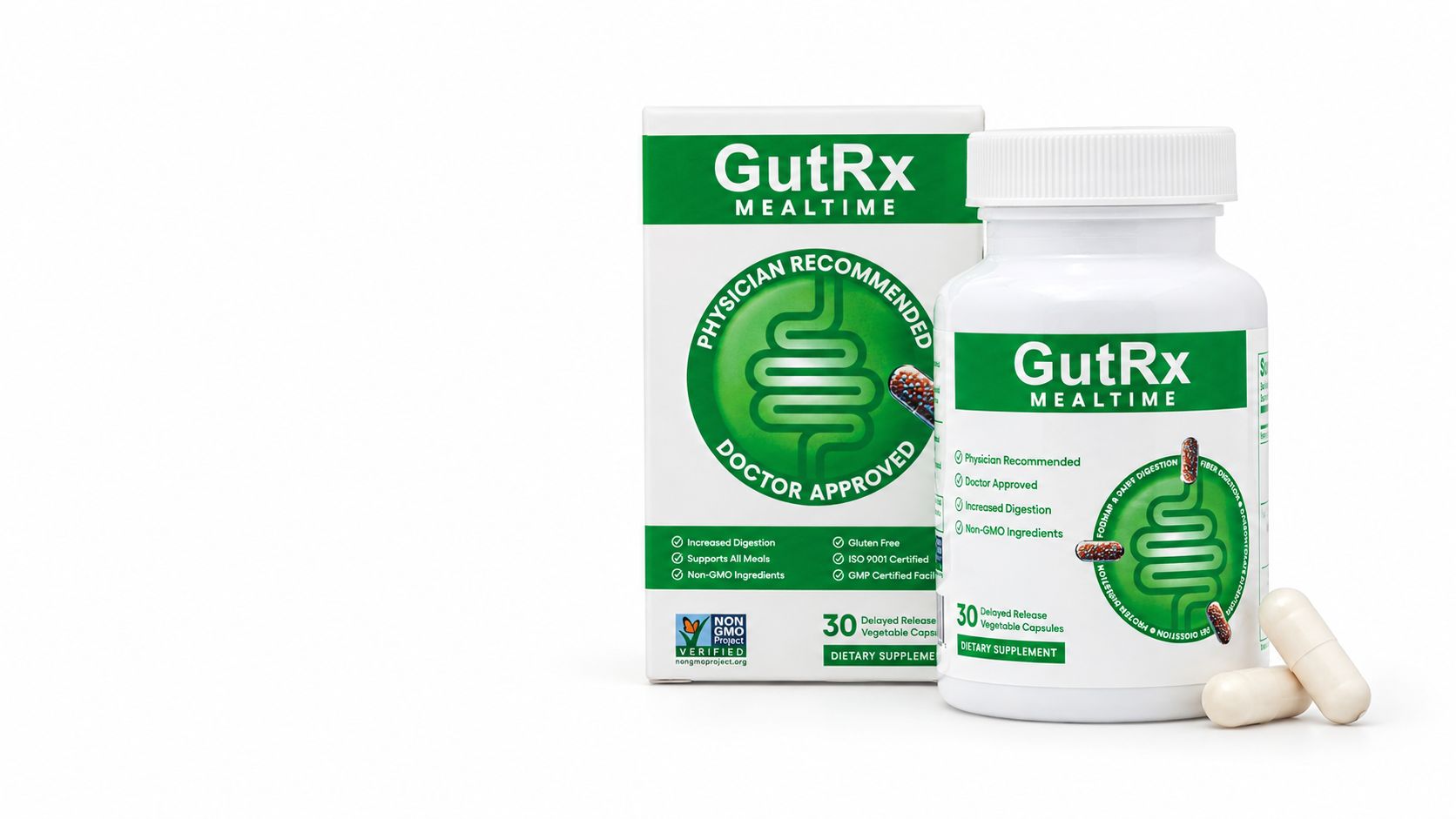
GutRx MEALTIME is another digestive-enzyme option positioned to support digestion, reduce bloating, and enhance nutrient absorption. Those stated benefits should still be evaluated against its current label and supporting documentation.
An enzyme name establishes an intended task. Disclosed activity is what makes its contribution meaningfully comparable.
Chewable Versus Capsule and Tablet Formats
Choose the format you'll use, but don't assume a chewable works faster or better because it breaks apart in your mouth. Digestive-enzyme performance concerns contact with the relevant food and retained enzyme activity, not just how quickly a supplement dissolves.
Convenience and formulation are different questions
Chewables can remove the water-and-swallowing step. They also need a taste system and a texture that people can tolerate, so flavors, sweeteners, and binders deserve attention.
Capsules and swallowed tablets may avoid that taste requirement. However, the shell or tablet form alone doesn't prove better stability, precise dosing, or protection from stomach acid. Those are product specifications that manufacturers need to substantiate.
Acid protection requires formulation evidence. Chewing isn't an acid-protection technology, and you shouldn't chew a product intended to be swallowed intact without confirming its directions.
The following visual summarizes common format considerations, but its generalizations need qualification.
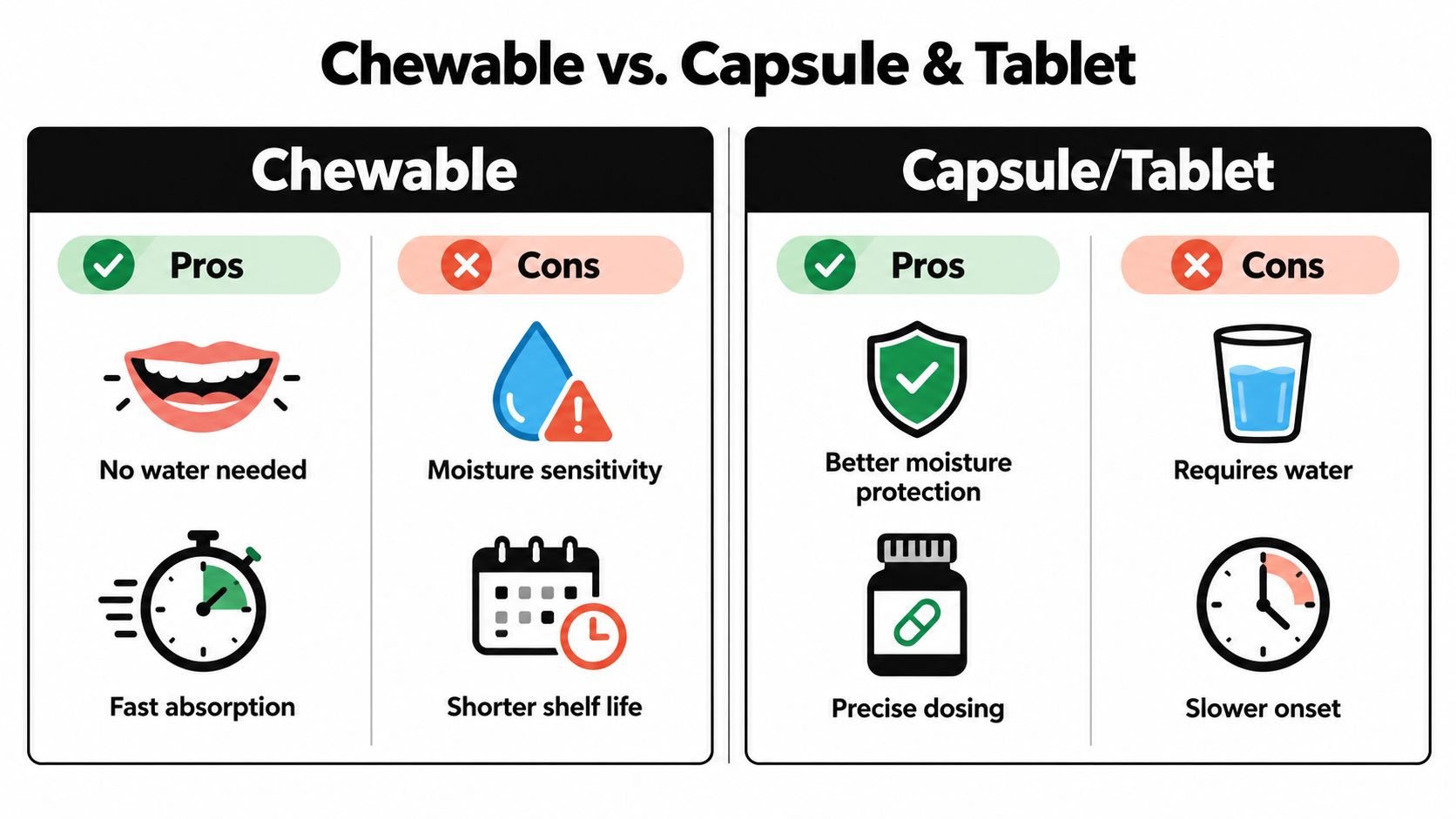
Claims such as faster absorption, slower onset, or shorter shelf life aren't established for every digestive-enzyme product. A well-packaged chewable may be a more sensible purchase than a capsule with unclear activity documentation.
Practical pros and cons
- Chewable advantage: Useful if swallowing pills prevents consistent meal-time use.
- Chewable trade-off: Taste ingredients and handling exposure become part of the comparison.
- Capsule or tablet advantage: May suit someone who prefers a tasteless, swallowed serving.
- Capsule or tablet trade-off: Water, swallowing ability, and instructions about keeping the dosage form intact can affect usability.
Dose accuracy also depends on the serving instructions and manufacturing controls. Don't split a chewable and assume each piece contains an exactly proportional enzyme dose unless the manufacturer supports that use.
For travel, keep the original packaging when practical rather than carrying loose servings where you lose storage directions and batch identification. Compare the intended package, not just the dosage form pictured on the listing.
The digestive enzyme capsule guide provides another format-focused resource. The useful decision is whether the delivery system fits your routine without sacrificing verified activity, not whether chewables or capsules win as a category.
How to Compare Two Chewable Enzyme Labels in Five Minutes
Put the Supplement Facts panels side by side. Front-label phrases such as “maximum strength” or “complete digestion” aren't a substitute for the information needed to compare products.
Ask “What activity does this serving provide for my food trigger?” rather than “How many enzymes does this bottle contain?”
Start with potency and serving instructions
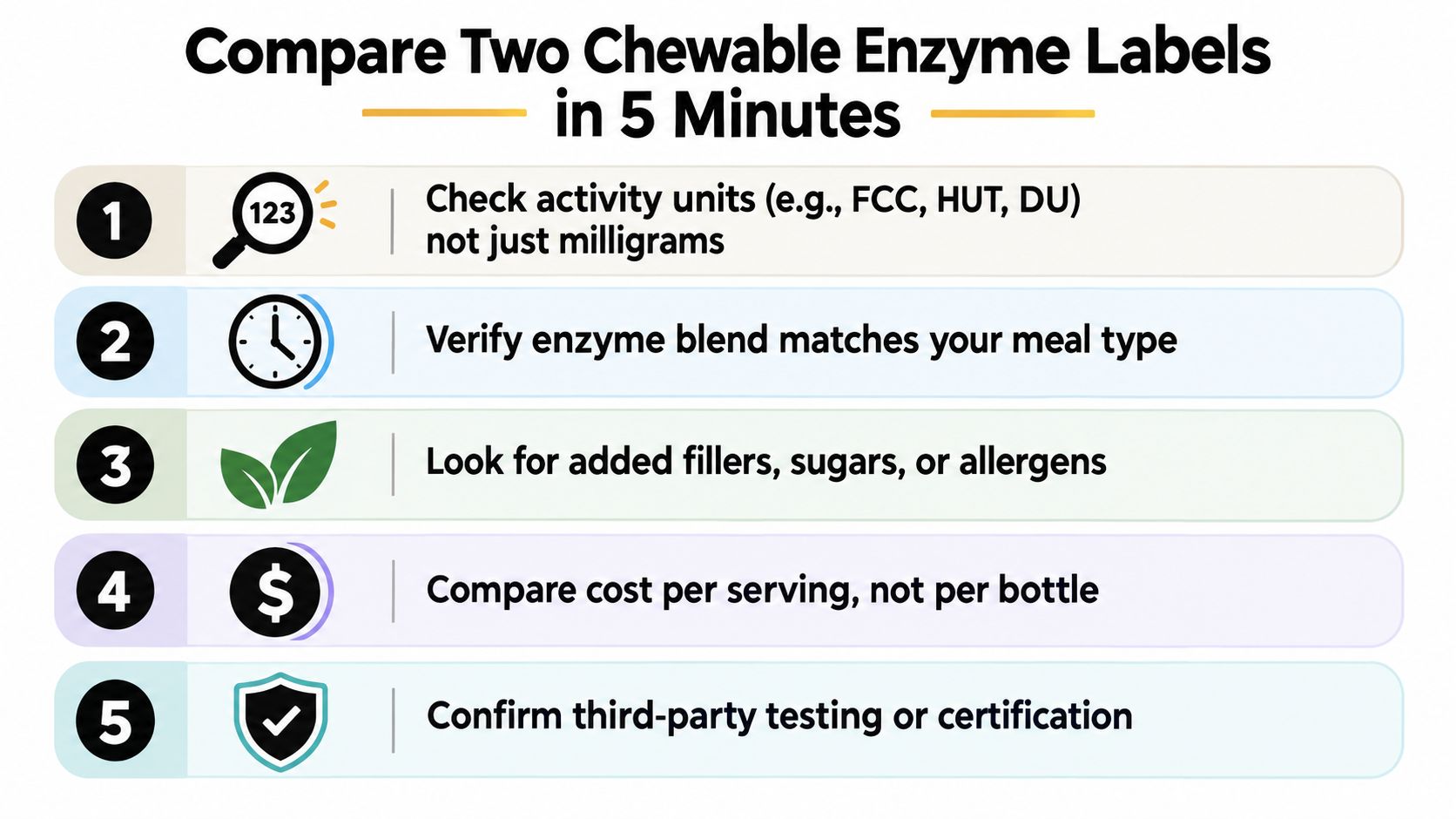
Check activity before milligrams. Look for FCC activity units for lactase, GalU for alpha-galactosidase, and validated activity assays for protease, lipase, and amylase. A weight-only proprietary blend can tell you how much powder is present without telling you how much useful catalytic activity each enzyme contributes.
Read the serving size carefully. Determine whether the displayed activity applies to a single chewable or the entire recommended serving. Then check whether directions describe use with meals or a daily total.
Compare equivalent use. If you're checking prices on Amazon, compare the cost of the labeled meal-time serving, not merely bottle price or tablet count. Don't assume that a smaller serving provides equivalent activity.
Use this visual as a starting checklist, then request the missing technical details.
Check what happens between manufacture and expiry
Enzymes can lose activity with moisture and heat. Industry guidance recommends finished-product testing in the final package and generally describes storage below 25°C and 40% relative humidity, along with scientifically validated, reproducible activity methods (enzyme stability and testing guidance).
That makes packaging a performance issue, not a cosmetic detail. Look for:
- Activity through expiry: Ask whether the declared potency is supported across shelf life, not only at manufacture.
- Packaging controls: Check for an appropriate barrier package, blister protection, or a desiccant-containing bottle.
- Excipient disclosure: Review sweeteners, flavors, binders, and other ingredients against your tolerances.
- Allergen handling: Look for clear information about enzyme sources and relevant allergen controls.
- Batch documentation: Request a certificate identifying the lot, test date, methods, and measured activity.
A certificate of analysis explained can help you distinguish ingredient identity testing from finished-product potency testing. A certificate that confirms an enzyme is present answers a different question from one that verifies its activity.
The better label is the one that lets you evaluate your intended meal-time use. If the manufacturer won't clarify the relevant activity or shelf-life specification, an impressive enzyme count shouldn't settle the purchase.
Matching Chewable Enzymes to Your Specific Symptom and Meal
Start with the meal you can describe, not the diagnosis you suspect. A repeatable reaction to lactose-containing dairy is a more actionable starting point than feeling bloated after almost everything.
Dairy discomfort has the clearest targeted rationale
Controlled lactose-challenge evidence summarized in a 2024 review found that oral lactase reduced breath hydrogen by 88%, with dose-dependent symptom improvement during a 25-gram lactose challenge (oral lactase and digestive-enzyme evidence).
Breath hydrogen helps assess carbohydrate reaching colonic bacteria. The symptom results address the discomfort buyers care about, but these findings still don't establish that every lactase product or dose performs equally.
For beans or certain vegetables, consider whether GOS is the suspected trigger. Alpha-galactosidase is a narrower choice than a generic “FODMAP enzyme,” because different fermentable carbohydrates require different targeting.
Heavy meals require more caution
Lipase with protease is mechanistically relevant to a meal containing substantial fat and protein. Amylase is relevant to starch. Neither match proves that supplementation will relieve your particular fullness or bloating.
A pancreatic-enzyme test-meal study found reduced bloating after a fatty meal but no significant improvement in gas, pain, nausea, or fullness, and its findings didn't support broader routine use (pancreatic enzymes after a test meal).
This visual helps identify possible substrate matches, not guaranteed symptom treatments.
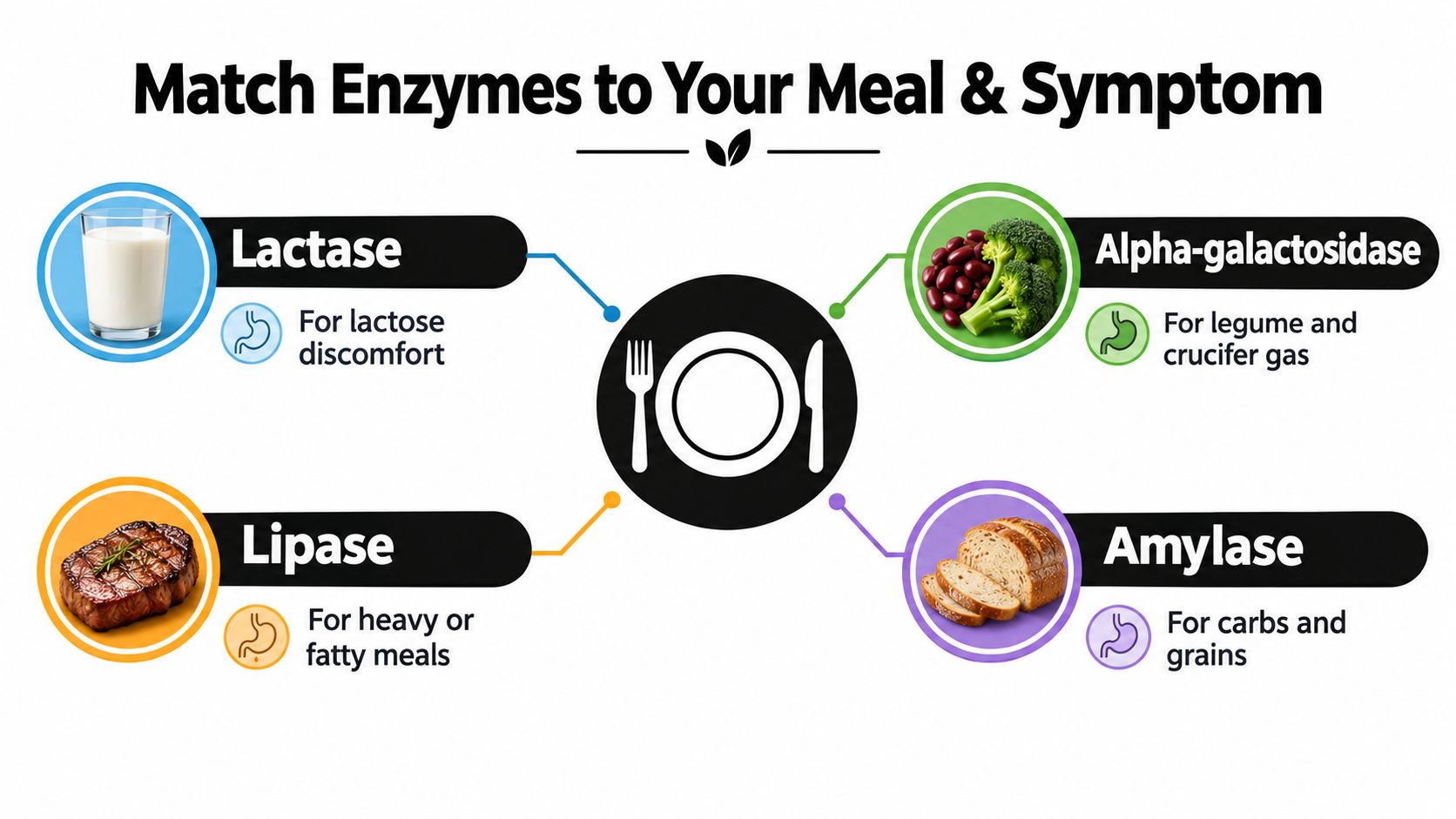
Clinical boundary: Enzymes are substrate-specific tools, not an all-purpose digestive rescue.
Consider clinical assessment rather than another blend when symptoms suggest something beyond food breakdown:
- Persistent pain or broad food reactions: Visceral hypersensitivity or other causes may need evaluation.
- Constipation with ongoing bloating: An enzyme doesn't establish an answer to slow transit.
- Urgency linked to stress or eating: Gut-brain triggers may require a different approach.
- Warning signs: Weight loss, bleeding, anemia, chronic diarrhea, or nutritional concerns warrant clinician review.
Keep a simple record of the meal, product directions, symptom timing, and response. Don't change several supplements and dietary habits simultaneously if you want to understand whether a targeted choice helps.
Safety, Dosing, and What 'Supports Digestion' Can and Cannot Mean
An over-the-counter enzyme supplement isn't equivalent to an approved prescription enzyme medicine. Availability doesn't establish suitability for your medical history.
The distinction matters when reading a label that uses digestive-support language.
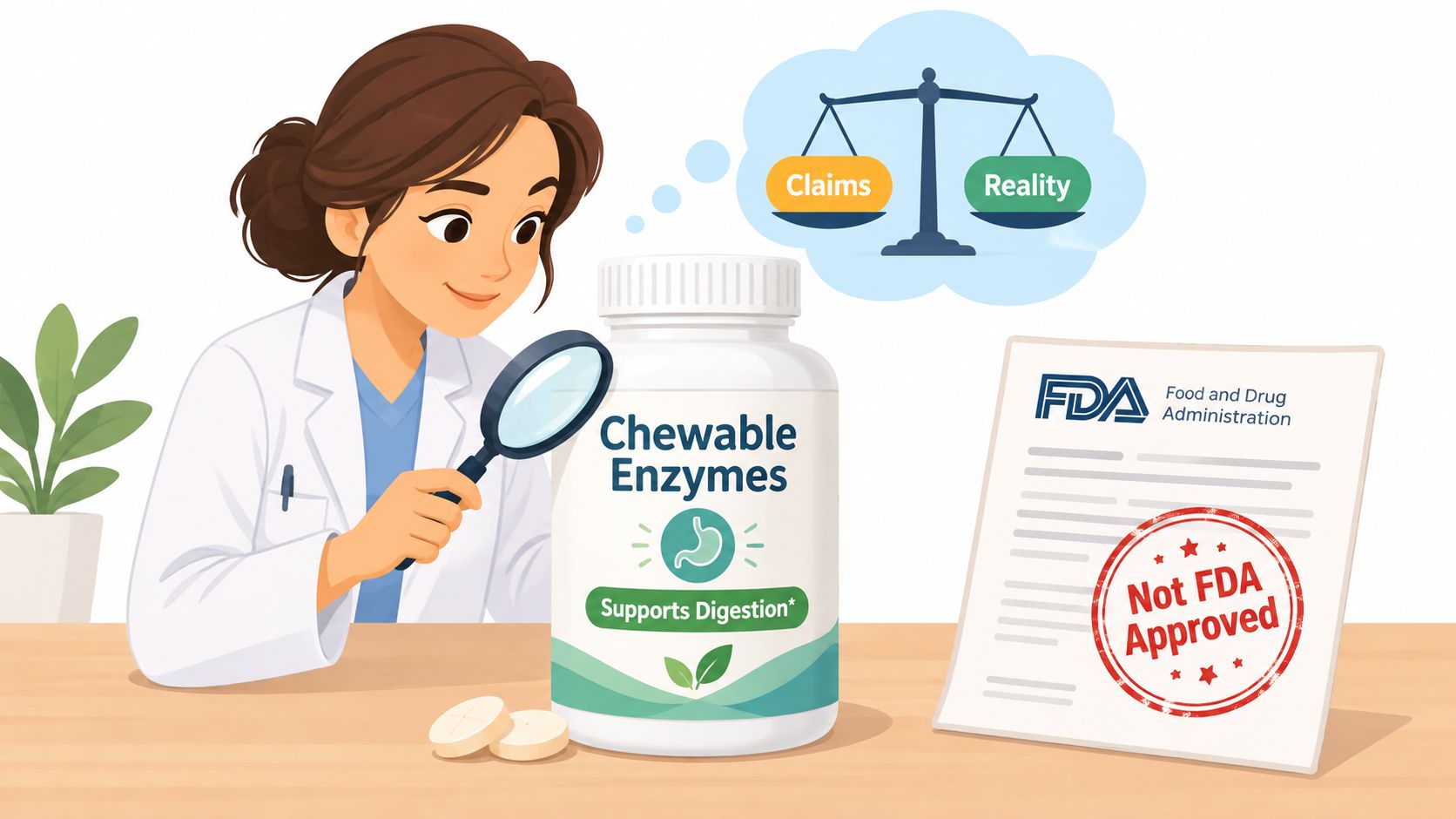
Understand the claim, then review your risks
U.S. dietary supplements aren't approved by the FDA before marketing, manufacturers are responsible for safety and compliant labeling, and supplements can cause adverse effects or interact with medicines and other products (FDA consumer guidance on dietary supplements).
Arrange clinician or pharmacist review before self-treatment if you're pregnant, considering pediatric use, have known pancreatic disease, or take anticoagulants or diabetes medications. That doesn't mean every enzyme interacts with every such medicine; it means the exact ingredients and your circumstances need checking.
Research-use benchmarks include approximately 3,000–11,250 IU for lactase with lactose-containing foods and 300 GalU for alpha-galactosidase, as described in the earlier testing guidance. These aren't universal prescriptions, and IU shouldn't be treated as automatically interchangeable with another label's assay units.
Take the product according to its meal-time directions, generally with the first bites rather than waiting until discomfort has developed. The goal is contact with the relevant food, not using enzymes as an after-meal rescue.
Support language isn't disease-treatment approval
A substantiated structure/function claim such as “supports digestion” isn't FDA pre-approval. The marketer must notify the agency within 30 days of first marketing the claim and include the required disclaimer: “This statement has not been evaluated by the Food and Drug Administration. This product is not intended to diagnose, treat, cure, or prevent any disease.” (FDA structure/function claim requirements).
Keep that distinction in mind when viewing supplement explanations.
Prescription pancreatic enzyme replacement is standard treatment for diagnosed exocrine pancreatic insufficiency, a different clinical situation from routine digestive comfort (history and clinical role of pancreatic enzyme replacement).
Feeling better after a meal doesn't prove you had an enzyme deficiency. It establishes a response worth evaluating, not a diagnosis.
Buyer Checklist and Quick Answers for Chewable Enzyme Decisions
A defensible purchase connects a recognizable meal trigger with a relevant enzyme, a usable serving, and credible product documentation. Don't pay extra for complexity that doesn't address your reason for buying.
Your final product-page check
- Substrate match: Identify the food component you're targeting.
- Activity disclosure: Confirm meaningful enzyme-specific units.
- Meal-time serving: Check how much the directions require.
- Ingredient fit: Review sweeteners, excipients, sources, and allergens.
- Quality evidence: Verify batch testing, packaging, and shelf-life support.
- Format preference: Choose a chewable because it suits you, not because chewing implies superior efficacy.
Quick answers before you order
How soon should I take it relative to eating?
Follow the label's meal-time directions. If it says “with meals” but gives no clearer timing, ask the manufacturer rather than inventing a pre-meal interval.
Can a chewable replace a probiotic?
Don't treat them as interchangeable purchases. Choose an enzyme for a substrate-specific meal-time purpose; a probiotic requires its own rationale and product-specific evidence.
Which situations need clinician input?
Use the safety and warning-sign checks above before experimenting. If you're already being treated for a digestive condition, bring the full label to the clinician managing it.
Does a certificate of analysis prove it works?
No. A COA can document identity, potency, or contaminants within its testing scope; it doesn't replace clinical efficacy testing.
You can also check whether the label includes the expected Supplement Facts panel, other ingredients, business identification, and net contents, which are among the FDA's dietary-supplement labeling requirements.
Buy only when you can explain why that formula fits that meal. If you can't, request clarification before ordering.
GutRx offers digestive-enzyme and probiotic options for different digestive-support goals. Visit GutRx to review the enzyme option's current label and product information, then compare its disclosed activity and directions with the foods you're trying to manage.


