

Cutting a nerve that runs from the stomach toward the brain once changed patients' mental health, and stimulating that same nerve later improved mood. That's the most useful entry point into how gut health affects the brain. The link is not that a single microbe controls how you feel. It's that nerves, immune signals, and chemical byproducts from digestion reach brain systems involved in stress, attention, and mood.
Table of Contents
- What 'How Gut Health Affects the Brain' Actually Means
- The Three Routes Linking Gut and Brain
- SCFAs, Butyrate, and Why Fiber Matters
- The Honest Truth About Mood and the Microbiome
- Why Bloating Can Fog Your Thinking
- Practical Levers for Gut-Brain Support
- Your First Two Weeks Toward a Calmer Gut-Brain Loop
What 'How Gut Health Affects the Brain' Actually Means
Many picture digestion as a one way tube. Food goes in, nutrients get absorbed, waste leaves. Your brain, in that picture, sits far away making decisions.
The biology is less separate. Your gut and brain form a two way communication system, often called the gut brain axis. Signals move from gut to brain, and brain to gut, all day.
Picture a house with three kinds of wiring. One is a direct phone line. One is messages carried through the bloodstream by the immune system. One is chemical mail made by gut microbes as they process food.
The Three Kinds of Signal
- Neural signals: Nerves sense stretch, nutrients, and irritation in the gut wall and report upward quickly.
- Immune signals: Immune cells in the gut lining release mediators that can travel and influence inflammation elsewhere, including the brain.
- Metabolite signals: Bacteria ferment fiber and produce compounds such as short chain fatty acids, which can affect barriers and immune cells.
None of these routes works alone. A stressful week can change gut motility and sensitivity. A bloated, urgent afternoon can change how much attention you have left for work. The same loop, running in opposite directions.
Gut brain communication is biological, not metaphorical. But biological does not automatically mean a probiotic will fix mood.
That distinction matters for every practical decision that follows. If you're choosing a probiotic for bloating, a daily probiotic for regularity, or digestive enzymes for bloating after eating, you're targeting gut symptoms first. Any benefit for focus or emotional resilience is more likely to come through feeling physically better, sleeping better, and monitoring discomfort less, rather than through one microbe directly raising a brain chemical.
You'll also hear serotonin mentioned constantly in gut brain content. It's an incomplete shortcut. Serotonin made in the gut plays important local roles, but that doesn't mean gut serotonin travels up and sets your mood. The stronger story is broader and more honest, involving nerve signaling, inflammation, barrier function, and the mental cost of ongoing gut symptoms.
The Three Routes Linking Gut and Brain
Start with the wiring you can point to on an anatomy chart. The vagus nerve is the tenth cranial nerve, and a major physiology review describes the vagus nerve as the fastest and most direct neural route between gut and brain, a path supported by early gastrectomy patients who showed increased psychiatric disorders after vagal disruption and by later vagus nerve stimulation that was first used for refractory epilepsy, improved mood, and gained approval for refractory depression.
That history doesn't prove microbes cause depression. It proves gut to brain signaling can be biologically actionable. Interrupt the line or stimulate it, and brain outcomes can shift.
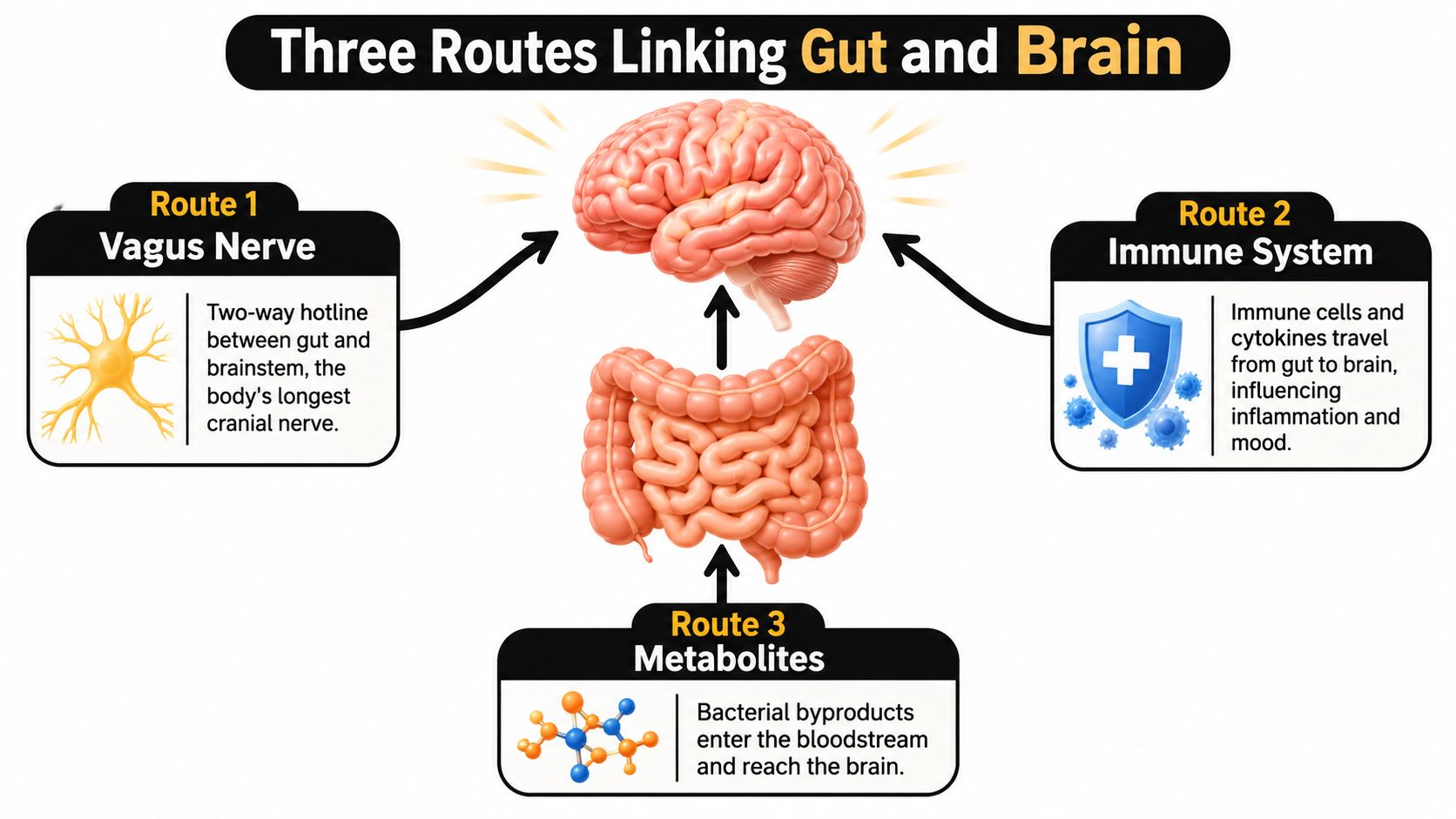
Route One Is the Vagus Nerve
Picture the vagus as a hotline between the gut wall and the brainstem. It can carry information related to nutrients, immune activity, and microbial signals toward the central nervous system. The brain can also send signals back down, which is one reason anxiety before a presentation can become nausea, urgency, or cramping within minutes.
If that pattern is familiar, the connection between stress and gut health is worth understanding before you blame a single food. Stress doesn't need to damage the intestine to change how strongly gut sensations register.
Routes Two and Three Travel Through Blood
The second route is immune signaling. Much of your immune system sits near the gut lining because that's where food, microbes, and the outside world meet your tissues. When that lining is irritated or more permeable, immune mediators can enter circulation and influence inflammatory signaling that reaches the brain.
The third route is metabolites, the chemical products microbes make. This route got a concrete human example when researchers followed 38 patients treated for recurrent Clostridioides difficile infection with fecal microbiota transplantation and found improved quality of life alongside increased butyrate, valerate, and 2 methylbutyrate, a combination that reduced interleukin 6, tumor necrosis factor, and nitric oxide in cultured microglia.
That finding doesn't prove transplanting microbes treats mood or cognition. It shows something narrower and more credible. Change the gut ecosystem, change the metabolites in blood, and brain immune cells can respond differently in the lab.
SCFAs, Butyrate, and Why Fiber Matters
Here's an analogy that holds up well. Fiber is the fuel, gut bacteria are the engines, and short chain fatty acids are the exhaust, except this exhaust turns out to be valuable.
Your own enzymes can't fully break down many plant fibers. They reach the colon mostly intact, where bacteria ferment them. That fermentation produces acetate, propionate, and butyrate, the main SCFAs.
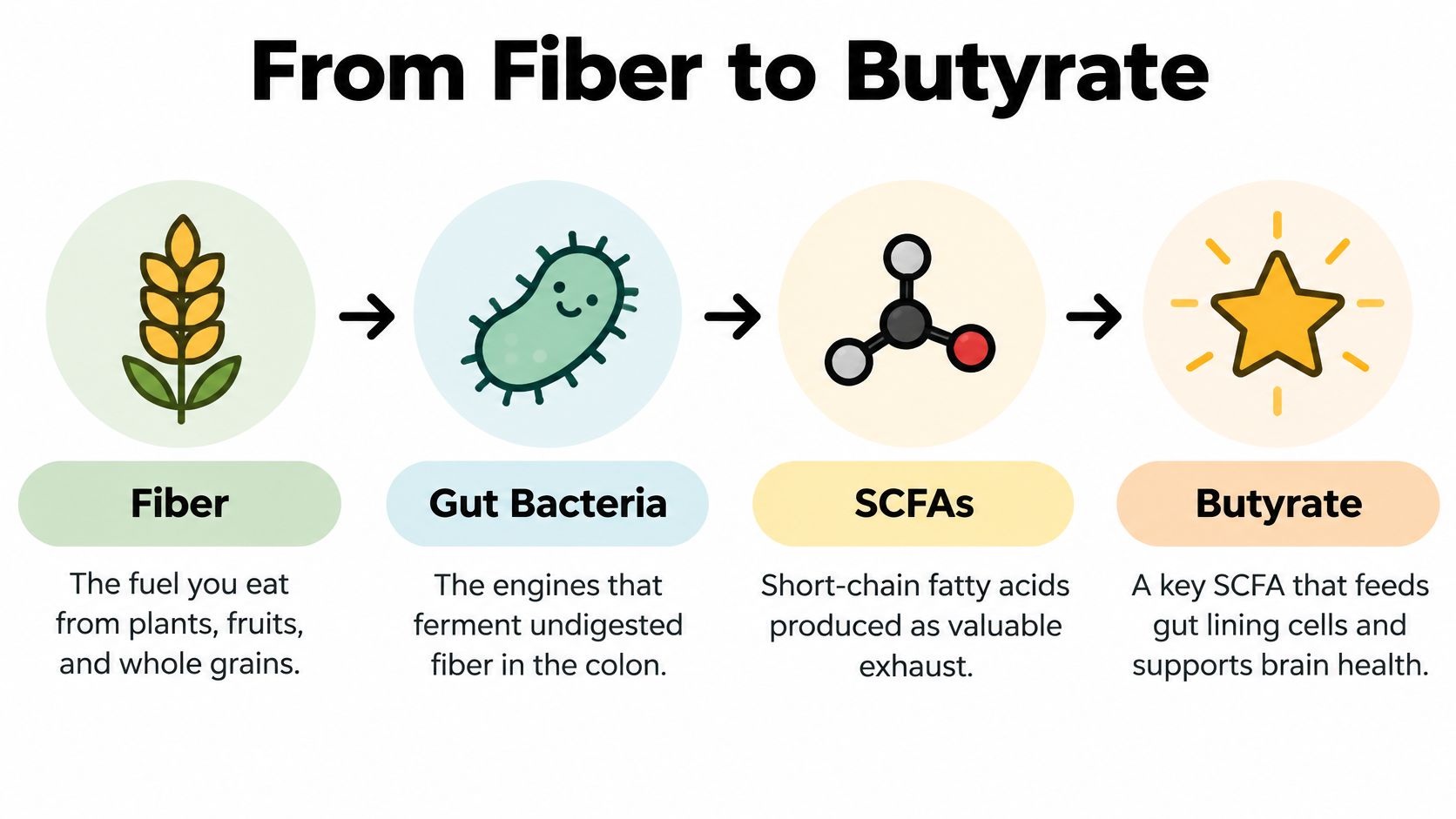
What Butyrate Actually Does
Butyrate feeds colon lining cells and helps support intestinal barrier integrity, the gut wall's ability to let nutrients through while keeping larger irritants contained. SCFAs can also influence the blood brain barrier and brain immune cells called microglia.
The mechanistic evidence is specific. Experimental work shows SCFAs can cross the blood brain barrier through monocarboxylate transporters, increase tight junction protein expression, regulate microglia through receptor signaling and histone deacetylase inhibition, and that mice fed inulin produced microglia secreting less tumor necrosis factor alpha after lipopolysaccharide stimulation.
Read that carefully. It's a plausible mechanism, supported by animal and laboratory work. It's not proof that eating one fiber powder will calm human brain inflammation or lift mood.
Why More Fiber Is Not Always Better
Fermentation produces gas as well as SCFAs. If you have IBS, rapidly increasing fermentable fiber can worsen bloating before it helps anything. Dose and type need to match your tolerance, and gradual escalation matters more than aggressive targets.
If you're sorting fact from folklore on this point, fiber myths explained by Pumpernickel Health Foods is a useful plain language companion. Readers who want the bacterial side can go deeper on butyrate producing bacteria and why supporting producers differs from taking a generic probiotic.
Practical rule: You can't assume any probiotic alone will raise beneficial SCFAs. The microbes need fermentable substrate, and you need a dose your gut can tolerate.
That logic explains why prebiotic plus probiotic combinations, often called synbiotics, exist. For example, GutRx COMPLETE is a high potency probiotic and prebiotic blend with 62B CFUs, Akkermansia muciniphila, and SIBO support, designed to boost digestion and immunity. Treat that kind of formula as digestive support, not as a proven mood intervention.
The Honest Truth About Mood and the Microbiome
This comparison captures the popular version of the story, balanced gut on one side, troubled gut on the other. Reality is less tidy.
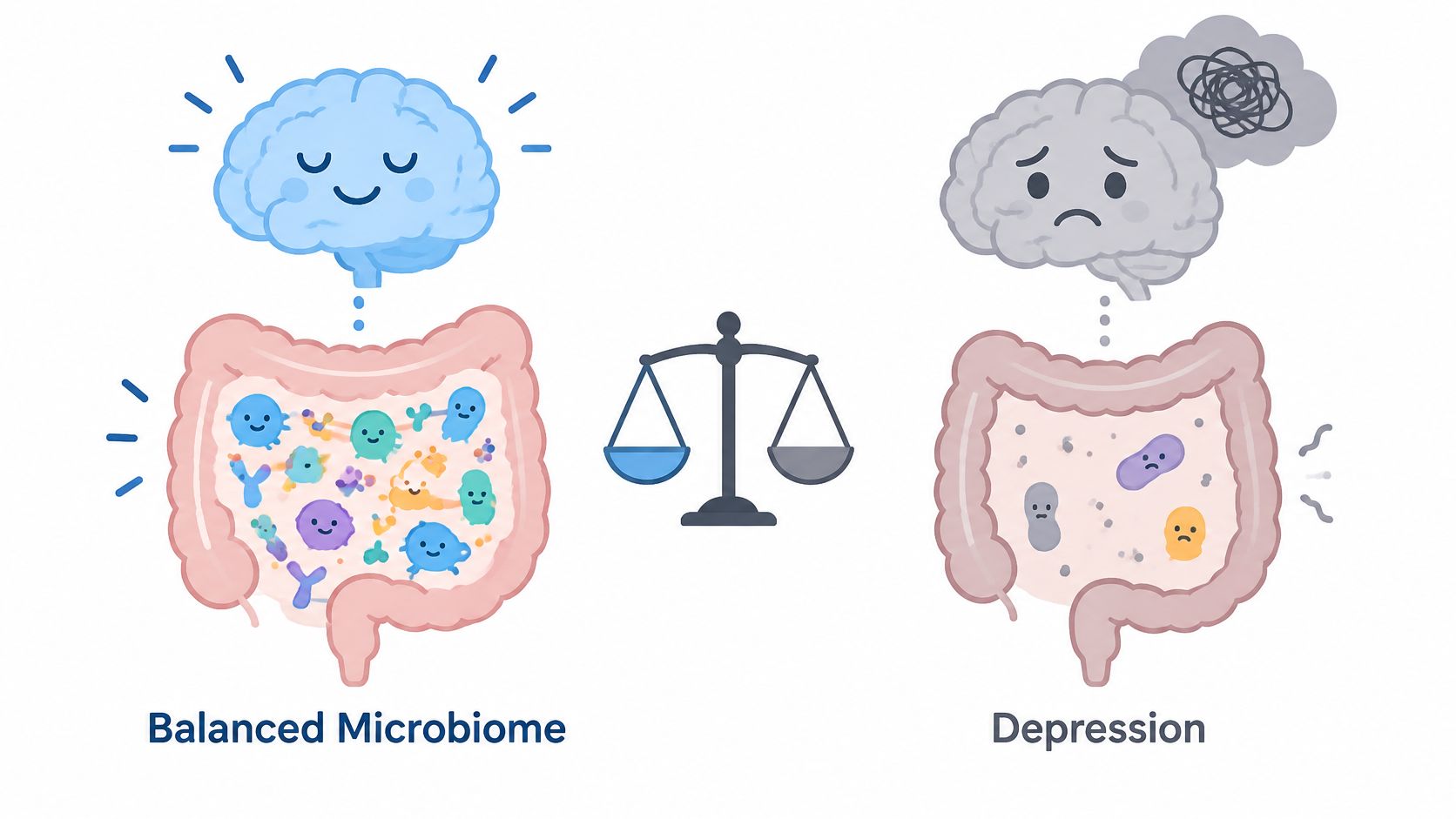
People with depression do, on average, have different gut microbiomes from people without depression. That's a real finding, not marketing.
Across studies, differences repeatedly involved bacterial diversity and taxa that produce SCFAs such as butyrate. That lines up neatly with the mechanism you just learned. Neat alignment is encouraging, but it's still not causation.
Association, Mechanism, Treatment Effect
Keep three buckets separate and most gut brain confusion disappears.
Association means two things travel together. Depression and certain bacterial patterns travel together. Mechanism means we can describe a plausible path, such as SCFAs influencing microglia. Treatment effect means changing the microbiome in a controlled human trial reliably improves mood. That third bucket is where evidence thins out.
Recent synthesis work is candid about this gap. A 2025 review reported that most findings remain observational, randomized trials suggest dietary changes may improve mental health outcomes while evidence for supplements and probiotics remains conflicting, and a separate synthesis of 45 studies involving 1,200 adolescents with depression found its strongest causal evidence in animal experiments rather than human trials.
Why is causation so hard to pin down? Because diet, medication, stress, sleep, socioeconomic conditions, and illness affect both the microbiome and mood. A person sleeping badly, eating erratically, and taking medication may have altered gut bacteria because of depression and its circumstances, not only the other way around.
This short video walkthrough reinforces why diet quality deserves attention without turning food into a mood prescription.
For a broader look at eating patterns and emotional health, 5 surprising diet reasons for mood offers additional context from a clinical perspective. The takeaway for buyers is simple. No microbiome test and no probiotic for gut health can currently predict who will feel emotionally better. Digestive relief and emotional well being may be connected, but they're not interchangeable outcomes.
Why Bloating Can Fog Your Thinking
You don't need depression, or a neurotransmitter problem, for gut symptoms to affect your brain's performance. You just need discomfort that your brain keeps monitoring.
Your brain constantly samples signals from inside the body, including stretch, pressure, and urgency from the gut. When those signals are frequent or unpredictable, attention gets pulled toward them. Monitoring becomes a background task that never fully switches off.
Attention Is the Missing Explanation
Translate that into daily life. You're in a meeting while part of your attention tracks whether bloating is getting worse, whether you'll need a bathroom, and whether anyone can tell. That monitoring consumes mental bandwidth. Focus, patience, and decision speed suffer not because microbes lowered your intelligence, but because discomfort is expensive to track.
Brain fog during a flare may be your brain spending cycles on threat monitoring, not evidence that a single microbe sabotaged your neurotransmitters.
This also explains why stress amplifies gut sensations without new intestinal damage. A sensitized system turns the volume up. If that sounds familiar, exploring whether stress can cause bloating and gas may explain flares that seem disconnected from food.
The practical implication is encouraging. If reducing bloating, urgency, or irregularity frees attention, then ordinary digestive support, a probiotic for digestive balance, meal timing changes, or enzymes for trigger foods, may improve how clearly you think through a much more ordinary route. You feel less distracted because there's less to monitor.
Individual variability still rules. The same meal or symptom affects people differently, and no single microbial profile explains IBS. Track your own peak symptom days against sleep, stress, and focus, and you'll learn more than any generic gut type quiz can teach you.
Practical Levers for Gut-Brain Support
Four levers cover most sensible action. They're not interchangeable, and stacking all of them at once makes it impossible to know what helped.
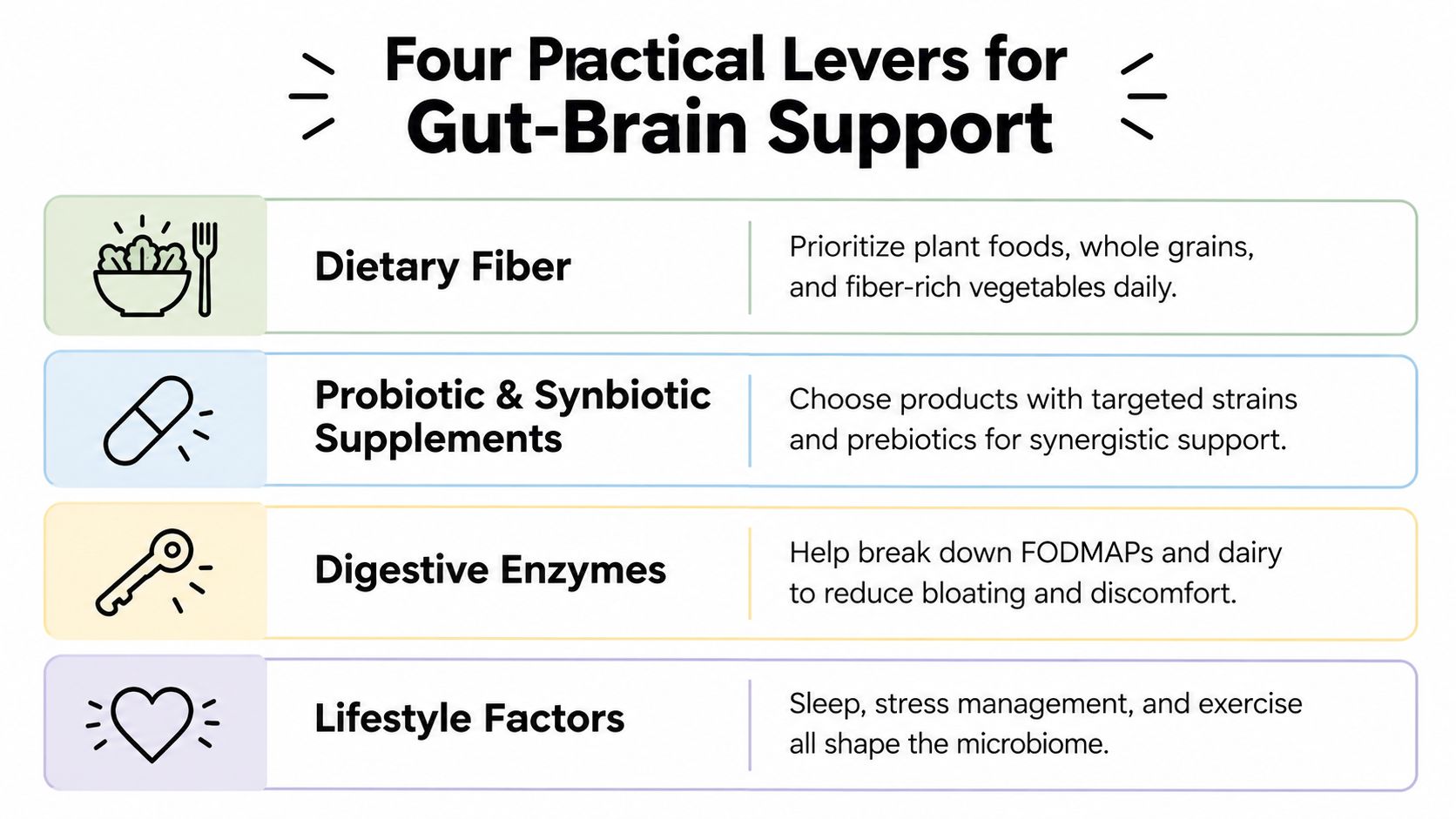
Lever One and Two Cover Food and Microbes
Dietary fiber is the long game for SCFA production. Build from plant foods you tolerate, increase gradually, and watch gas as feedback, not failure.
Probiotics and synbiotics target digestive symptoms, and here the human trial evidence is stronger for gut outcomes than for mood. A 2023 systematic review and meta analysis of 72 randomized controlled trials in IBS found probiotics improved overall symptoms versus placebo with a standardized mean difference of -0.55 and a 95 percent confidence interval of -0.76 to -0.34, improved abdominal pain with a standardized mean difference of -0.89, and improved health related quality of life with a standardized mean difference of 0.99.
Because that analysis pooled different formulations, don't generalize to every product. Look for clinically studied strains, a third party tested probiotic with strain verification, and delivery that protects live organisms, such as an enteric coated probiotic or delayed release capsule. A shelf stable probiotic with verified counts beats a headline CFU number you can't confirm. Whether you need a probiotic for constipation, a probiotic for diarrhea support, or a women's probiotic with cranberry and D mannose depends on your symptom pattern, not on gut brain hype.
Lever Three Is Meal Specific
Digestive enzymes solve a different problem. They don't colonize anything and they don't treat mood. They help break down specific food components before bacteria ferment them.
Targeted enzymes have a matching rationale. An enzyme mixture designed to pre digest lactose, fructans, and galactans improved FODMAP digestibility and reduced gas pressure in an experimental model, while a human study of a fructan hydrolyzing agent reported significant improvements in IBS severity, bloating, flatulence, and pain, with 78 percent of participants reporting more than 30 percent improvement in bloating.
So digestive enzymes for dairy and FODMAP foods fit meal driven symptoms, especially bloating after specific foods. They won't resolve every cause of bloating.
Lifestyle factors form the fourth lever. Sleep, stress management, and regular movement shape both gut sensitivity and the microbiome, and they support healthy vagal signaling. They're unglamorous, and they're also the confounders that make mood claims so hard to prove.
Gut-Brain Support Levers at a Glance
| Lever | Target Symptoms | Realistic Timeline | What Success Looks Like | Caveats |
|---|---|---|---|---|
| Dietary fiber | Irregularity, low SCFA production | Gradual, over weeks | Easier, more regular bowel movements | Increase slowly if you have IBS |
| Probiotic or synbiotic | Bloating, pain, digestive balance | Consistent daily use | Lower overall symptom burden | Effects are strain and product specific |
| Digestive enzymes | Bloating after dairy or FODMAP meals | With the meal itself | Less post meal gas and discomfort | Won't fix non food causes |
| Sleep and stress habits | Sensitivity, flares, poor focus | Ongoing | Fewer stress linked flares | Hard to isolate from other changes |
Your First Two Weeks Toward a Calmer Gut-Brain Loop
Don't overhaul everything. Run a small signal test instead, structured enough to teach you something.
A Simple Two Week Plan
- Track briefly: Note meals, bowel pattern, bloating, sleep, stress, and focus once daily. You're looking for patterns, not perfection.
- Pick one dietary lever: Add one tolerated fiber source gradually, or test enzymes only with your known trigger meals.
- Pick one supplement lever: If you add a probiotic, change nothing else that week, so any shift means something.
- Reassess: Compare digestion, attention, and mood separately at day fourteen. Better focus with unchanged mood is still a useful result.
Quality markers decide whether a supplement test is even informative. Third party probiotic testing can verify strain identity, quantify live CFUs, and screen for contaminants, while U.S. manufacturing requirements under 21 CFR Part 111 mandate identity testing before ingredients are used, which makes downloadable COAs and strain verification real buying criteria. Add delayed release protection and clinically studied strains, and you're comparing evidence instead of labels.
Set expectations in the right order. Better digestion often delivers better mental bandwidth before it delivers better mood, because there's less discomfort to monitor. If mood symptoms are significant or persistent, gut support should complement clinical assessment and established mental health treatment, never replace it.
That's the honest version of how gut health affects the brain. Real routes, real mechanisms, promising but correlational mood evidence, and a practical path that starts with the symptoms you can measure.
If bloating, irregularity, or meal related discomfort is stealing your focus, GutRx offers third party tested probiotics, synbiotics, and digestive enzymes built around clinically studied strains, delayed release protection, and downloadable certificates of analysis. Explore the Daily, Balance, Women's, Mealtime, and Complete formulas to match support to your specific symptoms, and start your own two week signal test with a product you can verify.


