

Digestive enzymes are biological catalysts that break carbohydrates, proteins, and fats into absorbable molecules, accelerating reactions by more than a million-fold so a meal is processed in hours rather than years. They help turn starch into sugars, protein into amino acids, and fat into fatty acids and glycerol, making nutrient absorption possible.
But if enzymes break down food so efficiently, why can a bowl of beans, a glass of milk, or a rich restaurant meal still cause bloating? The answer is that digestion depends on matching the right enzyme to the right food, at the right point in the digestive tract, under the right chemical conditions. A general “digestive support” product may not address lactose, fructans, galactooligosaccharides, excess fructose, or fat digestion equally well.
Table of Contents
- What Digestive Enzymes Actually Do
- The Main Types of Digestive Enzymes and What They Break Down
- Where Enzymes Are Produced in the Digestive Tract
- How Enzymes Handle FODMAPs and Problem Foods
- Signs of Enzyme Insufficiency and What the Research Shows
- How to Choose a Digestive Enzyme Supplement That Works
- How to Use Enzyme Supplements Safely and Effectively
- Enzymes as Part of a Complete Digestive Routine
What Digestive Enzymes Actually Do
Food doesn't become useful to your body just because it moves through your digestive tract. It must first be reduced from large, complex molecules into smaller units that can cross the intestinal lining. Digestive enzymes are proteins that speed up these chemical reactions, allowing the body to extract usable nutrients rather than passing undigested material onward.
Think of an enzyme as a specialized pair of molecular scissors. Amylase works on starch, proteases work on protein, and lipase works on fat. Each enzyme recognizes a particular chemical structure, binds to it, and helps split the bonds holding the larger molecule together. The enzyme itself isn't used up, so it can continue helping with the same type of reaction.
This only works when the conditions fit. Enzymes need access to their target, and their activity depends on factors such as pH, activation, and release timing. Salivary amylase can begin starch digestion in the mouth, while pepsin becomes active in the acidic stomach. Pancreatic enzymes then continue much of the work in the small intestine, where absorption takes place. The Open University's digestion resource describes enzymes as biological catalysts capable of accelerating reactions by more than a million-fold.
The three main food targets
- Carbohydrates: Amylase begins starch digestion, while enzymes in the small intestine continue converting carbohydrate fragments into sugars.
- Proteins: Pepsin starts protein breakdown in the stomach. Pancreatic proteases continue splitting proteins into peptides and amino acids.
- Fats: Lipase breaks dietary fats into smaller molecules, including fatty acids and glycerol, that the intestine can absorb.
Smaller food components can also matter. Lactose in dairy, fructans in some plant foods, and galactooligosaccharides in beans may reach the lower gut when the relevant enzyme activity isn't sufficient for that meal. Gut bacteria then ferment these carbohydrates, which can contribute to gas and bloating.
Practical rule: The useful question isn't only “Do I need digestive enzymes?” It's “Which food causes the problem, and which enzyme acts on that food?”
That question leads to more realistic supplement choices. A lactase product may help with lactose, but it won't replace lipase for a high-fat meal. A broad enzyme blend may cover several macronutrients, while a targeted formula may be more appropriate when one specific food consistently causes symptoms.
The Main Types of Digestive Enzymes and What They Break Down
Enzymes make more sense when you connect them to ordinary meals. When you chew bread, amylase in saliva begins working on starch. The process continues in the small intestine with pancreatic amylase, helping reduce complex carbohydrates into smaller sugars that can be absorbed.
A steak, eggs, or a serving of tofu follows a different route. Proteases break down protein. Pepsin begins the process in the stomach, while pancreatic enzymes such as trypsin and other proteases continue it in the small intestine. The final products include amino acids and small peptides.
Fat digestion also requires its own specialist. Lipase acts on triglycerides found in foods such as butter, avocado, cheese, and oils. Bile helps disperse dietary fat into smaller droplets, giving lipase better access to the fat molecules. The resulting fatty acids and glycerol can then move toward absorption.
For readers who want a closer look at one carbohydrate-digesting enzyme, this explanation of amylase enzyme function connects the biochemistry to common food digestion.
Match the enzyme to the meal
| Enzyme | Breaks Down | Produces | Example Trigger Food |
|---|---|---|---|
| Amylase | Starch and complex carbohydrates | Smaller sugars and carbohydrate fragments | Bread, rice, potatoes |
| Pepsin and other proteases | Protein | Peptides and amino acids | Steak, eggs, poultry |
| Lipase | Dietary triglycerides | Fatty acids and glycerol | Butter, avocado, cheese |
| Lactase | Lactose | Glucose and galactose | Milk, ice cream, soft cheese |
| Alpha-galactosidase | Galactooligosaccharides | Smaller carbohydrate units | Beans and some cruciferous vegetables |
| Sucrase and maltase | Disaccharides | Simple sugars | Table sugar and maltose-containing foods |
Lactase has a particularly clear target. It breaks lactose, the sugar in dairy, into glucose and galactose. When lactase activity is insufficient, dairy may be followed by cramping, bloating, or diarrhea, as described in this overview of digestive enzyme types and functions.
A product such as GutRx BALANCE is a probiotic rather than a digestive enzyme. It offers 30 billion CFUs per capsule with next-generation probiotics for gut health, digestive balance, and immune support, so it shouldn't be confused with a meal-time enzyme formula.
Where Enzymes Are Produced in the Digestive Tract
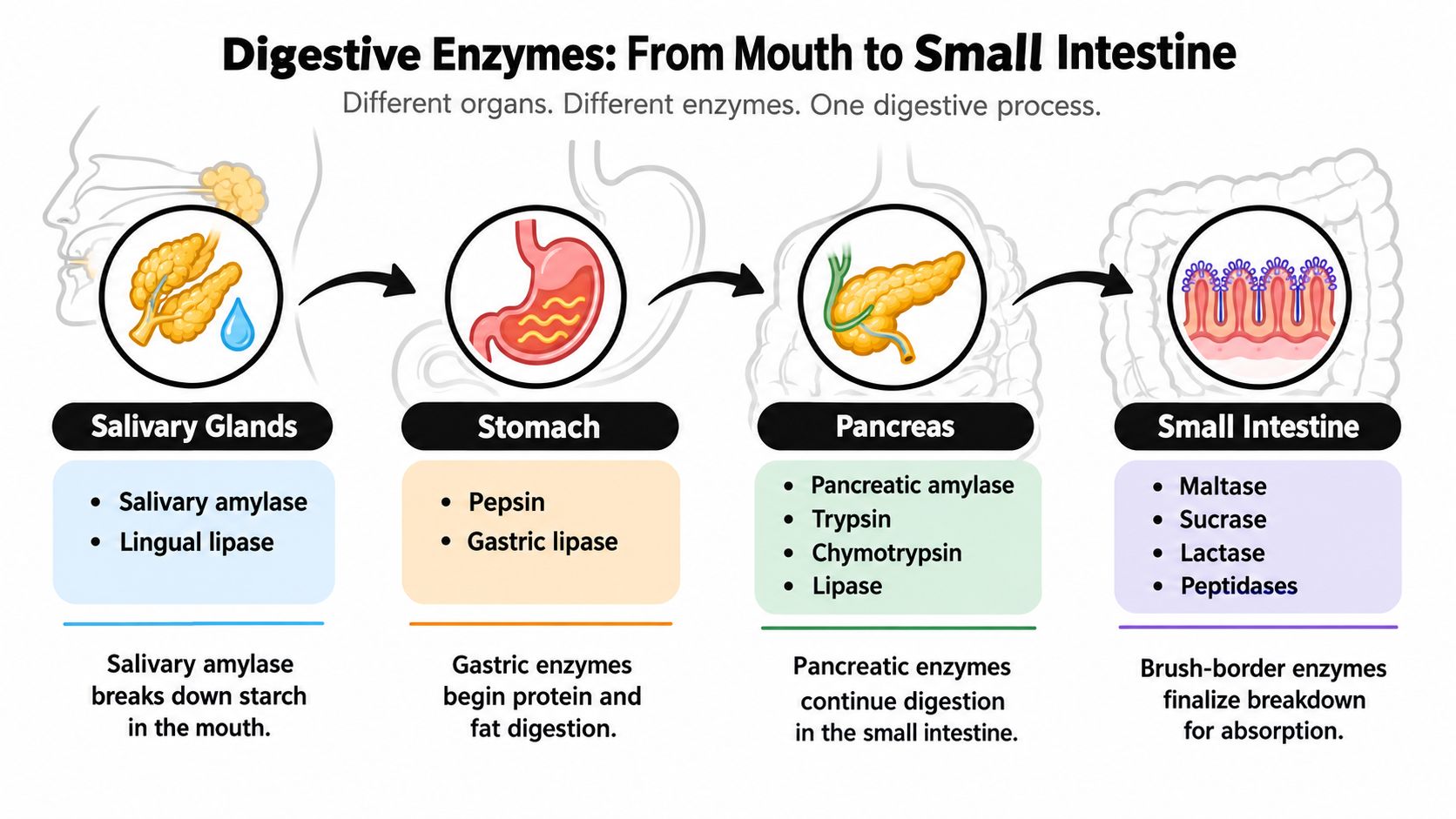
Digestion works like a relay race. Different organs release different enzymes, and each handoff prepares food for the next stage.
The mouth begins the process
Chewing physically breaks food into smaller particles and mixes it with saliva. Salivary amylase starts starch digestion, while lingual lipase begins working on some dietary fat. The acidic environment of the stomach later limits salivary amylase activity, so the mouth's contribution is important but incomplete.
The stomach changes the conditions
The stomach churns food and mixes it with acid and digestive secretions. Pepsin begins protein digestion after activation in the acidic stomach environment. Gastric lipase contributes to fat digestion, while mechanical mixing turns the meal into a semi-liquid mixture that can enter the small intestine gradually.
The pancreas supplies the heavy work
Once food reaches the duodenum, the pancreas releases a major supply of digestive enzymes. Pancreatic amylase continues carbohydrate digestion, lipase works on fat, and proteases such as trypsin and chymotrypsin continue protein breakdown. The pancreas is a major source of enzymes for the three main macronutrients, as explained in this clinical overview of digestive enzymes.
The pancreas releases several protein-digesting enzymes in inactive forms. Activation in the small intestine helps protect pancreatic tissue from premature digestion and allows the protease cascade to proceed where food is present.
The intestinal surface finishes the job
The small intestine has enzymes located along its brush border, the specialized surface facing the intestinal contents. Lactase, sucrase, maltase, and peptidases complete the final stages of digestion, reducing remaining sugars and peptides into absorbable units.
The timing is tightly coordinated. Pancreatic enzyme delivery rises rapidly after a meal, reaching maximal values within the first post-meal hour, or sometimes within 20 to 30 minutes, then declining to lower sustained levels for about 3 to 4 hours depending on meal size, according to this review of post-meal pancreatic secretion. If one organ or enzyme system isn't working properly, later stages may receive food that hasn't been adequately prepared.
How Enzymes Handle FODMAPs and Problem Foods
FODMAPs aren't one single substance, so one enzyme can't address every FODMAP-related trigger. The useful match depends on the carbohydrate involved, the amount eaten, and whether the supplement contains an enzyme capable of acting before that carbohydrate reaches the colon.
Lactase is the clearest example. It targets lactose in milk, ice cream, and other dairy foods. If dairy causes symptoms but beans and onions don't, a lactase-focused product may be more logical than a broad formula.
Alpha-galactosidase addresses galactooligosaccharides found in beans and some vegetables. It may help with a meal built around lentils or beans, but it isn't a universal solution for every source of bloating. This guide to alpha-galactosidase supplements explains why the enzyme is usually considered in relation to specific carbohydrate triggers.
Different triggers need different coverage
| FODMAP Type | Common Foods | Typical Symptom | Targeted Enzyme |
|---|---|---|---|
| Lactose | Milk, ice cream, soft cheese | Bloating, cramping, diarrhea | Lactase |
| Galactooligosaccharides | Beans, lentils, some vegetables | Gas and abdominal bloating | Alpha-galactosidase |
| Excess fructose | Apples, honey, high-fructose corn syrup | Bloating, gas, loose stools | Fructose-targeted assistance |
| Fructans | Wheat, onions, garlic | Gas, bloating, abdominal discomfort | Formulation-dependent support |
| Polyols | Some stone fruits, sugar-free gum | Bloating, gas, altered stool pattern | Enzyme support may be limited |
| Resistant starch and fiber | Legumes, cooled starches, some grains | Fermentation-related gas | Amylase and broader carbohydrate support |
A multi-enzyme FODMAP-targeting blend can make sense for someone who reacts to several categories. A single-enzyme product is narrower by design. That isn't a weakness, because narrow coverage can be useful when the trigger is known. It means the label should match the meal rather than relying on a general promise to “support digestion.”
Evidence also shows why expectations need to stay specific. A recent randomized crossover study of a FODMAP-targeting blend reported improvements after 4 weeks, including 78.0% of participants improving in bloating or flatulence, 75.0% of participants with IBS-D improving in diarrhea, and 72.7% of participants with IBS-C improving in constipation, as reported in the PubMed study record. Those findings support targeted use, but they don't mean every enzyme works for every person or every IBS mechanism.
Signs of Enzyme Insufficiency and What the Research Shows
Symptoms can offer clues, but they can't prove a specific enzyme deficiency. A pattern that appears soon after dairy points toward lactose malabsorption, while gas after beans may reflect fermentation of carbohydrates that weren't fully broken down. Pale or oily stools, floating stools, and ongoing difficulty digesting fatty meals deserve more careful evaluation because they may involve pancreatic or biliary problems rather than ordinary meal-related bloating.
Common patterns to notice
- After dairy: Cramping, bloating, or diarrhea after milk-based foods can fit insufficient lactase activity.
- After beans or certain vegetables: Lower-abdominal gas and distension may reflect incomplete handling of fermentable carbohydrates.
- After fatty meals: Greasy or floating stools can suggest that fat digestion or absorption needs medical assessment.
- Across many meals: Persistent symptoms that don't track with a particular food are less likely to be solved by choosing one targeted enzyme.
Research on enzyme blends is mixed, which is important for responsible buying decisions. A 2023 PubMed-indexed study of a multi-enzyme supplement in functional dyspepsia reported improved symptom scores, pain scores, and sleep scores, and the supplement was described as well tolerated without side effects in the study population. The clinical study record supports potential symptom benefit, but it doesn't establish that every bloating complaint comes from enzyme insufficiency.
A separate pilot study of alpha-galactosidase with oligosaccharide-rich meals found it wasn't superior to placebo for post-meal gastrointestinal symptoms or breath-gas measures, although some subgroup changes appeared the following morning, according to the trial information available here. This contrast with newer multi-enzyme findings suggests that the food target and formulation matter.
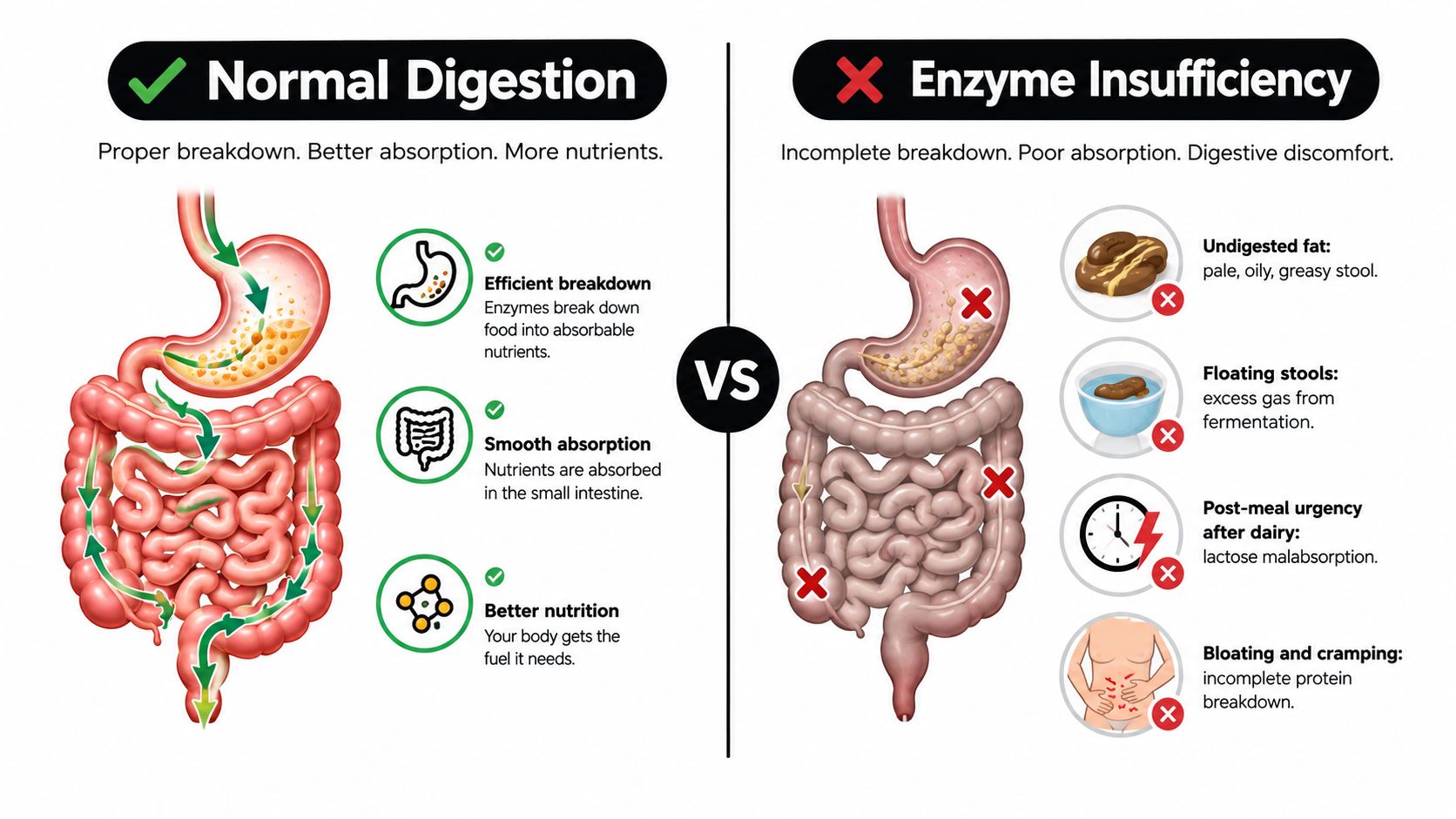
Enzymes may support people with lactose intolerance or meal-specific FODMAP-related symptoms. They aren't a substitute for evaluation of chronic pancreatitis, celiac disease, inflammatory bowel disease, suspected pancreatic insufficiency, or other persistent conditions. Seek clinical guidance when symptoms are ongoing, widespread, or accompanied by unexplained weight loss, blood in stool, anemia, or persistent pain.
How to Choose a Digestive Enzyme Supplement That Works
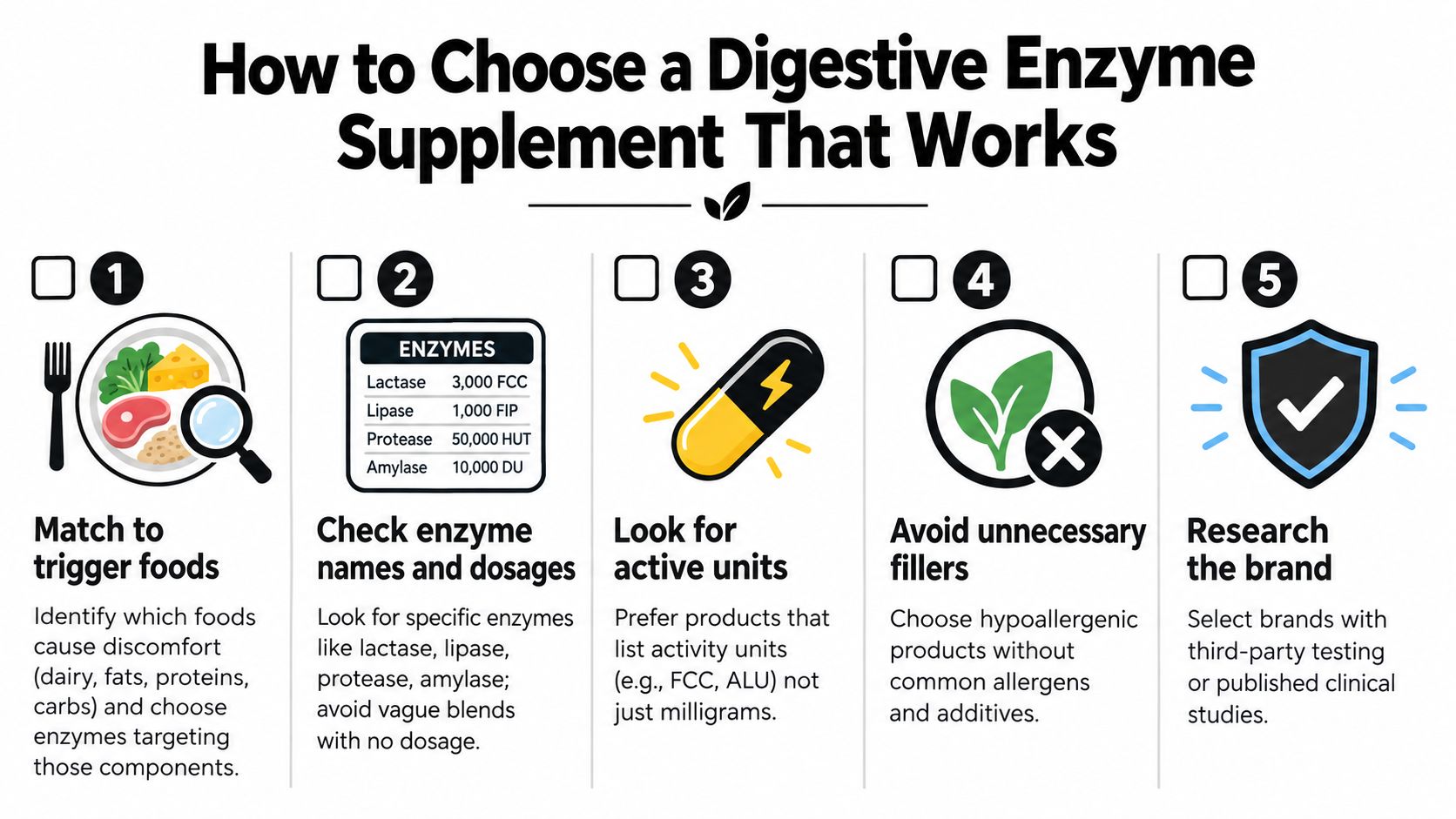
The best digestive enzyme supplement isn't necessarily the one with the longest ingredient list. Start with the meal that causes trouble, then check whether the product contains the enzyme activity that matches that food.
Use the label as a matching tool
A dairy-focused product should identify lactase. A bean-focused product should identify alpha-galactosidase. A broad meal formula may include amylase, protease, and lipase for carbohydrates, proteins, and fats, with additional activities for dairy or fermentable carbohydrates.
Look for activity units, not only the weight of the ingredient. Depending on the enzyme, labels may use units such as FCC, ALU, or other activity measures. Milligrams alone don't tell you how much chemical work the enzyme can perform, so a transparent label is easier to evaluate than a vague proprietary blend.
Compare the formula with the use case
| Formula type | Best fit | What to check |
|---|---|---|
| Single-enzyme lactase | Dairy-specific symptoms | Lactase activity and directions for dairy meals |
| Broad-spectrum digestive blend | Mixed meals containing protein, fat, and starch | Amylase, protease, lipase, and clearly stated activities |
| FODMAP-targeting blend | Several fermentable carbohydrate triggers | Lactase, alpha-galactosidase, and other clearly identified targets |
Third-party testing can add useful quality information. Look for documentation from recognized testing organizations such as USP, NSF, or Informed Choice when available, and check whether the brand explains identity, purity, and potency testing. A downloadable Certificate of Analysis is more useful than a general statement that a product is “high quality.”
Excipients matter too. If a capsule contains an ingredient you already associate with symptoms, the supplement may complicate your tracking. Keep the comparison practical: target match first, activity disclosure second, testing and tolerability third.
Buying principle: A lower-cost capsule that targets the wrong food isn't a value. Compare the activity relevant to your meal, not just the number of ingredients or capsules.
Digestive enzymes also shouldn't be confused with probiotics. Enzymes act on food during digestion, while probiotics are live microorganisms used for microbiome support. If you're comparing these categories, read digestive enzymes versus probiotics before deciding whether your goal is meal-specific comfort or broader digestive balance.
How to Use Enzyme Supplements Safely and Effectively
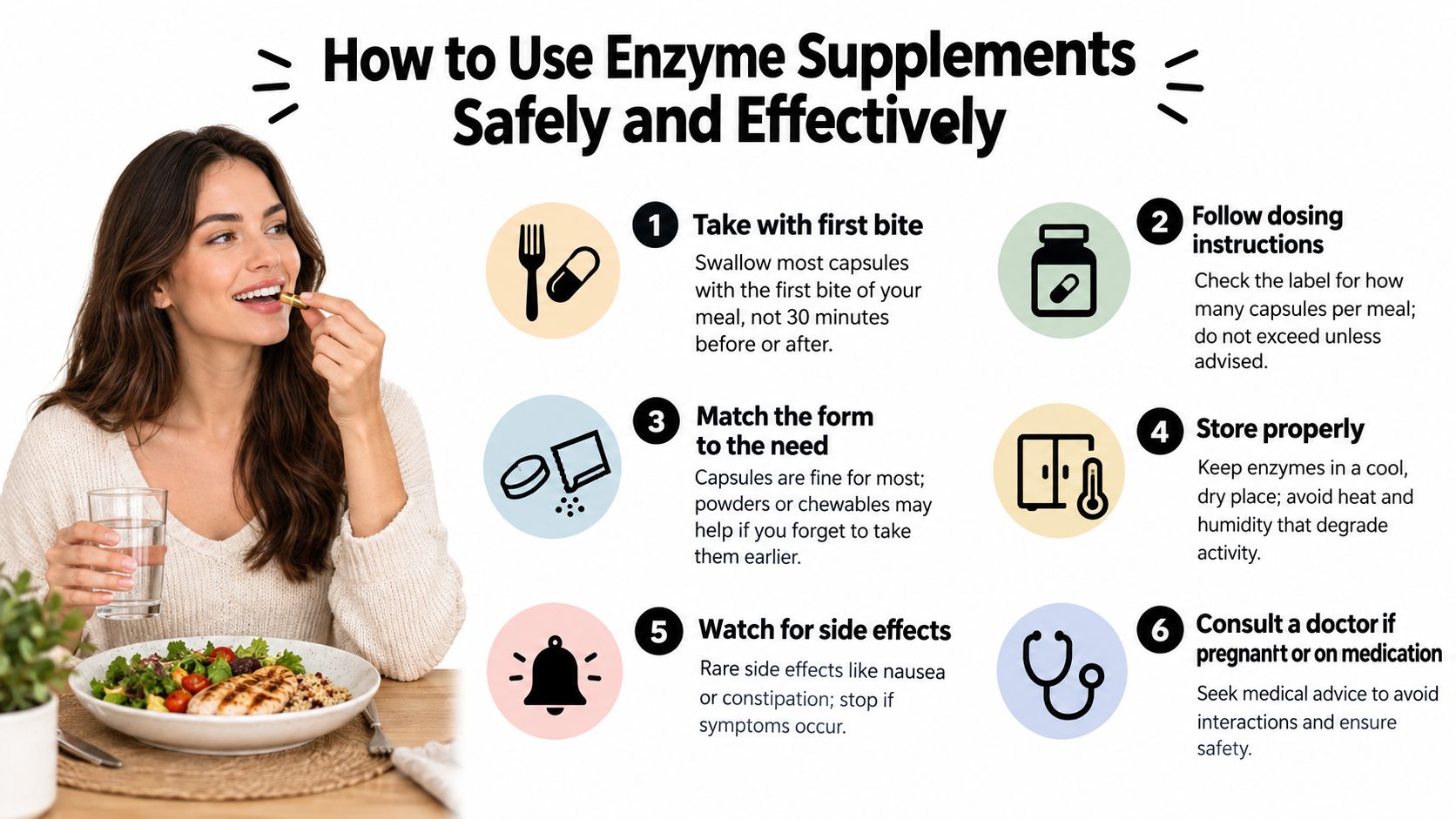
Most digestive enzyme capsules work best with the first bite of the meal, because the enzymes need to mix with food. Taking them long before or well after eating can reduce the chance that the enzyme will meet its intended substrate at the useful point in digestion.
Meal pairing is straightforward:
- Dairy-heavy meal: Choose lactase when lactose is the suspected trigger.
- Bean-heavy meal: Consider alpha-galactosidase for galactooligosaccharides.
- High-fat meal: A formula containing lipase may be more relevant.
- Mixed meal: A broad blend may offer wider coverage than a single enzyme.
Follow the product label rather than assuming that more capsules will produce better results. Start with the smallest labeled serving that fits the meal, record what you ate and how you felt, and avoid escalating without professional guidance.
Keep expectations realistic
Some people notice less meal-related discomfort within 30 to 60 minutes, but enzyme support won't reliably eliminate severe or persistent abdominal pain. A supplement can help process a trigger food while leaving other causes of bloating, altered motility, visceral sensitivity, or gut-brain stress signaling unchanged.
Digestive enzymes are generally well tolerated, but nausea or constipation can occur, and fungal-derived enzymes can rarely cause an allergic reaction. Stop using a product if you develop a concerning reaction. People who are pregnant, taking medication, managing a diagnosed digestive disease, or considering pancreatic enzyme support should ask a clinician or pharmacist first.
Don't keep self-treating red-flag symptoms with a new supplement. Blood in stool, anemia, unexplained weight loss, persistent pain, or ongoing greasy stools warrant medical evaluation. The right next step may be testing, dietary guidance, or treatment for an underlying condition rather than another enzyme blend.
Enzymes as Part of a Complete Digestive Routine
Targeted enzymes work best as one tool within a broader routine, not as blanket insurance for every meal. Eating slowly, chewing thoroughly, progressing fiber gradually, drinking enough fluid, managing stress, and protecting sleep can all influence how comfortably the digestive system handles food.
A food and symptom diary can help identify whether dairy, beans, high-fat restaurant meals, or another category is the consistent trigger. For suspected FODMAP sensitivity, a structured elimination and reintroduction process is more informative than permanently removing a long list of foods without guidance.
Use enzyme support strategically for known trigger meals, then reassess whether the pattern is changing. If symptoms continue across meals or suggest pancreatic, intestinal, or inflammatory disease, work with a clinician rather than treating the capsule as a diagnosis.
The practical rule is simple: match the enzyme to the food, take it with the meal, track the response, and investigate persistent symptoms. A targeted approach is more useful than assuming every digestive complaint requires the same supplement.
GutRx offers digestive enzyme support for meal-related needs alongside probiotic and microbiome-focused products, so you can compare targeted digestion support with broader gut-balance options. Visit GutRx to explore the available formulas and choose the approach that best matches your symptoms, trigger foods, and daily routine.


