

A familiar pattern: you finish a meal, your abdomen feels tight and full, and the product you tried didn't help. Before you take more or switch brands, match the remedy to the likely trigger. Simethicone is the main over-the-counter medicine for gas symptoms in the U.S., but it won't address every cause of bloating. FDA guidance identifies bloating, pressure, fullness, and a stuffed feeling as symptoms these products may relieve.
Bloating is common, but it doesn't always mean you have excess gas. Research estimates that abdominal bloating affects approximately 16% to 31% of people, and about 20% of participants in a large U.S. survey reported bloating in the previous week, according to the National Institute of Diabetes and Digestive and Kidney Diseases. A product that targets gas bubbles may help one person, while another needs to consider a food trigger or get medical advice.
Table of Contents
- Why Over the Counter Gas Relief Feels Confusing
- The Five Main OTC Categories and What Each One Actually Does
- Comparing OTC Gas Relief Options Side by Side
- Dosing, Timing, and Safety for Each Option
- Matching the Right Option to Your Specific Situation
- When More Product Is the Wrong Answer
- When to Stop Self-Treating and See a Clinician
Why Over the Counter Gas Relief Feels Confusing
You've tried a chewable after dinner, but the pressure is still there. It's tempting to take another dose, buy a stronger product, or add a supplement. Don't start there. The better first step is to work out what may be driving the symptom.
Think in terms of three different problems. Trapped gas bubbles may cause pressure or fullness. Fermentation of certain carbohydrates can produce gas after foods such as beans. And difficulty digesting a specific food component, such as lactose in dairy, calls for a different approach from a medicine that targets bubbles. These are useful distinctions, not a way to diagnose yourself.
Practical rule: Choose by trigger and active ingredient, not by the biggest strength number on the front of the box.
A quick comparison makes the categories easier to distinguish:
| If the likely trigger is… | Consider… | What it's intended to address |
|---|---|---|
| Pressure or fullness associated with gas | Simethicone | Gas-related symptoms |
| Beans or some vegetables | Alpha-galactosidase | Specific fermentable carbohydrates |
| Dairy when lactose is difficult to digest | Lactase | Lactose in food |
| Indigestion along with gas symptoms | An antacid plus simethicone product | The symptoms named on its label |
| Recurrent symptoms after varied meals | Reassess the cause | A medicine may not be the answer |
The five categories discussed below are simethicone, activated charcoal, digestive enzyme products, alpha-galactosidase, and antacid products combined with simethicone. They aren't interchangeable. Some target symptoms; others are intended to help digest a particular food component. More strength or more ingredients doesn't automatically mean a better match.
The Five Main OTC Categories and What Each One Actually Does
Start with the active ingredient, not the brand name. The label tells you whether a product is intended to relieve gas symptoms, help with a specific food, or address another digestive complaint.
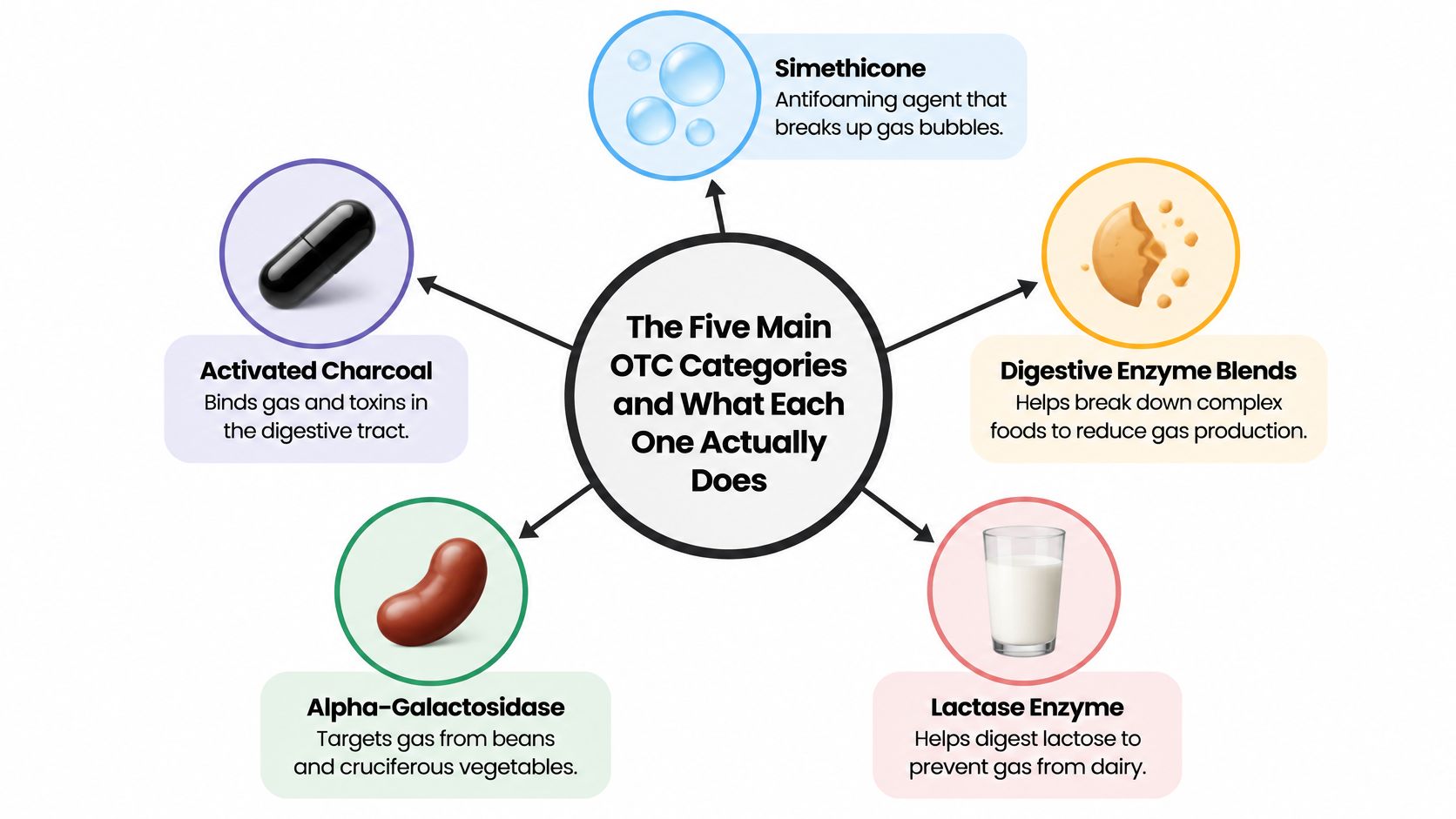
Simethicone is the principal U.S. OTC antiflatulent active ingredient recognized in the FDA framework. It's a non-systemic antifoaming agent: it helps small gas bubbles coalesce so they can pass more easily. It can relieve symptoms such as bloating, pressure, and fullness, but it doesn't stop gas production or correct a food intolerance, constipation, or another underlying cause. The FDA's OTC Monograph M002 lists simethicone and permits a maximum total daily dose of 500 mg.
Activated charcoal appears in some products marketed for gas. Don't assume that a product's presence on a shelf proves it will work for your particular symptoms. Check its label, review it with a pharmacist if you take other medicines, and don't treat it as a substitute for identifying a recurring food trigger.
Digestive enzyme products aren't one uniform category. Different enzymes act on different food components, so a blend should be matched to its stated purpose and the food you suspect is causing trouble. A general enzyme supplement shouldn't be assumed to treat every kind of bloating.
Alpha-galactosidase is a targeted enzyme option associated with gas after certain foods, including beans, vegetables, and whole grains. For an overview of this specific enzyme, see GutRx's explanation of alpha-galactosidase supplements. Lactase is a different enzyme, used to help digest lactose in dairy products.
Antacid products combined with simethicone contain ingredients intended for different symptoms. Read the full label to confirm what the product is for and whether its other active ingredients suit you. If you're comparing combination products, Rennie Deflatine tablets are one example to review against the symptoms and directions on its packaging.
An official consumer resource also distinguishes simethicone from enzymes used with specific foods. You can review its guidance on OTC options for gas and food-related symptoms.
Comparing OTC Gas Relief Options Side by Side
Use the table as a screening tool, not as a substitute for the package directions. A typical adult dose depends on the exact product, and dosing for one brand or formulation shouldn't be carried over to another.
| Category | Mechanism | Evidence strength | Typical adult dose | Best-fit trigger |
|---|---|---|---|---|
| Simethicone | Helps gas bubbles coalesce and pass | FDA-recognized OTC antiflatulent active ingredient for labeled gas symptoms | Follow the package; FDA maximum total daily dose is 500 mg | Gas-associated pressure, fullness, or bloating |
| Activated charcoal | Marketed for gas relief; check product labeling | Don't assume effectiveness for routine gas without product-specific support | Follow the package | Only consider if its label fits your situation |
| Digestive enzyme blends | Enzymes act on particular food components | Depends on ingredients and trigger; blends aren't interchangeable | Follow the package | A suspected food-related trigger that matches the enzymes listed |
| Alpha-galactosidase | Targets certain fermentable carbohydrates | Food-specific; a small IBS pilot study found no advantage over placebo for broad symptoms | Follow the package directions for the product and meal | A relevant meal that contains foods such as beans |
| Antacid plus simethicone | Combines an antacid with an antiflatulent | Depends on active ingredients and labeled symptoms | Follow the package | Gas symptoms alongside a complaint covered by the antacid label |
One important caution: alpha-galactosidase may make sense for a specific food, but that doesn't make it a general treatment for ongoing bloating. In a randomized, double-blind, placebo-controlled crossover pilot study of adults with IBS after oligosaccharide-rich meals, alpha-galactosidase did not outperform placebo for gastrointestinal symptom ratings, breath-gas measurements, or next-day bloating and pain. The study report is a reason to keep expectations measured, especially when symptoms happen after many different meals.
Probiotics are another category buyers may consider, but they aren't fast-acting substitutes for a labeled OTC gas medicine. Evidence varies by product and strain. A review of IBS guidance and evidence reports that the American College of Gastroenterology advised against probiotics for global IBS symptoms because the evidence quality was very low and products varied; the review also describes findings for combination products. Don't assume any probiotic will quickly relieve a single episode of gas.
Dosing, Timing, and Safety for Each Option
Read the package directions every time you use an OTC product. For simethicone, keep track of the total amount from all products you take, especially if you also use an antacid-plus-simethicone formulation. The FDA sets a maximum daily dose of 500 mg in its monograph; follow the specific package instructions and don't exceed them.
For food-targeted enzymes, timing matters because the enzyme is intended to act on a particular meal component. Match alpha-galactosidase to a meal containing the foods it targets, and use lactase only when dairy-related lactose is the suspected issue. Follow each product's own instructions rather than assuming that one enzyme or timing schedule works for another.
Activated charcoal and combination products deserve a careful label check. If you take prescription medicines or several OTC products, ask a pharmacist before adding charcoal or an antacid-containing product. Don't guess about spacing or interactions: the exact ingredients and your medication list matter.
Before combining products: Show a pharmacist the active-ingredient labels for everything you plan to take. This is especially useful when one product contains more than one medicine.
If you're pregnant or nursing, have a chronic health condition, or take ongoing prescription medicines, check with a clinician or pharmacist before starting an OTC medicine or supplement. A medication management guide for older adults can help explain why reviewing a full medication list matters, but your own pharmacist or clinician should advise on your specific products.
Matching the Right Option to Your Specific Situation
A bean-heavy chili dinner leaves you uncomfortable. If beans are a repeat trigger, alpha-galactosidase is more closely matched to the meal than simethicone because it targets certain fermentable carbohydrates. Use it according to its label, and don't expect it to solve persistent symptoms that also happen with unrelated foods.
A cheese plate leads to gas for someone who has difficulty digesting lactose. Lactase, taken according to its directions in relation to the meal, is the more targeted category to consider. Simethicone may address gas-related pressure, but it doesn't digest lactose or remove the trigger.
Carbonated drinks can leave someone feeling stretched and belchy. A gas-relief product may be reasonable for occasional discomfort, but reducing the drinks that reliably precede symptoms is a more direct way to avoid that trigger. A rich, high-fat restaurant meal is different again. Don't assume an enzyme blend will fix every heavy-meal reaction; check which food components its enzymes are meant to address.
Stressful weeks can coincide with digestive symptoms, but a week of recurrent gas isn't a cue to keep layering products. Track whether symptoms follow particular foods, changes in bowel habits, or other patterns, then seek advice if they continue. If coffee seems to be part of your pattern, this discussion of being bloated after coffee offers another trigger to consider.
For a meal-focused enzyme product, GutRx MEALTIME is described as supporting digestion, reducing bloating, and enhancing nutrient absorption. Consider any enzyme product by checking whether its stated purpose matches your meal and symptoms. For recurring gas or bloating, see guidance on probiotics for gas, but don't mistake a supplement for rapid relief from an isolated episode.
When More Product Is the Wrong Answer
Taking a higher dose or combining more products won't necessarily address the cause. Simethicone may relieve gas symptoms, but it doesn't reduce intestinal gas production. If symptoms keep returning after dairy, certain carbohydrates, or meals in general, the more useful move is to reassess the pattern rather than cycling through stronger products.
Persistent symptoms can reflect a food intolerance, constipation, IBS, or another issue that needs assessment. Medicines can also contribute to digestive symptoms. A recurring problem deserves a review of your symptoms, diet, and medications with a clinician, not a growing stack of supplements.
Use a practical reassessment rule: if you need OTC gas relief more than a couple of times a week, or symptoms last beyond two to three weeks, stop escalating and seek advice. That's a prompt to investigate, not a diagnosis. Probiotics may be considered for some longer-term digestive goals, but they shouldn't be treated as fast rescue medicine.

If you're looking for practical steps while you monitor symptoms, ways to reduce bloating quickly may help you review self-care options. Don't let self-care delay an appointment when symptoms are persistent, worsening, or interfering with daily life.
When to Stop Self-Treating and See a Clinician
Stop treating recurring symptoms as routine gas if they come with warning signs. Arrange medical assessment for bloating or gas accompanied by unexplained weight loss, blood in the stool, persistent abdominal pain, vomiting, fever, a new abdominal lump, or inability to pass stool or gas. The NHS guidance on bloating and its advice on flatulence also identify persistent symptoms and symptoms that affect daily life as reasons to seek medical help.
Symptoms that wake you at night also deserve clinical attention, particularly if they are new, persistent, or accompanied by other changes. Don't keep switching products while you wait to see whether a warning sign passes.
Seek emergency care for sudden severe abdominal pain, vomiting blood, or serious difficulty breathing. Those symptoms aren't a situation for another chewable or enzyme trial.
For occasional, uncomplicated symptoms, use this action plan:
- Identify the likely trigger. Consider the meal, drinks, and symptom pattern.
- Match the product to the problem. Choose simethicone for labeled gas symptoms, or a food-specific enzyme when the suspected trigger fits.
- Follow the label. Don't stack products or exceed directions to chase faster relief.
- Reassess. If symptoms persist, recur, or appear with warning signs, contact a clinician.
GutRx offers digestive-support supplements, including a meal-focused enzyme option and probiotic formulas. If you're comparing supplements for recurring digestive concerns, visit GutRx to review the products and their stated uses.


