

The gut-brain axis is a bidirectional signaling network linking the central nervous system, enteric nervous system, and autonomic nervous system through neural, immune, endocrine, and microbial-metabolic channels. It explains how gut activity can influence brain function, while stress and other brain signals can change digestion, motility, secretion, barrier function, and the microbiome.
The surprising part is that the gut-brain axis isn't one “gut feeling” pathway. It's a multi-channel control system involving nerves, immune signals, hormones, and molecules made by gut microbes. A stressful presentation can reduce appetite or trigger urgent bowel activity, while bloating or abdominal discomfort can heighten worry and affect concentration. These experiences reflect real physiology, not merely imagination.
Table of Contents
- The Gut Brain Axis Explained in Plain Terms
- How Signals Travel Between Your Gut and Brain
- The Role of Microbial Metabolites in Brain Function
- What the Science Actually Proves Versus What It Suggests
- Conditions Linked to Gut Brain Axis Disruption
- Practical Ways to Support Your Gut Brain Axis
- Key Takeaways for Daily Gut Brain Health
The Gut Brain Axis Explained in Plain Terms
The gut-brain axis describes constant two-way communication between the brain and the digestive tract. Major models include the central nervous system, enteric nervous system, and autonomic nervous system, along with the hypothalamic-pituitary-adrenal, or HPA, axis. Communication occurs through neural, endocrine, immune, and microbial-metabolic routes, as described in this review of the gut-brain axis.
The enteric nervous system is sometimes called the gut's own nervous system because it helps coordinate digestive activity locally. It regulates processes such as motility and secretion, while the autonomic nervous system connects those functions with broader body responses. The brain can alter the gut environment through autonomic output, and signals from the gut can reach the brain through sensory pathways.
Consider what happens before a stressful event. You may lose your appetite, feel nauseated, or need to use the bathroom. The brain has changed the gut's movement and secretory activity. The reverse can also happen. Persistent abdominal discomfort, irregularity, or bloating can create signals that affect attention, mood, and stress reactivity.
A system, not a metaphor
The phrase “gut-brain connection” can sound informal, but the underlying network has defined biological components. The vagus nerve provides a major direct route, while immune cells and hormones carry other signals through circulation. Gut microbes add another layer by producing metabolites that interact with intestinal cells, immune systems, and nervous systems.
This matters for those seeking a probiotic for gut health, a daily probiotic, or digestive support for bloating. A product may influence one part of the system without changing every part. A fiber-based formula may affect fermentation and metabolite production, while a digestive enzyme formula addresses the breakdown of food during a meal. Those are different targets within a broader network.
Practical rule: Think in pathways. “Gut health” is too broad to guide a decision unless you know whether you're trying to support regularity, barrier function, meal digestion, microbial metabolites, or stress-related digestive symptoms.
The axis also includes microbial communities and their outputs. Bacteria, fungi, viruses, and archaea contribute to the gut ecosystem, while their metabolites and by-products help transmit information between the gut and brain. That doesn't mean every symptom is caused by microbes. It means the gut environment is one participant in a physiological conversation involving several systems.
How Signals Travel Between Your Gut and Brain
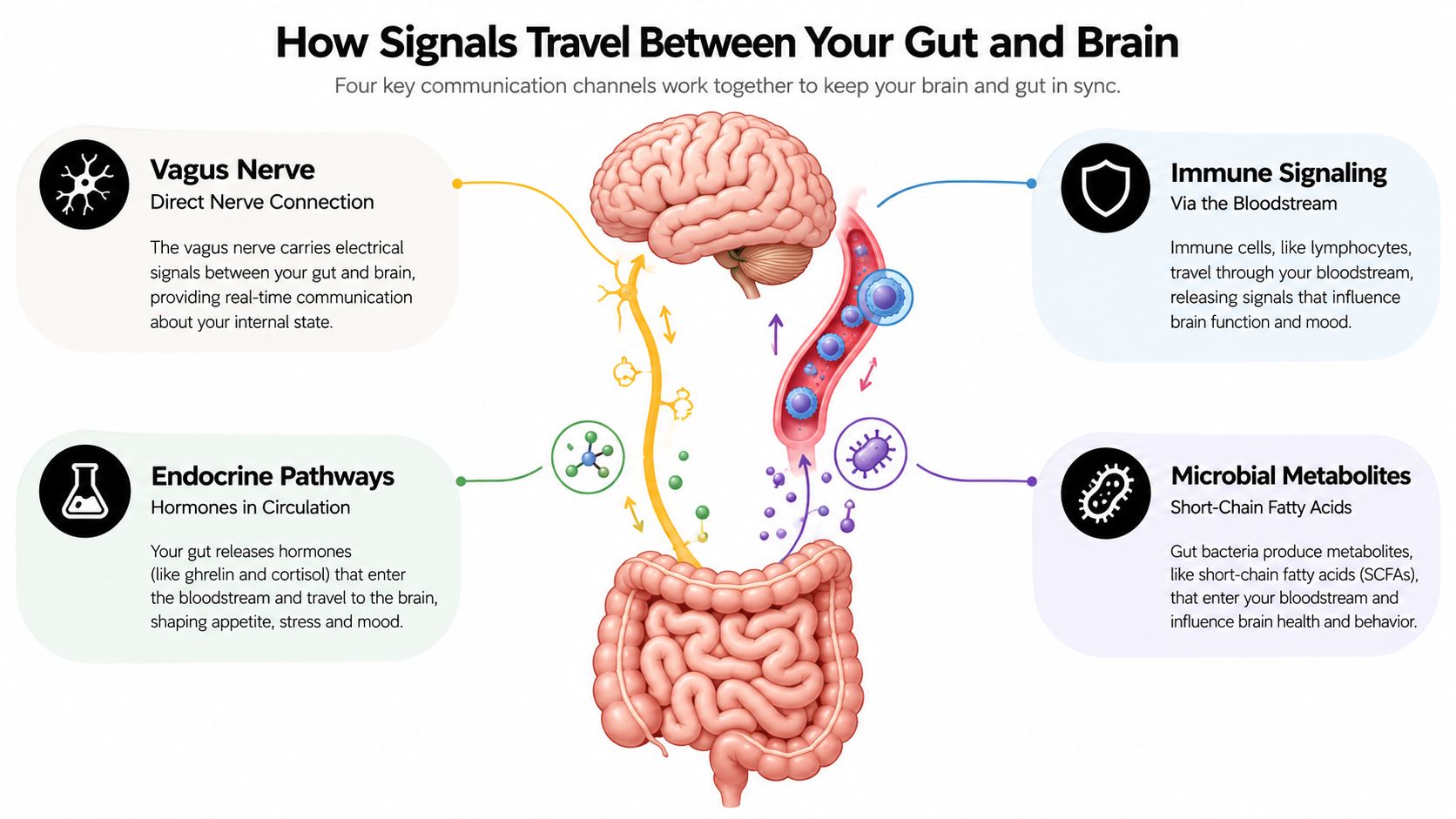
The gut-brain axis uses several communication channels at once. A useful analogy is a city connected by different infrastructure. Nerves act like rapid cables, immune signals resemble alarms, hormones function as circulating messages, and microbial metabolites behave like chemical data packets.
The vagus nerve
The vagus nerve is one of the most important direct routes between the gut and brain. Research reviews describe microbiome-to-central-nervous-system signaling as primarily neuroimmune and neuroendocrine, often involving the vagus nerve. Gut microbes can produce molecules that act on enteroendocrine cells, enterochromaffin cells, and mucosal immune cells, creating signals that influence neural activity. These pathways are detailed in the Physiological Reviews discussion of microbiota and brain communication.
The nerve isn't an outgoing command line from the brain. It also carries sensory information upward from the digestive tract. Signals about gut contents, distension, and local conditions can influence how the brain interprets bodily states. This helps explain why digestive sensations can affect appetite, nausea, stress, and perceived discomfort.
Immune signaling
The intestinal barrier separates the gut contents from the body's internal environment. When barrier function changes, different microbial products may reach systemic circulation and interact with immune and nervous systems. Immune cells can then release cytokines and other signals that influence inflammatory tone and neurobiology.
This pathway doesn't mean that ordinary bloating automatically indicates harmful inflammation. Digestive symptoms have many possible explanations. The relevant point is that barrier integrity and immune signaling are part of the axis, so they deserve more precision than generic claims about “balancing bacteria.” A detailed review of immune mechanisms in the microbiota-gut-brain axis describes nervous, endocrine, and immune pathways as interacting channels.
Endocrine communication
The HPA axis coordinates hormonal responses to stress. When the brain perceives a threat, stress-related endocrine signals can alter gut motility, secretion, permeability, and the microbial environment. The gut can also influence endocrine activity through microbial molecules and signals from intestinal cells.
Hormones don't travel with the speed of a nerve impulse, but they can affect tissues throughout the body. That makes endocrine signaling important for understanding why stress-related gut symptoms may persist beyond the initial stressful moment.
Microbial metabolites
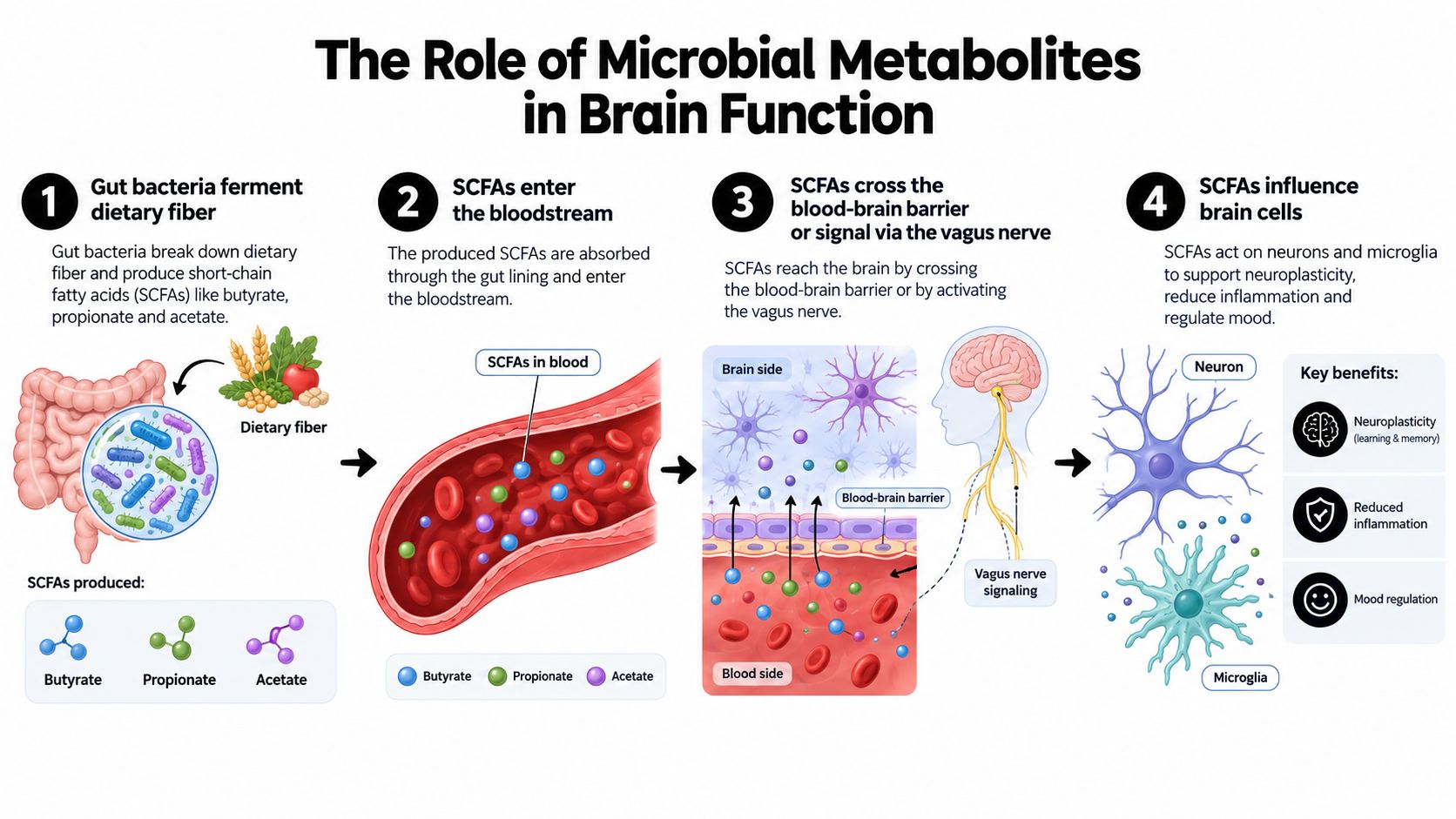
Gut microbes transform dietary components and other substrates into molecules such as short-chain fatty acids, tryptophan derivatives, and bile acids. These compounds can interact with intestinal cells, immune cells, and nervous systems. Some can cross the intestinal barrier into circulation, where they may be detected by immune and neural systems.
GutRx BALANCE offers 30 billion CFUs per capsule with next-generation probiotics for gut health, digestive balance, and immune support. That product description identifies its formulation category, but it doesn't prove a particular brain or mood outcome for every user. The appropriate question is which pathway a product is designed to support and whether its evidence matches the buyer's goal.
For a visual explanation of the system, see this gut-brain axis diagram. The central lesson is simple: the axis has multiple routes, so a single intervention won't necessarily produce the same result across nerves, immune signaling, hormones, and microbial metabolism.
The Role of Microbial Metabolites in Brain Function
Microbial metabolites are among the most actionable mechanisms in gut-brain axis research because they provide a direct link between what microbes do and how host tissues respond. A recent scoping review screened 1,249 records and retained 23 studies, focusing on tryptophan metabolism, short-chain fatty acids, and GABA-producing taxa in depression-related neurobiological pathways. The findings are summarized in this PubMed record on microbial metabolites and the gut-brain axis.
SCFAs and butyrate
Short-chain fatty acids, including butyrate, are produced when gut microbes ferment suitable substrates. Butyrate and related SCFAs can support intestinal barrier integrity and participate in immune regulation. They also act as histone deacetylase inhibitors, which means they can influence gene expression and affect microglial activity and inflammatory signaling in the central nervous system.
This gives the term postbiotic a concrete meaning. A postbiotic isn't simply a vague synonym for “advanced probiotic.” It refers to a preparation or output associated with nonliving microbial components or microbial products, and metabolites such as SCFAs are central to the concept of microbial output. A synbiotic or prebiotic strategy therefore makes most sense when it supports the production of useful metabolites, not merely when it lists a large number of organisms.
Tryptophan pathways
Tryptophan is an amino acid that can move through different metabolic routes. Changes in microbial processing may affect the balance between serotonin-related and kynurenine-related pathways. Those shifts can influence neuroinflammatory signaling and other depression-related neurobiological mechanisms.
That doesn't mean eating a tryptophan-containing food or taking a probiotic directly raises mood. The outcome depends on the wider ecosystem, host metabolism, immune status, diet, and other factors. The practical takeaway is more restrained: formulations should be evaluated by whether they plausibly support stable metabolite production and barrier function.
Why formulation matters
A probiotic delivers organisms. A prebiotic supplies substrates that selected microbes can use. A postbiotic focuses on microbial components or outputs. These categories overlap in a broader gut-brain strategy, but they aren't interchangeable.
A product comparison should therefore ask:
- Microbial output: Is there a rationale for SCFA production or tryptophan metabolism?
- Delivery: Can the formulation protect its contents through the digestive tract?
- Target: Is it designed for daily digestive balance, meal-related discomfort, or a more specific symptom?
- Evidence: Does the available research apply to the actual strain, ingredient, dose, and intended use?
Readers interested in the organisms associated with butyrate production can explore butyrate-producing bacteria. The strongest formulation logic connects the organism or substrate to a measurable biological output, while avoiding the promise that one supplement will control the entire axis.
What the Science Actually Proves Versus What It Suggests
The existence of the gut-brain axis is well supported. Researchers have identified neural, immune, endocrine, and microbial-metabolic routes, including vagal signaling, cytokine activity, barrier interactions, and metabolite movement into circulation. Those are mechanisms, not marketing metaphors.
The harder question is causality. If a person with anxiety has a different microbiome, did the microbial change contribute to anxiety, did anxiety reshape the gut, or did another factor influence both? The same problem appears with IBS, fatigue, irregularity, and bloating. A correlation can identify a relationship without showing which change came first or whether changing one factor changes the outcome.
What has a clear mechanistic basis
The following principles are grounded in the current physiological model:
- Bidirectional signaling: The brain can alter gut motility, secretion, barrier function, and microbial composition, while gut signals can influence brain and stress responses.
- Multiple routes: Nerves, immune mediators, hormones, and microbial metabolites can carry information.
- Barrier relevance: Metabolites can enter systemic circulation after crossing the intestinal barrier and encounter immune and nervous systems.
- Metabolite activity: SCFAs and tryptophan derivatives can participate in inflammatory, gene-regulatory, and neurobiological pathways.
What remains uncertain
It isn't yet possible to say that a particular microbiome profile directly causes anxiety or that a specific probiotic will reliably resolve IBS. Reviews continue to identify gaps in mechanistic clarity across neural, immune, endocrine, and metabolic pathways. NIH workshop coverage and recent reviews emphasize research opportunities and the need for stronger causal, longitudinal human evidence, as discussed in this review of current gut-brain axis research gaps.
A responsible expectation: A supplement may support a biological pathway, but pathway support isn't the same as a guaranteed clinical outcome.
This distinction helps buyers judge claims. Look for strain-specific or ingredient-specific evidence, transparent testing, and clear intended use. Be cautious when a product treats “microbiome balance” as proof that it will improve mood, cognition, bloating, and every digestive complaint at once.
Conditions Linked to Gut Brain Axis Disruption
Gut-brain axis research connects digestive symptoms with broader neuropsychological processes, but the connection doesn't assign a single cause to every condition. IBS, for example, can involve altered motility, secretion, visceral sensitivity, brain-driven stress responses, barrier changes, and microbial factors in different combinations.
Mood-related pathways also vary. Immune signaling can contribute to neuroinflammatory activity, while altered tryptophan metabolism may affect serotonin and kynurenine balance. These mechanisms help explain why digestive symptoms and mood changes may appear together, but they don't establish that one always causes the other.
| Condition | Primary Axis Pathway | Key Mechanism |
|---|---|---|
| IBS and functional GI symptoms | Neural and autonomic signaling | Brain-driven changes in motility, secretion, sensation, and barrier function may interact with gut-originating signals |
| Bloating and abdominal discomfort | Enteric, vagal, and barrier pathways | Distension, altered motility, microbial products, and sensory processing can shape symptoms |
| Anxiety and depression-related symptoms | Immune, endocrine, and metabolite pathways | Cytokine signaling, stress-axis activity, and tryptophan metabolism may influence neurobiology |
| Inflammatory digestive conditions | Immune and barrier signaling | Gut inflammation can change circulating signals and brain-related inflammatory responses |
| Sleep and stress-related digestive changes | Circadian, endocrine, and autonomic pathways | Timing, stress responses, and autonomic output can reshape gut function and microbial conditions |
| Neurodevelopmental and neurodegenerative research areas | Multi-channel signaling | Current research examines interactions among microbial, immune, metabolic, and neural pathways |
The circadian expansion
The gut-brain model is expanding beyond microbes and nerves. Recent reviews discuss a gut-brain-circadian axis in anxiety and depression, while NIH workshop coverage identifies environmental exposures as an active research frontier. Sleep timing, stress, age, environment, and microbial composition may interact rather than operate as isolated variables. This emerging framework is summarized in the recent review of gut-brain axis developments.
A person with bloating and poor sleep shouldn't assume that changing probiotics alone will solve the problem. Sleep disruption may alter stress signaling, and stress may affect digestion even when the microbial composition hasn't been measured. The useful framework is to consider several contributors without turning association into diagnosis.
Practical Ways to Support Your Gut Brain Axis
Support should match the pathway you want to influence. A person with meal-related discomfort may need to think about digestive enzyme activity, while someone focused on microbial metabolites may prioritize fermentable fiber and a suitable synbiotic approach. Neither strategy should be presented as a universal treatment.
Start with the substrate
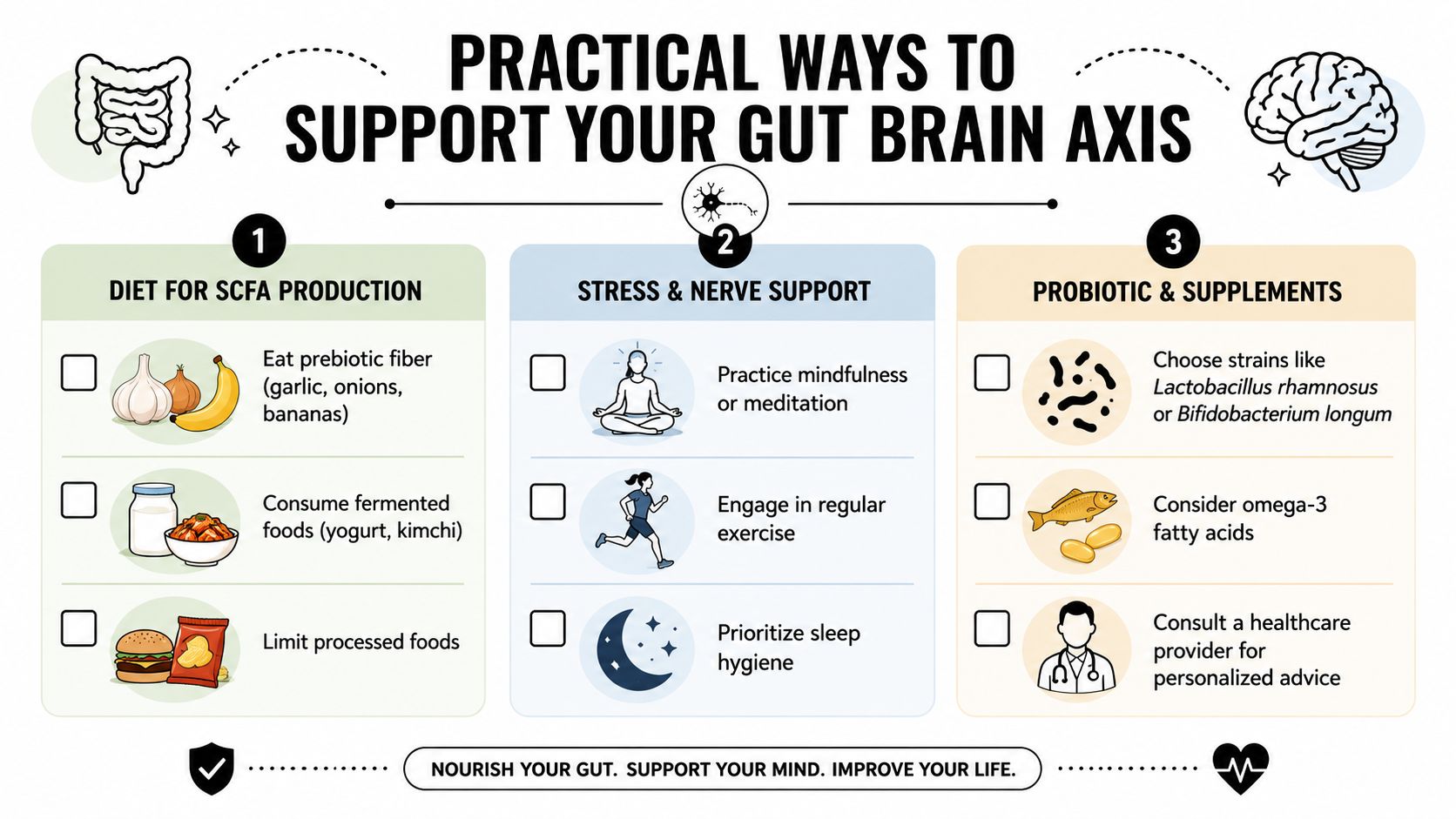
Dietary fiber gives gut microbes material to ferment into SCFAs. Foods such as garlic, onions, bananas, legumes, whole grains, vegetables, nuts, and seeds can contribute fermentable substrates, although tolerance varies widely among people with digestive symptoms. Increase fiber gradually if sudden changes worsen bloating, and pay attention to hydration and individual triggers.
Fermented foods may add microbial exposure, but they don't replace a full assessment of symptom patterns. If dairy causes discomfort, a digestive enzyme product designed for meal support may be a different tool from a daily probiotic.
Match supplements to the job
A synbiotic combines a probiotic with a prebiotic. A postbiotic strategy focuses on microbial products or components. A delayed-release or enteric-coated probiotic is designed around delivery through the upper digestive tract, while a shelf-stable probiotic addresses storage convenience. These are formulation features, not automatic evidence of a better outcome.
For a broad formula combining probiotic and prebiotic concepts, GutRx COMPLETE is described as a high-potency blend with 62B CFUs, Akkermansia muciniphila, and SIBO support. Treat that as product information, not a guarantee of a gut-brain result. Buyers should still compare the intended use, strain details, testing documentation, delivery system, and tolerance.
Engage the nerve and body clock
Slow breathing, mindfulness, meditation, regular physical activity, and consistent sleep routines can support autonomic regulation and circadian alignment. These practices don't “activate the vagus nerve” in a way that guarantees a particular digestive outcome, but they target brain-to-gut inputs that can influence motility and stress reactivity.
Use this guide to gut-brain axis supplements when comparing products, and ask a clinician or qualified nutrition professional for personalized advice if symptoms are persistent, severe, or unexplained.
Stress-related digestive symptoms can benefit from behavioral approaches, but ongoing diarrhea, constipation, pain, bleeding, unexplained weight change, or other concerning symptoms require medical evaluation rather than self-treatment with supplements.
Key Takeaways for Daily Gut Brain Health
The gut-brain axis is a practical way to connect symptoms that may otherwise seem unrelated. Bloating, irregular digestion, stress-sensitive bowel activity, poor sleep, and mood changes can involve overlapping neural, immune, endocrine, and microbial-metabolic signals.
The best question isn't “Which probiotic fixes the gut-brain axis?” It's “Which pathway might matter for my goal, and what evidence supports that choice?” Fiber and synbiotic strategies target microbial fermentation, digestive enzymes target meal breakdown, and stress or sleep practices target brain-to-gut regulation. Product quality also matters, so compare strain identity, delivery system, testing, and intended use rather than relying only on broad labels such as “high potency.”
The science supports the network and its mechanisms, but it doesn't guarantee that changing one microbial feature will resolve a complex symptom pattern. Keep expectations specific, track how your body responds, and involve a healthcare professional when symptoms persist.
GutRx offers targeted digestive supplements built around probiotics, prebiotics, postbiotic concepts, and digestive enzymes, including formulas for digestive balance and meal support. Visit GutRx to compare options by use case and review the product information before choosing a routine.


