

You've just finished pasta, garlic bread, and a glass of milk. Within an hour, your abdomen feels stretched, heavy, and uncomfortably full. The practical question isn't whether one capsule can “fix digestion.” It's whether the formula contains the right enzyme activities for the foods that triggered your symptoms.
Broad spectrum digestive enzymes combine several activities, such as protease, lipase, amylase, lactase, alpha-galactosidase, cellulase, and related enzymes, to help hydrolyze proteins, fats, starches, lactose, and some plant carbohydrates in a mixed meal. They're different from single-enzyme products, such as a lactase tablet used specifically with dairy.
The useful way to evaluate them is substrate by substrate. Which enzyme matches your food pattern? When should you take it? How strong is the evidence? What does a transparent label need to disclose? This guide answers those questions without treating a broad blend as a universal treatment for bloating, IBS, or every digestive complaint.
Table of Contents
- What Broad Spectrum Digestive Enzymes Actually Are
- How Enzymes Break Down a Meal From Start to Finish
- The Core Enzymes and What Each One Targets
- Matching Enzyme Blends to Real Symptom Patterns
- Dosing, Timing, and How to Judge a Response
- Where the Evidence Is Strong and Where It Falls Short
- Choosing a Quality Broad Spectrum Enzyme Formula
What Broad Spectrum Digestive Enzymes Actually Are
A broad spectrum formula is a multi-enzyme digestive supplement taken with food. Its purpose is to provide several types of digestive activity at once, so one capsule can address the different macronutrients and carbohydrates found in a typical meal. Protease acts on proteins, lipase on fats, amylase on starches, lactase on lactose, and alpha-galactosidase on certain fermentable carbohydrates.
That broad coverage can make sense when a meal combines several potential triggers. Pasta brings starch, garlic can contribute fermentable carbohydrates, and milk supplies lactose. A single lactase tablet might be relevant to the milk, but it won't address the starch or other food components. A broad formula attempts to cover more than one substrate, although the label still needs to show whether each activity is present at a useful level.
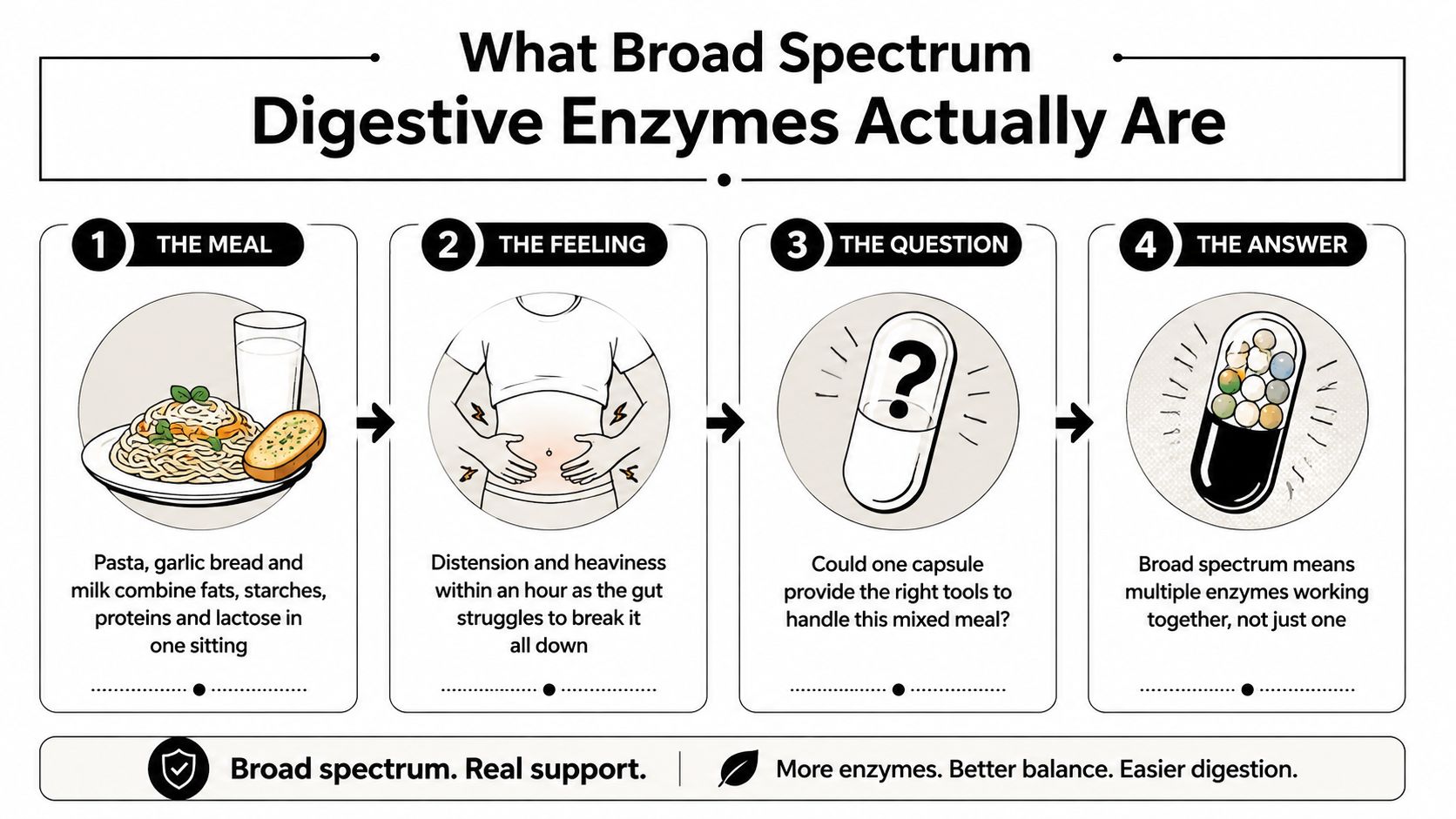
Broad coverage doesn't mean broad disease treatment
Digestive enzymes work in the gut lumen, where they interact with food. They aren't systemic medicines, and over-the-counter blends aren't substitutes for prescription pancreatic enzyme replacement in people with diagnosed pancreatic insufficiency. Enzyme replacement therapy has a clinical role in exocrine pancreatic insufficiency, while evidence is much less consistent for healthy adults with nonspecific discomfort, as described in this clinical review of digestive enzyme supplementation.
The category also has a long clinical and industrial history. Enzymes were first isolated in the 19th century, and enteric-coated pancrelipase products developed in the late 1980s and early 1990s helped improve delivery through stomach acid and into the small intestine, according to this market history and formulation overview.
Practical rule: A quality broad spectrum digestive enzyme label should tell you which enzymes are included, what each one targets, and how activity is measured. “Digestive blend” alone isn't enough information to judge fit.
The commercial category has expanded well beyond a niche supplement format. One 2026 market estimate valued the global digestive enzyme supplements market at USD 11.85 billion in 2025, while other market estimates also project continued expansion, as summarized by Fortune Business Insights. Commercial demand doesn't prove clinical effectiveness, but it explains why multi-enzyme products are now common.
How Enzymes Break Down a Meal From Start to Finish
Think of digestion as dishwashing. A mixed meal contains grease, starch, protein, and plant material, and one detergent can't clean every surface equally well. Broad spectrum digestive enzymes supply several biological “detergents,” each designed to split a particular type of molecule into smaller pieces.
The process starts before a supplement reaches the stomach. Salivary amylase begins working on starch in the mouth. In the stomach, pepsin starts protein digestion, while gastric processes help disperse fat. The duodenum then receives pancreatic amylase, lipase, and proteases, along with bile and secretions from the small intestine. Brush-border enzymes, including lactase and other disaccharidases, finish breaking down certain carbohydrates at the intestinal surface.
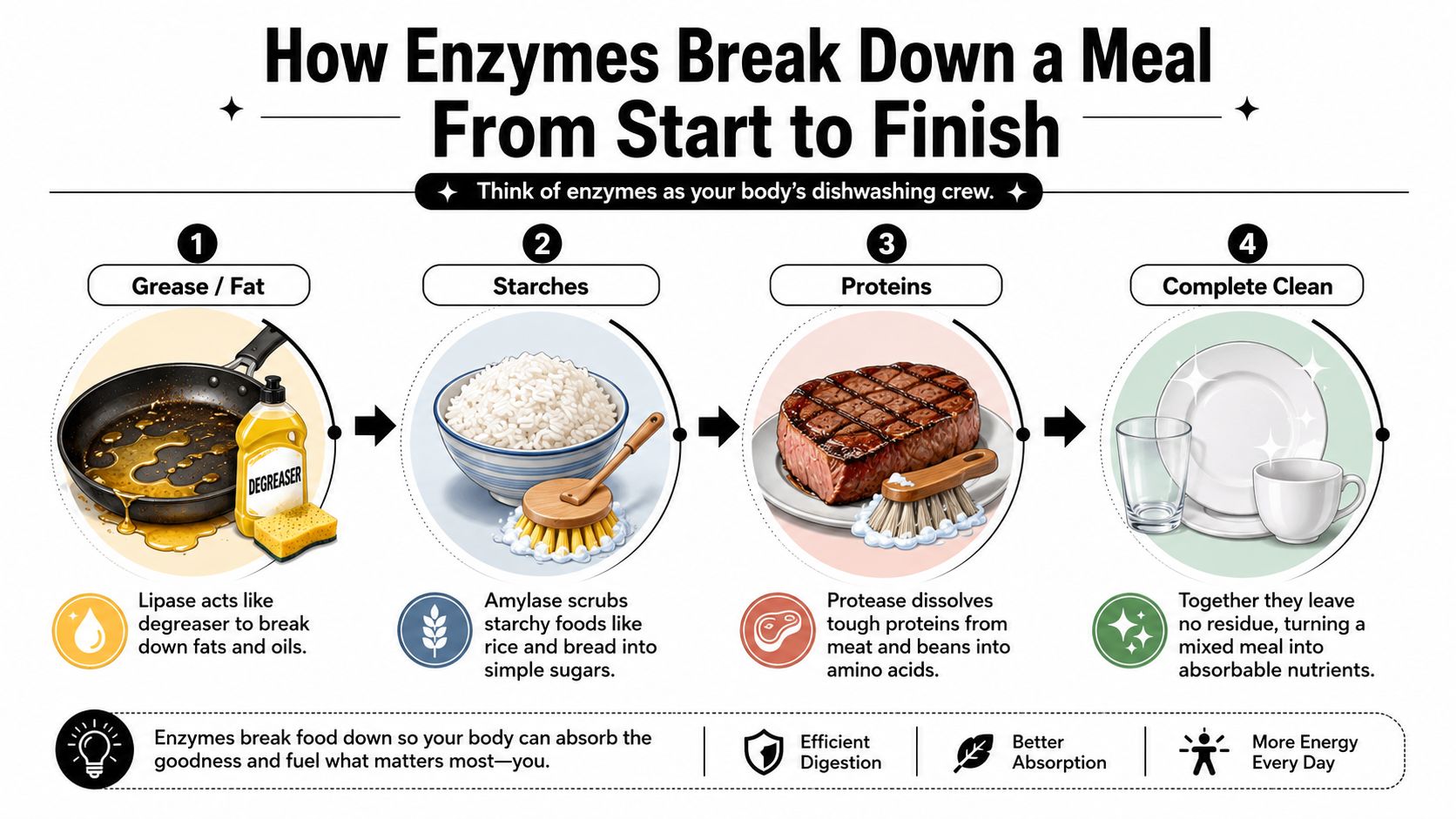
The substrate determines the enzyme
Lipase helps split triglycerides into smaller fatty components. Amylase breaks starch into smaller carbohydrates. Proteases break proteins into peptides and amino acids. Lactase splits lactose into glucose and galactose, while other enzymes act on specific plant carbohydrates.
If a relevant step underperforms, larger molecules can travel farther through the digestive tract. In the colon, bacteria ferment some undigested carbohydrates, which can create gas, pressure, distension, and changes in stool consistency. The mechanism is plausible, but it doesn't mean every case of bloating results from low enzyme activity.
The key distinction is broad substrate coverage versus broad medical claims. A blend can contain activities for fat, protein, starch, dairy, and selected fibers. That doesn't make it a treatment for IBS, functional dyspepsia, inflammatory disease, or unexplained abdominal symptoms.
A practical test is to connect the meal to the symptom. If dairy reliably causes urgent discomfort, lactase deserves attention. If beans and onions cause gas, alpha-galactosidase may be more relevant. If a mixed, high-fat meal causes heaviness, a formula containing lipase alongside protease and amylase may be a reasonable experiment.
The Core Enzymes and What Each One Targets
The most useful labels identify enzyme activity by substrate, not just by the total weight of a proprietary blend. The same milligram amount can represent very different functional potency depending on the enzyme and assay method.
Protein, fat, and starch activities
Protease breaks proteins into smaller peptides and amino acids. It may be relevant after a meal centered on meat, eggs, dairy proteins, or legumes, especially when the complaint is heaviness after a large protein serving. Some formulas discuss gluten or casein peptide activity, but those claims should be interpreted narrowly. Protease activity isn't a substitute for avoiding gluten in people with celiac disease.
Lipase acts on triglycerides, producing smaller fat components that the body can absorb. A high-fat meal can feel slow and heavy, but that sensation isn't proof of inadequate lipase. Lipase is most logically matched to fatty meals and fat-related digestive discomfort, not used as a general remedy for every type of bloating.
Amylase targets starches in foods such as bread, pasta, rice, and potatoes. Its role is straightforward, but starch-related symptoms can also depend on portion size, food preparation, fermentation, and individual carbohydrate tolerance.
Dairy, legumes, and plant fibers
Lactase targets lactose, the sugar in milk and many dairy foods. For people who don't absorb lactose efficiently, supplemental lactase has a clear substrate-specific rationale. A 2024 review of diet therapies for gut-brain interaction disorders reports that oral lactase can reduce symptoms and breath hydrogen with lactose doses up to 25 g, but not with larger 50 g doses. That distinction matters because a capsule doesn't neutralize unlimited lactose.
Alpha-galactosidase, often associated with products such as Beano, acts on raffinose-family oligosaccharides found in beans, lentils, soy, and some vegetables. These carbohydrates can ferment in the colon when they aren't broken down earlier. Alpha-galactosidase is therefore a targeted tool for bean and vegetable-related gas, not a universal enzyme for all FODMAPs.
Cellulase and hemicellulase act on components of plant cell walls. Humans don't produce the full enzyme set needed to digest all plant fibers directly, so these activities may be relevant to meals containing raw vegetables and whole grains. Their symptom impact is less predictable because fiber can also influence stool bulk and microbial fermentation in ways that aren't harmful.
| Enzyme | Substrate | Symptom pattern | Typical activity units |
|---|---|---|---|
| Protease | Proteins | Heaviness after protein-rich meals | HUT or other protease units |
| Lipase | Triglycerides and fats | Slow, heavy discomfort after fatty meals | FIP |
| Amylase | Starches | Discomfort after bread, pasta, rice, or potatoes | FCC or product-specific units |
| Lactase | Lactose | Dairy-related gas, bloating, cramps, or loose stool | ALU or FCC |
| Alpha-galactosidase | Raffinose and stachyose | Gas after beans, lentils, soy, onions, or some vegetables | GalU |
| Cellulase and hemicellulase | Plant cell-wall fibers | Fullness after fibrous vegetables or whole grains | CU or product-specific units |
Activity units vary across enzymes and brands. Common abbreviations include HUT, ALU, FIP, LAU, GALU, and CU, and they shouldn't be compared as though they were interchangeable. For a practical explanation of blend design, see this digestive enzyme blend guide.
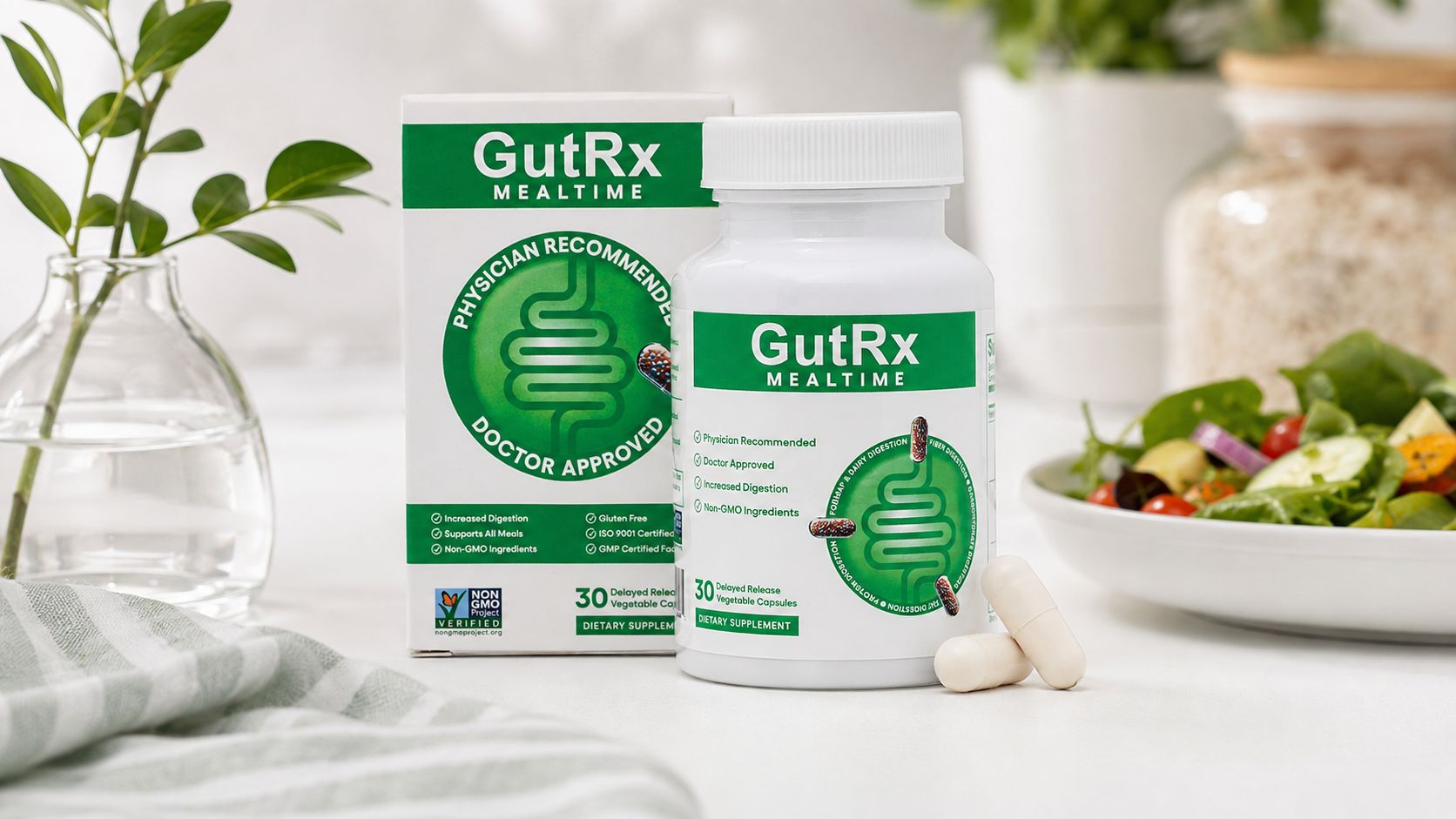
GutRx MEALTIME is one example of a digestive enzyme product positioned to support digestion, reduce bloating, and support nutrient absorption. The relevant buying question remains the same for any brand: does its disclosed enzyme coverage match your actual food pattern?
Matching Enzyme Blends to Real Symptom Patterns
The best formula depends less on the phrase “broad spectrum” than on the meal that reliably precedes your symptoms. Use the pattern as a starting point, then test one change at a time.
If fatty meals cause heaviness
Look for lipase alongside a general protease and amylase base. This combination fits a meal containing fried foods, rich sauces, or substantial amounts of meat and dairy. It may support digestion of the meal, but persistent greasy stools, unexplained weight loss, or ongoing malabsorption concerns need medical evaluation rather than repeated self-treatment.
If dairy causes rapid gas or loose stool
Prioritize lactase. Symptoms that occur after milk, ice cream, or soft dairy products are more directly matched by lactase than by a broad blend with an undisclosed amount of lactase. Check the activity units per serving and whether the serving size reflects the amount of dairy you typically eat.
If beans, lentils, soy, onions, or garlic trigger gas
Look for alpha-galactosidase, and consider cellulase or hemicellulase when fibrous vegetables and whole grains are also part of the pattern. FODMAP digestion is not one single enzyme problem. An in vitro study using invertase, alpha-galactosidase, and beta-galactosidase found reduced FODMAP burden and gas pressure after predigestion, but it also found reduced short-chain fatty acid production, a trade-off that argues against oversimplifying the mechanism. The findings are detailed in this FODMAP enzyme study.
If mixed meals cause general bloating
A broad spectrum formula is a reasonable option when symptoms follow varied meals rather than one clear food. Judge the response by meal type, though. If the formula helps after dairy but not beans, that points toward lactose as the relevant substrate, not a generalized digestive improvement.
| Symptom Pattern | Primary Enzyme | Supporting Enzymes | What to Check on Label |
|---|---|---|---|
| Heavy fullness after fatty meals | Lipase | Protease, amylase | Lipase activity and meal timing |
| Gas and loose stool after dairy | Lactase | General carbohydrate enzymes | Lactase units per capsule |
| Gas after beans or lentils | Alpha-galactosidase | Cellulase, hemicellulase | GalU amount per serving |
| Bloating after mixed meals | Combination formula | Protease, lipase, amylase, targeted carbohydrate enzymes | Per-enzyme disclosure |
For a symptom-led explanation of possible enzyme-related patterns, use this guide to enzyme deficiency symptoms. It can help organize questions, but it shouldn't be used to diagnose pancreatic or intestinal disease.
Dosing, Timing, and How to Judge a Response
Digestive enzymes need to be present with the food they're intended to break down. Take a capsule at the start of a meal, ideally with the first bites. For a larger meal, splitting the dose between the first and last bites can help maintain contact as the meal progresses through the upper digestive tract.
Fasting and bedtime dosing don't match the main purpose of these products. Taking an enzyme after you've finished eating may mean the food has already moved beyond the point where the supplement can mix with it effectively.
Common label ranges used in practice include:
- Lactase: 3,000 to 9,000 ALU per dairy serving.
- Alpha-galactosidase: 300 to 1,000 GalU per bean or vegetable serving.
- Lipase: 1,000 to 4,000 FIP for a fatty meal.
- Protease and amylase: follow the product's stated FCC or enzyme-specific activity units.
Those ranges are practical reference points, not universal prescriptions. Start at the lower end when the label allows it, and adjust only when the same symptom persists across three or more similar meals. Stop if there's no clear benefit after two weeks, rather than continually increasing the dose without a defined target.
Track the trigger, not just the feeling: Record the food, enzyme activity, timing, and symptom. A response that appears only with dairy suggests a different strategy from a response after every type of meal.
Dose-response evidence remains limited for many broad spectrum products in healthy adults. If you develop new or worsening symptoms, don't keep experimenting indefinitely. Review the timing and formula with a clinician, particularly if you have a diagnosed digestive condition or take prescription medication. More practical timing guidance is available in this guide to the best time to take digestive enzymes.
Where the Evidence Is Strong and Where It Falls Short
The strongest case for digestive enzymes is substrate-specific support. Lactase is relevant to lactose intolerance, and alpha-galactosidase is relevant to oligosaccharides in foods such as beans and certain vegetables. These uses have a clear biochemical target, so the supplement can be tested against a defined meal and symptom.
Prescription pancreatic enzyme replacement also has an established role in exocrine pancreatic insufficiency. That evidence shouldn't be transferred automatically to healthy adults who experience occasional fullness. A medical deficiency and a normal digestive system handling a large meal are different situations.
Broad spectrum blends face a more difficult evidence standard. Reviews describe clinical utility in pancreatic insufficiency and lactose intolerance, while placebo-controlled evidence in people without documented maldigestion remains limited, as outlined in the review of digestive enzyme supplementation. The body already makes amylase, proteases, lipase, and lactase, so most healthy adults don't automatically need routine supplementation.
FODMAP-targeted blends offer a more specific example. A four-week real-world study reported improvement in bloating and flatulence for 78.0% of participants, diarrhea in IBS-D participants for 75.0%, constipation in IBS-C participants for 72.7%, and abdominal pain for 65.3%. However, the study was a single-arm, open-label cohort, so it doesn't provide the same certainty as a placebo-controlled trial. The results are reported in this clinical FODMAP enzyme study.
The counterargument is valid. Broad enzyme use can cost more than it delivers, and a perceived benefit may reflect meal changes, expectation, or natural symptom variation. It can also distract from symptoms that deserve evaluation. The most defensible approach is targeted use for a reproducible substrate-related pattern, followed by reassessment when the pattern doesn't improve.
Choosing a Quality Broad Spectrum Enzyme Formula
Start with the symptom, not the marketing phrase. Dairy-heavy meals need meaningful lactase. Bean, lentil, onion, or garlic meals may call for alpha-galactosidase or other targeted carbohydrate activity. Mixed meals require a formula that discloses protease, lipase, and amylase rather than hiding every ingredient inside one attractive blend name.
Four label checks
- Match coverage to the trigger. A long ingredient list isn't automatically useful. Look for the enzyme that corresponds to your food pattern.
- Check activity units. Milligrams tell you the weight of the ingredient, not necessarily its functional activity. Per-enzyme units are more useful for comparison.
- Look for independent quality verification. Third-party programs such as USP, NSF, or ConsumerLab can provide additional quality information. Also check the lot, expiration date, storage instructions, and whether testing documentation is accessible.
- Assess dose adequacy. Compare the disclosed activity with the practical ranges and substrate-specific evidence discussed above. A token amount may create the appearance of coverage without matching the intended use.
| Label Feature | What to Look For | Why It Matters |
|---|---|---|
| Enzyme coverage | Protease, lipase, amylase, plus lactase or alpha-galactosidase when relevant | Connects the formula to your actual trigger |
| Activity disclosure | Units listed for each enzyme | Allows meaningful potency comparison |
| Testing | USP, NSF, ConsumerLab, or accessible batch testing | Adds information about identity and quality |
| Date and storage | Expiration date and clear storage guidance | Enzyme activity can depend on handling |
| Source | Vegan, microbial, or fungal sourcing when required | Helps match dietary and allergen needs |
| Delivery format | Capsule or powder suited to the meal and user | Affects convenience and how the product is used |
Buying questions worth answering
Are vegan enzymes effective? Many commercial enzymes come from microbial or fungal sources, so vegan sourcing is common. Confirm the actual source and allergen statement rather than assuming every “plant-based” label means the same thing.
Can enzymes be taken with probiotics? They serve different roles. Enzymes interact with food during digestion, while probiotics are intended to support the intestinal microbial environment. Combining them may be reasonable, but introduce one product at a time so you can identify what changes your symptoms.
Should you choose capsules or powders? Capsules are convenient for mixed meals. Powders can be useful when a product is designed to be sprinkled directly onto food, but follow the manufacturer's instructions because heat, moisture, and storage can affect handling.
Avoid products that disclose only a total “enzyme blend” amount, omit expiration information, or make expansive promises about treating multiple conditions. For unexplained persistent symptoms, seek medical advice instead of stacking increasingly complex supplements.
GutRx offers digestive enzyme support through its Mealtime product, alongside probiotic formulas for broader digestive balance. Review the available options and product details at GutRx, then choose based on your specific meal-related symptom pattern and the label information you can verify.


