

You finish a meal, loosen your waistband, and feel pressure building across your abdomen. Maybe you're passing more gas than usual, or maybe your stomach looks visibly enlarged. Bloating and gas in the stomach are often manageable, but the right solution depends on what's causing the discomfort, not just on how much gas you produce.
Table of Contents
- Understanding Why Bloating and Gas Happen
- The Physiology of Digestive Gas
- Common Misconceptions About Bloating Relief
- Dietary Strategies to Reduce Gas and Bloating
- Supplements and Enzymes for Digestive Support
- When to See a Doctor for Persistent Bloating
Understanding Why Bloating and Gas Happen
A meal can leave one person comfortable and another feeling pressure, tightness, or visible swelling. Bloating is a symptom, not a single disease, and abdominal distension can occur with or without the sensation of bloating. Common contributors include swallowed air, fermentation of poorly absorbed carbohydrates, slower intestinal movement, constipation, and heightened sensitivity to normal digestive stretching. This bloating causes explained overview shows why the same food can affect people differently.
The symptom is widespread. A 2023 analysis of 51,425 respondents from 26 countries found that 17.68% reported bloating at least once per week, or approximately 1 in 6 adults. Prevalence was about 11% in East Asia and 20% in Latin America, and women were approximately twice as likely as men to report it (international bloating analysis).
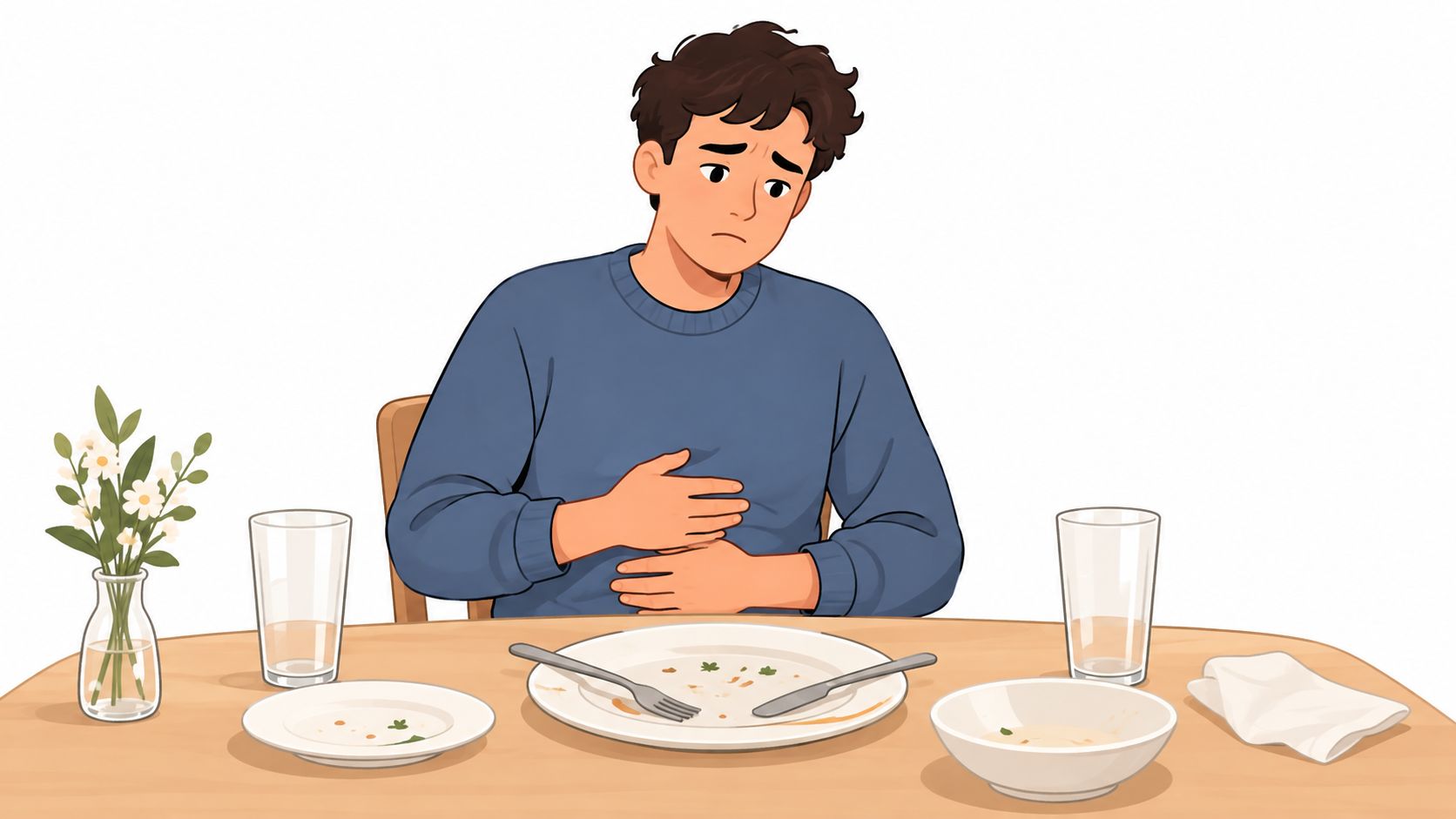
The symptom has more than one mechanism
Bloating may result from increased gas production, poor gas movement, or an intestine that reacts strongly to ordinary amounts of gas or stool. Constipation can increase pressure by slowing transit. Functional gastrointestinal disorders can also make routine digestive activity feel painful or excessive. Across other gut-brain interaction disorders, reported bloating ranged from 21% in functional diarrhea to 74% in epigastric pain syndrome.
The practical question is whether gas is being produced or only felt more intensely. A probiotic may suit someone seeking daily digestive support, while a targeted enzyme may be more appropriate when lactose consistently triggers symptoms. Constipation-related distension calls for a bowel-focused plan rather than another gas-reducing product. Matching the intervention to the mechanism gives you a better chance of reducing the symptom instead of masking it.
The Physiology of Digestive Gas
Gas production and gas sensitivity are separate processes. The digestive tract makes gas from swallowed air and from bacteria fermenting carbohydrates that were not fully absorbed in the small intestine. Healthy adults pass flatus approximately 14–18 times per day, a range compatible with normal physiology (clinical review of intestinal gas).
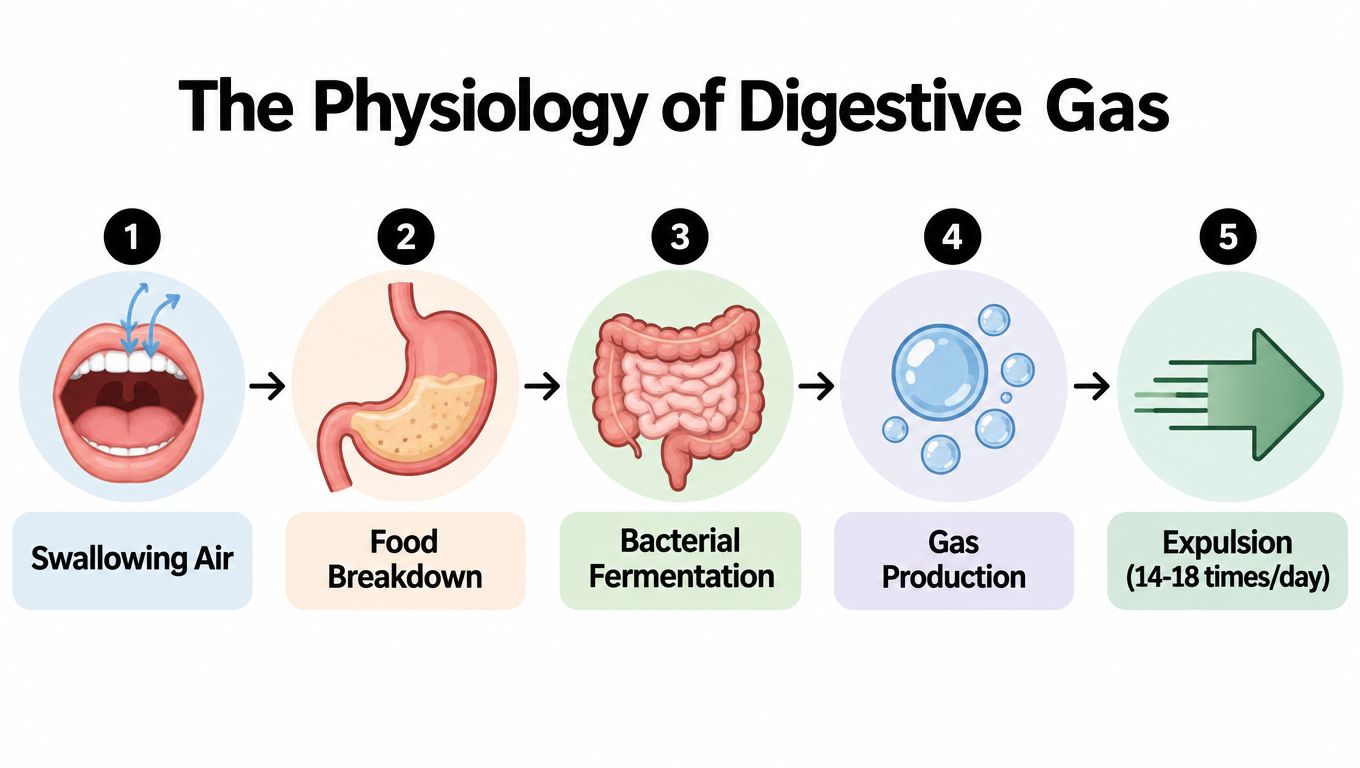
What happens after you eat
The sequence follows five main stages:
- Air enters through the mouth. Eating quickly, drinking through a straw, talking during meals, and fizzy drinks can increase swallowed air.
- The stomach breaks food down. Muscular contractions and digestive secretions prepare the meal for the small intestine.
- The small intestine absorbs available nutrients. Carbohydrates that remain unabsorbed continue toward the colon.
- Colonic bacteria ferment those carbohydrates. This produces gases and short-chain fatty acids.
- The body clears the gas. Gas can be absorbed, moved through the intestine, released through belching, or expelled as flatus.
Food choices affect volume. Average expelled gas ranged from about 214 mL on a low-fiber diet to 705 mL on a high-fiber diet, showing that fiber intake can produce a substantial change (clinical review of intestinal gas). A temporary increase after beans, whole grains, or other fermentable foods does not automatically indicate a problem.
Practical rule: Judge gas by its pattern and accompanying symptoms, not frequency alone.
The same amount of gas can feel very different from person to person. A more sensitive intestine may register ordinary stretching as pressure or pain, while another person notices little discomfort. There is no universally accepted threshold for “too much” intestinal gas. Persistent, disruptive, painful symptoms, or a clear food-related pattern deserve more attention than volume alone.
Odor and volume also have different causes. Why intestinal gas can smell strong explains the compounds behind odor. GutRx BALANCE contains 30 billion CFUs per capsule and is formulated with next-generation probiotics for gut health, digestive balance, and immune support. It may suit someone seeking general digestive support, but it cannot address every mechanism behind bloating or gas.
Common Misconceptions About Bloating Relief
The most common mistake is assuming that a larger abdomen always means excessive gas. Bloating may involve visceral hypersensitivity, impaired gas clearance, altered intestinal movement, or constipation-related distension. In some people with IBS, normal amounts of gas or stool create substantial pressure or pain because the gut is more sensitive, not because the digestive tract is producing an abnormal volume.
That makes the popular “just add more fiber” advice incomplete. Fiber can support bowel regularity, but a sudden increase can give bacteria more material to ferment before the gut adapts. NIDDK advises increasing fiber gradually by about 2–3 grams per day because too much at once can worsen gas and bloating (NIDDK guidance on gas).
Match the intervention to the pattern
| What you notice | A more likely consideration | A poor first assumption |
|---|---|---|
| Pressure after rapidly increasing fiber | Fermentation and adjustment | Fiber can never worsen symptoms |
| Bloating with infrequent or difficult stools | Constipation-related distension | More random probiotics will solve it |
| Pain from modest meals or ordinary gas | Gut sensitivity | Gas volume must be unusually high |
| Symptoms after a specific dairy food | Lactose-related digestion issue | Every meal needs a broad enzyme |
| Symptoms after several carbohydrate-rich foods | FODMAP sensitivity may be relevant | All carbohydrates must be removed |
Randomly switching probiotic products can create another problem. Probiotic evidence varies by strain and product, and recent international guidance characterizes the evidence as low-certainty and variable across products. More capsules, more strains, or a higher label count isn't automatically a better match for your symptom pattern.
The same applies to aggressive elimination diets. Removing broad food groups without a reintroduction plan can make eating unnecessarily restrictive and may hide the actual trigger. Use a short, organized test, record what happens, and restore foods that don't cause a meaningful problem.
The useful question isn't “How do I stop all gas?” It's “What mechanism is making this gas uncomfortable?”
Dietary Strategies to Reduce Gas and Bloating
Start with behaviors that reduce swallowed air before making your diet more restrictive. NIDDK recommends avoiding fizzy drinks and straws, eating more slowly, avoiding conversation while chewing or drinking, and sitting down rather than eating on the run (NIDDK gas treatment guidance). These changes are simple, but they address a direct source of air entering the digestive tract.
Smaller, more frequent meals may also be useful for people who feel worse after large portions. Don't remove every food that has ever caused discomfort. Track the food, portion, timing, and bowel pattern so you can distinguish a repeatable trigger from a one-off reaction.
Use FODMAP restriction as a test
FODMAPs are short-chain fermentable carbohydrates. They can draw additional water into the small intestine through osmotic effects, then reach the colon where bacteria ferment them and produce gas. In a person with visceral hypersensitivity, the resulting distension may trigger bloating, pain, flatulence, diarrhea, or other functional symptoms (FODMAP mechanisms and IBS guidance).
A practical low-FODMAP process has three parts:
- Short-term restriction. Reduce the main high-FODMAP foods with professional guidance when possible.
- Structured reintroduction. Test food groups rather than assuming every restricted food is a permanent problem.
- Personalization. Keep the smallest effective restriction and build meals around foods you tolerate.
A Monash University review reported clinical response in approximately 50% to 80% of people with IBS, particularly for bloating, flatulence, diarrhea, and overall symptoms (Monash University FODMAP review). That range also shows why the approach shouldn't be sold as a guarantee.
Meal quality still matters. A resource on building a well balanced meal Sanstories can help you think about variety and nourishment while you test individual triggers. For additional practical ideas focused on immediate symptom management, see ways to reduce bloating fast, then adjust the advice to your own pattern.
Supplements and Enzymes for Digestive Support
Supplements work best when they answer a specific question. Lactase may help when gas follows lactose-containing foods and lactose intolerance is the relevant trigger. A broad digestive enzyme isn't a universal solution for bloating, and an enzyme designed for dairy won't address constipation, impaired gas clearance, or sensitivity to ordinary intestinal stretching.

Probiotics may support digestive balance, but results vary by strain, formulation, dose, and the person taking them. Prebiotics provide fermentable material for gut bacteria, which can be useful for some routines but may temporarily increase gas in sensitive people. Postbiotics are nonliving microbial preparations or components, and their role depends on the specific ingredient and product evidence, not just the category name.
What to check before buying
Look for proof that helps you evaluate the product rather than marketing language alone:
- Strain identification: A product should make clear what organisms it contains instead of relying only on a broad species label.
- Third-party testing: Independent testing can help verify purity, potency, and identity.
- Certificates of Analysis: Downloadable COAs make quality documentation easier to review.
- Delivery design: Delayed-release or enteric protection may be relevant when a product is designed to help organisms pass through stomach acid.
- Trigger alignment: Choose lactase for a lactose-related pattern, a targeted enzyme blend for meal-related digestion, or a probiotic routine for a broader digestive-balance goal.
For a focused discussion of enzyme use, digestive enzymes for bloating explains why timing and food triggers matter. Readers comparing ingredient quality can also browse natural enzyme sourcing tips, while still checking the finished product's testing and labeling rather than judging quality from “natural” wording alone.
Talk with a clinician or pharmacist before adding supplements if you have a diagnosed digestive disorder, take regular medication, are pregnant, or have persistent symptoms. A supplement should complement an evaluation when one is needed, not delay it.
When to See a Doctor for Persistent Bloating
Occasional bloating and gas often improve after changing eating speed, fizzy drinks, fiber increases, or a consistent food trigger. Persistent or recurrent symptoms deserve more attention, especially when dietary changes don't help.
Contact a clinician if bloating occurs regularly, doesn't go away, or appears with:
- Unintentional weight loss
- Blood in the stool
- Ongoing vomiting
- Severe or persistent abdominal pain
- Fever or chills
- A swelling or lump
- A major change in bowel habits
- An inability to urinate, pass stool, or pass gas
NHS guidance recommends urgent evaluation for severe symptoms, including sudden intense pain, vomiting blood or material resembling coffee grounds, or severe breathing difficulty (NHS guidance on bloating). Don't assume these signs indicate a need for a probiotic or enzyme. They can point to conditions requiring medical assessment.
GutRx offers lab-grade synbiotics and digestive enzymes, including formulas designed for daily digestive support and targeted meal-related digestion, with third-party testing and downloadable Certificates of Analysis. If you're comparing support for bloating, gas, or digestive balance after reviewing your symptom pattern, visit GutRx to explore the available options.


