

Digestive enzyme supplements are over-the-counter capsules, tablets, or powders that supply lipase, protease, amylase, and lactase to help break down fats, proteins, carbohydrates, and lactose. If a heavy pasta dinner or a dairy-rich meal leaves you feeling bloated and sluggish, these products are meant to support digestion, not replace the enzymes your body already makes.
You can think of them as targeted helpers, not universal gut fixes. Some people need them for clear medical reasons, others try them for meal-related discomfort, and the difference matters a lot.
Table of Contents
- What Digestive Enzyme Supplements Actually Are
- The Main Enzyme Types and the Foods They Target
- How Digestion Works and Where Enzymes Fit In
- Which Symptoms Have Real Evidence Behind Them
- How to Take Digestive Enzymes for Best Results
- Enzymes Versus Probiotics and Synbiotics
- How to Choose a Quality Enzyme Product
- When Enzymes Make Sense and When to See a Doctor
What Digestive Enzyme Supplements Actually Are
That uncomfortable, overfull feeling after a cheese plate or a big bowl of pasta is the moment many people start looking for enzyme supplements. The appeal is simple, food should be broken down efficiently, and when it isn't, people notice the pressure, gas, and heaviness.
A plain-language definition
Digestive enzyme supplements are products designed to deliver enzymes that help cut food into smaller pieces your body can absorb. The four core enzymes are lipase for fats, protease for proteins, amylase for starches, and lactase for milk sugar.
These supplements can come from animal-derived sources, like porcine or pancreatic material, or from plant- and fungal-derived sources, such as Aspergillus or Rhizopus. That source matters because it affects how the product is made, how it behaves in the gut, and whether it fits your diet.
A key limit is that supplements aren't the same as prescription pancreatic enzyme replacement therapy. If someone has a condition like cystic fibrosis or chronic pancreatitis, they need medical guidance, not a casual over-the-counter swap.
Practical rule: use enzyme supplements as a tool for a specific eating problem, not as a vague “better digestion” fix.
The commercial history is long, too. Digestive enzyme products have existed since the late 19th century, and industry history notes that the U.S. supplement market for these products grew from about USD 80 million in 2000 to USD 209 million in 2010 historical overview. More recently, one industry estimate placed the global market at USD 1.48 billion in 2024 and projected USD 2.12 billion by 2030 market estimate.
The Main Enzyme Types and the Foods They Target
The easiest way to understand digestive enzymes is to match them to food. Lipase works on fats. Protease works on protein. Amylase works on starch. Lactase works on lactose, the sugar in dairy.
Food by food
If you eat butter, avocado, fried foods, or other high-fat meals, lipase is the enzyme most directly tied to that job. If a meal is heavy on meat, dairy protein, or legumes, protease is the enzyme family that matters most. If the meal is bread, rice, pasta, or other starch-heavy foods, amylase and related enzymes do the early breakdown work. If dairy is the trigger, lactase is the one to look for.
Some products also include cellulase and hemicellulase for plant fiber, alpha-galactosidase for the oligosaccharides in beans and cruciferous vegetables, phytase for phytic acid in grains and legumes, and sucrase, maltase, and isomaltase for different sugars. That ingredient list tells you whether a product is narrow and targeted or broad and mixed.
| Enzyme | Targets | Common Food Sources | Typical Symptom If Deficient |
|---|---|---|---|
| Lipase | Fat | Oils, butter, avocado, fried foods | Greasy fullness, post-meal heaviness |
| Protease | Protein | Meat, dairy, legumes | Sluggish digestion after protein-heavy meals |
| Amylase | Starch | Bread, rice, pasta | Bloating after starchy meals |
| Lactase | Lactose | Milk, ice cream, soft cheeses | Gas, bloating, diarrhea after dairy |
| Alpha-galactosidase | Oligosaccharides | Beans, cruciferous vegetables | Gas after beans or legumes |
Enzyme activity is measured in units like FIP, HUT, ALU, and FCC, not just milligrams. That matters because the label has to tell you what the enzyme can do, not just how much powder is in the capsule.
For a focused look at amylase and starch digestion, see this explainer on amylase enzyme function.
How Digestion Works and Where Enzymes Fit In
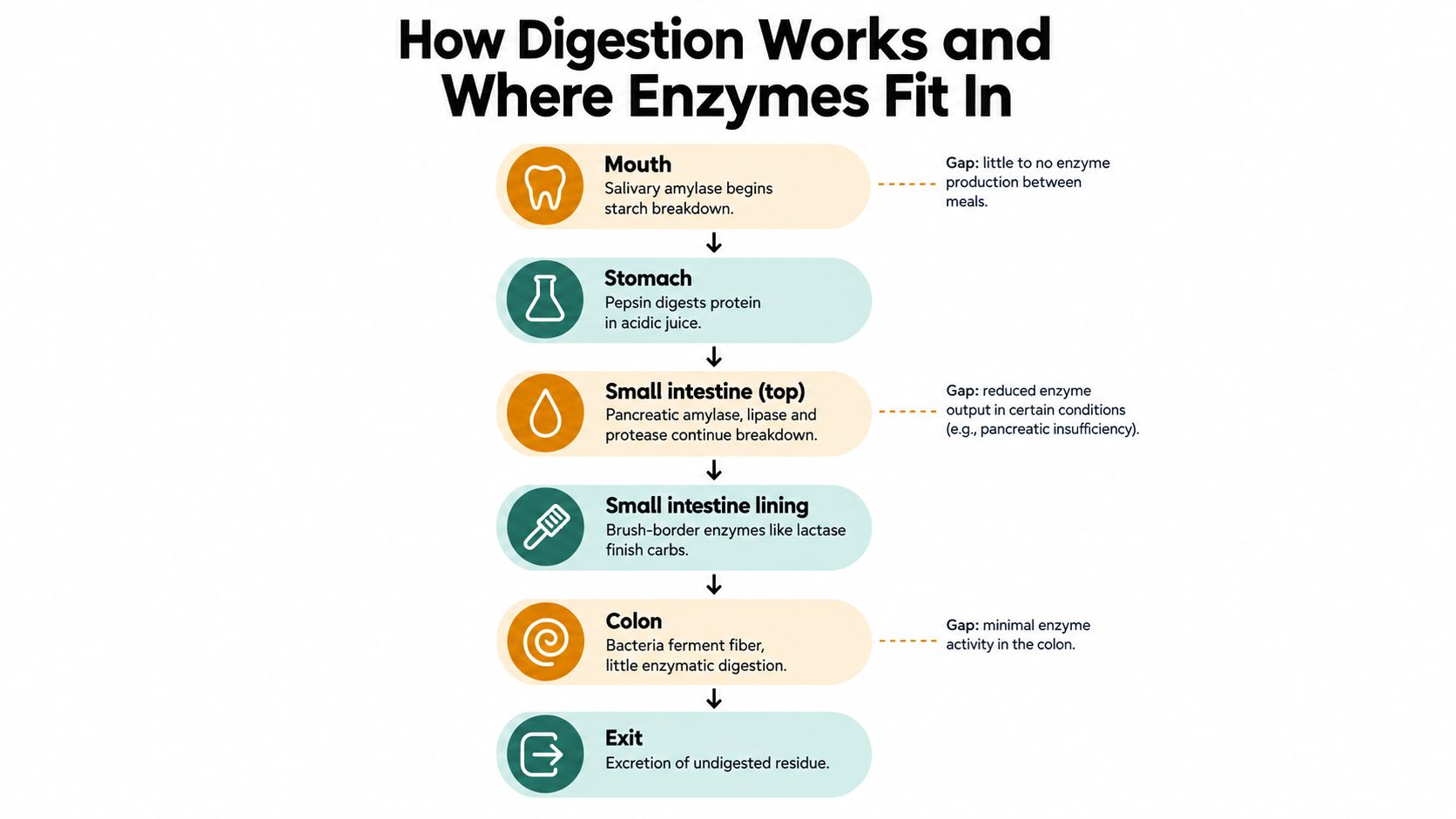
Digestion starts before the food even leaves your mouth. Salivary amylase begins starch breakdown right away, then stomach acid and gastric enzymes keep the process moving, and the small intestine does most of the heavy lifting.
The digestive cascade
In the stomach, pepsin helps digest protein, and a small amount of gastric lipase supports fat digestion. In the small intestine, pancreatic enzymes, especially lipase, trypsin, chymotrypsin, and pancreatic amylase, do most of the work, with bile helping fat digestion along.
Brush-border enzymes on the intestinal lining, including lactase, sucrase, and maltase, finish the job. Anything left over moves into the colon, where microbes ferment what your own enzymes didn't fully break down.
Healthy adults usually make enough enzymes at each step, which is why broad enzyme claims can be misleading. The cases where supplementation makes the most sense are the ones with a clear gap, such as pancreatic insufficiency, cystic fibrosis, lactose non-persistence, celiac disease, or certain bowel surgeries.
That's why the question isn't really, “Do enzymes work?” It's, “Where is the breakdown happening, and is it an enzyme problem?”
Which Symptoms Have Real Evidence Behind Them
A glass of milk causes gas and diarrhea, while beans trigger mainly flatulence. Those patterns point to different enzymes. The symptom and its food trigger matter more than a supplement label promising broad digestive support.
Stronger use cases
Lactase is a reasonable match when dairy reliably causes gas, bloating, or diarrhea in someone with lactose intolerance. The enzyme helps break down lactose, the milk sugar that otherwise reaches the colon undigested. Pancreatic enzyme replacement is standard medical care for exocrine pancreatic insufficiency, when the pancreas does not release enough digestive enzymes. Treatment aims to relieve symptoms and improve nutrient absorption, rather than provide general wellness support.
For bean-related gas, alpha-galactosidase has a narrower role. It can reduce flatulence caused by certain fermentable carbohydrates in beans and cruciferous vegetables. Its usefulness is therefore tied to the food, not to unexplained bloating after every meal.
Helpful distinction: one food repeatedly causing one symptom makes a targeted enzyme more plausible than a broad-spectrum blend.
Weaker, broader claims
Evidence is less consistent for generalized bloating, IBS-like discomfort, or vague food intolerance. Some small trials report improvement, while others do not, so placebo effects and varied study designs make broad claims difficult to interpret, as the Cleveland Clinic overview explains.
A swollen or uncomfortable abdomen does not automatically indicate an enzyme deficiency. Persistent symptoms may reflect celiac disease, SIBO, pancreatic insufficiency, or another condition that needs medical assessment rather than supplement trial and error.
Multi-symptom marketing can blur that distinction. GutRx WOMEN'S is positioned for digestive, vaginal, and urinary support, but its digestive-enzyme relevance still depends on whether a person has an identifiable, food-specific trigger.
How to Take Digestive Enzymes for Best Results
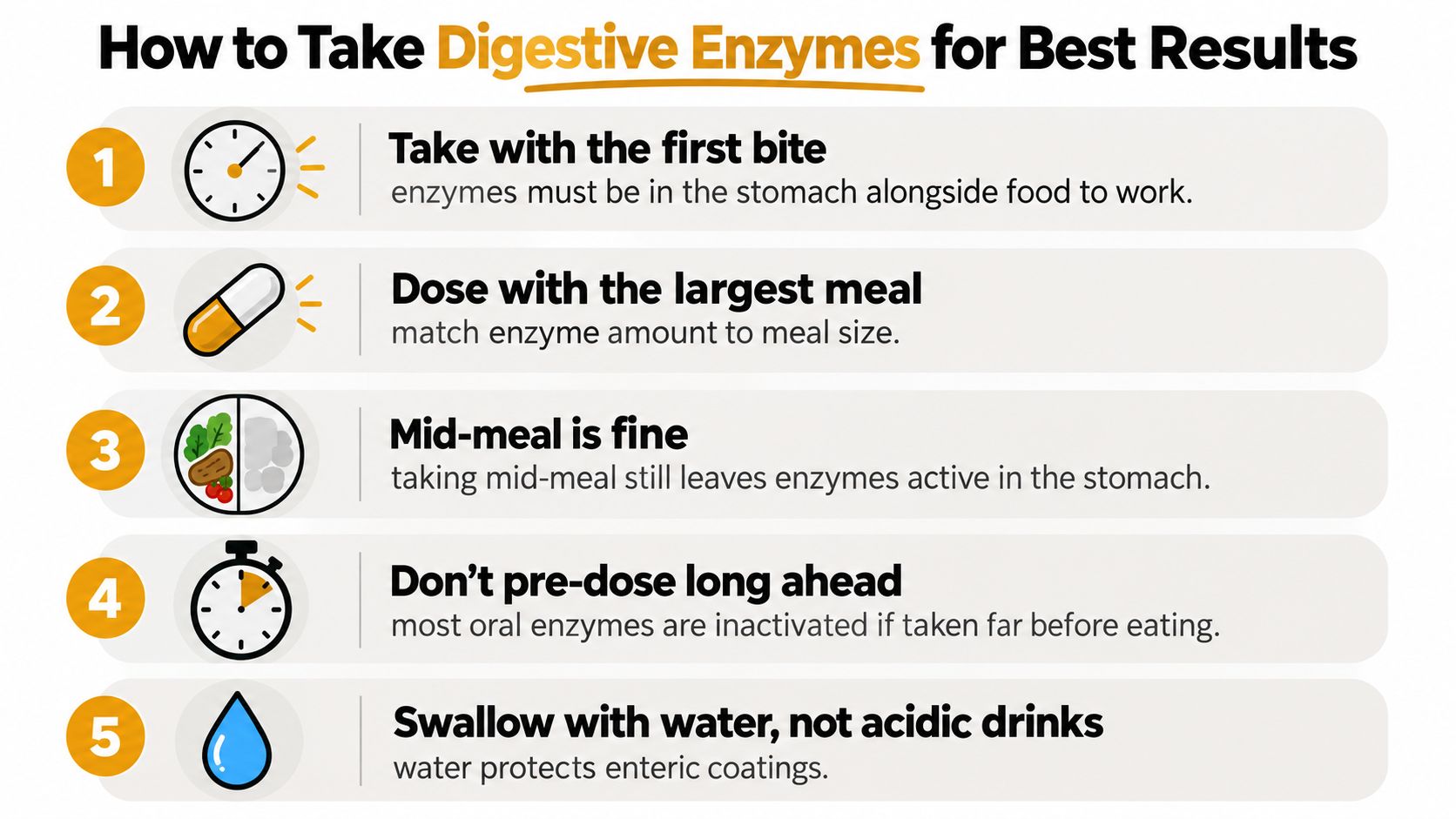
Timing matters because these enzymes need to meet food in the stomach or small intestine. If you take them too early, they may sit around without a job.
A simple meal-time routine
Take most enzyme supplements with the first bite of the meal, or split the dose between the first and middle bites if the meal is large. That keeps the enzyme available while food is still being processed. For lactase, many people take it just before the first dairy bite.
Start with the label dose and only increase if the product directions allow it and symptoms still show up. Don't exceed the label casually, especially if you're also taking medications or dealing with a diagnosed condition.
Practical rule: enzymes should travel with the meal, not arrive long before it.
It also helps to separate enzymes from certain medicines by about two hours, especially proton pump inhibitors and some antibiotics. Water is the safest way to take them, and very hot food can be a problem for some fungal-derived preparations.
For a dosing walkthrough, this timing guide for digestive enzymes is a useful reference point. A meal-focused product such as GutRx MEALTIME fits this kind of use case when someone is specifically trying to support digestion around food.
Enzymes Versus Probiotics and Synbiotics
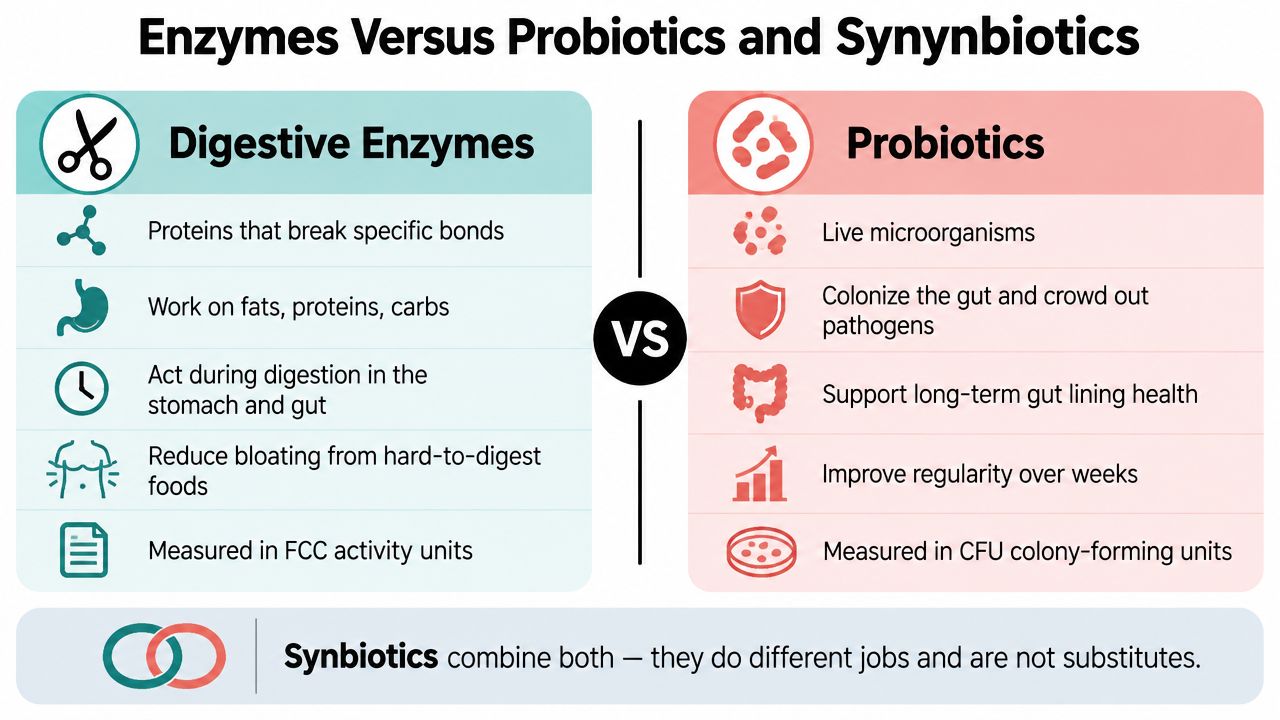
Digestive enzymes and probiotics often get lumped together, but they do different jobs. Enzymes break food apart during a meal. Probiotics are live microorganisms that work over time in the gut environment.
Different tools, different problems
Enzymes are the better fit for food-specific discomfort, such as dairy, beans, or a heavy fatty meal. Probiotics are the better fit when the goal is microbial balance, recovery after antibiotics, or longer-term support for the gut ecosystem digestive enzyme vs probiotic comparison.
Synbiotics combine prebiotics and probiotics, but they still don't replace enzymes. They support a different part of the digestive process. Some people use both, taking enzymes with meals and a probiotic between meals.
A simple way to separate them is this, enzymes help with what you ate, probiotics help with what's living in the gut. That distinction keeps people from buying the wrong product for the wrong symptom.
How to Choose a Quality Enzyme Product
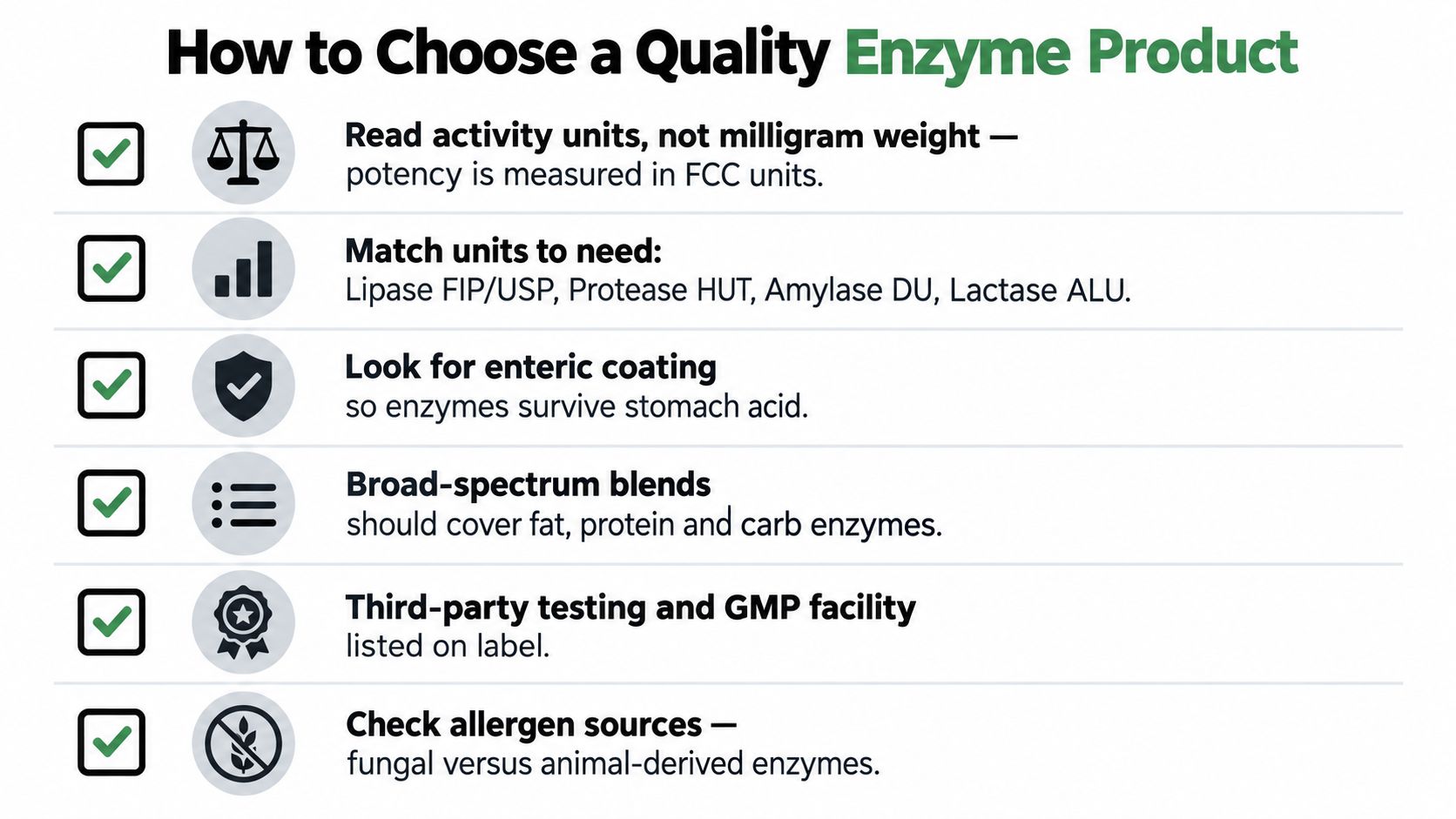
A label should show which foods a formula targets and how strongly its enzymes act. Check activity units first. Capsule weight does not reveal enzyme potency, while FCC units and related standards describe activity more usefully.
What to look for on the label
Read the enzyme names and their units, including Lipase FIP/USP, Protease HUT, Amylase DU, Lactase ALU, and Cellulase CU. Lipase relates to fat, protease to protein, amylase to starch, lactase to lactose, and cellulase to fiber. Match the product to the food or symptom pattern rather than choosing the longest ingredient list.
A third-party review can provide another check on label accuracy and contamination controls. Look for verification or certification from USP, NSF, or ConsumerLab, and review what that program tests.
Use this checklist:
- Targeted formulas first: standalone lactase for dairy, alpha-galactosidase for beans, or a broad blend when several food groups are involved.
- Enteric protection: may help some enzymes withstand stomach acid before mixing with food.
- Transparent activity units: each enzyme should have a visible amount, not disappear inside a proprietary blend.
- Allergen source check: fungal and animal-derived enzymes may differ for dietary preferences and tolerance.
- Storage discipline: keep the bottle cool, dry, and within its expiration date.
Be cautious with “enzyme matrix” claims that provide no activity units, blends that hide individual amounts, and products marketed as fat burners. Those labels emphasize sales claims rather than a clearly defined digestive purpose.
Helpful filter: if the label cannot explain what each enzyme does, choose a product with clearer amounts and targets.
When Enzymes Make Sense and When to See a Doctor
Enzymes make the most sense when there's a clear trigger and a clear pattern. That includes confirmed lactose intolerance, heavy meal discomfort that tracks with fat intake, or a diagnosed enzyme shortfall being managed under medical supervision.
A simple decision filter
They're less convincing when the complaint is vague bloating, chronic IBS-type symptoms without a food link, or fatigue that gets blamed on “bad digestion.” In those situations, the supplement may be masking something that should be evaluated instead.
See a clinician sooner if you have any of these:
- Unintended weight loss
- Persistent diarrhea
- Blood in the stool
- Symptoms that wake you at night
- New digestive symptoms after age 50
- Family history of celiac disease or colorectal cancer
If you want to test a supplement on your own, keep it short and structured. Use it with one known trigger meal for about a week, track the result, and stop if nothing changes. If the symptom pattern is inconsistent or keeps returning, the better move is medical workup, not another bottle.
Digestive enzyme supplements can be useful, but only when they match the problem. They're a tool for food-specific breakdown, not a cure-all for every gut complaint.
If you want a practical next step, visit GutRx to look at digestive-support options built around meal timing, targeted use cases, and third-party-tested formulas. GutRx offers enzyme and synbiotic products designed for specific digestive needs, so you can compare a meal-focused enzyme against broader gut-support options without guessing.


