

You've finished a meal, but instead of feeling satisfied, you feel heavy, tight, gassy, or uncomfortably full. That's when many people search for the best digestive enzyme supplements and reach for the broadest formula they can find. The better approach is more specific: match the enzyme to the food trigger and symptom you experience.
Digestive enzymes can be useful for lactose-related discomfort, gas from certain carbohydrates, and some post-meal symptoms, but they aren't universal solutions for bloating or every digestive complaint. The comparison below provides a practical starting point.
| Main trigger or symptom | Enzyme strategy | What to look for | Practical expectation |
|---|---|---|---|
| Dairy causes gas or loose stool | Lactase | Clear lactase activity information | Useful when lactose is the trigger |
| Beans, lentils, or some vegetables cause gas | Alpha-galactosidase | A labeled alpha-galactosidase activity level | Targeted support for certain fermentable carbohydrates |
| Protein-heavy meals feel difficult to digest | Protease | Protease activity units, not only ingredient names | May support protein breakdown |
| Fatty meals cause heaviness | Lipase | Clearly labeled lipase activity | May help with fat digestion, but persistent symptoms need evaluation |
| Mixed meals cause occasional fullness | Multi-enzyme blend | Transparent enzymes, activity units, and testing | Evidence is more limited than marketing often suggests |
| Ongoing bloating without a clear trigger | Assessment first | Symptom tracking and professional guidance | An enzyme may not address the underlying cause |
Table of Contents
- Why Enzyme Supplements Don't Work the Way You Expect
- Understanding the Three Main Enzyme Categories
- Clinical Evidence by Symptom Type
- Quality Control and Label Transparency Issues
- Matching Enzymes to Specific Triggers
- Evaluating Product Quality Standards
Why Enzyme Supplements Don't Work the Way You Expect
Restaurant meals often trigger the search for a broad-spectrum enzyme capsule, but that approach misses how enzymes work. You may notice pressure or fullness after eating and assume one formula should prevent the reaction next time. A long ingredient list can look reassuring while offering little help for the specific trigger involved.
Digestive enzymes act on particular nutrients. Lactase breaks down lactose, while alpha-galactosidase targets certain carbohydrates in foods such as beans. The useful question is whether the product matches the food and symptom pattern, rather than whether it contains the largest number of enzymes.
Practical rule: Start with the food pattern, not the product ranking.
Harvard Health reports that there is little evidence that enzyme supplements relieve general bloating (Harvard Health's review of enzyme supplements and bloating). Johns Hopkins describes enzyme use for gas, bloating, and diarrhea as situation-specific rather than broadly effective (Johns Hopkins guidance on digestive enzymes).
The symptom can mislead you
Bloating after dairy suggests a different test from heaviness after a high-fat meal. Gas after beans may relate to fermentable carbohydrates, while upper-abdominal fullness can reflect another digestive pattern. Treating each complaint with the same “complete” blend makes it harder to identify what actually helps.
Independent review coverage describes the strongest findings for multi-enzyme blends in specific post-meal targets, including fullness and upper-abdominal discomfort associated with functional dyspepsia. Evidence for broad over-the-counter blends remains limited (review of digestive enzyme supplement evidence). That distinction should guide a purchase, especially if you are considering daily use without a clear food trigger.
Understanding the Three Main Enzyme Categories
A useful way to compare products is to sort their ingredients by the macronutrient they help digest. The three practical groups are proteases, lipases, and carbohydrate-digesting enzymes. Each has a different job, and the right choice depends on what you ate and what you felt afterward.
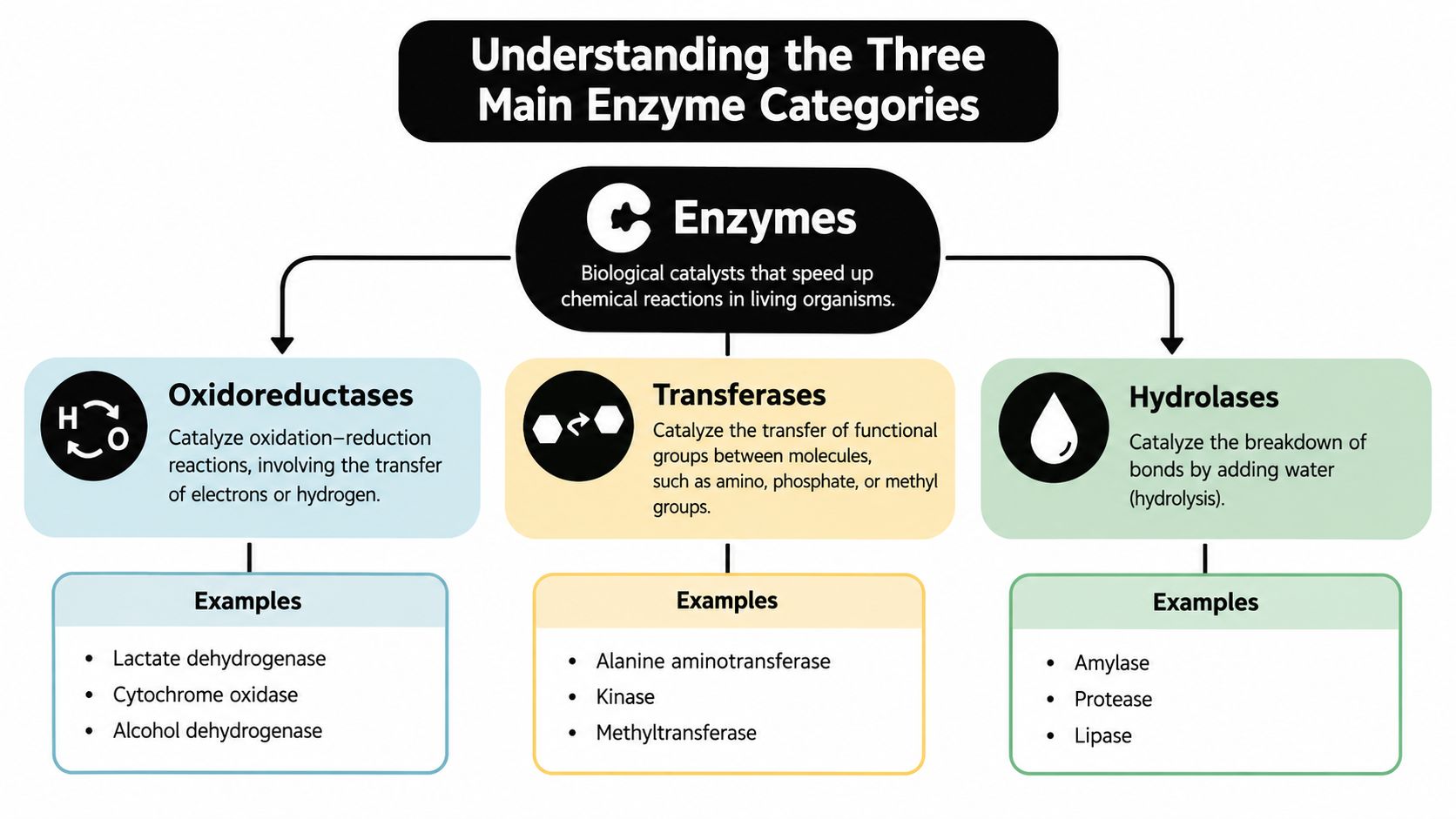
Protease and lipase
Proteases break down proteins. They're the category to examine when discomfort repeatedly follows protein-dense meals, although a supplement shouldn't be used to explain persistent pain, vomiting, or significant changes in bowel habits without clinical assessment.
Lipases support the breakdown of fats. A fatty restaurant meal may leave some people feeling unusually heavy, but that symptom alone doesn't prove a lipase deficiency. Persistent oily stools, unexplained weight loss, or a history of pancreatic disease warrant medical evaluation rather than self-treatment.
The label should identify the enzyme and its activity, not merely list a small amount of powder. Activity units help you compare what the enzyme is intended to do, whereas a milligram weight alone doesn't tell you how active the formula may be.
Carbohydrate-digesting enzymes
Carbohydrate support is less uniform because carbohydrates include several different compounds.
- Lactase targets lactose, the sugar in milk and many dairy foods. It makes the most sense when dairy consistently causes gas, bloating, or urgent stool.
- Alpha-galactosidase targets certain complex carbohydrates in beans, lentils, and some vegetables. It may be a better match for meal-related gas than a general enzyme capsule.
- Amylase supports starch digestion, but broad discomfort after bread, pasta, or other carbohydrate-rich meals doesn't automatically mean you need extra amylase.
For a mixed meal, GutRx MEALTIME is described as a digestive enzyme supplement intended to support digestion, reduce bloating, and enhance nutrient absorption. That positioning makes it a broad meal-support option, not proof that every symptom has an enzyme cause.
A short visual explanation can help clarify how enzyme groups differ:
Clinical Evidence by Symptom Type
A useful trial starts with the trigger, not with a “broad-spectrum” label. Lactase for lactose intolerance is the clearest example: it targets lactose, so a person who reliably reacts to milk can test lactase with dairy. Daily bloating without a consistent food pattern offers a far less certain target.
Alpha-galactosidase has a similarly specific role for gas after beans, lentils, and some vegetables. For a meat-heavy meal followed by difficulty digesting protein, a product listing a protease may be more relevant than one focused only on carbohydrate enzymes. That pairing still does not prove the symptom comes from inadequate enzyme activity, and persistent symptoms need assessment.
What the bloating evidence shows
General bloating can reflect food intolerance, constipation, altered fermentation, meal size, functional gastrointestinal symptoms, or another problem that enzymes will not correct. Medical News Today's evidence review on enzymes and bloating describes small studies in which digestive enzymes appeared to reduce bloating and other gastrointestinal symptoms, while concluding that evidence remains insufficient for broad use.
A peer-reviewed trial illustrates both the potential and the limits. A multi-enzyme and herbal supplement reduced post-meal abdominal distension compared with placebo by 58% at 30 minutes and 68% at 90 minutes. Measurements were 0.93 cm versus 1.50 cm at 30 minutes and 0.94 cm versus 2.12 cm at 90 minutes (peer-reviewed trial on a multi-enzyme and herbal supplement). The findings support interest in that tested formula, not a blanket expectation that every multi-enzyme capsule will work similarly.
Where medical treatment differs
People with diagnosed pancreatic insufficiency require clinician-directed treatment rather than a casual over-the-counter substitute. Prescription enzyme replacement is selected, dosed, and monitored for the underlying condition. A supplement can be reasonable for a defined food trigger, but it should not postpone evaluation of ongoing or worsening symptoms.
Readers examining the relationship between enzymes and IBS symptoms can review this digestive enzymes for IBS guide for added context. Seek medical care for blood in stool, persistent vomiting, fever, or unexplained weight loss.
Quality Control and Label Transparency Issues
A label can identify the ingredients a manufacturer intends to include. It cannot, by itself, confirm that each enzyme remains active through storage, that the dose is meaningful for the target food, or that every batch performs consistently.
Over-the-counter supplements follow different regulatory requirements from prescription enzyme therapies. The FDA's guidance on dietary supplement regulation explains why buyers should assess the manufacturer's documentation rather than assume that a listed ingredient guarantees a specific result. This matters most when a product makes broad promises across several digestive complaints.
Compare claims with verification
| Label feature | Stronger signal | Weaker signal |
|---|---|---|
| Testing | Independent testing or batch verification | A general “quality tested” statement |
| Documentation | A downloadable Certificate of Analysis | No batch-level documentation |
| Enzyme information | Activity units for individual enzymes | A long list with no activity data |
| Formula identity | Specific enzyme names and sources | Vague “digestive complex” wording |
| Intended use | A clear trigger or meal context | Broad promises for every digestive complaint |
ConsumerLab's digestive enzyme review notes that “the amounts of enzymes in supplements can vary widely,” making the stated enzyme activity and independent product testing more useful than an ingredient name alone (ConsumerLab's digestive enzyme quality coverage). Check the page's discussion of enzyme amounts and testing when comparing products. A higher price is difficult to justify when a manufacturer provides no meaningful evidence of identity, potency, or batch control.
Why a COA matters
A Certificate of Analysis may document testing for a specific batch, depending on what the manufacturer releases. It does not show that the formula will resolve your symptoms. It can, however, answer a narrower buying question: does the product have verifiable quality information behind its label?
Use this guide to what a Certificate of Analysis means for supplements to review the document's scope and limitations. Look for the product name, batch identifier, test dates, measured results, and the testing laboratory. If a brand offers polished marketing language without meaningful verification, choose cautiously.
Matching Enzymes to Specific Triggers
The most useful buying framework is a symptom-to-trigger map. Record the meal, suspected food, timing, and symptom, then test one targeted strategy at a time. This approach addresses the common mismatch between broad product promises and the specific digestive problem a supplement may help.
Use the narrowest reasonable match
Dairy discomfort: Choose lactase when milk, ice cream, soft cheese, or another dairy food repeatedly causes symptoms. Lactase addresses lactose digestion, so it has limited relevance when the same discomfort follows non-dairy meals.
Beans and certain vegetables: Alpha-galactosidase fits gas linked to beans, lentils, or some cruciferous vegetables. Constipation and non-carbohydrate-related distension respond poorly to this enzyme because it targets specific fermentable sugars only. The alpha-galactosidase supplement guide provides more detail on this targeted use.
Protein-heavy meals: A formula containing protease may be reasonable when symptoms consistently follow large protein portions. Symptoms after nearly every meal suggest that meal composition is only one possible contributor, so a protease trial may offer little useful information in that pattern.
Fat-heavy meals: Lipase relates to fat digestion. Oily stool or weight changes require clinical attention rather than repeated experimentation with retail supplements.
When a broad blend makes sense
A multi-enzyme product can suit occasional mixed meals when no single trigger is clear. An independent review reported significant improvements in fullness and upper-abdominal discomfort in clinical trials involving functional dyspepsia, with no higher adverse-event rates than placebo. It also described the evidence for general over-the-counter blends as limited (independent review of multi-enzyme blend evidence).
Broad formulas provide convenience, while targeted products create a clearer test. More ingredients do not automatically mean better support. If lactase resolves a dairy-related problem, adding protease, lipase, and several carbohydrate enzymes may increase cost without addressing the relevant trigger.
Gluten intolerance and celiac disease require specific caution. Enzyme products do not replace gluten avoidance for celiac disease, and bloating after wheat may involve fructans or another component rather than gluten itself. Track the suspected food, dose, timing, and symptom change for one to two weeks so the response can be judged against a consistent pattern.
Evaluating Product Quality Standards
Before choosing among the best digestive enzyme supplements, apply a quality filter that works across brands. Start with specific enzyme activity, clear serving directions, and a stated reason for each major ingredient. A formula that names enzymes without showing meaningful activity information leaves you guessing about practical potency.
Next, look for independent testing and batch documentation. Downloadable COAs can support claims about identity and purity, while vegan, non-GMO, and gluten-free standards may matter for dietary compatibility when the manufacturer verifies them. These features don't prove clinical effectiveness, but they provide more useful evidence than a large “complete gut health” promise.
Targeted versus bundled formulas
For a known food trigger, I favor the narrowest formula that addresses that trigger. Lactase for dairy and alpha-galactosidase for certain bean-related gas are easier to evaluate than a product that combines enzymes with probiotics, prebiotics, herbs, and broad microbiome claims.
Combination products may be convenient, but they can also be expensive and harder to troubleshoot. Independent medical commentary continues to caution that over-the-counter enzymes are unregulated and often offer limited benefit for broad digestive complaints, even when products are packaged with “gut health” positioning (Diet vs Disease review of digestive enzyme supplements).
My buying standard: Choose a product that makes its enzyme activity, testing process, and intended use easy to verify.
For occasional mixed-meal support, a transparent broad formula may be a sensible experiment. For recurring symptoms, use the supplement as a short, focused test and reassess if the pattern doesn't improve. Don't let a supplement replace evaluation of persistent pain, diarrhea, constipation, or unexplained changes in digestion.
GutRx offers digestive support products designed around specific needs, including Mealtime for enzyme support and other formulas for broader microbiome goals. Visit GutRx to review the available options, check the product details, and choose a formula that matches your trigger rather than relying on a generic enzyme list.


