

The most popular advice about supplements that are 3rd party tested is also the least useful: look for a seal and assume the product is safe. A seal can be meaningful, but the phrase “lab tested” may describe anything from a defined independent certification program to a vague brand claim. The practical question isn't whether a product was tested. It's who tested it, what they tested, and whether the result applies to the lot in your bottle.
For probiotics, synbiotics, postbiotics, and digestive enzymes, that distinction matters. A credible quality program can assess identity, declared potency, contaminants, manufacturing controls, and, for some products, dissolution or banned substances. It still won't prove that a supplement will work for your individual symptoms, and it won't guarantee that every bottle ever produced is identical.
Table of Contents
- What Third-Party Testing Actually Guarantees
- Comparing the Major Independent Certifiers
- The Real Value of Contamination Control
- How to Read and Verify a Certificate of Analysis
- Red Flags and Tightening Marketplace Standards
- Your Pre-Purchase Quality Verification Checklist
What Third-Party Testing Actually Guarantees
Third-party certification means an independent organization with no ties to the manufacturer evaluates the product and, in some programs, the manufacturing process. That differs from a brand's own quality-control testing. Internal testing can be useful, but the manufacturer controls the sampling, laboratory relationship, and reporting process. An external certifier adds separation between the company selling the product and the organization judging it.
The scope of verification depends on the program. Independent certification may examine:
- Identity: Whether the product contains the listed ingredients.
- Potency: Whether active ingredients match the declared amount.
- Purity: Whether the formula stays within specified contaminant limits.
- Manufacturing controls: Whether the facility follows applicable Good Manufacturing Practice requirements.
- Dissolution: Whether a product breaks down properly for absorption, where the program includes that assessment.
The meaning of third-party testing therefore isn't “this supplement is effective.” It's closer to “an independent party evaluated defined quality characteristics under a defined standard.” That's valuable, especially when label accuracy and contamination are the main concerns, but it has boundaries.
The lot limitation most shoppers miss
A passing result applies to the specific sample or lot tested. It doesn't permanently guarantee that every bottle from the brand matches that result, that future production will remain unchanged, or that the formula will suit your physiology. This is particularly important for products containing multiple strains, complex botanicals, or ingredients that can vary during manufacturing and storage.
A certification seal may lower the likelihood of a mismatch between label and contents, but you still need to identify the seal's scope. Some programs emphasize identity, potency, purity, and manufacturing. Others add dissolution testing, off-the-shelf sampling, or banned-substance screening.
Practical rule: Treat “third-party tested” as the beginning of your investigation, not the conclusion.
For a daily probiotic, a shelf-stable formula, or a digestive enzyme used around meals, the label should tell you enough to find the certifier, understand the standard, and request documentation. If the company can't identify the laboratory or certification program, the claim gives you little usable information.
Comparing the Major Independent Certifiers
The seal matters because different organizations target different failure points. USP Verified is designed to assess whether a supplement contains its listed ingredients at the declared amount, meets purity expectations, dissolves properly where applicable, and is manufactured under current GMPs. NSF certification uses independent testing and manufacturing audits, while NSF Certified for Sport adds screening for substances prohibited in sport. ConsumerLab uses off-the-shelf testing through its voluntary Quality Certification Program, so its work can evaluate products purchased as consumers encounter them rather than relying only on samples supplied by a brand.
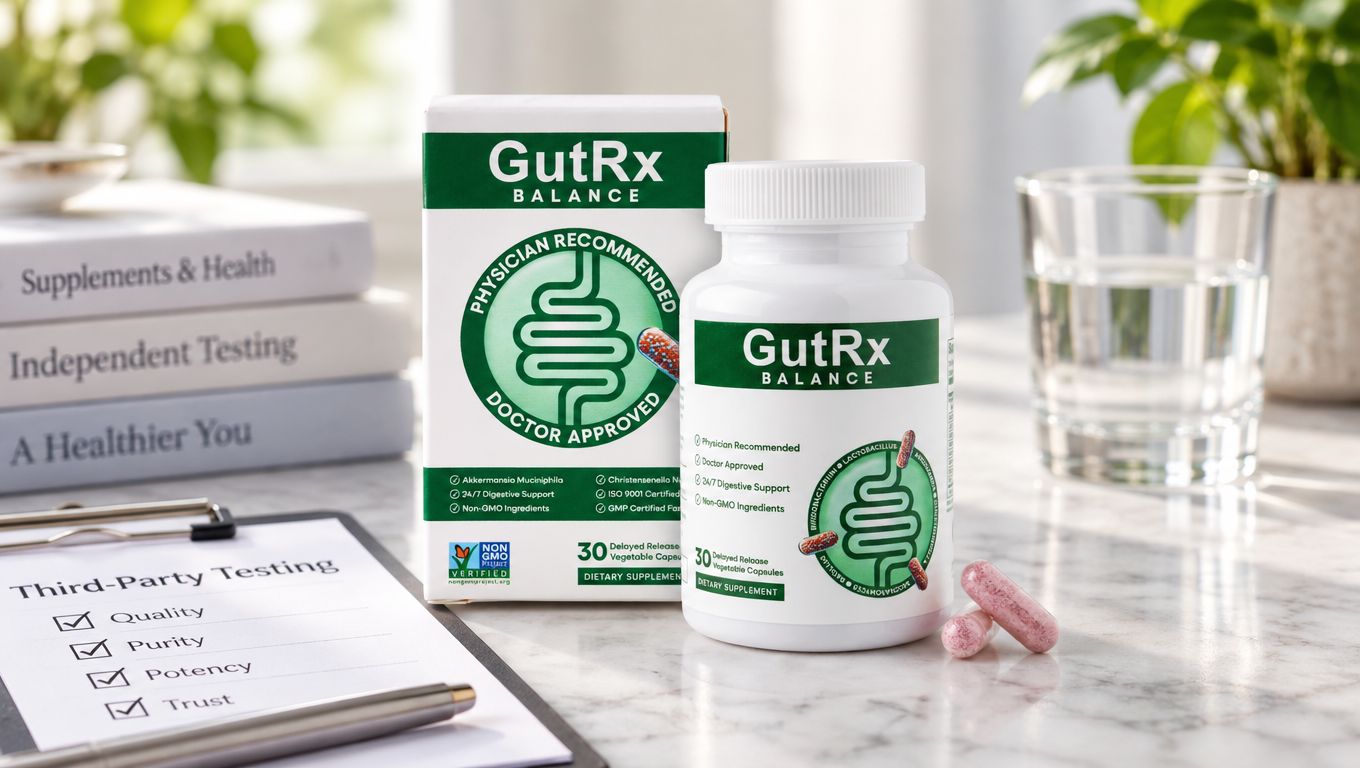
These programs shouldn't be treated as interchangeable badges. A consumer choosing a probiotic may prioritize strain identity and declared potency. An athlete may need banned-substance screening. Someone comparing a complex botanical formula may care most about contaminant controls and manufacturing oversight.
Major Supplement Certifiers Compared
| Certifier | Core Verification Focus | Unique Testing Features |
|---|---|---|
| USP Verified | Identity, potency, purity, dissolution, and controlled manufacturing | Assesses whether listed ingredients match declared amounts and whether the product is made under current GMPs |
| NSF | Product quality, contaminant controls, and manufacturing practices | Includes lot-by-lot or off-the-shelf testing, annual GMP audits, chain-of-custody controls, and review of formulation changes |
| NSF Certified for Sport | Standard NSF quality checks plus athlete-focused safety | Adds banned-substance screening |
| ConsumerLab | Independent evaluation of real retail products | Its voluntary Quality Certification Program tests off-the-shelf products rather than relying solely on brand-supplied samples |
A product such as GutRx BALANCE is described as offering 30 billion CFUs per capsule with next-generation probiotics for gut health, digestive balance, and immune support. That product description tells you what the formula is designed to provide. It doesn't, by itself, tell you which independent organization verified the product or what the verification covered.
Choosing the right type of proof
If you're buying a probiotic for bloating or irregularity, ask whether the documentation addresses strain identity, potency, and contamination. If you're buying a women's probiotic with cranberry and D-mannose, ask whether the certificate covers the actual finished product rather than only incoming ingredients. If you're an athlete, standard testing may not answer the banned-substance question, so NSF Certified for Sport has a different relevance.
ConsumerLab's approach also illustrates why off-the-shelf testing matters. Its probiotic review tested products through a voluntary certification program, showing that independent programs can assess retail products rather than accepting a manufacturer's preferred sample. That doesn't make one certifier universally better. It makes the sampling model worth examining.
The Real Value of Contamination Control
The strongest technical reason to look for independent testing is contamination control. A supplement can have an attractive label and still contain undeclared ingredients or unacceptable contaminant loads. Independent reviews and regulatory guidance emphasize the need to consider heavy metals, microbes, pesticides, and other adulterants, especially when the formula includes ingredients with more complex safety profiles.
This matters for a multi-ingredient synbiotic, a botanical blend, or a product used by someone particularly sensitive to contamination. Every additional ingredient creates another opportunity for identity confusion, cross-contamination, or an unexpected interaction between raw materials. Testing can't remove all risk, but it can target the problems that matter most: identity, potency, and impurities.
What contamination screening should address
A useful report should make clear which safety endpoints were tested. “Purity tested” is too broad unless the company explains the test panel and the applicable limits.
Look for documentation that addresses:
- Heavy metals: The report should identify the metals examined and show whether results met the stated limits.
- Microbial contamination: This is relevant to products containing live organisms, plant materials, powders, or other ingredients vulnerable to microbial growth.
- Pesticides: Botanicals and agricultural ingredients may warrant pesticide screening, depending on the formula and sourcing.
- Undeclared substances: A meaningful program should explain whether it screens for adulterants or prohibited ingredients relevant to that product category.
- Formula identity: A clean contaminant result doesn't compensate for a product that fails to contain the listed ingredients at the declared potency.
The risk profile should shape your scrutiny. A straightforward enzyme formula and a complex botanical product don't create identical testing questions. A probiotic also has its own quality issue: the organism must be correctly identified, and the viable quantity needs to be measured in a way that supports the label through the expiry date.
What testing does not establish
A clean report doesn't prove clinical effectiveness. It doesn't tell you whether a probiotic will relieve your bloating, whether a digestive enzyme will help with a particular meal, or whether a formula is appropriate alongside your medicines. It only speaks to the endpoints measured.
That distinction protects you from two opposite mistakes. Don't dismiss testing as mere marketing when the program thoroughly examines contamination and manufacturing. But don't convert a quality certificate into a promise of symptom relief. For digestive complaints that persist, worsen, or include concerning features, supplement selection shouldn't replace appropriate clinical evaluation.
How to Read and Verify a Certificate of Analysis
A Certificate of Analysis, or COA, is useful only when it identifies what was tested and connects the result to the product you bought. A generic certificate for a raw ingredient, an undated report, or a document with no lot number can create the appearance of transparency without proving that your bottle passed the relevant tests.
Start with the product label in your hand. Record the lot or batch number, expiration date, serving information, and the exact product name. Then compare those details with the COA supplied by the brand or testing laboratory.
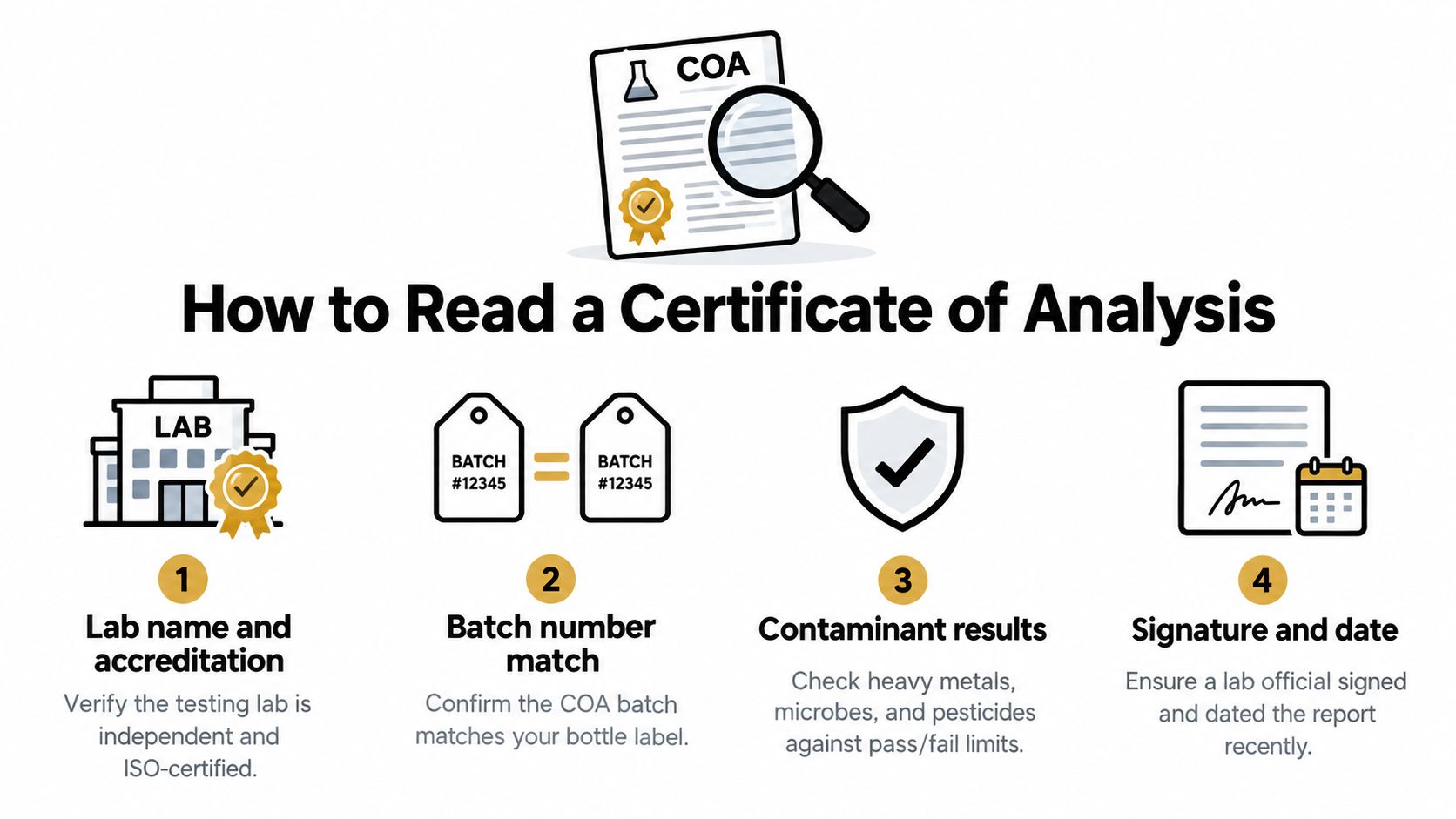
Four checks that make a COA useful
-
Identify the laboratory. The document should name the independent laboratory and describe its qualifications or accreditation. A brand-generated spreadsheet isn't the same as an independent lab report.
-
Match the batch. The COA's lot or batch number should match the number printed on your bottle. If it doesn't, the result may belong to a different production run.
-
Read the actual endpoints. Look for strain identity and quantified CFU content for probiotics, along with heavy-metal, microbial, pesticide, or other contaminant results when relevant. A single “passed” statement gives you less information than named tests with stated limits.
-
Check the date and authorization. Look for the report date and the signature or approval of an authorized laboratory official. An old document may not represent the current lot, even if the formula name is unchanged.
For probiotics, the report should address strain identity and CFU content through the expiry date, not merely the presence of generic “good bacteria.” The product's microbial species and quantities should be accurately represented on the label through its stated shelf life. For a practical explanation of what this document should contain, see how to read a Certificate of Analysis.
The COA should also distinguish between finished-product testing and testing of individual raw materials. A manufacturer may test an ingredient before production, then test the completed capsule or powder separately. Those are different checks. If the company offers only an ingredient certificate, ask whether the finished product was tested as well.
This short video can help orient you to the purpose and layout of laboratory documentation:
If a company won't provide a lot-matched COA, ask customer service whether it can confirm the testing laboratory, the tested endpoints, and the relationship between the document and the product lot. A transparent answer doesn't guarantee effectiveness, but an evasive answer is a reason to keep comparing.
Red Flags and Tightening Marketplace Standards
A label that says “quality tested” or “third-party tested” without naming the organization is weak evidence. You can't evaluate the laboratory, standard, sampling method, or test panel if the brand withholds those details. The same problem appears when a logo looks official but doesn't link to a certifier's registry or explain what the program verifies.
Marketplace requirements are pushing brands toward more formal documentation. Recent coverage reports that Amazon expanded third-party verification requirements across all supplement categories in 2026, according to coverage of Amazon's supplement verification change. That shift makes independent verification more commercially important, but marketplace eligibility still isn't the same as proof that a product will improve your symptoms.
What Amazon's requirements reveal
Amazon's dietary supplement requirements state that products must be manufactured in a facility compliant with FDA cGMP regulations 21 CFR 111 or 21 CFR 117, or an equivalent standard. The cGMP audit or certification must come from an accredited third party. Amazon explicitly excludes private audits, first-party audits, consulting audits, and FDA inspections from that accepted certification pathway.
Amazon also requires the cGMP certificate to be current and unexpired. Its listed accepted programs include NSF/ANSI 455-2, NSF 229, Eurofins, UL GMP 21 CFR 111, USP GMP, SGS GMP, TGA GMP, and SSCI, as described in Amazon's dietary supplement requirements.
That gives shoppers a useful lesson: manufacturing certification and finished-product testing are related but not identical. A facility can meet cGMP requirements while a shopper still needs to ask whether the exact probiotic, enzyme, or synbiotic lot was tested for identity, potency, and contaminants.
Watch for these warning signs:
- Unnamed laboratory: The product says “independently tested” but gives no certifier or laboratory.
- No lot information: The brand publishes a polished COA with no batch number.
- Raw-material substitution: The document covers an ingredient, not the finished product in the bottle.
- Unclear test panel: “Purity” appears without named contaminants or acceptance limits.
- Expired documentation: The certificate is no longer current or doesn't correspond to the product's current formulation.
- Seal without verification: The logo cannot be confirmed through the certifier's own information.
You can also review a brand's manufacturing claims through its U.S.-made supplement information, but “Made in the USA” is not a substitute for a named testing program or lot-specific documentation.
Your Pre-Purchase Quality Verification Checklist
Before adding a probiotic, synbiotic, postbiotic, or digestive enzyme to your cart, run this quick audit:
-
Name the certifier. Don't accept “third-party tested” without the organization's name and a description of its scope.
-
Find the lot-specific COA. Confirm that the brand provides a document tied to a batch or lot, not just a generic formula sheet.
-
Match the label. Compare the COA's product name, lot number, expiration information, and serving details with the bottle you're considering.
-
Check the right potency measure. For a probiotic, look for strain identity and quantified CFUs through expiry. For an enzyme product, look for clearly defined activity measures where applicable.
-
Review contamination endpoints. Look for named testing for heavy metals, microbes, pesticides, and other adulterants relevant to the formula.
-
Separate facility proof from product proof. Confirm that manufacturing occurs under an accredited cGMP program, then ask whether the finished product was independently tested.
-
Verify the testing model. Find out whether the sample came from the retail shelf, the manufacturer, or a specific production lot.
-
Reject outcome promises. A quality certificate supports product consistency and safety controls. It doesn't guarantee relief from bloating, constipation, diarrhea, or other symptoms.
If a brand can answer these questions clearly, you have meaningful information for comparison. If it relies on badges, vague language, or documents that can't be matched to the product, choose a more transparent option.
GutRx offers digestive supplements with third-party testing and downloadable Certificates of Analysis, including probiotic formulas designed for digestive balance and targeted digestive support. Visit GutRx to review the available products and examine the quality information before you buy.


