

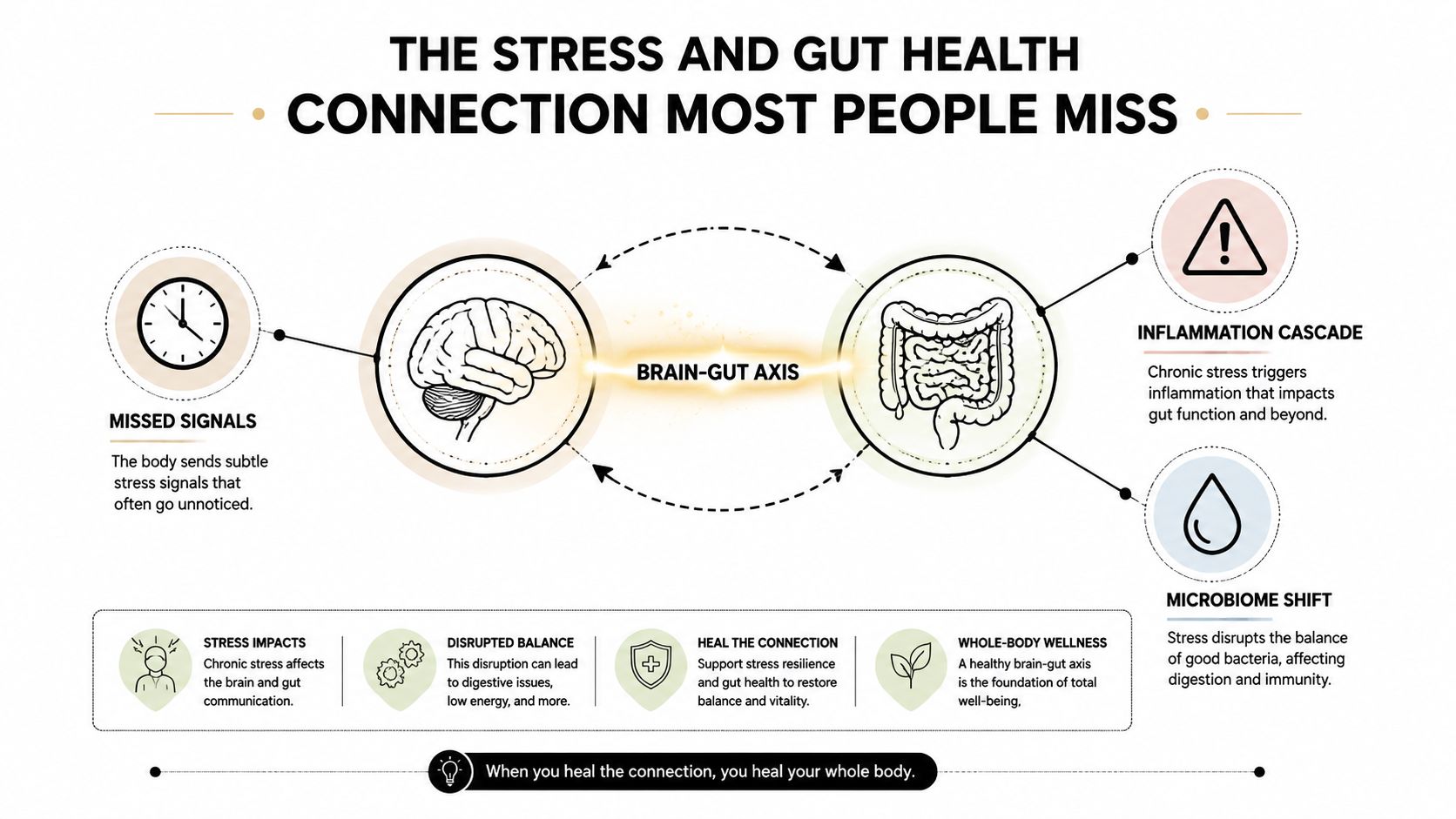
You're rushing through a deadline, your shoulders are tight, and your stomach suddenly feels swollen. Maybe you're nauseated, urgently searching for a bathroom, or wondering why the same meal that felt fine yesterday now seems to trigger discomfort. This pattern is common, and it isn't “just in your head.” Stress and gut health are connected through a two-way communication system called the brain-gut axis.
That connection helps explain why stress can affect motility, gut sensitivity, inflammation, the microbiome, and the symptoms associated with irritable bowel syndrome, or IBS. It also explains why a probiotic, synbiotic, or digestive enzyme may be more useful when it's paired with better sleep, steadier meals, and practical nervous-system regulation.
Table of Contents
- The Brain-Gut Axis: Why Stress Shows Up in Your Digestive Tract
- How Stress Disrupts the Gut at Every Level
- What the Evidence Says About Stress and IBS
- Symptoms and Red Flags to Watch For
- A Practical Plan to Calm Stress and Restore Gut Balance
- The Hidden Roles of Sleep Timing and Stress Biology
- Women, Practitioners, and Choosing the Right Support
- Bringing It All Together in 30 Days
The Brain-Gut Axis: Why Stress Shows Up in Your Digestive Tract
A tense morning meeting can leave you with little appetite, while the same stress later in the day may bring urgency or abdominal discomfort. These shifts reflect the brain-gut axis, the communication network connecting emotional and cognitive brain regions, including the amygdala, prefrontal cortex, and insula, with the enteric and autonomic nervous systems.
The vagus nerve carries signals in that network, and the hypothalamic-pituitary-adrenal, or HPA, axis adds hormonal control during the stress response. Together, these systems help explain why stress may change how quickly food moves, how strongly ordinary intestinal activity feels, and how the gut barrier responds to microbial and immune signals.
A clinical review describes psychological stress as a factor that can alter gastrointestinal motility, increase gut sensitivity, and contribute to inflammation and microbiome changes. The clinical review on stress and gut pathophysiology reflects the shift from viewing digestive symptoms as purely structural.
The gut is an active communication system
Food affects digestion, but the gut also works as a sensor and signal generator. Immune cells, nerve endings, hormones, microbes, and the intestinal lining continually send information to the brain.
That feedback can influence mood, sleep, appetite, and stress tolerance. During periods of heightened reactivity, ordinary digestion may feel unusually intense. A normal stretch after eating can register as painful fullness, while a routine change in motility may become urgency, constipation, or loose stool.
The timing of symptoms can provide useful context. Morning urgency may follow anticipatory stress before work or school, while evening bloating may reflect accumulated mental load, rushed meals, or reduced recovery time. Tracking when symptoms appear, alongside stress and meals, can reveal patterns that a food list alone misses.
Practical rule: If symptoms repeatedly appear during emotional or cognitive overload, treat nervous-system regulation as part of digestive care, not as a substitute for it.
Why this changes supplement decisions
A supplement can support one part of the digestive environment, but it cannot address every signal driving symptoms. Someone seeking a probiotic for bloating may benefit from microbiome support, while another person may need meal-based enzymes, clinician-guided dietary assessment, or help reducing stress-related gut sensitivity.
For a plain-language overview, read GutRx's guide to gut-brain axis supplements. A practical plan can combine symptom tracking, appropriate clinical evaluation, and support for both the gut and nervous system.
How Stress Disrupts the Gut at Every Level
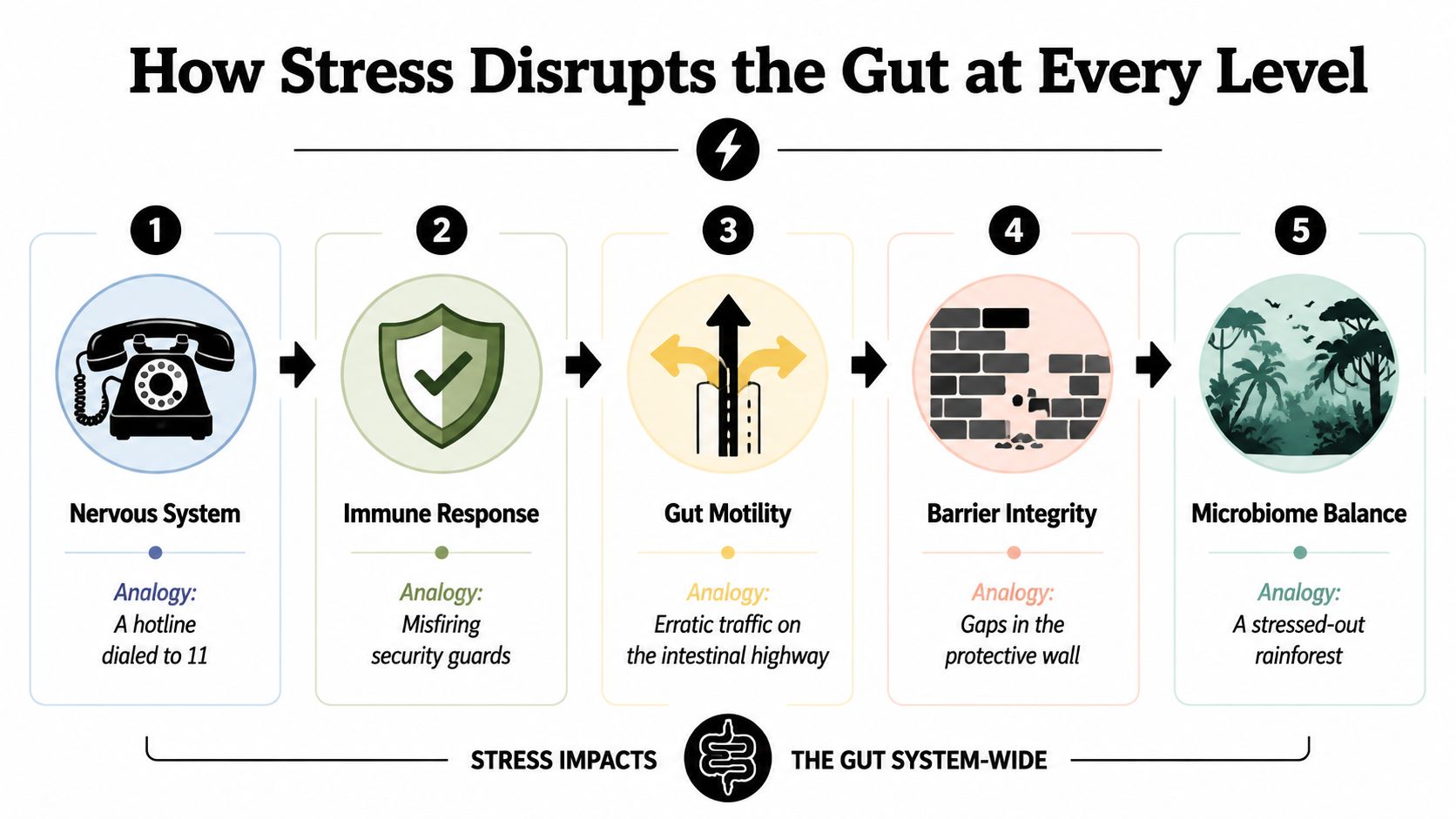
Stress doesn't affect digestion through one switch. It changes several connected systems, which is why the same person can experience bloating, constipation, diarrhea, reflux, and pain at different times.
Five connected pathways
-
Nervous signaling acts like a hotline dialed too high. The vagus nerve supports rest-and-digest activity, while sympathetic signaling prepares the body for action. Repeated stress can shift that balance toward fight-or-flight, making digestion less coordinated. The result may be a heavy feeling after meals, altered appetite, or greater awareness of abdominal sensations. A review of the microbiota-gut-brain axis describes stress-related effects on blood flow, secretion, permeability, motility, and immune activation.
-
Immune signaling can resemble a low-grade fire. Stress hormones interact with immune cells in the gut, including mast cells, and can promote inflammatory signaling. You may not have visible tissue injury, but the lining can become more reactive. That reactivity may contribute to discomfort, food-related sensitivity, or changes in bowel habits.
-
The microbiome can lose ecological balance. Think of the gut microbiome as a rainforest. A stable ecosystem contains many organisms interacting with one another, while repeated stress can shift community composition and reduce microbial diversity. Reviews of chronic stress describe changes that can affect motility, secretion, sensitivity, and the intestinal barrier. Research on stress-related microbiome and barrier changes supports viewing persistent stress as a factor in symptom variability rather than a passing emotional inconvenience.
-
Motility becomes erratic traffic. The intestines need coordinated contractions to move contents forward. Stress can accelerate movement in some situations and slow it in others, creating urgency, loose stool, constipation, or an alternating pattern. That helps explain why stress-related gut symptoms don't always look the same from one person to the next.
-
Permeability creates gaps in the protective wall. Intestinal cells are joined by structures called tight junctions. Acute psychological stress can measurably increase small-intestinal permeability in humans, and the effect has been linked to corticotropin-releasing hormone, or CRH, and mast-cell activation. The human study of stress, CRH, and intestinal permeability found that peripheral CRH reproduced the permeability effect, while disodium cromoglycate blocked stress- and CRH-induced changes.
When the barrier becomes more permeable, luminal antigens and microbial products can pass between cells more readily. That can amplify immune activity, visceral sensitivity, and IBS-like symptoms. A 2024 study also described a CRH-CRHR1-mitochondria pathway in which acute stress affected colonocytes, epithelial hypoxia, and dysbiosis, adding detail to the brain-to-gut transfer mechanism. The study of CRH, colonocytes, and stress-related dysbiosis offers one example of how researchers are mapping that pathway.
For people considering a targeted probiotic for digestive balance, GutRx BALANCE offers 30 billion CFUs per capsule with next-generation probiotics for gut health, digestive balance, and immune support. It should be considered alongside, rather than instead of, stress regulation and appropriate medical care.
What the Evidence Says About Stress and IBS
IBS shows how stress can shape symptoms without making those symptoms imaginary. A 2014 review estimated that IBS affects 11.2% of the world population and reported that at least one psychiatric disorder occurs in 40% to 60% of people with IBS, with some reports reaching 80%. The same review linked stressful life events with worsening abdominal pain and distension in up to one-third of patients. The NIH review of IBS epidemiology and psychiatric comorbidity places these findings in a global clinical context.
A later systematic review and meta-analysis of 73 papers found anxiety symptoms in 39.1% of people with IBS, anxiety disorders in 23%, depressive symptoms in 28.8%, and depressive disorders in 23.3%. Compared with healthy controls, people with IBS had about three-fold higher odds of anxiety or depression. The 2021 IBS anxiety and depression meta-analysis helps explain why stress regulation is often included in digestive care.
| Study type | Population | Key finding | Relevance to stress-gut link |
|---|---|---|---|
| Review of global IBS literature | People with IBS across international research | IBS is widespread and psychiatric comorbidity is common | Stress and mental health can modify symptom burden |
| Systematic review and meta-analysis | IBS patients across 73 papers | Anxiety and depressive symptoms are frequent, with roughly three-fold higher odds than healthy controls | The brain-gut connection is clinically meaningful |
| Human permeability study | People exposed to acute psychological stress | Stress-related permeability changes involved CRH and mast-cell activity | Stress can affect the gut barrier through a defined pathway |
| Stress and gut pathophysiology review | Clinical and research evidence | Stress affects motility, sensitivity, inflammation, and microbiome behavior | Symptoms can arise from several interacting systems |
The pattern also varies by person and by time of day. One person may notice symptoms after a morning rush or a poor night of sleep, while another may flare during evening worry or before a demanding event. Tracking the timing of stress alongside meals, sleep, bowel habits, and symptom intensity can reveal a usable signal rather than treating every flare as random.
IBS is not a psychological disorder. Its symptoms are real, and stress is one modifiable upstream variable that can change how strongly the gut responds. For condition-specific care, IBS treatment guidance from GutRx can help organize questions for a clinician, while persistent or concerning symptoms still require medical evaluation.
Symptoms and Red Flags to Watch For
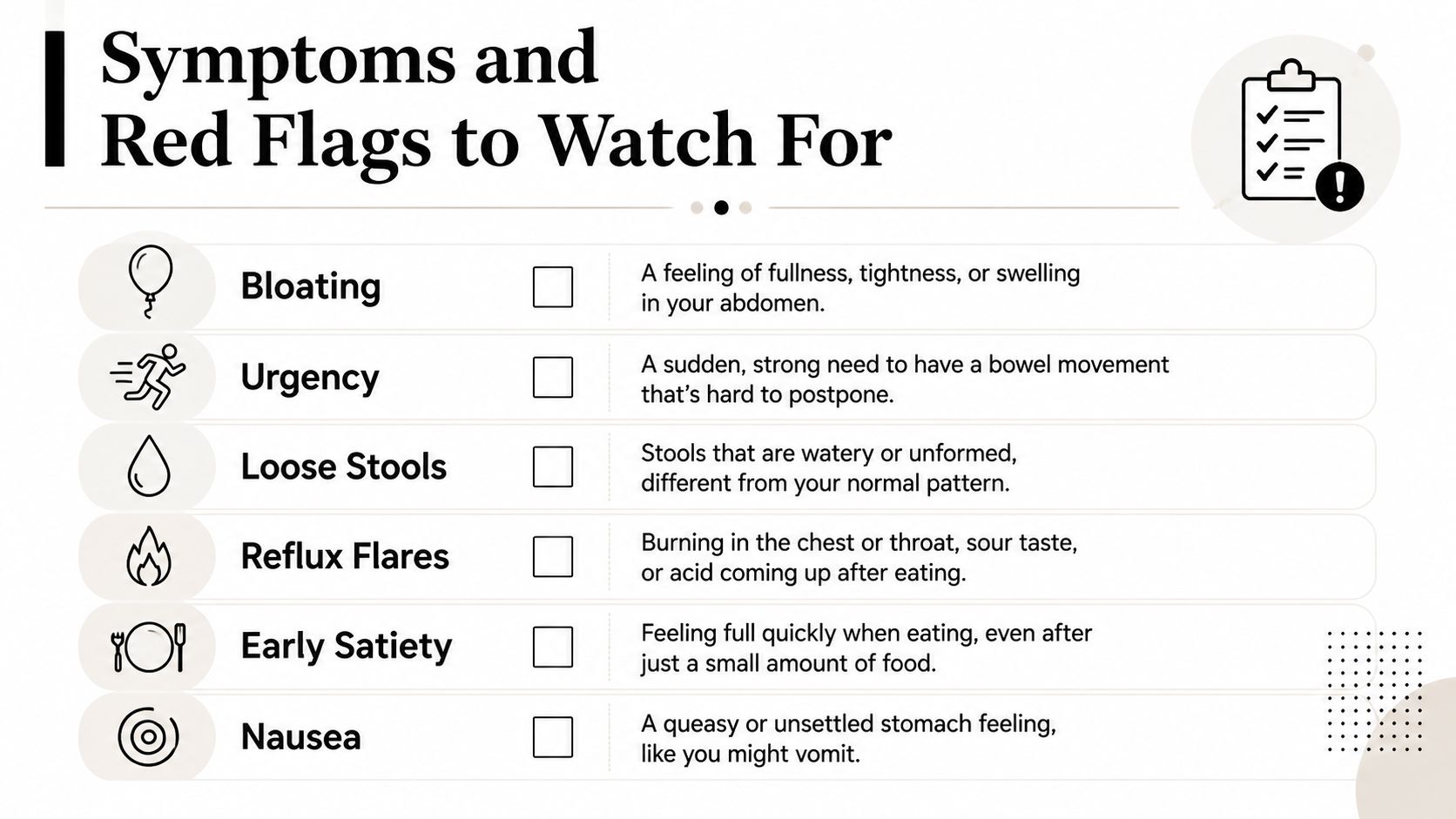
Stress-related gut symptoms often follow a recognizable pattern. They may appear during a demanding work period, after poor sleep, before an important event, or when worry keeps the nervous system activated.
Common patterns include:
- Bloating: Altered motility and heightened visceral sensitivity can make normal intestinal gas or stretching feel more uncomfortable.
- Urgency or loose stools: Faster or poorly coordinated transit may occur during acute stress.
- Reflux flares: Stress can interact with motility, sensitivity, and eating behavior, making upper-GI symptoms feel more pronounced.
- Early satiety and nausea: Slower stomach emptying, altered signaling, or heightened sensitivity may create fullness sooner than expected.
- Appetite swings: Fight-or-flight activation can reduce appetite for some people and drive comfort eating for others.
A symptom pattern that tracks with stress can still deserve medical attention. Seek prompt evaluation for unintentional weight loss, GI bleeding, anemia, nocturnal pain or diarrhea, difficulty swallowing, persistent vomiting, new-onset symptoms after age 50, or a family history of colorectal cancer or inflammatory bowel disease.
Those findings can change the appropriate next step. A clinician may consider bloodwork, stool studies, endoscopy, or supervised dietary guidance rather than a self-directed supplement experiment. A low-FODMAP approach may help some people identify triggers, but it should be used as a structured, short-term process with professional guidance when symptoms are complex.
Track meals, sleep timing, stress load, bowel patterns, pain, and supplements without turning the log into constant surveillance. The purpose is to identify repeatable relationships and give a clinician useful information, not to make you monitor every sensation.
A Practical Plan to Calm Stress and Restore Gut Balance
The most effective approach usually starts with the most impactful behaviors and adds targeted products only when the symptom pattern makes them relevant. This prevents a common mistake, buying a probiotic for gut health while ignoring the sleep disruption or meal pattern that keeps activating symptoms.
Start with autonomic regulation
Slow diaphragmatic breathing can help shift attention away from threat monitoring and toward a calmer physiological state. Try breathing gently into the lower ribs, keeping the exhale comfortable and unforced, then add moderate movement such as walking, cycling, or easy strength work.
Short mindfulness sessions, yoga, and gut-directed relaxation may help reduce the intensity of IBS symptoms for some people. The aim isn't to eliminate stress from life. It's to give the nervous system repeated experiences of returning to baseline.
Stabilize daily rhythms
Keep sleep and wake times as consistent as your schedule allows. Eat at reasonably predictable times, sit down for meals, chew thoroughly, and avoid making every meal a rushed transaction.
Sleep timing matters because the gut receives signals from the body clock as well as from food and stress. Irregular schedules can make it harder to tell whether a symptom came from an ingredient, a meal gap, insufficient rest, or a high-alert nervous system.
Build a tolerable dietary foundation
Prioritize a varied intake of fiber-rich foods, gradually increasing variety when your symptoms allow. A Mediterranean-style pattern can provide vegetables, fruit, legumes, whole grains, nuts, seeds, and unsaturated fats, but the right version is the one you can digest and sustain.
If bloating and irregularity remain difficult, a clinician or dietitian may use a low-FODMAP trial as a diagnostic tool. It shouldn't become a permanent, increasingly restrictive diet without a structured reintroduction process.
Use supplements as targeted tools: Match a strain-identified probiotic to the symptom goal, use digestive enzymes with the meals they're designed to support, and look for transparent quality markers such as strain identity, CFU information, and third-party testing.
Supplement selection requires restraint. The provided evidence supports strain-specific thinking, but it doesn't establish one universal dose range or duration for every person, and it doesn't justify assuming that more CFUs are always better. Magnesium glycinate and omega-3s may be discussed with a qualified clinician when appropriate, especially if you take medication or have an underlying condition.
The Hidden Roles of Sleep Timing and Stress Biology
“Reduce stress” is incomplete advice if it ignores when stress occurs. Research on the gut-brain axis suggests that gut microbes can regulate stress responsivity in a circadian manner, and microbiota transplantation research has shown that daily oscillations in gut microbes can affect glucocorticoid secretion and stress-sensitive behavior. The research on circadian microbiota and stress responsivity makes sleep timing relevant to digestive symptoms.
A late bedtime, rotating schedule, or night shift can change the context in which the gut meets meals and stress signals. The same stressful email may feel different to the digestive system after restorative sleep than after a disrupted night. Morning and evening stress may also produce different symptom experiences because hormone rhythms, feeding patterns, and microbial activity vary across the day.
The population question matters too. Adolescents under sustained pressure, high-demand professionals, caregivers, shift workers, and people with IBS-like symptoms may not share the same baseline vulnerability. A 2025 adolescent study associated high chronic stress with altered gut microbiota composition and metabolite profiles, while emphasizing that longitudinal research is still needed to clarify causality. The adolescent study of chronic stress and the gut microbiome supports a careful interpretation, not a claim that stress alone determines a person's microbiome.
A better question than “How stressed are you?” is “When does stress meet your gut?”
Record whether symptoms follow late nights, skipped breakfasts, rotating shifts, exam periods, caregiving demands, or evening work. You can find additional routine-oriented support in the GutRx sleep and relaxation collection, but persistent symptoms should still be assessed on their own merits.
Women, Practitioners, and Choosing the Right Support
Women may experience stronger brain-gut signaling because reproductive hormones can influence motility, intestinal permeability, and pain sensitivity across the menstrual cycle. Stress load can add another layer, particularly when symptoms cluster around menstruation, perimenstrual changes, caregiving responsibilities, or poor sleep.
That doesn't mean every digestive symptom in a woman is hormone-related. It means cycle timing can be useful clinical information. Record bowel changes, bloating, pain, nausea, reflux, stress exposure, and supplement use across the cycle so patterns become easier to discuss.
A selection framework for practitioners
Clinicians and nutrition professionals should begin with the symptom pattern and safety screen, not the product label.
- For IBS-type symptoms: Look for evidence tied to a named strain rather than relying only on a species name or a high CFU number. Bifidobacterium infantis 35624 is one example often discussed in IBS-focused probiotic evidence.
- For diarrhea support: Lactobacillus rhamnosus GG is an example of a named strain used in diarrhea-related probiotic discussions, but the cause, duration, medication history, and hydration status still determine whether supplementation is appropriate.
- For meal-related discomfort: Digestive enzymes may be more logical than a daily probiotic when symptoms consistently follow dairy, high-fat meals, or specific carbohydrate-rich foods. The formula should match the food and be taken as directed with the meal.
- For product quality: Check strain identification, CFU labeling, storage instructions, expiration handling, and credible third-party testing. A downloadable Certificate of Analysis can make verification easier, but it doesn't replace clinical judgment.
Referral is appropriate for red flags such as bleeding, anemia, unintentional weight loss, nocturnal symptoms, persistent vomiting, or new symptoms after age 50. Psychological support can also be clinically relevant when fear, hypervigilance, trauma, or anxiety is maintaining the symptom cycle, while gastroenterology evaluation remains important when the pattern is atypical or worsening.
Practitioner summary box
- Screen safety first: Check red flags, medications, pregnancy status, relevant diagnoses, and symptom duration.
- Define the target: Separate bloating, constipation, diarrhea, pain, reflux, and meal-specific discomfort.
- Match the intervention: Choose behavioral care, dietetic support, enzymes, probiotics, or referral according to the pattern.
- Review response: Track symptoms and tolerability, then continue, adjust, or escalate based on the result.
Bringing It All Together in 30 Days
A structured month can turn stress and gut health from a vague concern into a pattern you can evaluate.
Week 1 focuses on observation and rhythm. Note your main stress triggers, sleep and wake timing, meal timing, bowel pattern, and the situations in which symptoms appear. Add a brief breathing practice and protect a consistent sleep schedule.
Week 2 adds food and meal structure. Keep hydration steady, slow down meals, and choose either a Mediterranean-style shift or a professionally guided low-FODMAP trial if your symptoms call for it. Change one meaningful variable at a time so you can interpret the result.
Week 3 introduces targeted support. If bloating, irregularity, diarrhea-type discomfort, or meal-related symptoms remain, discuss a strain-specific probiotic or a digestive enzyme matched to the suspected trigger. Check the label for strain identification, CFU information, directions, and third-party quality testing.
Week 4 is for review. Compare symptom frequency and intensity with your initial notes, identify the strongest triggers, and decide whether to continue the routine or seek clinical evaluation. Red flags, worsening symptoms, or a lack of a clear pattern should move you toward a clinician rather than toward increasingly complex supplementation.
Consistency matters more than perfection. Your notes can become a diagnostic tool that shows how sleep timing, stress exposure, meals, and targeted support interact.
GutRx offers digestive supplements designed around different needs, including daily regularity, digestive balance, microbiome support, and meal-based enzyme support. Visit GutRx to compare the available formulas and choose a product that fits your symptoms alongside the stress, sleep, and clinical-care steps discussed here.


