

The honest answer is indication-dependent. Start with a minimum 4-week trial, use 8 to 12 weeks for IBS, bloating, and regularity, and consider 7 to 21 days for short-course goals such as antibiotic-associated diarrhea.
You've probably bought a probiotic after a stretch of bloating, irregular bowel movements, or digestive discomfort, then wondered whether you should feel something tomorrow, next week, or after the bottle is empty. The useful question isn't only “how long should I take probiotics?” It's what symptom are you targeting, which strain is in the formula, and what result will justify continuing?
A probiotic trial works best when you define the endpoint before you begin. Track one symptom, take the product consistently, and reassess at a meaningful checkpoint instead of stopping after a few days or continuing indefinitely by habit.
Table of Contents
- What a Sensible Probiotic Timeline Looks Like
- Why Probiotics Are Measured in Weeks, Not Days
- Probiotic Duration by Symptom and Goal
- Factors That Change How Long You Should Take Probiotics
- Monitoring Benefits, Side Effects, and the Stop-or-Continue Decision
- Two Sample Regimens for Acute and Maintenance Goals
- The Longer-Is-Not-Automatically-Better Trap
- Key Takeaways and Your Personal Decision Rule
What a Sensible Probiotic Timeline Looks Like
A sensible timeline matches the probiotic trial to its purpose. Use the first 4 weeks to establish whether the product produces an initial effect. Persistent digestive concerns may require evaluation through 8 to 12 weeks, while acute support, such as antibiotic-associated diarrhea, can call for a shorter 7-to-21-day window. Research reviewed in this published probiotic trial review illustrates why sustained exposure matters more than judging a formula after only a few doses.
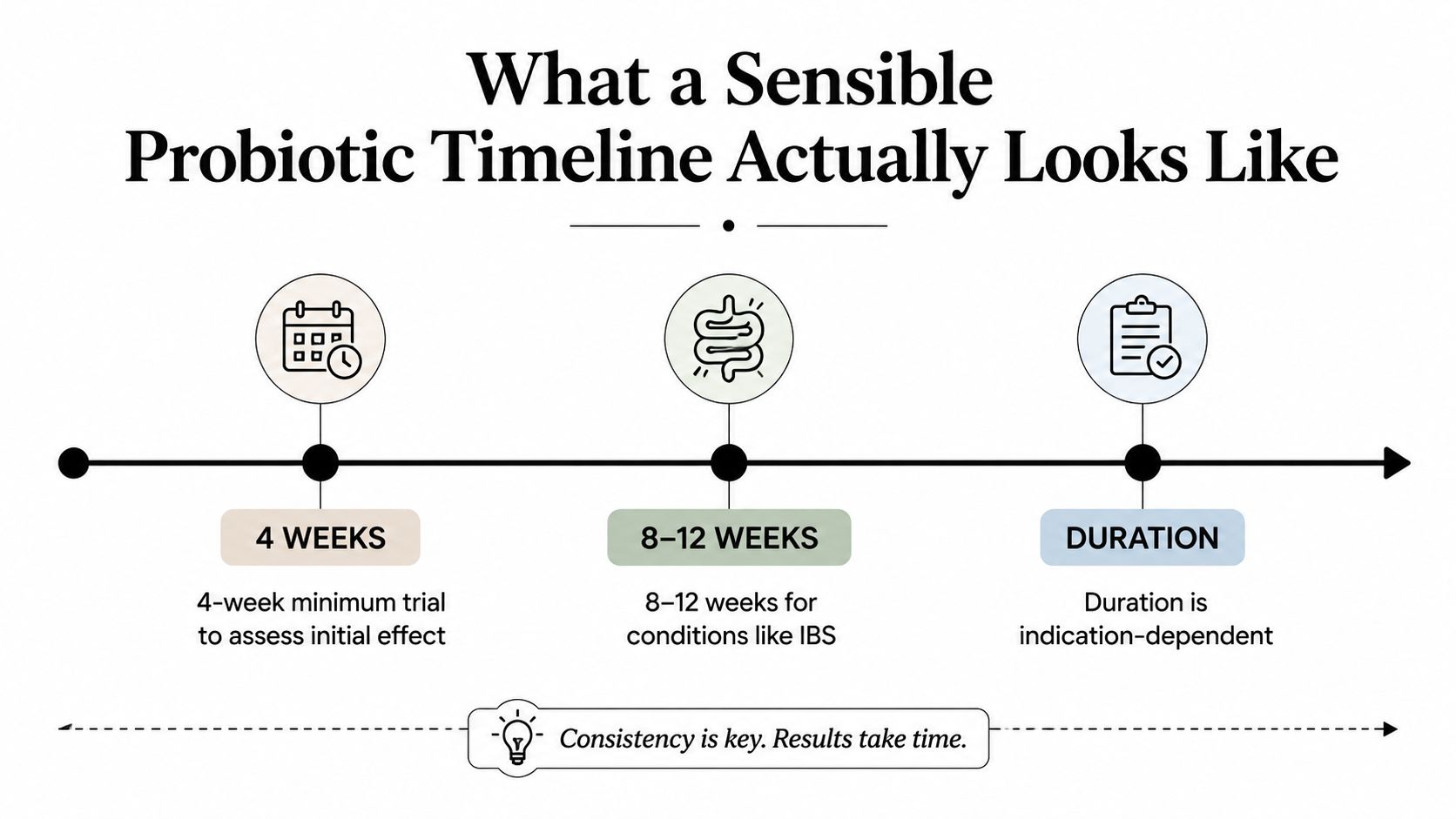
What to expect across the trial
- Week 1: Prioritize consistent use and tolerance. Gas, stool frequency, or abdominal sensations may change, but early effects do not establish that the formula is addressing your main goal.
- Weeks 2 to 4: Look for a clear direction. Bowel movements may become more predictable, bloating less disruptive, or digestion more comfortable. For an acute target, this checkpoint may provide enough information to continue or stop.
- Weeks 5 to 8: This period gives a more useful read on ongoing bloating, constipation, or IBS-type symptoms. A historical placebo-controlled digestive trial included a 2-week run-in period before an 8-week intervention, supporting assessment over sustained use rather than a handful of doses. The review is available in this published probiotic trial review.
By Weeks 9 to 12, choose among three options: continue because the benefit is meaningful, change the strain or product, or stop because the result is unclear or absent. Digestive-care guidance commonly treats 12 weeks as a reasonable upper evaluation limit when symptoms have not clearly improved.
Practical rule: Set the target and reassessment date before starting. Continue only when the observed benefit justifies ongoing use.
A recovery-focused plan may follow a different course from routine supplementation. This guide to how long gut healing may take provides broader context for that distinction. For a daily formula intended to support regularity, a defined trial helps prevent both premature stopping and indefinite use by habit.
Why Probiotics Are Measured in Weeks, Not Days
A probiotic capsule does not act like an antacid. You might notice a digestive change quickly, yet meaningful assessment usually requires repeated use. The timeframe depends on the strain's mechanism, the existing gut environment, and the outcome being tracked. A global review of probiotic study durations found intervention periods ranging from 30 days to more than 10 years, showing why one universal schedule is unreliable.
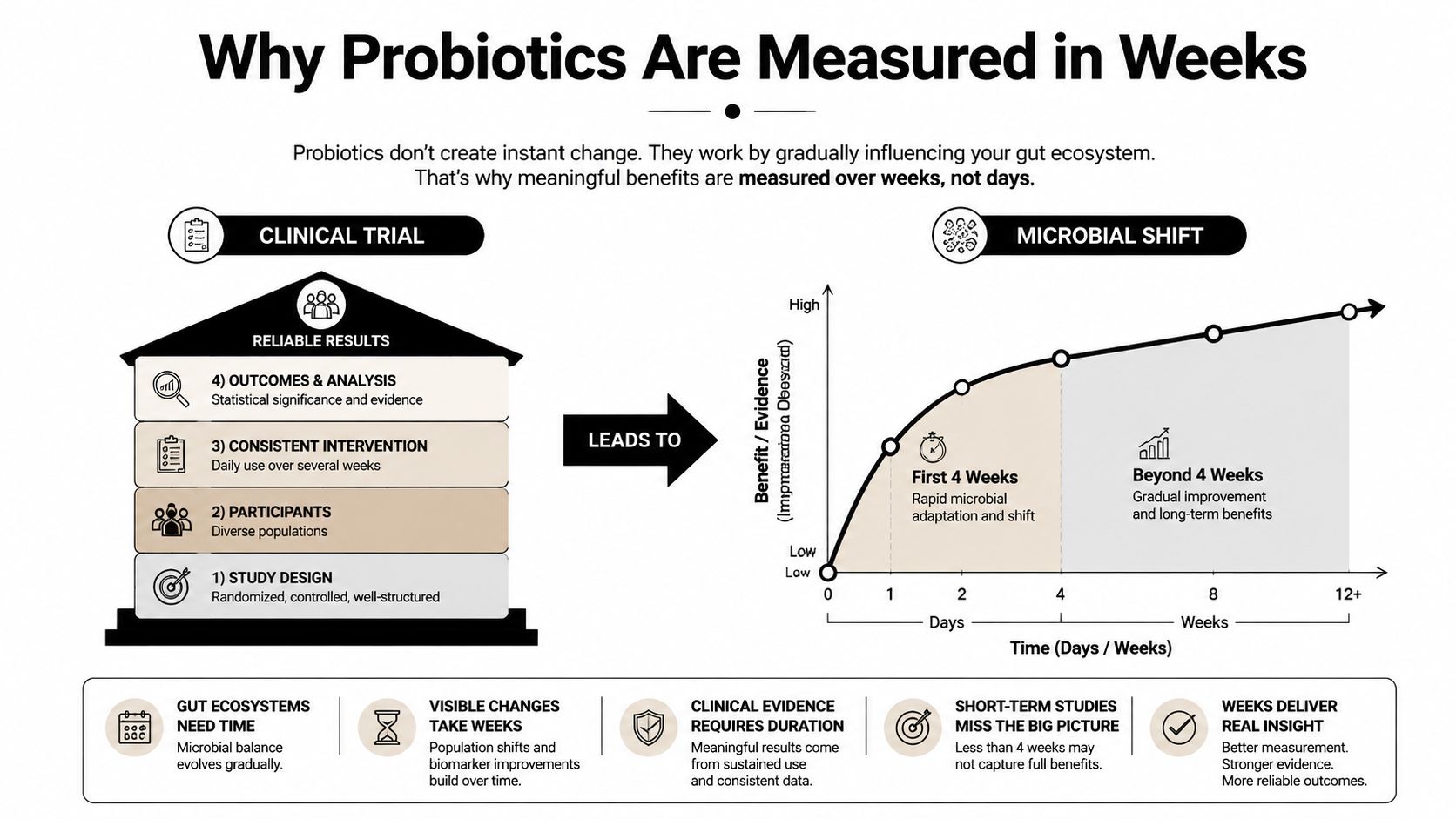
The biology behind the waiting period
Many probiotic microorganisms are transient. They may affect the gut while you take them without permanently replacing resident microbes. Consistent daily dosing gives the selected strain more opportunities to interact with existing microorganisms, digestive contents, and the intestinal lining. Any effect can lessen after stopping because the supplement does not necessarily permanently rebuild the microbiome.
The intended outcome also sets the pace. A yeast-based probiotic used for antibiotic-associated diarrhea has a different role from a bacterial blend used for bowel regularity or IBS-related bloating. Short-term support may target a narrow disruption. Chronic digestive symptoms require enough observation to detect a meaningful change in stool pattern, discomfort, or bloating burden.
Why clinical checkpoints matter
Researchers use a stable baseline and repeated observations to separate a treatment signal from ordinary symptom fluctuation. Digestive symptoms change from day to day, so one comfortable morning does not establish efficacy, while one difficult day does not automatically disprove it.
Trial designs commonly run for several weeks, and clinical guidance often uses a minimum 4-week trial, extending to 12 weeks when the goal is symptom improvement. The NIH probiotic evidence summary describes the strain-specific nature of probiotic evidence and the range of outcomes studied. Weeks rather than days reflect the time needed to judge a pattern, not a marketing delay.
Probiotic Duration by Symptom and Goal
The right duration follows the goal you are testing. Someone taking a probiotic during antibiotic treatment needs a different plan from someone assessing chronic constipation or IBS-related bloating. Evidence varies by strain, formulation, and condition. An IBS systematic review and meta-analysis found study periods ranging from 4 to 24 weeks. In that analysis, significant symptom improvement appeared in groups treated for 8 weeks or more, while shorter periods did not show a statistically significant benefit.
| Indication | Typical Duration | Symptom or Endpoint to Track | Strain Family |
|---|---|---|---|
| Antibiotic-associated diarrhea support | 7 to 21 days | Stool frequency, urgency, and diarrhea during and after antibiotics | Saccharomyces boulardii or studied bacterial strains |
| Acute diarrhea support | A short, finite course, based on the product and clinical situation | Duration and severity of loose stools, hydration, and recovery | Strain-specific bacterial or yeast probiotics |
| IBS and bloating | 8 to 12 weeks | Bloating days, abdominal discomfort, stool pattern, and overall symptom burden | Strain-specific Bifidobacterium, Lactobacillus, or multi-strain formulas |
| Chronic constipation | 4 to 8 weeks for an initial assessment, with a longer evaluation when bowel habits change slowly | Weekly bowel regularity, stool consistency, straining, and comfort | Strain-specific Bifidobacterium, Lactobacillus, or multi-strain formulas |
| Vaginal or urinary support | Goal-specific and clinician-guided | Recurrence pattern, urinary symptoms, and vaginal comfort | Strain-specific vaginal and urinary-support organisms |
| General maintenance | Reassess rather than assuming indefinite use | Whether the original symptom or support goal remains relevant | Formula-dependent |
Acute digestive goals
Antibiotic-associated diarrhea usually calls for a short, focused trial. Follow the product label, and separate probiotic and antibiotic doses if the product instructions or a clinician recommends doing so. The guide to choosing probiotics during antibiotic use explains practical considerations for selecting a formula and timing it around antibiotics.
A short course does not mean symptoms will resolve immediately. A Cochrane evidence update reported that probiotic treatment shortened diarrhea episodes by an average of 30.48 hours across 12 trials, as described in this Cochrane evidence update on probiotics for diarrhea. Severe symptoms, dehydration, fever, or blood in the stool call for medical evaluation rather than self-directed changes to supplements.
Persistent bloating, IBS, and constipation
These goals require a longer observation period because symptoms fluctuate and improvements may appear as a gradual change in frequency or severity. For IBS, a clinical recommendation advises trying probiotics for at least 4 weeks at the manufacturer's dose, with continuation up to 12 weeks to assess response. Use the longer checkpoint when recurring bloating, irregularity, or a broader digestive-balance goal is the target.
If a formula for gut and digestive balance is under consideration, GutRx BALANCE provides 30 billion CFUs per capsule and includes next-generation probiotics for gut health, digestive balance, and immune support. Its fit depends on whether those aims match your symptoms and whether you can assess the product through a defined trial. Reassess at the planned checkpoint instead of continuing automatically.
Factors That Change How Long You Should Take Probiotics
A four-week starting point is useful, but it isn't a universal prescription. Four variables can move the timeline: strain and mechanism, dose, symptom goal, and personal health context.
Strain and mechanism
Probiotic effects are strain-specific. A formula containing S. boulardii may be selected for short-course antibiotic-associated diarrhea support, while a strain studied for IBS-related bloating may need a longer evaluation. The label should identify the organism and strain clearly enough to compare it with the evidence, rather than relying only on a broad species name.
Dose and formulation
CFU count matters, but more CFUs don't automatically mean faster results. A product's delivery system, storage requirements, strain viability, and studied dose also affect whether the stated organisms reach the intended site alive. A lower-dose product may still be appropriate if its strains and delivery method fit the goal, while a high-potency formula may be poorly matched to the symptom.
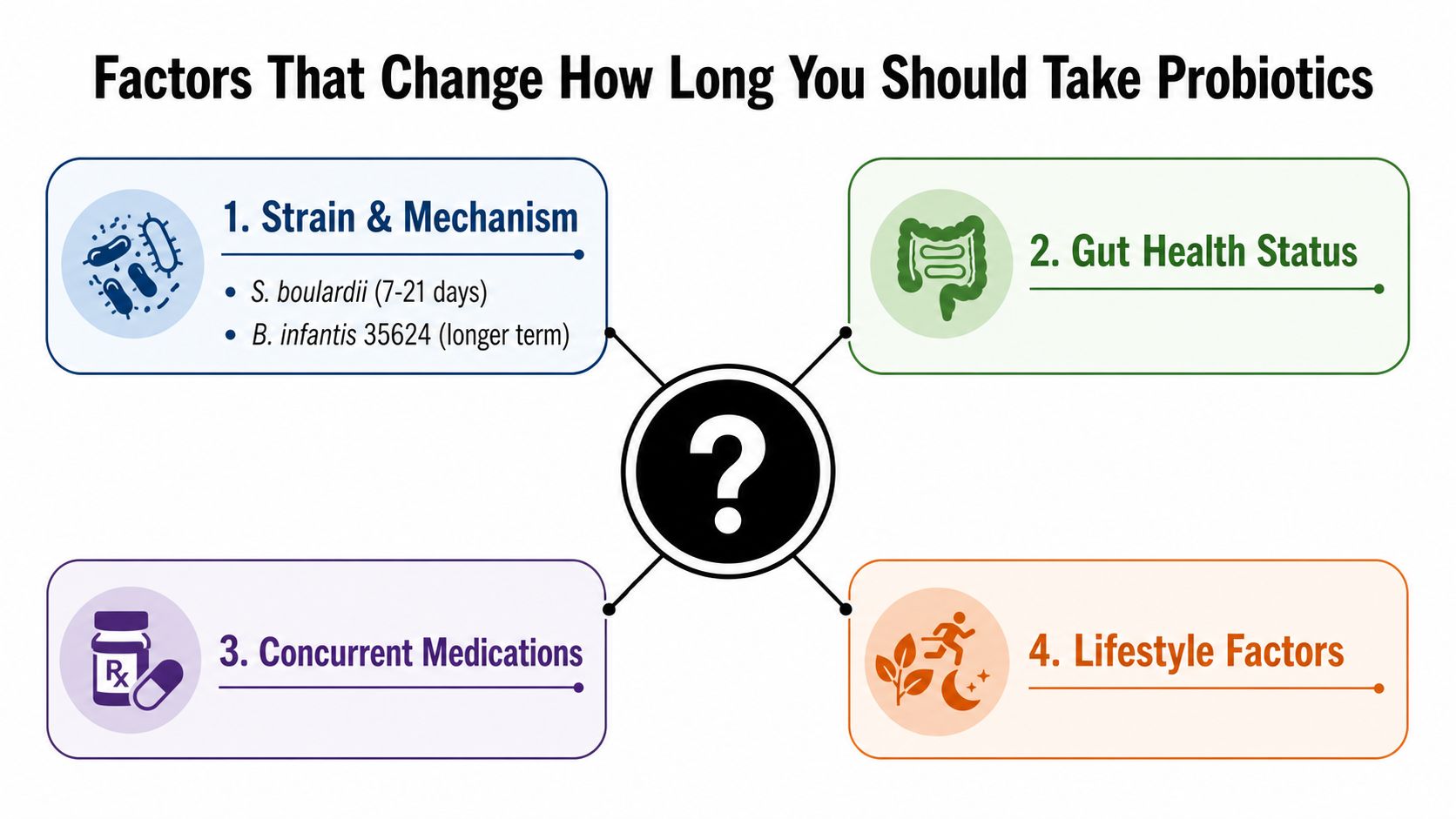
Acute versus chronic goals
Acute diarrhea support has a narrower endpoint, so a short trial can be reasonable. Regularity, IBS-type discomfort, and recurrent bloating need a longer observation period because you're evaluating patterns, not one isolated event.
Your starting point
Recent antibiotics, older age, immune suppression, a history of IBS or suspected SIBO, concurrent medications, and major dietary changes can all affect tolerability and response. These factors don't automatically mean you need a higher dose or longer use. They mean you should involve a clinician when the context is medically complex, particularly if you're immunocompromised or symptoms are severe.
Clinical judgment matters: Adjust the trial around the strain's evidence and your health status, not around the largest number printed on the front of a bottle.
Monitoring Benefits, Side Effects, and the Stop-or-Continue Decision
A good probiotic trial produces a record you can interpret. Choose one primary symptom, score it consistently, and avoid changing several supplements at once. For example, rate bloating each evening as absent, mild, moderate, or severe, or record whether a bowel movement felt comfortable and complete.
Use checkpoints instead of guesswork
At week 2, review tolerance. Mild gas, rumbling, or a temporary change in bowel pattern can occur as your digestive system adjusts, but worsening symptoms shouldn't be dismissed as proof that the probiotic is working. If discomfort persists, intensifies, or feels clearly different from your baseline, pause and ask a clinician or pharmacist whether the strain is appropriate.
At week 4, make the first formal decision. Acute goals should show a useful directional signal by this point. If nothing has changed, continuing automatically isn't a strategy. Check the strain match, label directions, storage, and whether another condition could explain the symptom.
At week 8, reassess persistent bloating, IBS-type symptoms, and constipation. Look for a repeatable pattern across your log, not one unusually good day. If the product is helping but the benefit is incomplete, you might discuss a strain change or a different formulation with a qualified professional.
At week 12, decide whether continued use has a clear purpose. Responders can discuss reducing frequency or stopping, while nonresponders should question the product fit rather than extending the same trial.
Stop the supplement and seek clinical advice promptly for fever, blood in stool, severe cramping, or a new skin reaction. These symptoms aren't routine adjustment effects. Anyone with significant immune suppression or a serious underlying illness should ask a clinician before starting a probiotic.
Simple log: Date, dose taken, primary symptom score, bowel pattern, and any new reaction. That small record is more useful than relying on memory.
Two Sample Regimens for Acute and Maintenance Goals
These examples show how the same question produces different answers. They aren't personal prescriptions, and the product label or clinician's advice takes priority.
| Feature | Regimen A, Acute AAD Prevention | Regimen B, Maintenance for Regularity and Immune Support |
|---|---|---|
| Primary goal | Support during antibiotic exposure and recovery | Evaluate ongoing digestive regularity and broader support |
| Organism approach | A studied S. boulardii product may be used according to its label | A multi-strain probiotic selected for the individual's target |
| Timing | Begin around the start of antibiotics and continue for a limited period afterward | Take consistently each day during the evaluation period |
| Reassessment | Review stool pattern and tolerance after the antibiotic course and recovery period | Reassess after the defined trial before continuing |
| If there's no benefit | Stop or seek clinical guidance rather than extending automatically | Switch strategy or discontinue after reviewing strain fit |
| Practical details | Follow separation instructions for antibiotics and probiotics | Follow meal, storage, and expiration directions on the label |
For an acute goal, the course should be finite. If diarrhea is severe, prolonged, bloody, or accompanied by fever or dehydration, medical care matters more than adjusting a supplement.
For maintenance, the useful discipline is to choose one target, take the formula consistently, and reassess instead of committing to indefinite daily use. Some products require refrigeration, while others are shelf-stable, so storage isn't interchangeable across strains and formulations. Take a missed dose when remembered if the label permits, but don't double up unless a clinician specifically tells you to.
Meal timing also varies by product. Follow the manufacturer's directions, especially when the label specifies taking the capsule with food or on an empty stomach. Consistency matters more than chasing a perfect minute on the clock.
The Longer-Is-Not-Automatically-Better Trap
Extending a probiotic trial can solve one problem while creating another. Stopping before 4 weeks may miss a gradual response, especially for persistent digestive symptoms, but taking the same product forever without a continuing goal doesn't prove that it remains useful.
A recent systematic review of gastrointestinal disorders reported treatment durations ranging from 2 to 24 weeks. It also found that short-term use of 2 to 4 weeks showed no sustained symptom benefit, while subgroup analysis didn't clearly separate shorter and longer treatment for every symptom outcome. That uncertainty supports a defined trial and reassessment, not an automatic promise that more time will fix a mismatched strain. The review is available in this systematic review of probiotics for gastrointestinal disorders.
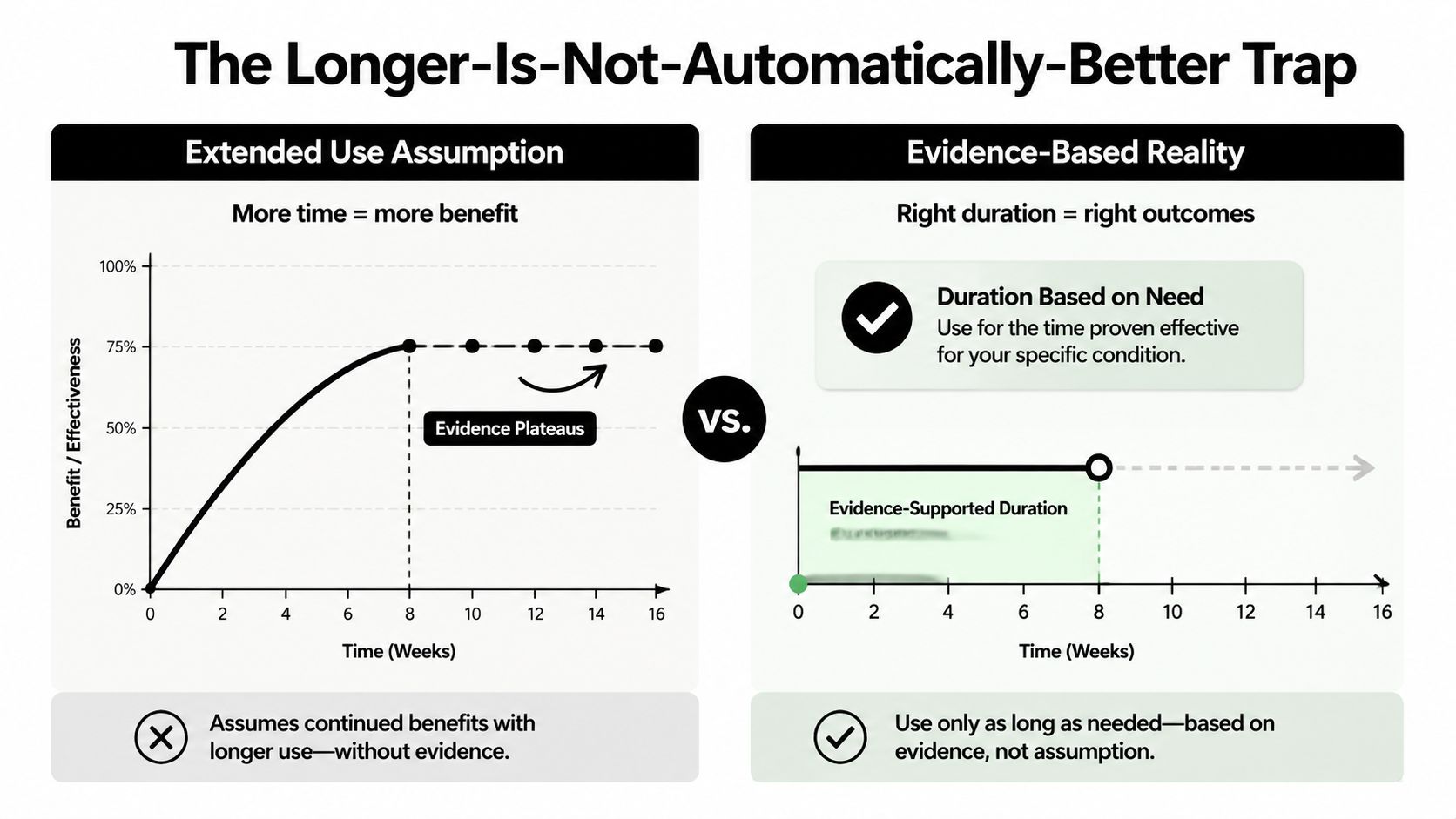
When longer use can make sense
Continuing may be reasonable when you have a clearly documented benefit, a persistent symptom goal, or a clinician-guided reason to maintain the formula. Reassess tolerance and relevance periodically. If the original complaint has resolved, the next decision may be to stop rather than keep paying for an untested routine.
When to be more cautious
Healthy adults without gastrointestinal symptoms may have little reason to take a probiotic indefinitely. A 2026 review concluded that routine daily supplementation isn't recommended for healthy adults without GI symptoms and that an 8-to-12-week therapeutic trial is more appropriate than indefinite use. People with suspected SIBO, significant immune suppression, complex medical conditions, or unexplained worsening symptoms should get individualized advice before continuing.
The high-CFU probiotic discussion is useful when comparing potency, but potency should remain one selection factor among strain identity, evidence, delivery system, tolerability, and purpose.
Key Takeaways and Your Personal Decision Rule
Use the target symptom and trial window to decide how long to continue:
- Start with the goal: Support for acute antibiotic-associated diarrhea generally fits 7 to 21 days. IBS, bloating, and irregularity usually need 8 to 12 weeks for a fair assessment.
- Allow at least four weeks when appropriate: Probiotic effects are typically assessed over weeks, not a few days. As noted earlier, evidence and product quality vary by strain.
- Track one endpoint: Record stool regularity, bloating, urgency, or abdominal comfort consistently.
- Reassess at weeks 4, 8, and 12: Continue only if the pattern shows meaningful benefit or a clinician has given you a clear reason.
- Match the strain and dose to the goal: A high CFU count alone does not show that a product suits your symptom.
- Stop and seek advice for red flags: Fever, blood in stool, severe cramping, or a new skin reaction requires clinical attention.
Your decision rule is practical: try consistently, measure the target symptom, reassess at the appropriate window, and stop when there is no clear reason to continue. Indefinite use is not automatically better, especially after the original complaint has resolved.
GutRx offers probiotic and digestive-support formulas for daily regularity, digestive balance, women's wellness, and mealtime enzyme support. Visit GutRx to compare options with your goal and trial timeline.


