

The popular advice is simple: your gut controls your brain. Gut-brain axis research supports something more precise and more useful. The gut and brain communicate in both directions through neural, endocrine, immune, and humoral signals, but most human evidence still shows associations or narrow effects rather than proof that a particular microbe determines mood, cognition, or psychiatric illness.
That distinction matters if you're comparing a daily probiotic, a synbiotic, a postbiotic, or a strain-specific formula for bloating and stress-related digestive symptoms. The strongest findings involve defined populations, measured outcomes, and particular organisms. They don't automatically justify broad claims for everyone.
Table of Contents
- Why Most Gut Brain Axis Coverage Gets It Wrong
- The Four Communication Pathways Between Gut and Brain
- What Human Clinical Trials Show
- How to Evaluate Gut Brain Axis Study Quality
- Practical Applications for Patients and Clinicians
- Evidence-Based Takeaways and Product Selection
- Where the Research Is Heading Next
Why Most Gut Brain Axis Coverage Gets It Wrong
“Gut controls your brain” is a memorable slogan, but it is a poor clinical model. The gut-brain axis is bidirectional: brain activity can alter motility, secretion, and digestive symptoms, while intestinal signals can influence immune, endocrine, and neural processes. Stress may worsen gastrointestinal symptoms, yet that does not show that a probiotic can replace mental-health care or predictably change personality.
The modern field developed quickly. Reviews describe the past 15 years as a period when microbiota became recognized as a major regulator of gut-brain function, alongside growing interest in bidirectional signaling and brain-imaging methods developed in the 1980s (Physiological Reviews overview of microbiota and gut-brain function). Bibliometric analysis also reported 1,713 microbiome-gut-brain axis articles from 2009 to 2018, with publication growth increasing over time, measured as r = 0.950, P < 0.001 in that source. The expanding literature shows scientific interest, not proof that broad consumer claims are valid.
Correlation isn't a treatment recommendation
A large share of human studies measures microbiome features and symptoms at one point in time. Such work can identify hypotheses, but it cannot determine whether microbial changes caused anxiety, followed changes in diet or sleep, or reflected medication and illness. Animal experiments can clarify mechanisms, though a behavioral effect in an animal model does not establish the same outcome in people.
Recent evidence reviews still describe psychobiotic research as concentrated in observational human studies and preclinical models, with human validation needed for proposed biomarkers and interventions (review of psychobiotic evidence and translational limitations). For clinical use, the relevant questions are narrower: does an effect recur across trials, depend on a specific strain or dose, and produce a meaningful change for a defined symptom group?
Practical rule: Treat a microbiome association as a research lead, not proof that a supplement will change mood.
Human-trial findings suggest that any benefit may be more apparent among people experiencing stress or subclinical mood disturbance than in the general population. That supports targeted investigation of stress-linked digestive symptoms or mild mood complaints, not broad wellness promises. Major mental-health conditions still require appropriate clinical assessment and treatment. The useful question is therefore not whether the gut-brain axis matters in general, but which intervention helps which patients, under which measured conditions.
The Four Communication Pathways Between Gut and Brain
The gut-brain axis operates through four distinct signaling routes, each with its own mechanism and evidence base. Microbial activity in the intestine can generate signals that affect distant tissues, while the brain can influence gut function through autonomic and hormonal pathways. These routes include neural, endocrine, immune, and humoral communication. Metabolites and inflammatory signals may act without microbes entering the bloodstream, as described in this review of bidirectional gut-brain signaling mechanisms.
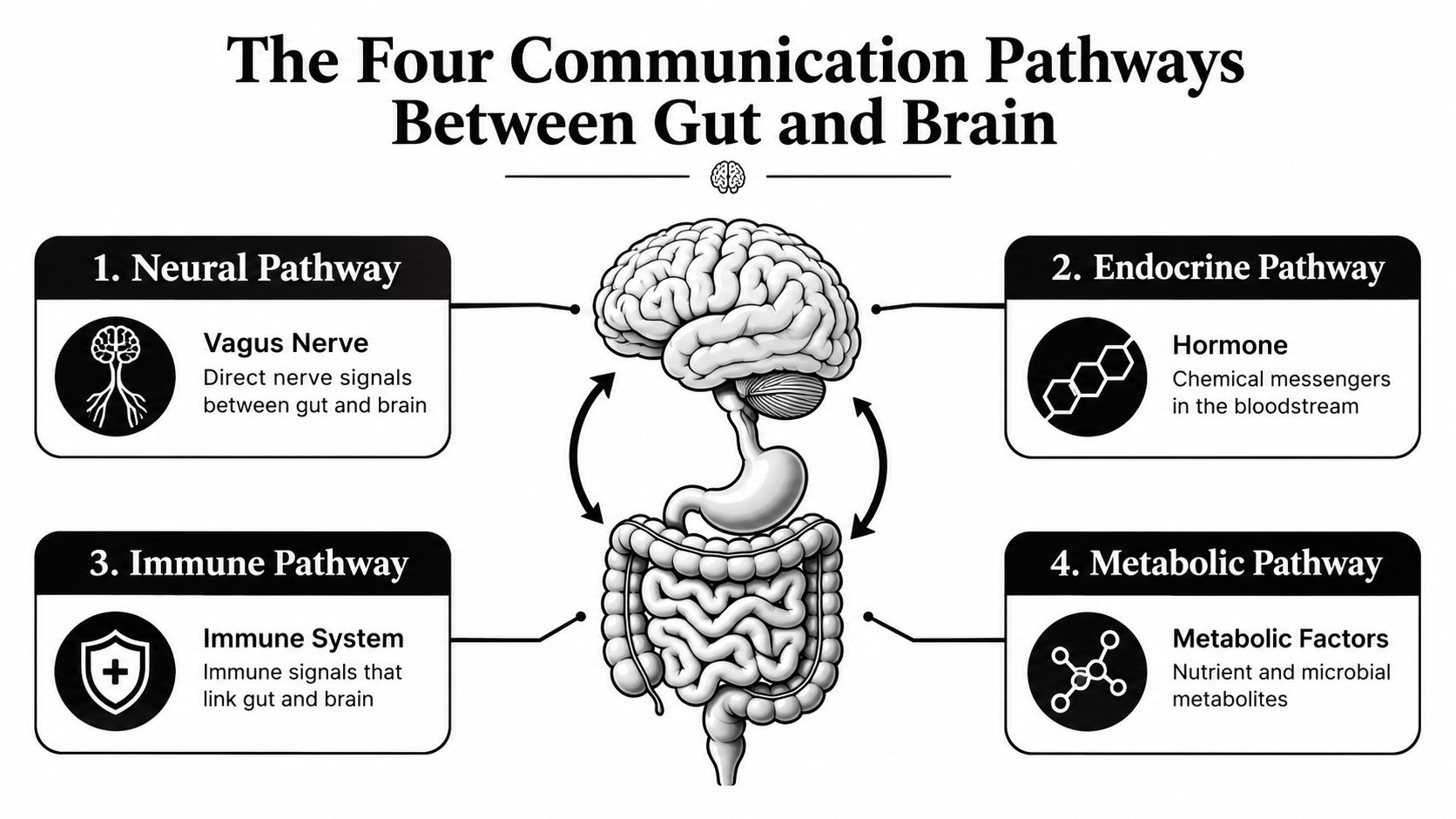
Neural signaling
The vagus nerve provides a rapid route for information between the gastrointestinal tract and the brain. Signals related to intestinal stretch, nutrient sensing, and local activity can affect circuits involved in autonomic regulation. Communication also runs in the opposite direction. Brain-driven changes in motility and secretion can alter the intestinal conditions in which microbes live.
Neural signaling is therefore one plausible mechanism linking digestive sensations and intestinal conditions with central nervous system activity. The mechanism alone does not establish that a probiotic will improve calmness or mood.
Endocrine and immune signaling
The endocrine route uses hormones and stress-related mediators to coordinate gut and brain responses. The immune route involves cytokines and other inflammatory signals. Changes in intestinal barrier integrity and immune tone may consequently become relevant intervention targets, even when organisms remain within the gut.
Direct microbial translocation isn't required for gut-derived molecules or inflammatory signals to affect brain-relevant pathways. Barrier function, immune regulation, and vagal signaling can influence these pathways without evidence that bacteria have entered brain tissue.
Metabolic and humoral signaling
Microbes transform dietary and host-derived compounds into metabolites. These molecules can act locally or circulate through the body, influencing intestinal cells, immune pathways, and other tissues. Biological plausibility is not clinical proof. Identifying a mechanism does not show that consuming a particular strain will produce a meaningful mood effect in people.
For product evaluation, match the evidence to the exact strain, formulation, population, and outcome. This gut-brain axis diagram provides a visual summary of the communication routes. GutRx BALANCE is listed as providing 30 billion CFUs per capsule with next-generation probiotics for gut health, digestive balance, and immune support. That catalog description does not establish a specific psychiatric benefit.
What Human Clinical Trials Show
Human evidence is narrower than the term “psychobiotic” suggests. A 2024 review describes a randomized, double-blind, placebo-controlled study of 44 adults with IBS, diarrhea or mixed stool pattern, and mild to moderate anxiety or depression. Participants received Bifidobacterium longum NCC3001 at 1 × 10^10 CFU/g for 6 weeks. Depression scores on the Hospital Anxiety and Depression Scale decreased with the probiotic (psychobiotic review and NCC3001 trial details).
A separate systematic review describes an 8-week intervention in which Bifidobacterium longum improved psychometric measures among IBS patients with comorbid anxiety or depression. It also reports a 6-week intervention associated with lower depression scores and reduced amygdala engagement during a negative-emotion task (systematic review of oral probiotics and brain structure and function). Together, these findings indicate measurable gut-brain effects in selected groups. They do not establish a general mood benefit across strains, formulations, or diagnoses.
| Strain | Dose | Duration | Population | Primary outcome |
|---|---|---|---|---|
| Bifidobacterium longum NCC3001 | 1 × 10^10 CFU/g | 6 weeks | 44 adults with IBS, diarrhea or mixed stool pattern, and mild to moderate anxiety or depression | Reduced depression scores on the Hospital Anxiety and Depression Scale |
| Bifidobacterium longum | Not specified in the cited summary | 8 weeks | IBS patients with comorbid anxiety or depression | Improved psychometric measures |
| Bifidobacterium longum | Not specified in the cited summary | 6 weeks | Participants completing a negative-emotion task | Lower depression scores and reduced amygdala engagement |
Digestive outcomes are a separate evidence stream
IBS research provides broader evidence for digestive symptom targets. One review reports that probiotic use in IBS has been studied in more than 80 trials involving more than 10,000 patients, with regular intake of certain probiotics associated with relief of bloating, abdominal distension, and altered bowel habits (IBS, microbiota, and probiotic evidence). The finding supports strain-specific symptom research, not a universal effect for every IBS presentation.
Akkermansia muciniphila shows why outcomes must remain linked to the intervention. In a proof-of-concept study, daily oral supplementation with 10^10 bacteria for 3 months was safe and well tolerated in overweight or obese adults. Compared with placebo, pasteurized A. muciniphila improved insulin sensitivity by 28.62% ± 7.02%, reduced insulinemia by 34.08% ± 7.12%, and lowered total cholesterol by 8.68% ± 2.38% (Akkermansia muciniphila proof-of-concept trial). These are metabolic outcomes, not evidence that the intervention treats anxiety or depression.
For neurodevelopmental questions, the probiotics and ADHD research overview offers educational context. It should not be read as evidence that microbiome products treat ADHD.
How to Evaluate Gut Brain Axis Study Quality
A credible gut-brain study must identify who participated, which exact strain and dose they received, what control group they used, and which validated outcomes changed. Randomized, double-blind, placebo-controlled trials generally provide stronger evidence than observational comparisons because randomization reduces the chance that baseline differences explain the result. The most useful studies also report adverse events, adherence, and whether benefits persisted after the intervention ended.
The field's rapid expansion makes careful screening more important. A 2025 bibliometric study identified 1,902 publications from 1999 to 2024, with 1,816 documents ultimately analyzed, including 1,135 research articles and 681 reviews. It identified contributions from roughly 65 countries or regions, while publication volume rose from 16 papers in 2011 to 370 by the end of 2023 (2025 bibliometric analysis of the microbiota-gut-brain axis, anxiety, and depression). This growth maps an active research field, not a completed clinical consensus. Mechanistic findings, small pilot trials, and reviews can generate hypotheses without confirming that a product improves symptoms in practice.
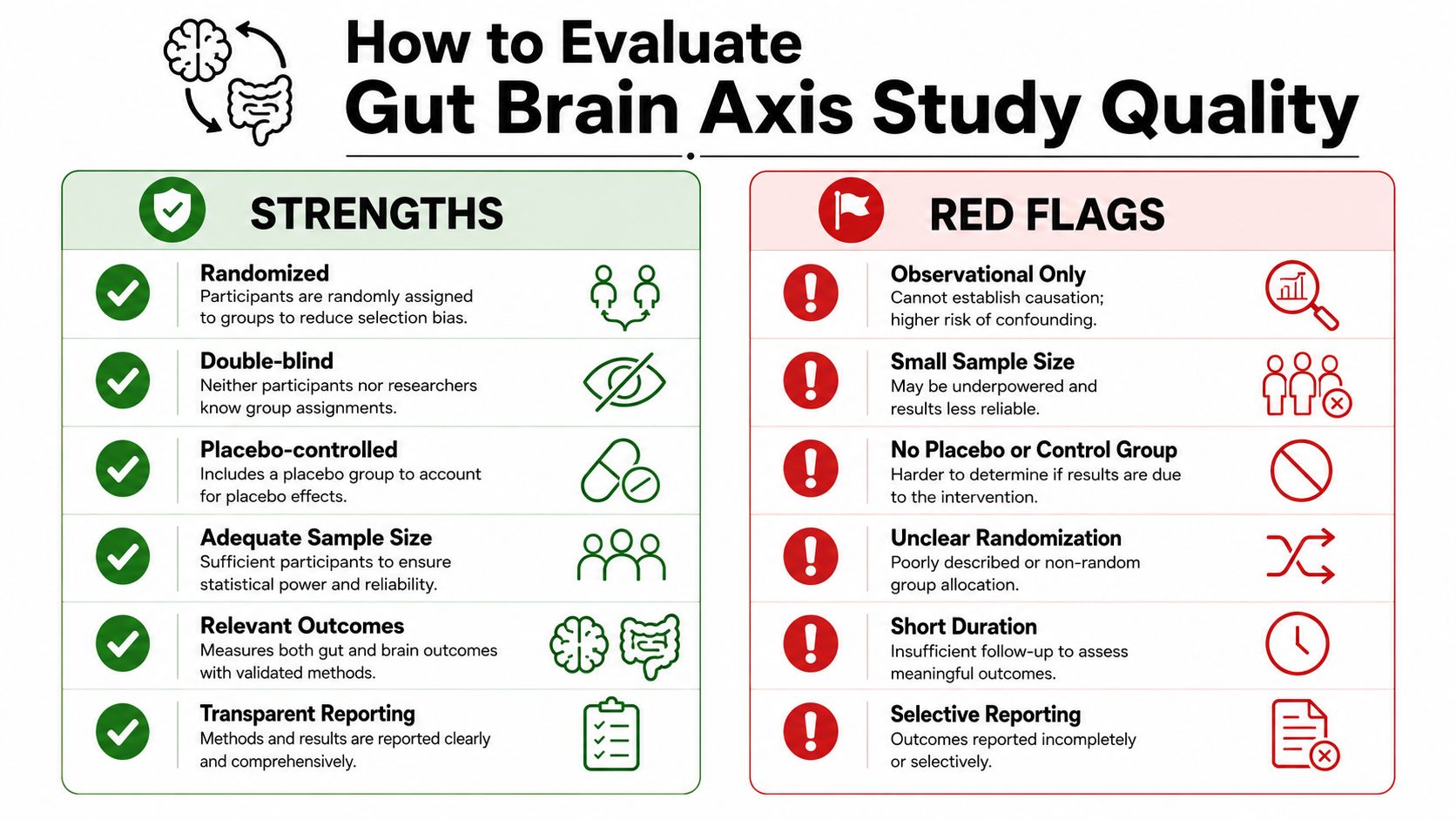
Compare the claim with the study
Use this checklist when assessing a product page or article:
- Study population: Does the trial match the claimed symptoms, such as IBS with anxiety, or is evidence being extended from another group?
- Strain identity: Is the organism identified at strain level, or only by species?
- Control quality: Did researchers use a placebo and appropriate blinding?
- Outcome selection: Were validated mood, digestive, metabolic, or brain-function measures used instead of a broad wellness questionnaire?
- Duration and follow-up: Does the design assess persistence, or only a short-term response?
- Replication: Has an independent team reported a similar result?
Statistical care does not guarantee clinical relevance. A narrow sample, surrogate outcome, high dropout rate, or short follow-up can limit how far the finding applies. Animal mechanisms are biologically informative, but they have not yet reached the threshold for consumer recommendations.
Practical Applications for Patients and Clinicians
Gut-brain interventions are most useful when matched to a defined symptom pattern. IBS-related bloating with stress-linked discomfort requires a different clinical question from metabolic support or routine probiotic use. Clinicians should establish the primary goal before selecting a strain, dose, or combination.
Evidence from human-trial reviews suggests that psychobiotic effects may be more detectable in people under stress or with subclinical mood disturbance than in people without those symptoms (translational review of psychobiotics). This does not establish stress as a diagnosis or predict an individual response. It indicates that baseline symptoms may influence whether a modest intervention produces a noticeable change.
Questions that improve product selection
Patients can bring specific questions to a clinician, dietitian, or pharmacist:
- Which outcome matters first? Define bloating, stool pattern, anxiety symptoms, and metabolic markers separately.
- Is the evidence strain-specific? Findings for B. longum NCC3001 should not be applied automatically to every B. longum product.
- What response would count as meaningful? A validated symptom scale or consistent diary provides better evidence than an impression after one dose.
- What should be monitored? New or worsening symptoms, possible medication interactions, and persistent digestive changes warrant professional review.
Product assessment also requires practical verification. Clinicians should check the strain identity, stated serving, storage instructions, and whether labeled contents remain viable through the listed shelf life. Third-party testing and downloadable Certificates of Analysis can help confirm identity and potency, although they do not replace evidence from a trial of the exact formulation.
A cautious routine changes one major variable at a time, records digestive and stress-related symptoms consistently, and reassesses before increasing use. Persistent diarrhea, bleeding, unexplained weight change, severe pain, or significant mood symptoms call for medical evaluation rather than continued supplement experimentation. Animal mechanisms can inform research, but they do not by themselves support consumer recommendations.
Evidence-Based Takeaways and Product Selection
A gut-brain supplement should be judged against a defined symptom and a matching human trial, not against a broad promise about “wellness.” A formula studied for IBS-related bloating may not address constipation, meal-related discomfort, anxiety symptoms, or metabolic outcomes. Strain identity matters because probiotic effects aren't interchangeable, including among products from the same species.
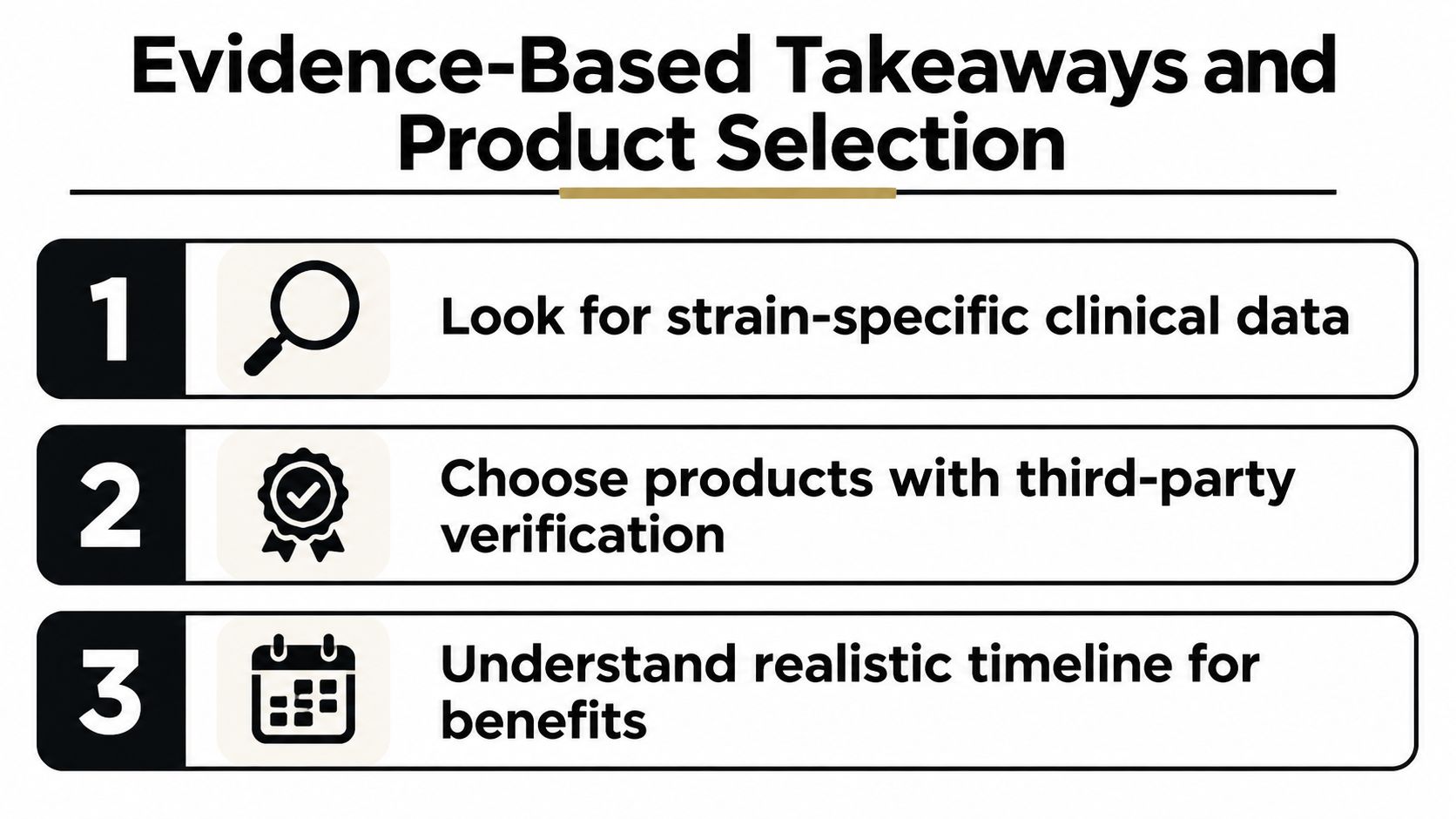
A practical buyer screen
-
Match the strain to the outcome. Look for human research using the named strain, the relevant symptom, and a comparable dose and duration. Bifidobacterium longum NCC3001 has specific evidence in IBS patients with mood symptoms. Akkermansia muciniphila has proof-of-concept metabolic evidence in a different population. Neither result automatically transfers to another strain, population, or product.
-
Check product quality separately from efficacy. Strain verification, third-party testing, and downloadable Certificates of Analysis make label claims easier to assess. A high CFU count does not establish clinical benefit. A multi-strain formula cannot claim every result reported for its individual organisms.
-
Assess delivery and supporting ingredients in context. Delayed-release capsules may matter when the formulation is designed to protect organisms through the upper gastrointestinal tract. Prebiotics supply substrates for microbial activity, while postbiotics contain microbial components or metabolites. These features may support formulation goals, but neither guarantees a mood outcome.
The gut-brain axis supplement guide offers a further framework for comparing synbiotic formulas. GutRx COMPLETE is cataloged as a high-potency probiotic and prebiotic blend containing 62B CFUs, Akkermansia muciniphila, and SIBO support. These are product-description facts, not evidence that the formula reproduces any specific trial result.
Selection principle: Choose the formulation whose documented strains, testing, and intended outcome align with the clinical question, rather than the product making the broadest brain claim.
Expectations should match the evidence. A probiotic may affect digestive balance or a measured symptom domain, but it should not be presented as a standalone treatment for depression, anxiety disorders, or neurological disease.
Where the Research Is Heading Next
The next phase of gut-brain axis research should test personalized, clinically measurable patterns, rather than assume one “good” microbiome suits everyone. Human studies need to establish whether microbial markers predict treatment response, whether defined strain combinations help specific symptom subgroups, and whether any benefit remains after supplementation stops.
Researchers are also studying next-generation organisms, synbiotic combinations, postbiotic preparations, and delivery systems designed to improve survival or intestinal exposure. These approaches could make interventions more consistent, but advanced formulation cannot replace human outcome data. A plausible mechanism remains a hypothesis until clinical studies confirm a meaningful symptom change.
Trial design will determine how much confidence clinicians can place in future findings. Longer follow-up and shared measures for bloating, bowel habits, anxiety, depression, immune activity, and metabolic health would allow results from similar studies to be compared. Without common endpoints, a larger publication record may look convincing while leaving the practical question unanswered: which patients benefit, from which intervention, and by how much?
The field has grown from a niche research topic into a substantial international discipline. Earlier bibliometric work identified the USA, China, Ireland, and Canada among prominent contributors (Physiological Reviews discussion of the field's development). The most useful advances will come from reproducible human trials, transparent strain labeling, and products whose supporting evidence can be inspected.
GutRx offers probiotic and prebiotic formulas aimed at digestive-support goals, including products cataloged with next-generation strains such as Akkermansia muciniphila. Its broader brand information describes third-party testing and downloadable Certificates of Analysis. Visit GutRx to compare options for digestive balance, stress-related gut symptoms, and evidence-conscious daily support.


