

Lunch at 1 p.m., bloating by 3 p.m., and hungry again before dinner? Protein and fiber meals can make that pattern easier to manage by pairing a substantial protein source with plant foods that provide fiber. A practical target is roughly 20 grams or more of protein and about 8–12 grams of fiber per serving, but individual needs and tolerance vary. The U.S. Dietary Guidelines set fiber at 14 grams per 1,000 calories, which equals 28 grams on a 2,000-calorie pattern. The eight meals below cover breakfast, lunch, and dinner, with portions, approximate nutrition, and adjustments for dairy, FODMAP foods, or bloating-prone digestion. For more meal ideas, explore these flavourful high protein recipes.
Table of Contents
- 1. Greek Yogurt Parfait with High-Fiber Berries, Nuts, and Prebiotic Granola
- 2. Fiber-Forward Smoothie Bowl with Protein Powder, Oats, and Postbiotic Toppings
- 3. Egg-Based Protein Bowl with Sprouted Whole Grains and Fermented Vegetables
- 4. Lentil and Chicken Buddha Bowl with Roasted Cruciferous Vegetables
- 5. Legume-Based Soup with Bone Broth, Herbs, and Vegetable Medley
- 6. High-Protein Baked Tofu or Tempeh with Quinoa and Fiber-Rich Vegetables
- 7. Salmon or Mackerel with Resistant-Starch Side and Polyphenol-Rich Vegetables
- 8. Turkey or Lean Beef with Ancient Grains and Cruciferous Slaw
- 8-Item Protein & Fiber Meal Comparison
- Build a Week of Protein and Fiber Meals That Fit You
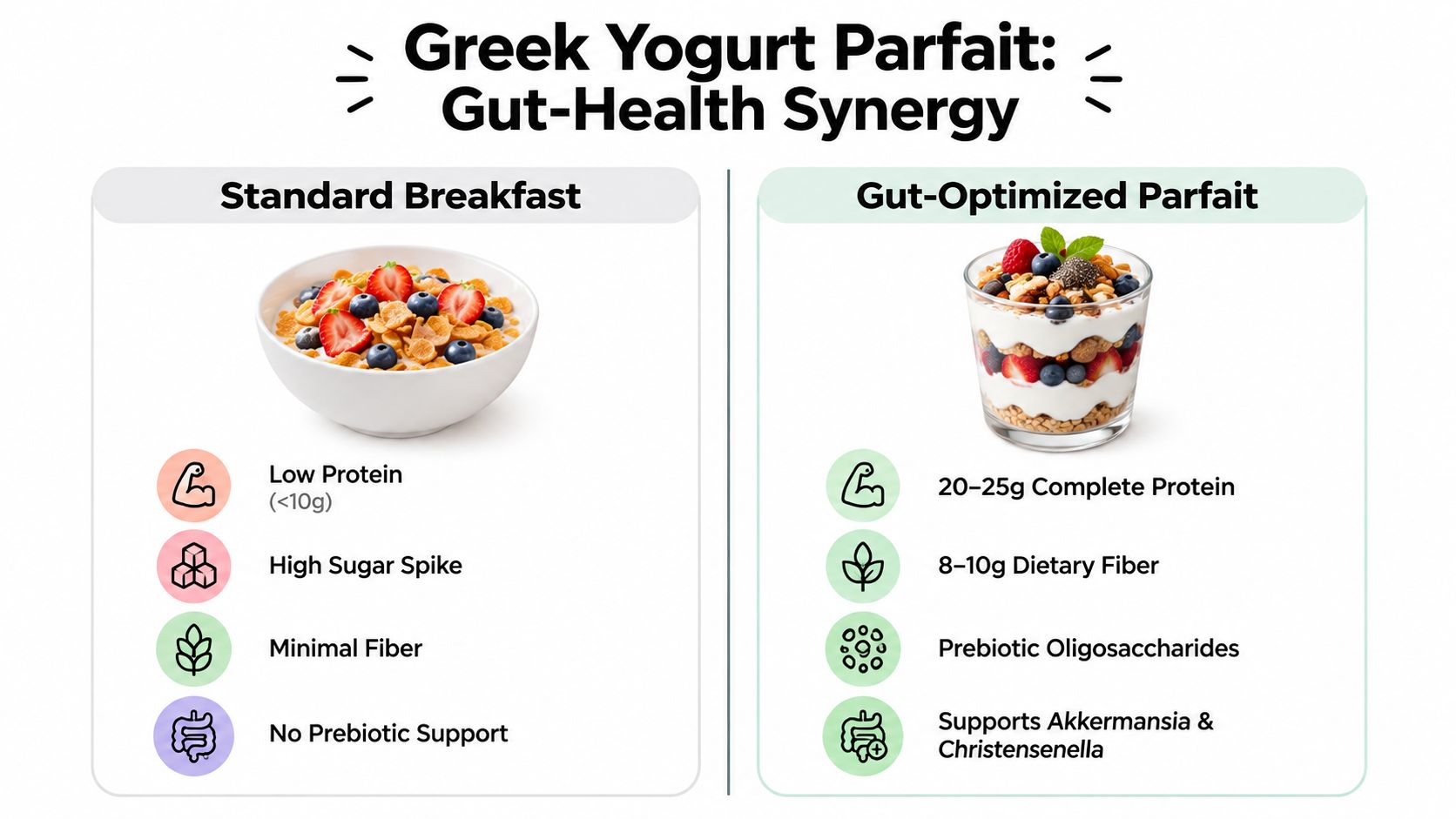
1. Greek Yogurt Parfait with High-Fiber Berries, Nuts, and Prebiotic Granola
Short on time but prone to hunger before lunch? Build the parfait around 1 cup plain non-fat Greek yogurt, ½ cup mixed berries, 2 tablespoons raw almonds, 1 tablespoon chia seeds, and ¼ cup prebiotic granola. This example provides approximately 285 calories, 22 grams of protein, and 9 grams of fiber. Treat those figures as recipe-specific estimates, since brands and serving sizes can change the result.
The yogurt gives the meal a concentrated protein base. Berries, chia, almonds, and granola contribute different textures and fiber sources, which can make the bowl more satisfying than yogurt alone. The Nutrition Reviews review describes fiber as a useful marker of diet quality and reports associations between higher fiber intake and lower cardiovascular and mortality risk. Those findings support pairing protein with plant foods, but one parfait does not treat a digestive or medical condition.
Make the texture work
Spoon in the yogurt first, then add the berries and almonds. Stir the chia seeds through the yogurt so they soften slightly, and add the granola just before eating to preserve its crunch. Plain yogurt without added sugar lets you control sweetness with cinnamon or extra berries instead of turning the meal into a dessert.
For lactose-related discomfort, choose lactose-free Greek yogurt or start with a smaller portion. If bloating follows the granola, inspect its ingredient list for added fibers that you may tolerate poorly, then reduce the serving or choose a simpler topping. A digestive enzyme may help some people with specific food intolerances, but persistent symptoms call for medical guidance rather than repeated self-treatment. GutRx BALANCE is a synbiotic formula for digestive balance and barrier strength. Check the product page for current formulation details, and do not use it to override a food that repeatedly causes symptoms.
Increase chia, flax, or granola gradually. A sudden rise in fiber can increase gas, even when the ingredients are nutritious.
2. Fiber-Forward Smoothie Bowl with Protein Powder, Oats, and Postbiotic Toppings
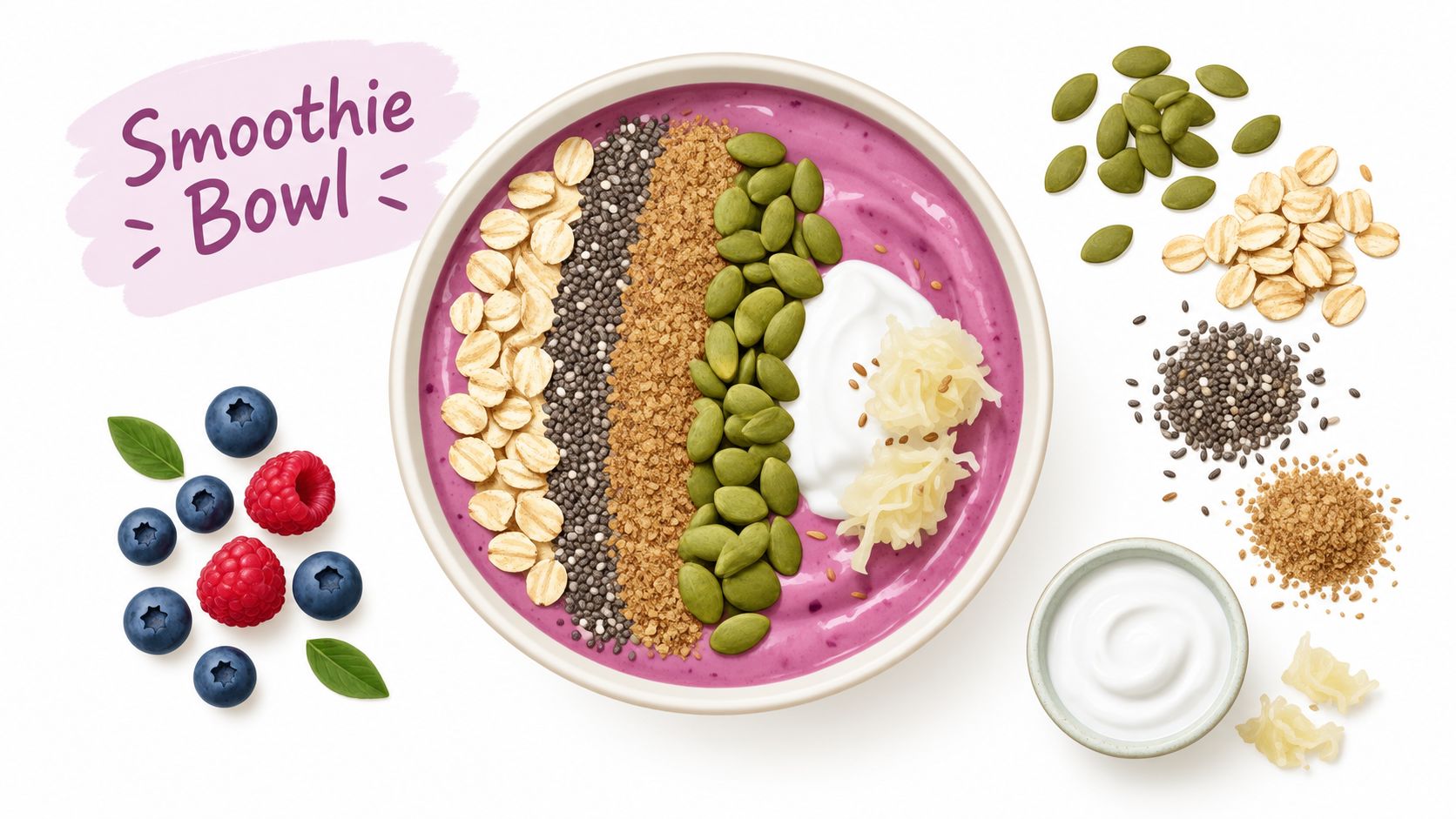
A smoothie bowl is convenient after exercise, but blending doesn't remove the need to manage fiber dose. Blend one scoop of plant-based protein powder, 1 cup unsweetened almond milk, ½ cup rolled oats, 1 tablespoon ground flax, and ½ frozen banana. Top it with 2 tablespoons coconut yogurt, 2 tablespoons raw sauerkraut, and 1 tablespoon pumpkin seeds. The example portion provides approximately 315 calories, 28 grams of protein, and 11 grams of fiber.
This meal combines a protein powder with oats, flax, fruit, and seeds. It can be filling, but the combination may be too fermentable for someone who adds every ingredient at full volume on the first attempt. NIDDK recommends increasing fiber gradually, by roughly 2–3 grams per day, to reduce the chance of gas and bloating. Read the guidance on protein powder for smoothies before choosing a powder with a long ingredient list or added sweeteners.
Adjust the bowl for training days
Start with less flax or oats if your usual breakfast is low in fiber. You can also leave off the sauerkraut at first, then add a small amount later if fermented foods suit you. The protein target can stay steady while you change the fiber load, which makes it easier to identify what your digestion tolerates.
Choose an unflavored or lightly flavored powder if sugar alcohols or strong sweeteners bother you. Add toppings after blending to preserve their texture. Nut butter can provide extra richness, but it also adds fat, so a large spoonful may feel heavy before training.
For a lower-FODMAP approach, use a smaller banana portion and choose ingredients based on your own tolerance rather than assuming that every high-fiber topping is suitable.
3. Egg-Based Protein Bowl with Sprouted Whole Grains and Fermented Vegetables
For a breakfast that can carry you through the morning, scramble 2 whole eggs with 2 egg whites and serve them with ½ cup cooked sprouted brown rice, ¾ cup kimchi, and herbs. Add 1 tablespoon avocado oil if it fits your day. This example provides approximately 320 calories, 21 grams of protein, and 11 grams of fiber.
Eggs supply the protein, while rice and vegetables provide the fiber. One small controlled crossover trial in 48 healthy adults compared egg breakfasts with a low-protein cereal breakfast. Both egg meals reduced the post-meal glucose response and later energy intake versus the cereal control. The 30-gram protein egg meal reduced later intake by 135 calories, while the egg meal containing 20 grams of protein and 7 grams of fiber reduced it by 69 calories. Those findings describe a short-term result in that study group, not a guaranteed response to every breakfast.
Use fermentation carefully
Stir kimchi in after removing the eggs and rice from the heat. Spicy fermented vegetables can aggravate reflux, loose stools, or urgency for some people. If that happens, use cooked carrots or zucchini, or add a small portion of pickled beets instead. Kimchi containing garlic, onion, or chili may be harder to tolerate, so check the ingredient list.
Start with less kimchi if fermentation is your main concern. A smaller portion keeps the meal's protein steady while reducing its flavor intensity and fermentable load. If the bowl still feels heavy, reduce the grain portion before cutting the eggs.
Sprouted grains are convenient, but regular brown rice works well. Cook the eggs gently over medium heat and batch-cook the rice for faster assembly.
4. Lentil and Chicken Buddha Bowl with Roasted Cruciferous Vegetables
For a substantial lunch, combine 6 ounces grilled chicken breast, ¾ cup cooked red lentils, 1½ cups roasted broccoli and Brussels sprouts, and 2 tablespoons tahini dressing. The example provides approximately 420 calories, 38 grams of protein, and 14 grams of fiber. It's a strong option for someone who wants protein from poultry without leaving legumes out of the meal.
The lentils and vegetables contribute the fiber that chicken cannot provide. Beans, lentils, and chickpeas are especially efficient ingredients because they contribute both protein and fiber, although large servings can be difficult for people with IBS or pronounced fermentation sensitivity. If legumes usually cause gas, begin with less lentil and use well-rinsed canned lentils or thoroughly cooked red lentils.
Reduce the fermentation load
Cook lentils until soft rather than stopping at a firm texture. Roasting broccoli and Brussels sprouts can make them easier to chew and may feel gentler than a large raw salad. You can also swap Brussels sprouts for zucchini or carrots if cruciferous vegetables reliably cause discomfort.
Tahini and lemon create a flavorful dressing without requiring a heavy pour of oil. If fat slows your digestion, use a thinner dressing and keep the portion modest. Enzymes may help with specific food components for some people, but they won't make every large serving comfortable.
Read whether protein provides energy for context on how protein fits into a meal rather than treating it as the only source of sustained energy. Batch-cook the lentils and chicken separately, then assemble bowls through the week.
5. Legume-Based Soup with Bone Broth, Herbs, and Vegetable Medley
Soup gives you a practical way to soften legumes and vegetables without relying on powders or bars. Simmer 2 cups broth, 1 cup cooked white beans, and 1 cup mixed carrots, zucchini, and celery with turmeric, ginger, salt, and pepper. The example provides approximately 240 calories, 23 grams of protein, and 11 grams of fiber, although broth labels vary and homemade recipes can produce different totals.
The most useful feature here is the cooking method. Soaking dried legumes, discarding the soaking water, and cooking them until very soft can improve texture and may make the meal more comfortable than a bowl of firm beans. That doesn't guarantee symptom relief. White beans, celery, and certain seasonings can still be problematic for people following a low-FODMAP approach.
Keep the recipe flexible
Use lentils instead of white beans if they suit you better. For a lower-FODMAP version, build the soup around carrots, zucchini, herbs, and a portion of legumes that you already tolerate. Garlic-infused oil can add flavor without using whole garlic, but personal tolerance remains the deciding factor.
Bone broth can contribute protein depending on the product, but don't assume every carton contains the same amount. Check the label and treat it as part of the meal, not as proof that the soup repairs the gut. Herbs such as ginger and thyme improve flavor, while turmeric adds color and warmth. They shouldn't be presented as treatment for intestinal disease.
Serve a small bowl first if you're prone to bloating. If it sits well, make the next serving larger rather than starting with a very large portion.
6. High-Protein Baked Tofu or Tempeh with Quinoa and Fiber-Rich Vegetables
This plant-based dinner uses 4½ ounces baked tempeh, ¾ cup cooked quinoa, 1½ cups steamed kale and roasted sweet potato, and 1 tablespoon tahini dressing. The example provides approximately 380 calories, 32 grams of protein, and 13 grams of fiber. Tempeh is fermented, while tofu is generally milder and may be preferable if fermented foods don't agree with you.
Marinate tempeh in tamari, ginger, and a little apple cider vinegar for about 20 minutes, then bake it at 400°F for about 25 minutes. The marinade improves flavor, but it doesn't guarantee easier digestion. If tempeh feels dense, steam it briefly before marinating, or use firm tofu and press it well before baking.
Choose the protein by tolerance
Quinoa, sweet potato, and greens give the plate a mixture of starch and fiber. Start with cooked vegetables rather than a large raw salad if bloating is your main concern. For a gentler version, reduce the kale and use spinach or zucchini.
Whole foods can supply both protein and fiber, but a fiber supplement isn't automatically better than beans, grains, vegetables, or seeds. The distinction is useful when appetite, access, or tolerance makes whole-food volume difficult. This discussion of fiber supplements and whole foods can help you compare the two approaches.
Serve the bowl with a modest amount of dressing and add miso only if sodium fits your overall diet. For another plant-based option, consider Saporia's vegan deli range as a convenient tempeh source.
7. Salmon or Mackerel with Resistant-Starch Side and Polyphenol-Rich Vegetables
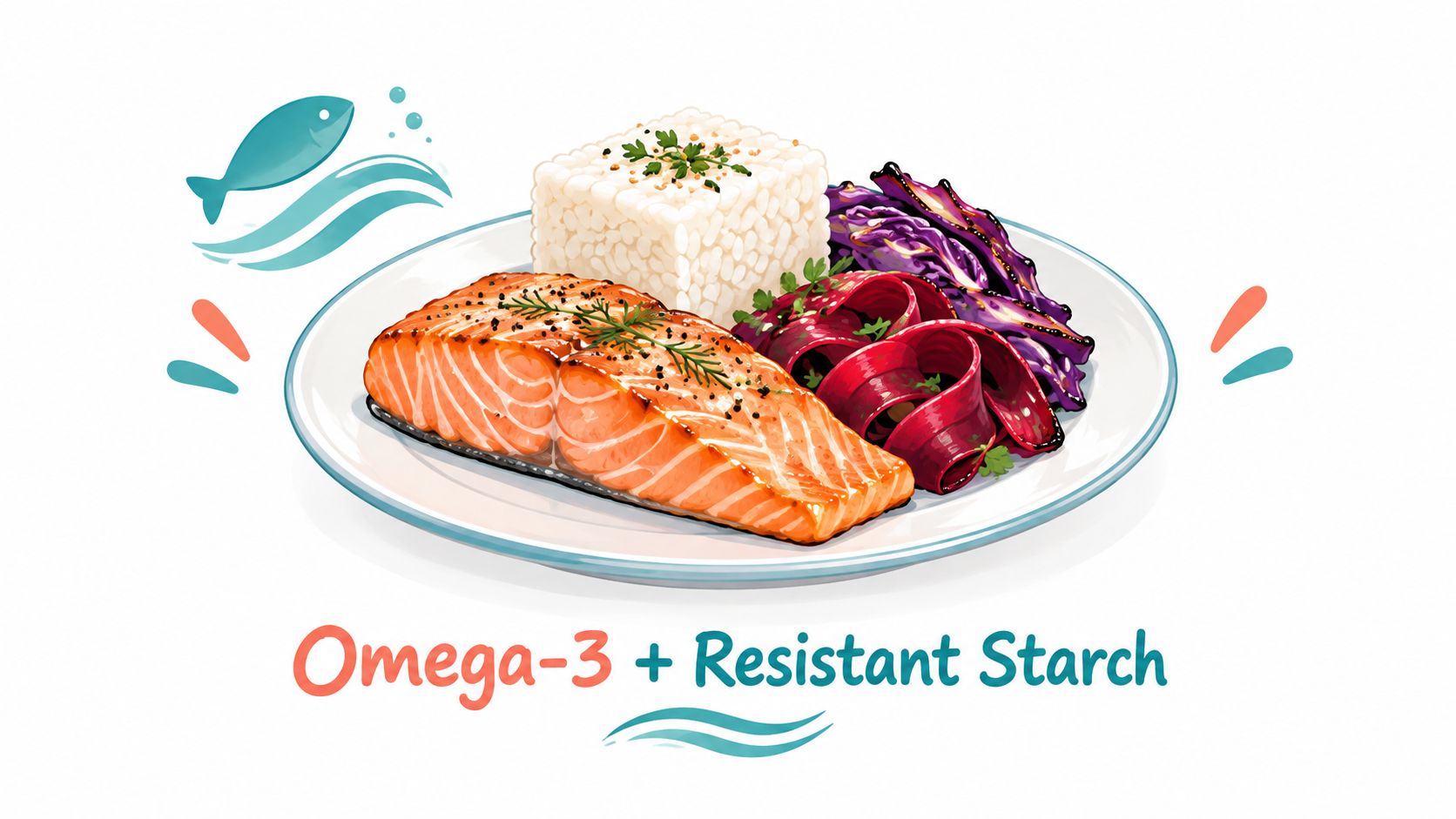
Bake 5 ounces salmon and serve it with ¾ cup cooked jasmine rice that has been cooled, 1½ cups roasted red cabbage and beets, and 1 tablespoon olive oil with lemon. The example provides approximately 420 calories, 34 grams of protein, and 11 grams of fiber. Mackerel can replace salmon, although its stronger flavor may work better with mustard, herbs, or a sharper dressing.
This plate separates the protein source from the fermentable ingredients in a useful way. Fish provides protein and fat, while rice, cabbage, and beets contribute the fiber and plant compounds. Cooking the rice in advance and cooling it changes its starch profile, but it doesn't turn the meal into a treatment for bloating or intestinal inflammation.
Make the side easier to handle
Prepare the rice the day before, refrigerate it promptly, and reheat or serve it chilled according to safe food-handling practices. If cooled rice feels uncomfortable, use a freshly cooked portion or replace it with quinoa or a well-tolerated grain. The meal still works without forcing a resistant-starch strategy.
Roast cabbage and beets until tender rather than serving a large raw portion. Finish with lemon and olive oil after cooking. People who experience diarrhea after fatty meals may prefer less oil and a leaner fish portion, while those with constipation may tolerate the full vegetable serving better when fluids are adequate.
Protein needs vary with body weight, age, activity, and health status. A 34-gram fish serving isn't a universal target, so adjust the fish portion to your overall eating pattern.
8. Turkey or Lean Beef with Ancient Grains and Cruciferous Slaw
For dinner, serve 5 ounces cooked lean ground beef, ¾ cup cooked teff, 1½ cups cabbage slaw with apple cider vinegar, and ½ cup steamed broccoli. The example provides approximately 410 calories, 38 grams of protein, and 11 grams of fiber. Ground turkey can replace beef when you prefer a lighter flavor or lower-fat preparation.
The slaw brings crunch and fiber, but raw cabbage isn't ideal for everyone. If it causes gas, massage it with salt and vinegar, steam it briefly, or replace part of it with cooked zucchini or carrots. A smaller amount of raw vegetable alongside a larger cooked portion often works better than forcing a big salad.
Match the grain to the meal
Teff has a small grain and a soft texture when cooked. Farro or millet can take its place, but farro contains gluten, so choose another grain if you avoid gluten. Cook the grain in water or a suitable broth, then season it with herbs instead of relying on a heavy sauce.
Use a lean cooking method and drain excess fat if rich meals cause urgency or nausea. A digestive enzyme may be relevant for a specific food trigger, but recurring diarrhea, pain, or unexplained changes in bowel habits deserve clinical attention. Don't use grass-fed labeling as a guarantee of better digestion or lower inflammation.
Serve this meal warm with the slaw added at the table. That keeps the textures distinct and lets you test whether the raw component is the part creating trouble.
8-Item Protein & Fiber Meal Comparison
| Meal | Preparation Complexity 🔄 | Resources & Time ⚡ | Expected Outcomes 📊 | Ideal Use Cases 💡 | Key Advantages ⭐ |
|---|---|---|---|---|---|
| Greek Yogurt Parfait with High-Fiber Berries, Nuts, and Prebiotic Granola | 🔄 Low, no cooking; simple layering | ⚡ Low time (5–10 min); needs fresh yogurt, berries, granola | 📊 Improves microbiome diversity, ↑ satiety, supports regularity | 💡 Quick breakfast; probiotic pairing (e.g., GutRx Daily) | ⭐ Protein+fiber synergy; prebiotic oligosaccharides |
| Fiber-Forward Smoothie Bowl with Protein Powder, Oats, and Postbiotic Toppings | 🔄 Medium, blending + assembly | ⚡ Moderate (10–15 min); blender and postbiotic toppings needed | 📊 Supports recovery, ↑ protein/fiber intake; may need fiber titration | 💡 Pre-/post-workout, active lifestyles, grab-and-go | ⭐ High protein/fiber, customizable, postbiotic boost |
| Egg-Based Protein Bowl with Sprouted Whole Grains and Fermented Vegetables | 🔄 Low–Medium, simple cooking and assembly | ⚡ Moderate (10–15 min); sprouted grains and fermented veg required | 📊 Digestible, barrier-supporting (choline), reduced bloating for sensitive guts | 💡 Sensitive digestion, quick nutritious meal | ⭐ Sprouting/fermentation improve digestibility; choline support |
| Lentil and Chicken Buddha Bowl with Roasted Cruciferous Vegetables | 🔄 Medium–High, cooking + roasting | ⚡ Higher (30–40 min); oven, legumes, poultry | 📊 High protein + prebiotic fiber, sustained energy, supports Akkermansia/Christensenella | 💡 Meal-prep lunch, active/work days, satiety-focused meals | ⭐ Very high protein-fiber, meal-prep friendly, prebiotic-dense |
| Legume-Based Soup with Bone Broth, Herbs, and Vegetable Medley | 🔄 High, long slow-cook or broth prep | ⚡ High time investment (8–24 hr for broth); quality ingredients needed | 📊 Therapeutic for barrier repair, reduces permeability and severe bloating | 💡 Healing protocols, leaky-gut support, comforting recovery meals | ⭐ Collagen/glycine for tight-junction repair; highly bioavailable nutrients |
| High-Protein Baked Tofu or Tempeh with Quinoa and Fiber-Rich Vegetables | 🔄 Medium, marinate/bake and cook grains | ⚡ Moderate (25–35 min); tempeh/tofu, quinoa, oven | 📊 Complete plant protein, postbiotic benefits from tempeh, improved digestion | 💡 Vegan/vegetarian dinners, weekly meal-prep | ⭐ Fermented tempeh provides postbiotics; complete amino-acid profile |
| Salmon or Mackerel with Resistant-Starch Side and Polyphenol-Rich Vegetables | 🔄 Medium, cook fish + prepare cooled starch | ⚡ Moderate (cook + overnight cooling for resistant starch) ; higher ingredient cost | 📊 Anti-inflammatory, supports barrier integrity and Akkermansia growth | 💡 Inflammation or barrier-repair focus; bloating reduction | ⭐ High EPA/DHA plus resistant-starch synergy for Akkermansia |
| Turkey or Lean Beef with Ancient Grains and Cruciferous Slaw | 🔄 Medium, cook meat and prepare slaw (raw or fermented) | ⚡ Moderate (20–40 min); may require specialty grains and quality meat | 📊 Nutrient-dense (heme iron, B-vitamins), supports energy and regularity | 💡 Energy/hormonal support, nutrient-dense dinners | ⭐ High bioavailable nutrients; glucosinolate-driven detox support |
Build a Week of Protein and Fiber Meals That Fit You
Start with one breakfast and one dinner from this list. Keep the rest of your routine familiar for several days so you can notice whether the new meal changes fullness, stool pattern, gas, or post-meal discomfort. A meal log with the ingredients, portion, timing, and symptoms is more useful than labeling every reaction as a problem with “fiber.”
The general fiber target is 14 grams per 1,000 calories, with reference amounts of 25 grams per day for women and 38 grams for men, according to the Nutrition Reviews evidence summary. Those figures are population guidance, not a requirement to force a large serving of beans or seeds into one meal. Spread fiber across the day, drink enough fluid for your own needs, and favor cooked foods when raw vegetables worsen symptoms.
A sustainable adjustment is usually small: Change one ingredient or portion at a time, then give your digestion enough time to show you whether it helped.
Use the meals according to the problem you're trying to solve. The yogurt parfait suits a fast breakfast, the smoothie bowl suits a portable or post-workout meal, and the lentil chicken bowl works when lunch needs to carry you through the afternoon. Soup, tofu, fish, and grain bowls offer different textures and protein sources, which helps prevent a high-protein routine from becoming repetitive.
IBS symptoms can vary widely. NIDDK recommends gradually increasing fiber, and some high-fiber ingredients, including legumes, onions, garlic, and certain sweeteners, may be poorly tolerated despite their nutritional value. Lower-FODMAP substitutions can be useful for a defined period with professional guidance, but they shouldn't become an unnecessarily restrictive permanent diet.
Supplements may fit around meals, but they don't replace meal structure. A probiotic isn't a universal answer for bloating, constipation, or diarrhea, and digestive enzymes won't correct every cause of discomfort. If symptoms persist, become severe, include bleeding, or come with unexplained weight change, speak with a clinician before making further dietary changes.
For practical planning, batch-cook one grain, one protein, and one cooked vegetable, then assemble different combinations through the week. Use these batch cooking and storage tips to make the approach easier to maintain. Treat the portions above as starting points, not prescriptions, and adjust them to your appetite, activity, health status, and tolerance.
GutRx offers synbiotic formulas and digestive enzymes designed to fit alongside food-based routines for concerns such as regularity, bloating, and meal-related discomfort. If you want to compare supplement options after building your meals, visit GutRx and review the product details before deciding what fits your needs.


