

You can eat “clean,” drink more water, and still feel like your digestion has its own schedule. One day you're fine, the next you're skipping, rushing, or going more often than you'd like. Irregular bowel movements are frustrating because they're often unpredictable, but the pattern is usually more informative than the calendar.
The most useful first step is to stop assuming there's one perfect bowel routine. In healthy adults, bowel habits span a broad range, and clinical interpretation depends on what changed, what else is happening, and whether symptoms are interfering with daily life. That shift in perspective matters, because the next move is not always “more fiber.” Sometimes it's recognizing a motility issue, a pelvic floor problem, a stress pattern, or a supplement choice that matches the actual symptom pattern.
Table of Contents
- Defining Normal Bowel Habits
- The Hidden Mechanics Behind Irregularity
- Red Flags and When to See a Clinician
- Targeted Supplements for Bowel Regularity
- Comparing Intervention Strategies
- A Practical 7-Day Tracking Protocol
- How to Evaluate Supplement Quality
Defining Normal Bowel Habits
A lot of people are told they should go every day, then start worrying the moment that does not happen. That is a poor benchmark. In a general adult sample, 98% of healthy subjects had between three stools per day and three per week, and 59.0% reported once-daily bowel movements, which means daily stooling is common but not required (PubMed).

What “normal” means in real life
Older population work matters because it shows that bowel regularity is not one ideal schedule. 96.8% of participants in that study fell within the commonly accepted range of 3 times per week to 3 times per day, which is why “irregular” has to be judged against a broad physiologic baseline, not social media habits (PubMed). A related population study found a regular 24-hour cycle in only 40% of men and 33% of women, while about one-third of women defecated less often than daily, so variation is common even without clear disease (PubMed).
The practical question is usually not “Did I go today?” It is “Is this new for me, is it comfortable, and is it predictable?” A person who normally goes every other day and feels fine is not the same as someone who suddenly has urgency, straining, or alternating stool patterns.
Practical rule: count the pattern, not just the day. If the routine changed and the change sticks, pay attention.
Why stress, sleep, and hormones matter
Bowel timing is not fixed. Stress, sleep disruption, recent illness, medication changes, and hormonal shifts can all change stool frequency and urgency without creating a dramatic illness picture. That is one reason people can have a steady gut week and then a confusing one after travel, a poor night's sleep, or a menstrual cycle change.
For shoppers comparing a probiotic for gut health or a daily probiotic, that matters because the goal is often support for a fluctuating system, not a dramatic overnight fix. A gut bacteria imbalance symptoms guide can be useful if the pattern includes bloating, gas, and changing stool form alongside the frequency shifts.
The Hidden Mechanics Behind Irregularity
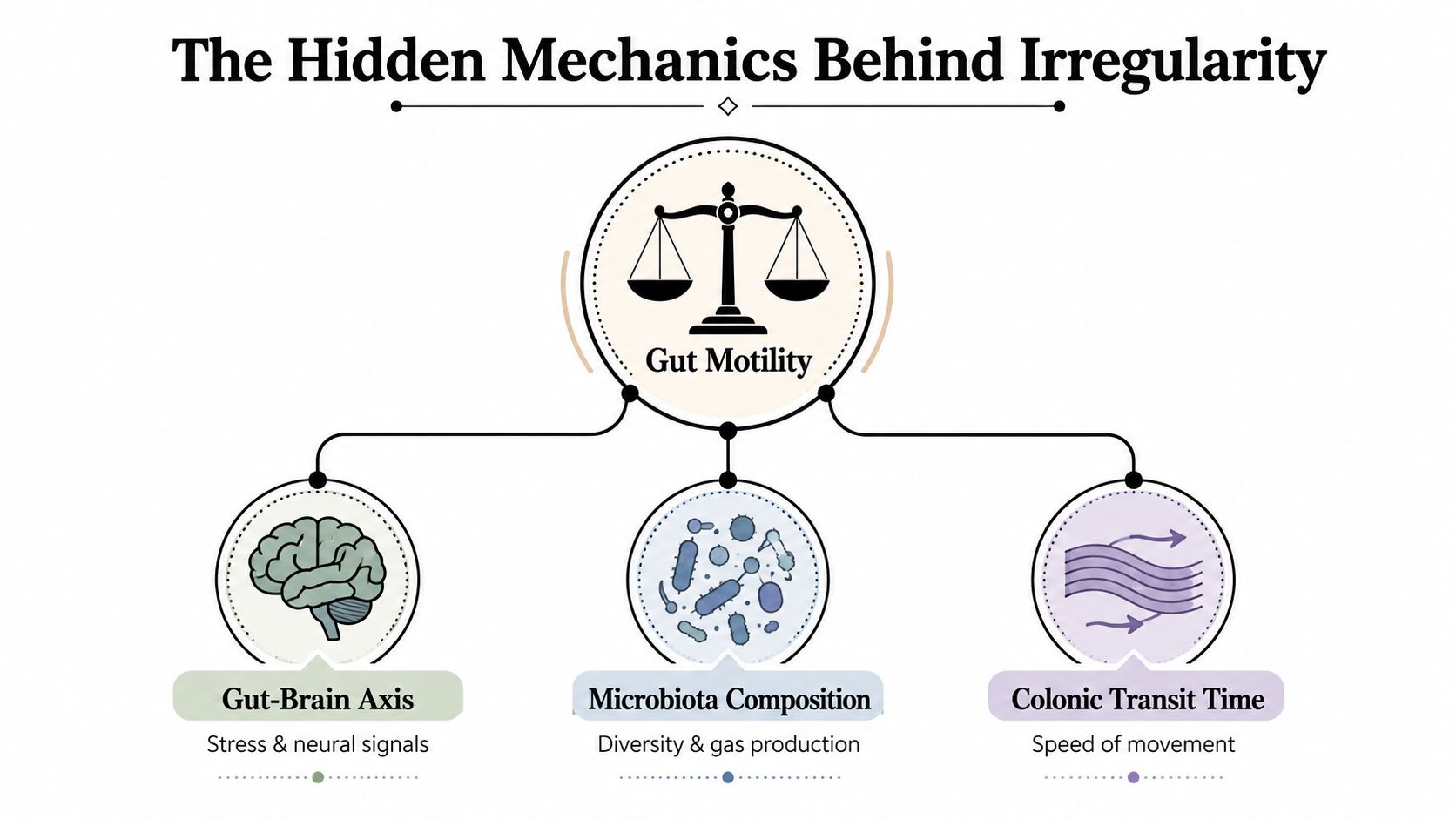
A lot of people are told to “eat more fiber” before anyone asks what is failing. Bowel movement pattern depends on motility, microbiome signaling, and outlet coordination, not just stool bulk. If any one of those parts is off, the result can look like constipation, urgency, or a back-and-forth pattern that never feels settled.
Microbiota can shift frequency and stool form
In chronic constipation, gut microbes are linked with changes in bile acids, short-chain fatty acids, serotonin, and methane production, all of which can influence colonic motility, secretion, and absorption (Oxford Academic). That is a real physiology pathway, not a vague microbiome slogan. More methane and altered bile acid handling are associated with slower transit and harder stools, while changes in SCFA and serotonin signaling can shift propulsive activity and urgency patterns.
Some people do better with a synbiotic, a formulation that combines probiotic support with prebiotic input and, in some products, postbiotic components. The goal is to support the ecosystem and the signaling together, not just add bacteria and hope the gut responds. For people whose symptoms flare with bloating plus irregularity, that layered approach may fit better than a single-track fiber strategy, especially when they are also comparing options like constipation relief supplements.
Pelvic floor dyssynergia is easy to miss
Another overlooked cause is pelvic floor dyssynergia. Defecatory disorders are marked by inadequate rectal propulsion, high anal resting pressure, or paradoxical contraction of the anal sphincter and pelvic floor during attempted defecation (PMC). In plain language, the body may create the urge to go, but the outlet does not relax properly.
That creates a frustrating pattern. A person feels pressure, sits down, strains, and passes little stool, or passes small amounts over and over. In those cases, more fiber can make the problem worse because it adds material to move through an outlet that is not coordinating well.
Clinical shortcut: repeated urges with incomplete evacuation point more toward coordination problems than a simple “slow digestion” story.
Red Flags and When to See a Clinician
Not every change in bowel habits needs urgent care, but some patterns should move from self-management to evaluation. Cleveland Clinic's guidance is clear that persistent constipation or diarrhea, blood, black or tarry stools, nocturnal symptoms, weight loss, vomiting, or symptoms lasting beyond about 2 weeks deserve medical attention (Cleveland Clinic). UCLA Health gives similar warning signs, which reinforces that bowel changes become more concerning when they're persistent, disruptive, or paired with systemic symptoms.
What matters more than frequency alone
Stool frequency by itself can mislead. Clinical guidance weighs urgency, pain, stool color, nocturnal waking, and inability to pass gas heavily, because those features can point to a problem even when the day count doesn't look dramatic. A person having fewer bowel movements than usual may still be okay if the pattern is short-lived and otherwise comfortable, while someone with normal frequency plus blood or nighttime symptoms needs attention sooner.
There's also a practical distinction between a symptom pattern and a diagnosis. Persistent constipation or diarrhea can reflect IBS, obstruction, medication effects, endocrine disease, pelvic-floor dysfunction, or another underlying issue rather than a basic diet problem. That's why “just eat more fiber” is too simplistic when the stool pattern is accompanied by pain, urgency, or repeated incomplete emptying.
A simple decision framework
If the change is new, brief, and clearly linked to a known trigger like travel, a medication change, or a big diet shift, observation is reasonable. If the pattern is persistent, worsening, or accompanied by blood, black stools, vomiting, nocturnal symptoms, or weight loss, it's time to book care.
For shoppers comparing a probiotic for constipation, a probiotic for diarrhea, or digestive enzymes for bloating after eating, the key is not to use supplements as a substitute for evaluation when red flags are present. Supplements are for support, not for masking a warning sign.
Targeted Supplements for Bowel Regularity
The supplement choice should match the mechanism, not just the symptom label. If the issue is meal-related fullness or bloating that makes stools feel erratic, digestive enzymes may help by reducing the burden of harder-to-break-down foods. If the issue looks more like fluctuating stool form and microbial signaling, a daily probiotic or synbiotic may be the more relevant tool.

Where Akkermansia and synbiotics fit
Next-generation ingredients get attention because they're designed around gut barrier and signaling support, not just broad-spectrum bacterial replacement. Akkermansia muciniphila is often discussed in that context, and it fits best in a formula aimed at gut ecosystem balance rather than a generic one-note constipation product. The same logic applies to synbiotics, which combine probiotic and prebiotic elements and may include postbiotic support to help create a more favorable gut environment.
That's a useful distinction for people with irregular bowel movements that swing between constipation, bloating, and urgency. The more variable the picture, the less likely a single ingredient will solve everything on its own.
One option in this category is GutRx Daily, a daily bowel movement supplement designed to support gut motility and digestive balance. It's the kind of product people tend to look for when they want a routine-support formula rather than a one-off rescue product.
Enzymes for meal-related discomfort
Meal-related bloating can amplify irregularity because discomfort changes how people eat, move, and respond to the urge to go. A targeted enzyme blend is often more relevant when symptoms appear after dairy, high-FODMAP meals, or heavy mixed meals. In that setting, the goal is better digestion of the meal itself, which can indirectly reduce the pressure and discomfort that seem to throw bowel habits off.
If post-meal symptoms are part of your pattern, the constipation relief supplements guide is worth reviewing alongside product labels. The right choice depends on whether the main problem is stool frequency, stool consistency, urgency, or fullness after eating.
Comparing Intervention Strategies
Different tools solve different problems. Fiber can help when stool is dry or low-volume, but it can also create gas and bloating if added too quickly or if the core problem is outlet coordination. Probiotics and synbiotics are better fits when the issue feels tied to fluctuating motility, while prescription options enter the picture when constipation is persistent, severe, or tied to an identified disorder.
| Strategy | Best For | Onset Time | Key Consideration |
|---|---|---|---|
| Fiber | Low intake, dry stool, mild constipation | Gradual | Can worsen bloating if increased too fast |
| Probiotic or synbiotic | Irregularity with bloating, gas, or pattern fluctuation | Gradual | Best when the issue seems ecosystem-related |
| Digestive enzymes | Meal-related discomfort after specific foods | With meals | Helps the meal, not the underlying motility pattern |
| Osmotic laxatives | Short-term constipation relief | Often faster than supplements | Works by drawing water into the bowel |
| Prescription therapy | Persistent or complicated constipation | Varies | Used when self-care doesn't solve the problem |
What usually works first
For many people, the first useful move is not the most aggressive one. It's the smallest intervention that matches the pattern. If stool is hard and infrequent, a fiber plan may be reasonable. If the picture is bloating plus irregular timing, a probiotic or synbiotic is often a more logical starting point. If symptoms flare after specific meals, enzymes make more sense than chasing bowel frequency alone.
Decision rule: match the tool to the symptom pattern, not to the trendiest supplement category.
When bowel habits are obviously tied to stress, sleep loss, or cycle changes, a supplement may still help, but it usually works better alongside tracking and routine changes. That's especially true for people who have already tried broad “gut health” fixes without knowing what moved the needle.
A Practical 7-Day Tracking Protocol
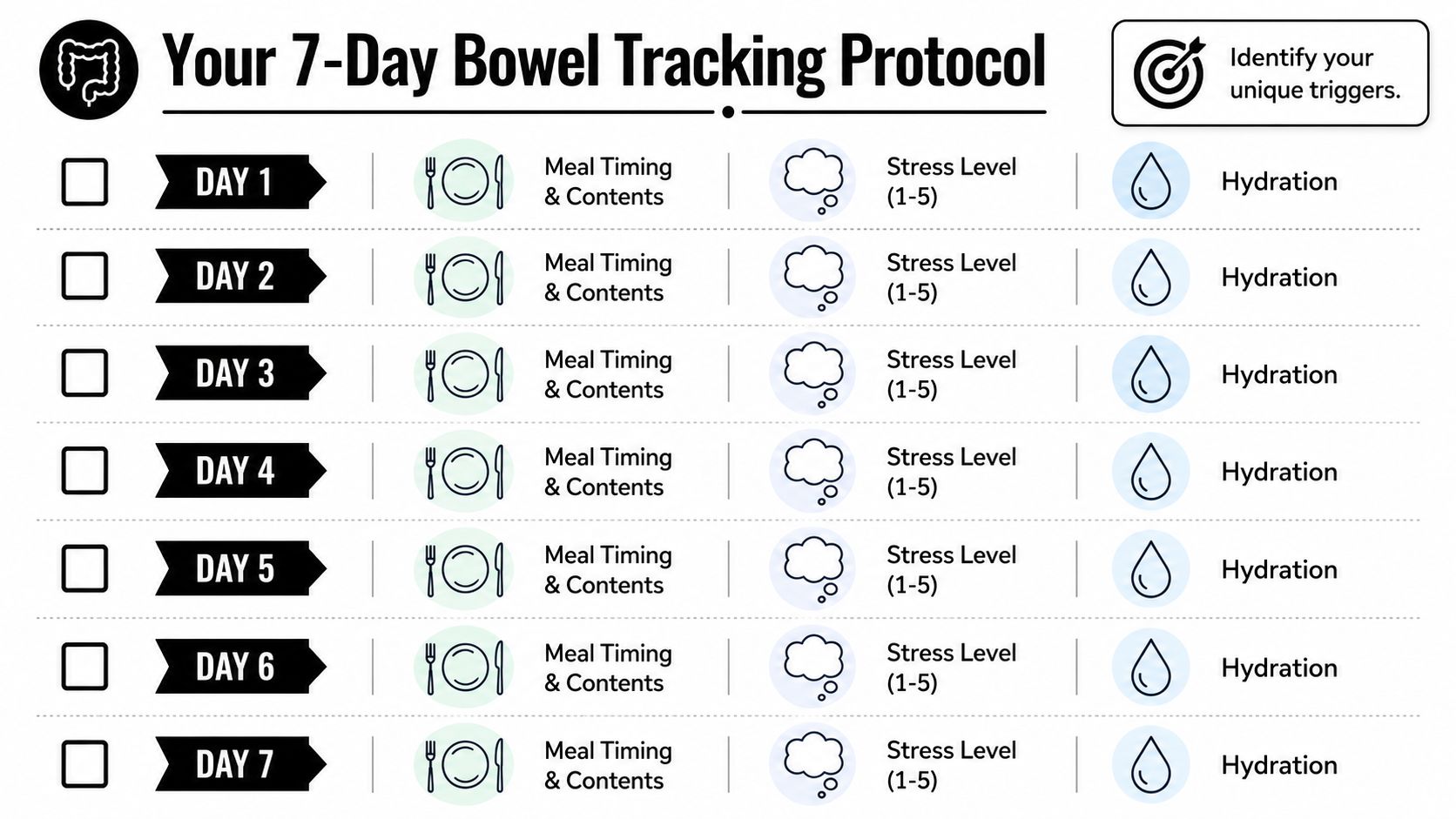
Random changes create random results. A short tracking run gives you a better read on whether the problem tracks with meals, stress, sleep, or a specific supplement. Even a week of notes can reveal patterns that are hard to notice in the middle of a frustrating day.
What to log each day
Keep it simple. Write down when you ate, what the meal looked like, whether the stool was urgent, hard, loose, or incomplete, and whether stress or sleep was off. If you're trialing a probiotic for bloating or irregularity, note the timing so you can tell whether symptoms changed after starting it.
- Meal timing and contents: Record breakfast, lunch, dinner, snacks, and any high-FODMAP or dairy-heavy meals.
- Stress level from 1 to 5: Note work strain, travel, arguments, deadlines, or anxious days.
- Hydration: Track whether your intake looked normal, low, or unusually high.
- Stool pattern: Write down frequency, urgency, and whether emptying felt complete.
How to use the pattern
After seven days, look for repeated links instead of one-off noise. If symptoms reliably show up after certain meals, digestive enzymes may be worth testing with those foods. If stool changes line up with stress or sleep disruption, a daily probiotic or a steadier routine may fit better than a pile of diet restrictions.
This is also where a targeted supplement trial works better than changing five things at once. One change at a time makes the pattern readable. If you're comparing products, start with the symptom that bothers you most, then adjust based on what the log shows.
How to Evaluate Supplement Quality
Quality matters more in gut supplements than many people realize. If a label doesn't tell you what's inside, how it's verified, or whether the strains are the ones being discussed, you're guessing instead of choosing. Third-party testing, downloadable Certificates of Analysis, and strain-specific verification are the basics, not bonus features.
What to look for on the label
A serious probiotic should identify the strain clearly, not just the genus and species. That matters because the strain is what makes the product specific enough to evaluate. Delayed-release capsules are also worth paying attention to, since they can help protect probiotics as they pass through stomach acid and reach the intestine where they're meant to act.
For buyers comparing shelf-stable probiotic options or a third-party tested probiotic, the checklist should be straightforward:
- Strain transparency: Clear names beat vague “proprietary blend” wording.
- Testing proof: Look for a public COA or another verification method.
- Delivery system: Delayed-release or otherwise protected capsules are easier to justify than unlabeled soft claims.
- Product purpose: Daily maintenance, bloating support, women's support, or enzyme-based meal support should be obvious from the formula.
Why verification changes the buying decision
A supplement can sound impressive and still be hard to trust. That's why external quality checks matter, especially in a category where people are taking a product daily and expecting a specific digestive effect. If you're evaluating a brand, the question isn't just whether it claims support for regularity. It's whether the ingredient list, strain naming, and testing documents line up.
The third-party tested probiotics guide is a useful reference if you want a deeper look at how verification should work. The same standard applies whether you're shopping for a probiotic for digestive balance, a synbiotic, or an enzyme blend for meal-related discomfort.
If you're comparing options for irregular bowel movements, GutRx offers daily probiotics, balance-focused formulas, women's support, and digestive enzymes built around specific symptom patterns. Start with the product that matches your main issue, then review the labels and testing details before you buy at GutRx.


