

You wake up with a relatively comfortable abdomen, eat breakfast, and watch the familiar pattern unfold by evening: bloating, pressure, cramping, and either an urgent trip to the bathroom or the frustrating sense that you still haven't emptied your bowels. Then your period arrives and the same symptoms become more intense. If this sounds familiar, IBS symptoms in women may involve more than food or stress alone. Hormonal changes, visceral sensitivity, bowel motility, pelvic symptoms, and the gut-brain connection can all shape the way IBS feels.
IBS is real, but it can resemble gynecologic, urinary, and other digestive conditions. The most useful next step isn't guessing which supplement or elimination diet will fix everything. It's identifying your symptom pattern, tracking how it changes across your cycle, checking for warning signs, and choosing support that matches your dominant problem.
Table of Contents
- Why IBS Affects Women Differently
- The Core IBS Symptom Profile in Women
- Hormonal Fluctuations and Menstrual Cycle Flares
- Distinguishing IBS from Endometriosis and Pelvic Floor Dysfunction
- How to Track Symptoms Across Your Cycle
- Targeted Management and Gut Microbiome Support
- Red Flags and When to Seek Immediate Care
Why IBS Affects Women Differently
A woman with IBS may notice that constipation dominates one week, bloating becomes the main problem before menstruation, and abdominal pain feels unusually intense even when bowel changes seem modest. Another woman may experience loose stools, urgency, nausea, fatigue, and pelvic discomfort at the same time. These experiences aren't imaginary or excessive. Women with IBS can have a distinct combination of bowel, pain, hormonal, and pelvic symptoms.
Large pooled studies show that IBS isn't evenly distributed by sex. A systematic review covering 80 study populations and 260,960 subjects found an overall IBS prevalence of 11.2%, with a higher prevalence among women than men, reflected by an odds ratio of 1.67 with a 95% confidence interval of 1.53 to 1.82 (systematic review of IBS prevalence). The same evidence base estimated prevalence at 14.0% in women and 8.9% in men, an absolute difference of just over five percentage points.
Pain is part of the biology
Women with IBS may also experience a stronger pain phenotype. Reviews describe lower rectal pain thresholds during colorectal distension and greater central nervous system activation during the same stimulus, findings that support visceral hypersensitivity rather than the idea that symptoms are just caused by more frequent bowel movements (review of sex differences in IBS).
Visceral hypersensitivity means the nervous system can interpret ordinary stretching, gas, or bowel movement as painful or threatening. The gut, brain, immune system, and reproductive hormones communicate continuously, so pain can intensify without visible intestinal damage. That doesn't make it less physical. It means the problem involves how the bowel senses and processes signals.
A practical reframe: If your symptoms worsen around menstruation, that pattern is useful clinical information, not evidence that the pain is “just hormones.”
Women also report broader symptom clusters than bowel changes alone. Fatigue, insomnia, urinary urgency or frequency, back pain, painful periods, and pain during intercourse can overlap with IBS and may point to a wider gut-brain-pelvic network (review of IBS and non-GI symptoms in women). A women-focused approach therefore asks not only, “Are you constipated or having diarrhea?” It also asks when the pain occurs, whether urination or sex triggers it, and how symptoms relate to the menstrual cycle.
For readers comparing options for digestive and vaginal support, this guide to probiotics for gut and vaginal health can help clarify why one product category may not address every symptom equally.
The Core IBS Symptom Profile in Women
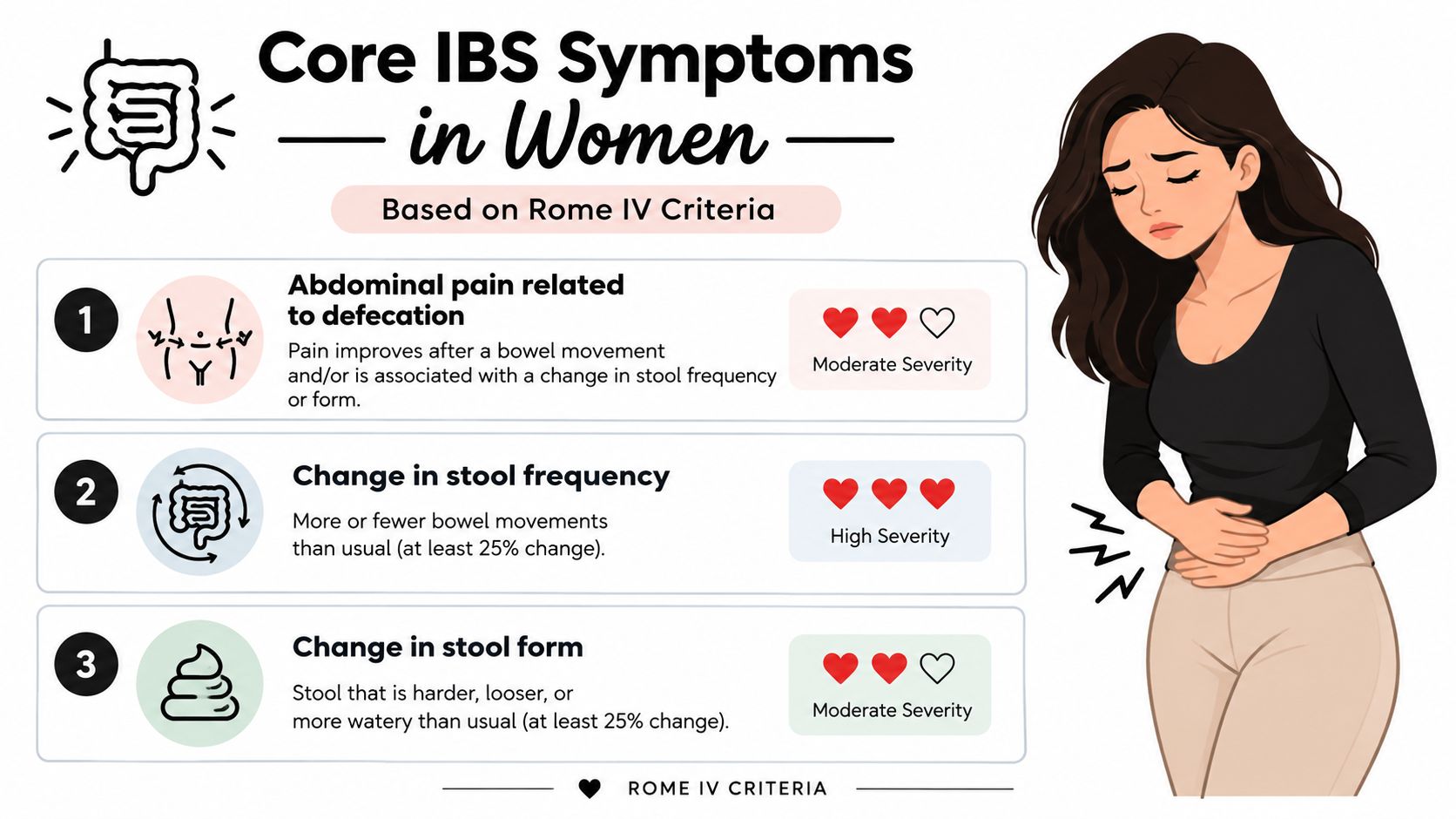
A patient may arrive with abdominal pain, bloating, unpredictable stools, and the fear of being far from a bathroom. That cluster is more informative than any single symptom. IBS is defined by abdominal pain associated with changes in bowel habits, including stool frequency, stool form, constipation, diarrhea, or an alternating pattern. Bloating, urgency, mucus, and incomplete evacuation often accompany it, as described in womenshealth.gov's IBS overview.
Rome IV provides a symptom-based clinical framework. One episode of gas or constipation does not establish IBS. A clinician looks for recurring pain linked with defecation, or with a change in bowel frequency or stool appearance, while checking whether another condition better explains the symptoms. The assessment should also consider pelvic pain, urinary symptoms, painful periods, and pain during intercourse, because bowel and pelvic-floor signals can overlap.
What the main symptoms can feel like
- Abdominal pain: Pain may ease, intensify, or change after a bowel movement. It can feel like cramping, pressure, aching, or sharp discomfort.
- Bloating and visible distension: Fullness may build after meals or later in the day. Clothing can feel tight even when passing gas provides little relief.
- Constipation: Hard stools, straining, infrequent bowel movements, or incomplete evacuation may dominate. Constipation-predominant IBS is particularly relevant in women.
- Diarrhea and urgency: Loose stools, repeated bathroom trips, or a sudden need to defecate can restrict travel, work, and social activities.
- Mixed bowel habits: Constipation and diarrhea may alternate, sometimes alongside dietary changes, stress, or other symptom triggers.
- Mucus: Mucus can occur with IBS. Blood is different and requires medical assessment.
As noted above, women have a higher overall IBS prevalence. A pooled review of IBS prevalence by sex provides that broader context, while subtype patterns offer more practical detail: a clinic-based meta-analysis found constipation-predominant IBS in 40% of women compared with 21% of men, while diarrhea-predominant IBS appeared in 31% of women and 50% of men (meta-analysis of IBS symptom patterns). These patterns describe groups, not a diagnosis for an individual patient.
For constipation-dominant symptoms, GutRx DAILY is described as combining selected probiotic strains with prebiotics intended to support bowel movement form and transit over time. That daily approach differs from products aimed at meal-related discomfort or acute diarrhea, so the formula should match the symptom pattern.
Hormonal Fluctuations and Menstrual Cycle Flares
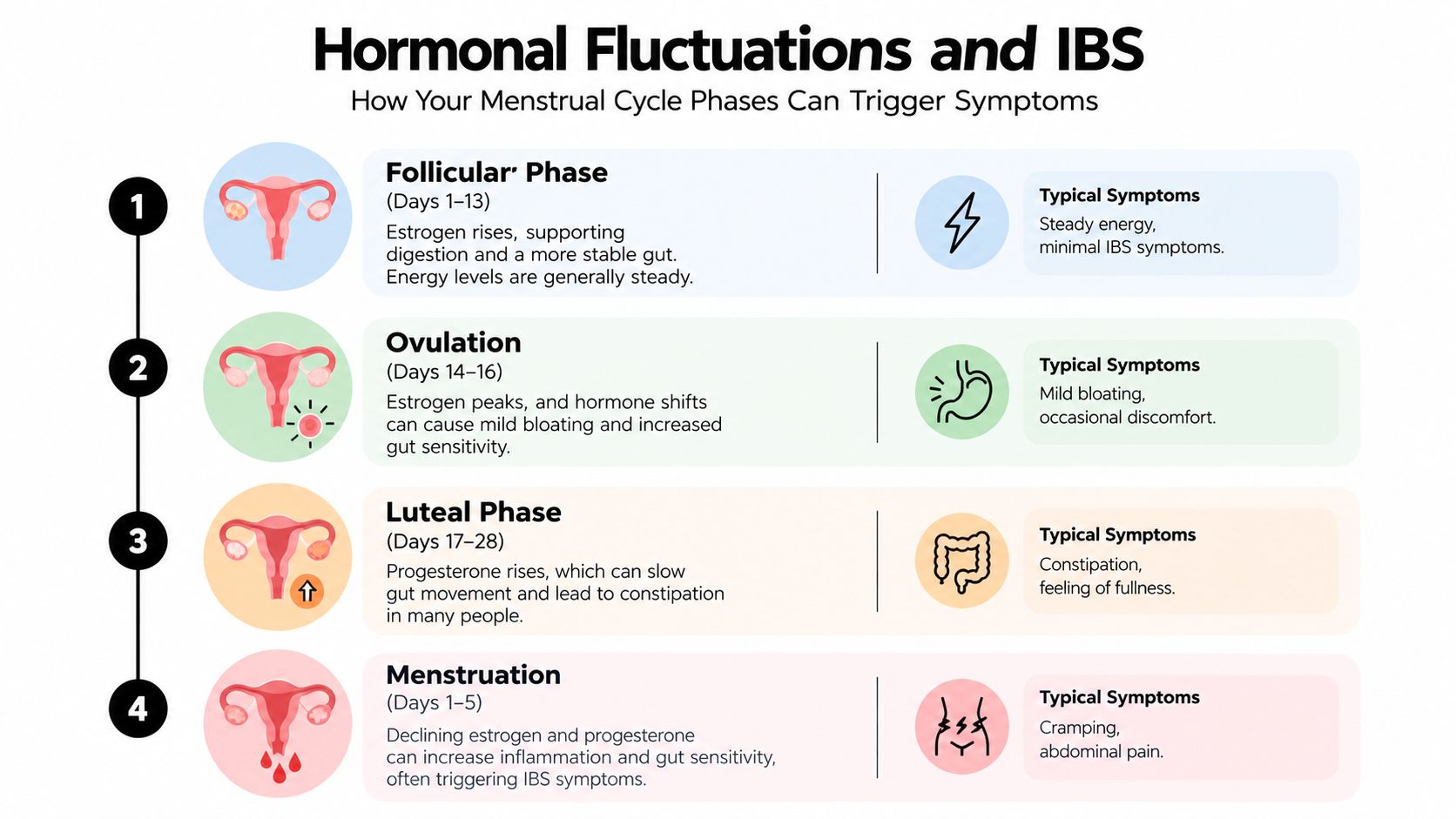
Many women notice that IBS symptoms rise before or during menstruation. The change may show up as more abdominal pain, bloating, nausea, diarrhea, constipation, or incomplete evacuation. Symptoms can also fluctuate during the late luteal phase, the period just before bleeding begins, when estrogen and progesterone fall.
Hormones can influence bowel movement and sensory processing. Literature on IBS and the menstrual cycle links hormonal shifts with changes in colonic 5-HT3 receptor expression, altered motility, and mast-cell signaling, mechanisms that may increase visceral sensitivity and symptom severity (review of IBS, sex hormones, and the menstrual cycle). You don't need to measure hormone levels to use this information. A repeated pattern of worsening symptoms before or during menstruation is enough to document and discuss with a clinician.
IBS flare or period-related pain
The distinction isn't always clean. Period pain tends to center in the pelvis and may occur with uterine cramping, menstrual bleeding, or back pain. IBS pain is more likely to travel with bloating, gas, stool changes, urgency, or a noticeable change after defecation. Both can occur together, which is why timing and associated symptoms are more useful than location alone.
A symptom diary can reveal whether constipation begins before bleeding, whether diarrhea appears during menses, or whether bloating persists throughout the cycle. It can also show that what feels like one condition may be two overlapping problems. Resources on gut health and menopause are useful for understanding how reproductive hormone changes can continue to affect digestive experiences during later hormonal transitions.
Use the pattern, not the calendar alone: A period-related flare can support an IBS hypothesis, but new, severe, or progressively worsening pelvic pain still deserves evaluation.
Diet and supplement decisions may need to change with the cycle, but extreme restriction usually creates more confusion than clarity. A person with constipation before menstruation may need a carefully managed regularity strategy, while someone with diarrhea during menses may need to focus on hydration, meal simplicity, and medical guidance for persistent symptoms. The best plan responds to the dominant pattern rather than assuming every woman needs the same protocol.
For a practical discussion of abdominal distension around menstruation, see this explanation of what causes bloating during your period. The aim is to recognize a predictable flare without dismissing symptoms that fall outside your usual pattern.
Distinguishing IBS from Endometriosis and Pelvic Floor Dysfunction
IBS can coexist with gynecologic and pelvic conditions, so a bowel-focused explanation shouldn't end the investigation when pain is severe or pelvic symptoms are prominent. Endometriosis, pelvic floor dysfunction, interstitial cystitis, urinary infection, and celiac disease can overlap with bloating, abdominal pain, bowel changes, or discomfort during sex.
The timing and trigger often provide the first useful distinction.
| Condition | Key Differentiating Symptoms | Pain Timing / Triggers |
|---|---|---|
| IBS | Abdominal pain with constipation, diarrhea, bloating, urgency, or incomplete evacuation | May change with bowel movements, meals, stress, or cycle phases |
| Endometriosis | Pelvic pain, painful periods, pain during intercourse, bowel or urinary discomfort | Often linked to menstruation, though symptoms may persist beyond bleeding |
| Pelvic floor dysfunction | Straining, incomplete evacuation, pelvic pressure, painful intercourse, difficulty relaxing to pass stool | May worsen with defecation, prolonged sitting, or pelvic muscle tension |
| Interstitial cystitis | Bladder pressure, urinary urgency or frequency, and pelvic discomfort without a typical infection pattern | Often changes with bladder filling or urination |
| Urinary tract infection | Burning urination, urgency, frequency, and sometimes pelvic discomfort | Symptoms may begin suddenly and require testing |
| Celiac disease | Digestive symptoms that may include diarrhea, bloating, pain, or signs of nutritional problems | Related to gluten exposure and requires medical testing rather than self-diagnosis |
Pain during intercourse, pain with urination, persistent bladder pressure, or pain that is strongly tied to menstruation should prompt a conversation with a gynecologist or pelvic health clinician. A useful overview of the interaction between bowel symptoms and muscle coordination is this resource on IBS and pelvic floor dysfunction.
What a clinician needs to know
Bring specific observations rather than a general statement that your stomach hurts. Explain whether pain improves after defecation, whether you strain, whether sex triggers pain, whether urination changes the symptoms, and whether the pattern appears only around menstruation. Mention any prior testing for celiac disease, infection, or urinary causes.
Pelvic floor dysfunction can make evacuation difficult even when stool isn't especially hard. In that situation, adding more fiber may increase fullness without solving the underlying coordination problem. Pelvic floor physical therapy may be more appropriate than repeatedly escalating laxatives, but it requires assessment by a qualified professional.
The same caution applies to endometriosis. A woman can have IBS and endometriosis at the same time, so improvement in bowel habits doesn't prove that pelvic pain has a digestive cause. If your symptoms are severe, cyclical, sexual, urinary, or progressively disruptive, ask whether both gastrointestinal and gynecologic evaluation are needed.
How to Track Symptoms Across Your Cycle
Tracking works best when it stays simple enough to continue. You don't need to record every ingredient, emotion, or bodily sensation in a complicated spreadsheet. You need consistent observations that show relationships among bowel habits, pain, bloating, menstrual timing, sleep, and meals.
A low-stress tracking method
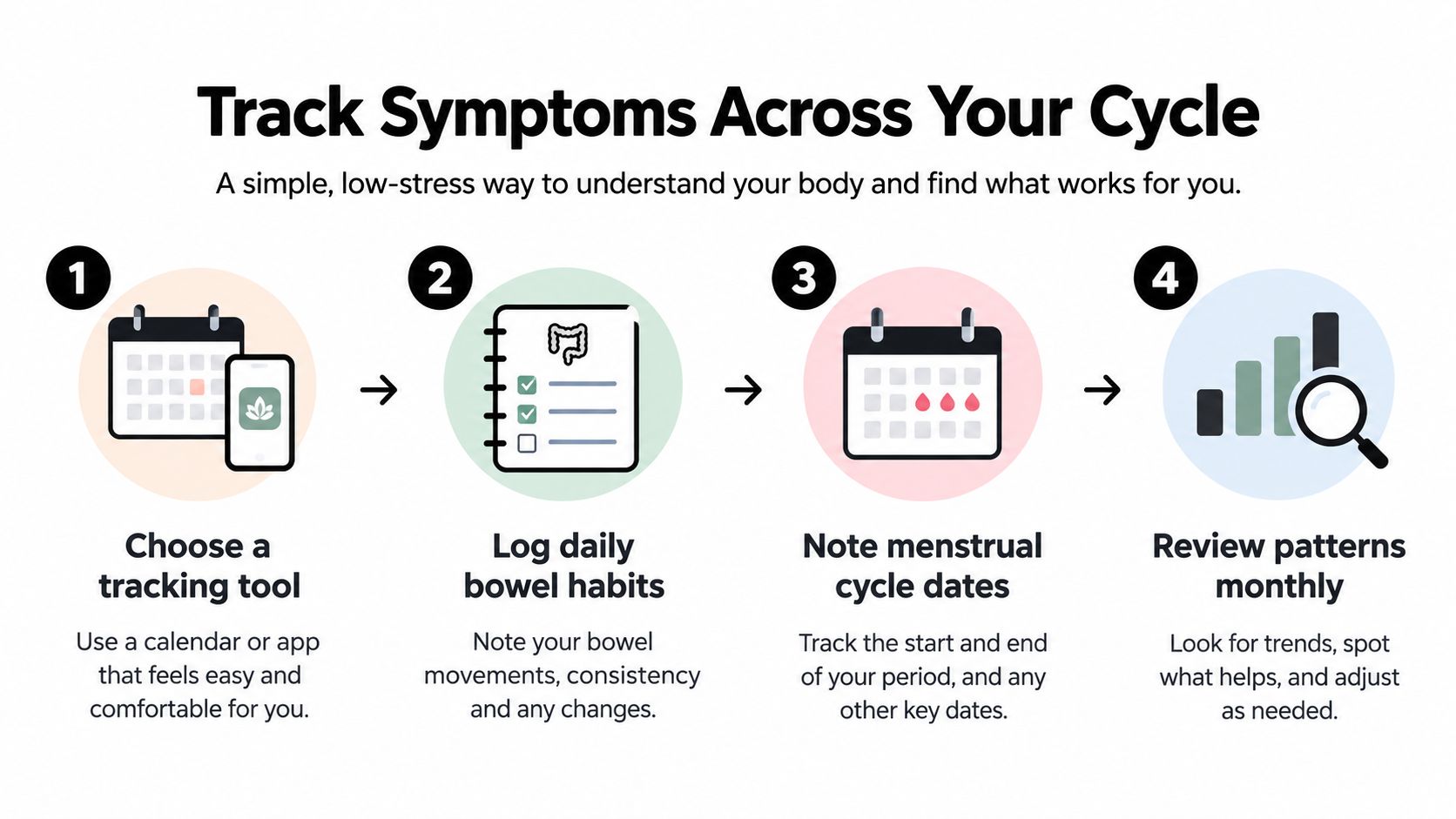
- Choose one tool: Use a calendar, notes app, or symptom tracker that you already open regularly. Create a small daily entry rather than a detailed narrative.
- Record bowel changes: Note constipation, diarrhea, urgency, incomplete evacuation, and any meaningful change in stool form. If you use a stool chart, record the category rather than relying on memory.
- Mark menstrual dates: Record the first day of bleeding and the days when symptoms intensify. Include the late luteal days if you recognize a premenstrual pattern.
- Rate symptoms consistently: Use the same simple scale for abdominal pain and bloating each day. Consistency is more useful than false precision.
- Add likely modifiers: Note unusually poor sleep, major stress, a large meal, or a food you already suspect. Don't remove multiple food groups at once, because you won't know what changed the outcome.
- Review before appointments: Look for repeated timing. Does constipation arrive before bleeding? Does diarrhea appear during menses? Does pelvic pain occur independently of bowel movements?
Bring the record to your gastroenterologist, gynecologist, or primary care clinician. A short summary such as “pain and constipation increase before menstruation, while urinary urgency and pain during intercourse occur separately” gives the clinician a much clearer starting point than a list of unrelated symptoms.
Keep tracking observational: The purpose isn't to prove that one food caused every flare. It's to identify patterns worth testing with professional guidance.
Targeted Management and Gut Microbiome Support
Effective management usually combines several modest interventions rather than relying on a single “IBS cure.” Start with the symptom that interferes most with daily life. Constipation, diarrhea, post-meal bloating, pelvic pain, and cycle-related flares require different priorities.
A structured low-FODMAP approach may help some people identify fermentable carbohydrate triggers, but it works best as a temporary, guided process followed by systematic reintroduction. Permanent broad restriction can reduce dietary variety and make eating more stressful. A registered dietitian experienced in gastrointestinal care can help you separate a true trigger from an overly restrictive routine.
For pain linked with straining, incomplete evacuation, pelvic pressure, or painful intercourse, pelvic floor physical therapy may address muscle coordination and relaxation. Gut-directed psychological therapies, sleep improvement, gentle movement, and stress regulation can also support the gut-brain pathway. These aren't suggestions that symptoms are psychological. They target the nervous system's role in motility and pain processing.
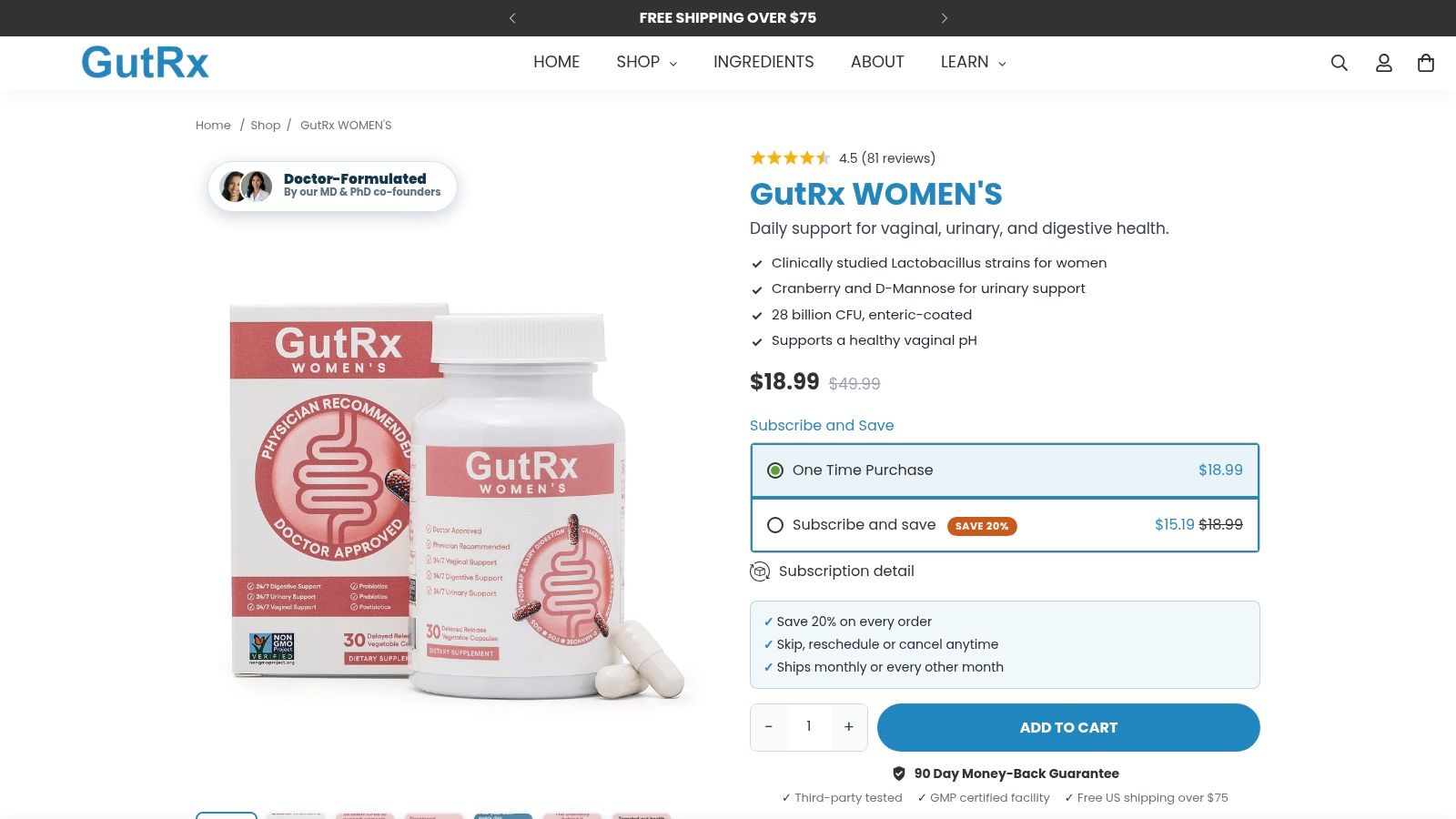
For women who want a combined microbiome option, GutRx Women's is described as a synbiotic-style formulation for digestive, vaginal, and urinary support that includes cranberry and postbiotic components. Consider that type of product only as one part of a broader plan. A probiotic or synbiotic may support digestive balance, but it won't diagnose endometriosis, treat a urinary infection, or replace evaluation for bleeding and severe pain.
Digestive enzymes are a separate category. They may be more relevant when discomfort follows a particular meal or food component, while a daily probiotic is intended for ongoing microbiome support. Compare the product's target use, strain and ingredient transparency, testing information, delivery system, and instructions instead of assuming that a higher number of organisms automatically means a better fit.
For another non-drug option, evidence-based acupuncture for IBS provides context on how acupuncture may fit into a broader symptom-management conversation. Discuss complementary treatments with your clinician, especially if you take medication or are pregnant.
A helpful overview for evaluating products and strains is this guide to the best probiotics for IBS. Choose one change at a time when possible, follow the label consistently, and stop if symptoms clearly worsen. If diarrhea, constipation, pain, or bloating persists, supplement experimentation shouldn't delay medical assessment.
Red Flags and When to Seek Immediate Care
IBS commonly causes recurring pain and bowel changes, but it shouldn't be used as a catch-all explanation for every digestive or pelvic symptom. Seek prompt medical evaluation for rectal bleeding, blood in the stool, unexplained weight loss, anemia, persistent vomiting, fever, severe or progressive pain, or pain that wakes you from sleep. Persistent nighttime diarrhea and a new abdominal lump also require assessment.
New symptoms deserve attention even if you've previously been told you have IBS. A change in your usual pattern may reflect infection, inflammatory bowel disease, celiac disease, gynecologic disease, medication effects, or another condition that needs a different treatment plan.
Build the right care team
Start with a primary care clinician or gastroenterologist for recurring bowel symptoms. Add gynecologic assessment when pain follows the menstrual cycle, affects intercourse, involves abnormal bleeding, or doesn't behave like a bowel-related symptom. Pelvic floor physical therapy may be appropriate when evacuation requires repeated straining or pelvic muscles remain tense.
Bring your cycle and symptom record, a list of medications and supplements, and a clear description of what helps or worsens the pain. Ask what testing is appropriate and which symptoms should trigger urgent follow-up. You don't need to accept either extreme, dismissing everything as stress or treating every flare as a dangerous disease.
A practical plan might include targeted nutrition support, careful product selection, cycle-aware symptom management, and professional evaluation of pelvic or urinary symptoms. The goal is not to make your life revolve around your digestion. It's to understand the pattern well enough that your choices become calmer, more specific, and safer.
GutRx offers targeted probiotic and digestive-support options for concerns such as regularity, digestive balance, and combined gut, vaginal, and urinary wellness. Visit GutRx to review the available formulas and choose support that fits your symptom pattern alongside appropriate medical care.


