

Many people reach for cranberry juice when urinary discomfort keeps returning. That's understandable, but juice isn't the same as a well-formulated cranberry supplement for urinary health, and neither option treats an active infection. The useful question isn't just whether cranberry works. It's which cranberry compounds are present, how consistently they're delivered, and whether the product matches the evidence.
Cranberry's most relevant compounds are proanthocyanidins, or PACs. They're associated with an anti-adhesion effect against certain urinary pathogens, especially uropathogenic E. coli. That makes cranberry a preventive tool for some people, not an antibiotic substitute or a general cure for burning, urgency, fever, or back pain.
Table of Contents
- Why Cranberry Juice Fails and Extracts Succeed
- How PACs Block Bacteria Without Antibiotics
- Who Actually Benefits from Cranberry Prevention
- The Dosage Debate and Standardization Rules
- Building a Complete Urinary and Vaginal Defense
- How to Read a Supplement Label for Quality Proof
- Designing Your Daily Prevention Routine
Why Cranberry Juice Fails and Extracts Succeed
Cranberry juice has a powerful reputation, but the familiar red beverage often creates the wrong buying criteria. A grocery-store bottle may emphasize flavor, juice percentage, or “cranberry cocktail” language while telling you little about its PAC content. If you're trying to build a daily prevention routine, an attractive bottle and a large serving volume don't prove that you're receiving a consistent amount of the compounds relevant to urinary support.
The FDA's qualified health claim for certain cranberry products is deliberately narrow. The agency describes the evidence as limited and inconsistent, and the claim concerns reduced risk of recurrent UTI in healthy women, not treatment of an active infection or a broad promise of “urinary health.” That distinction matters when a label uses expansive language.
Why beverage volume can mislead
Juice also introduces practical trade-offs. Many cranberry beverages contain added sugars, while unsweetened juice can be sharply tart and difficult to use consistently. More to the point, juice volume doesn't automatically tell you how many PACs you're taking. Two beverages can both feature cranberry on the front label while providing different amounts of the compounds you want to track.
Practical rule: Treat cranberry juice as a beverage choice, not as proof of a standardized urinary-health dose.
A concentrated extract can make comparison easier because the serving is smaller and the manufacturer can state an extract amount or, preferably, a measured PAC amount. That doesn't make every capsule effective. An extract with an undisclosed PAC yield still leaves you guessing, even if the front label displays a large cranberry-equivalent number.
The better buying question is therefore simple: Does the product identify the active PAC content per daily serving? If it doesn't, you can't meaningfully compare it with a standardized formula. For people who want a lower-sugar, trackable routine, a transparent cranberry supplement is usually more practical than relying on juice volume.
Cranberry also shouldn't distract from symptoms that need medical evaluation. New or worsening urinary symptoms, blood in the urine, fever, flank or back pain, or feeling systemically unwell require prompt clinical guidance rather than experimentation with juice or supplements.
How PACs Block Bacteria Without Antibiotics
PACs don't function like antibiotics. They aren't intended to kill bacteria throughout the urinary tract. Their better-understood role is anti-adhesion, meaning they may make it harder for certain bacteria to attach to urinary-tract surfaces and remain there.
Uropathogenic E. coli can use adhesion structures to grip the urinary epithelium. Think of the process as trying to fasten a hook onto fabric. If the hook can't catch securely, normal urine flow has a better chance of carrying the bacteria away before they establish a foothold. PACs are studied for interfering with that attachment process, not for sterilizing the urinary system.
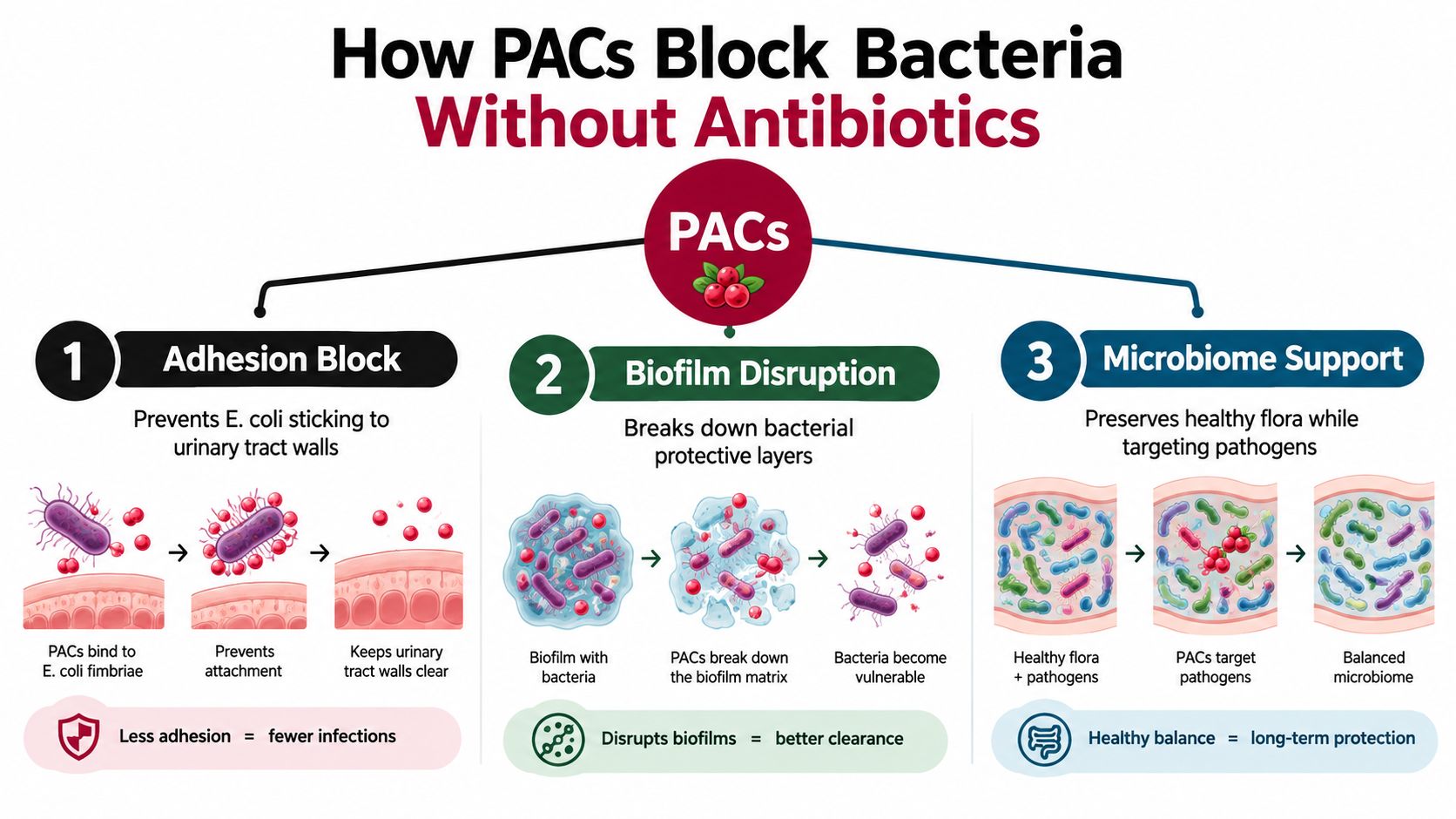
The 2023 Cochrane review of 50 trials involving 8,857 participants found that cranberry products reduced symptomatic, culture-verified UTIs overall, with a pooled relative risk of 0.70, 95% confidence interval 0.58 to 0.84. The review's results support a prevention conversation, but they don't convert cranberry into an infection treatment. You can read the full analysis in the Cochrane review of cranberries for preventing urinary tract infections.
Prevention isn't treatment
That mechanism explains both cranberry's appeal and its limits. If bacteria are already multiplying and causing symptoms, preventing additional adhesion may not be enough to resolve the problem. A supplement can't replace testing, diagnosis, or prescribed treatment when a clinician determines that an infection is present.
It also explains why a product should be judged by its PAC standardization, not just by the weight of cranberry powder. The label needs to connect the ingredient to a measurable amount that can be compared with research and with competing products.
For readers exploring broader wellness gifts, Healtsy's gift guide for 2024 offers a separate resource for considering health-focused products. It shouldn't be used as a substitute for clinical advice, but it can be useful when comparing how wellness products are presented to consumers.
A gut-focused probiotic addresses a different target. For example, GutRx BALANCE offers 30 billion CFUs per capsule with next-generation probiotics for gut health, digestive balance, and immune support. That type of product isn't interchangeable with a standardized cranberry formula, because the ingredients and intended applications differ.
The key point is physical rather than pharmaceutical: PACs may make bacterial attachment more difficult, but they don't clear an established infection. That's why cranberry belongs in a prevention plan for appropriate users, alongside medical care when symptoms appear.
Who Actually Benefits from Cranberry Prevention
Cranberry isn't a universal answer for every person with urinary concerns. The strongest practical case is prevention in groups where clinical research has found a meaningful reduction in recurrent or culture-verified UTIs, particularly women with a history of recurrent infections.
The Cochrane evidence found a 26% reduction in UTI risk among women with recurrent UTIs, a 54% reduction in children, and a 53% reduction in people susceptible to UTIs after medical interventions such as bladder or prostate radiation. These subgroup results are summarized in the NIH National Center for Complementary and Integrative Health overview of cranberry and other botanicals.
Groups with the clearest signal
For an adult woman who has experienced recurrent, confirmed UTIs, cranberry may be a reasonable preventive option to discuss with a healthcare professional. The evidence doesn't mean every person will respond, and it doesn't mean cranberry should replace evaluation for an underlying cause. It does mean this group has a stronger research rationale than a person using cranberry for vague, unrelated urinary sensations.
Children also showed a substantial subgroup effect in the review, but pediatric supplementation deserves age-appropriate guidance. A child with urinary symptoms should be assessed rather than managed solely with an over-the-counter product.
People at risk after certain medical interventions represent another relevant group. Their situation is more specialized, so a supplement decision belongs within the care plan of the treating team, especially when other medications, hydration restrictions, or urinary complications are involved.
Where expectations should be lower
The evidence was weaker or inconclusive for older nursing-home residents, pregnant women, and adults with bladder-emptying problems. The updated Cochrane summary also reports no clear benefit in several high-risk groups, including elderly institutionalized adults and people with neurogenic bladder and incomplete emptying. You can review that qualification in Cochrane's evidence summary on cranberry prevention.
| Situation | Practical interpretation |
|---|---|
| Recurrent UTIs in women | A reasonable prevention discussion, with realistic expectations |
| Children with UTIs | Evidence signal exists, but pediatric guidance matters |
| Risk after bladder or prostate radiation | A specialized use case that belongs in clinical care |
| Pregnancy | Evidence is inconclusive, so ask the obstetric care team |
| Incomplete bladder emptying or neurogenic bladder | Don't assume cranberry addresses the underlying risk |
| Active urinary symptoms | Seek evaluation rather than relying on cranberry |
A responsible cranberry supplement for urinary health should therefore be positioned around risk reduction, not cure language. If you have recurrent symptoms without confirmed cultures, ask whether the symptoms could reflect another condition. Burning, urgency, pelvic pain, or changes in urine can have causes that cranberry won't address.
The Dosage Debate and Standardization Rules
A cranberry label can make a simple dosing question unnecessarily difficult. One product may list hundreds of milligrams of cranberry extract, another a larger cranberry-equivalent amount, and a third may place the relevant details inside a proprietary blend. These figures cannot be compared reliably without checking the PAC content per serving.
The most useful benchmark is the amount of proanthocyanidins, or PACs. One randomized trial used a standardized cranberry extract providing 2 × 18.5 mg PAC per day for 24 weeks. A Cochrane review discusses ex-vivo anti-adhesion findings suggesting that at least 36 mg PAC per day may be needed. It also notes that 36 to 72 mg PAC per day is commonly recommended, while formulation and evidence quality still affect how confidently those figures can guide a product choice. The dosing evidence is summarized in this clinical review of cranberry and recurrent UTI prevention.
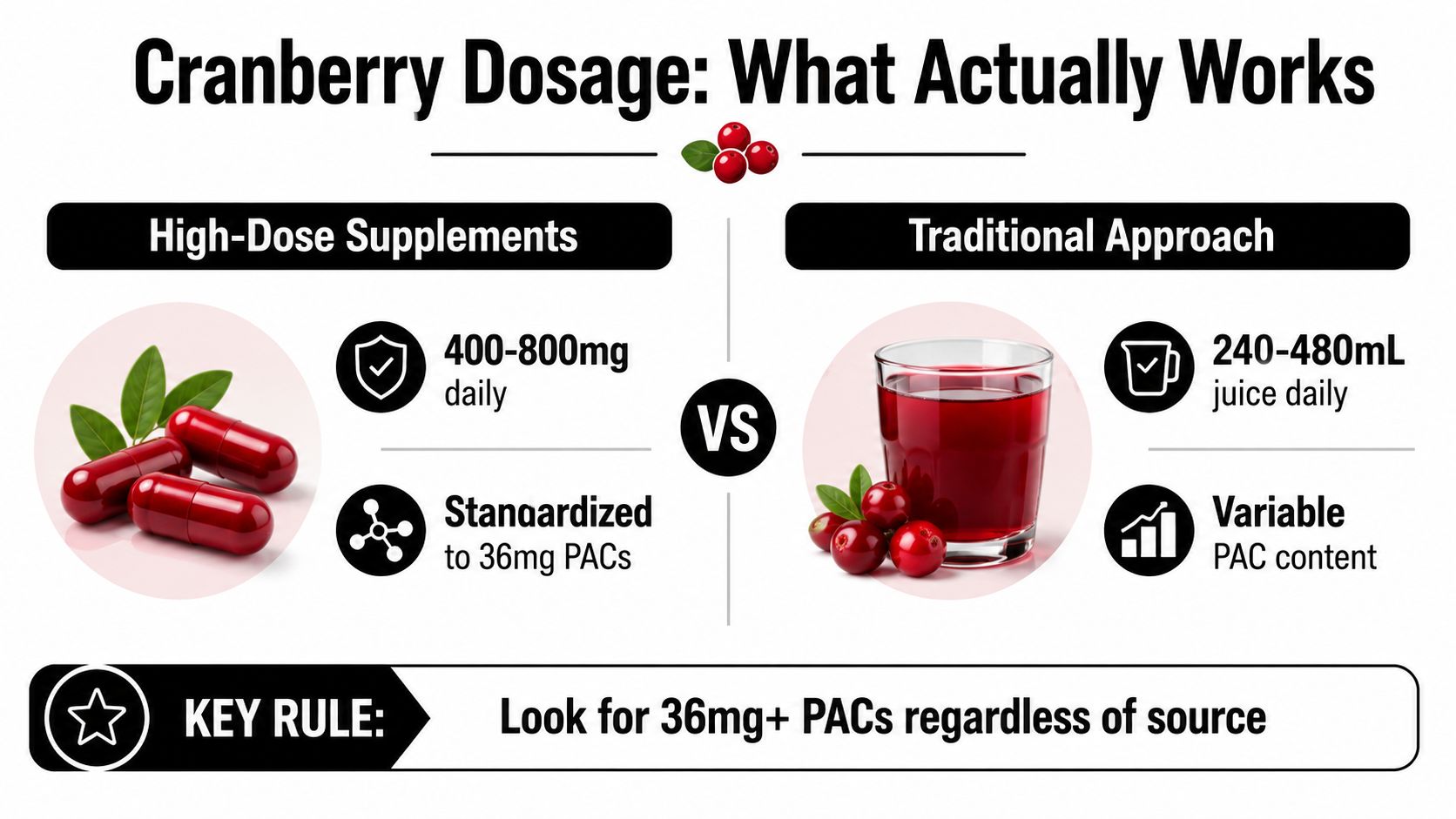
Compare the active marker, not the headline weight
The practical distinction is between ingredient mass and a standardized activity marker. A large cranberry extract with no stated PAC yield gives less useful information than a smaller extract that clearly reports its PAC content.
A 2025 guide cites 36 mg PAC per day for recurrent UTI prevention. A 2025 clinical summary also reported that a high-dose extract was not significantly more effective than a low-dose extract in healthy women. Together, these findings support a straightforward label rule: more cranberry extract isn't automatically better. The Cranberry Institute digital guidebook provides the dosing and standardization discussion.
Use this label filter:
- PAC amount: Look for a stated PAC quantity per serving, not only cranberry-equivalent milligrams.
- Daily serving: Check whether the amount applies to one capsule or the complete daily serving.
- Standardization language: Prefer an extract with a defined standardization over one that provides no active-marker information.
- Blend transparency: Treat proprietary blends cautiously if they hide the cranberry or PAC contribution.
Juice can suit personal preferences, but its active-compound content may be harder to compare. Capsules are not automatically superior. Choose the format that reports its dose clearly and can be taken consistently without an unwanted sugar or taste burden.
Building a Complete Urinary and Vaginal Defense
A urinary formula shouldn't imply that one ingredient controls every part of women's microbiome health. PACs address bacterial adhesion, while other ingredients may be selected for different mechanisms. The challenge is to distinguish a thoughtfully combined formula from a crowded label that lists many ingredients without explaining their amounts or purpose.
D-mannose is often included because it may act as a decoy for certain E. coli adhesion pathways. Instead of focusing only on the urinary surface, the concept is to give bacteria another molecule to bind to and then support clearance through urine. The evidence for D-mannose remains limited, so I'd treat it as a possible complementary ingredient, not as a guarantee and not as a replacement for diagnosis.

Think in layers, not in ingredient accumulation
A combined women's formula may also include Lactobacillus or Bifidobacterium strains aimed at broader microbiome support. That doesn't mean every probiotic strain supports the urinary tract, vaginal environment, or digestive system in the same way. Strain identity, dose, viability through the product's shelf life, and the specific claim being made all matter.
| Layer | What it may support | What to verify |
|---|---|---|
| Cranberry PACs | Anti-adhesion against susceptible bacteria | PAC amount and standardization |
| D-mannose | A complementary adhesion-decoy approach | Clear dose and realistic claims |
| Probiotic strains | Broader gut or vaginal microbiome support | Exact strain names and viability |
| Delivery system | Protection of sensitive ingredients | Delayed-release or enteric-coating details |
Women dealing with catheter-related risk, medical devices, pregnancy, or recurrent confirmed infections should use a clinician-led plan. A practical catheter infection prevention guide from Nursing Assessment Australia can provide additional context on prevention measures, but it doesn't turn supplements into treatment.
For readers comparing combined formulas, GutRx's women's probiotic with cranberry is a relevant educational resource. Evaluate any product through the same lens: identify the PAC amount, inspect the probiotic strain details, check whether D-mannose is included and disclosed, and confirm that the claims stay within the evidence.
The gut, vaginal, and urinary systems are connected through overlapping microbial and immune environments, but “connected” doesn't mean that one capsule automatically improves all three. A broad formula can be convenient, yet convenience should never excuse hidden doses or unsupported promises.
How to Read a Supplement Label for Quality Proof
A label should let you answer five questions quickly: What is the active ingredient, how much is present, how is it standardized, who tested it, and what happens to the capsule after swallowing? If the product page or bottle can't answer those questions, the brand hasn't given you enough information to compare it responsibly.
Start with the Supplement Facts panel
Look beyond the front label. Confirm the serving size, the total daily serving, the cranberry form, and the PAC yield. “Cranberry extract” is not the same information as “cranberry extract standardized to a stated PAC content.”
Then inspect the supporting documentation:
- Find third-party testing. A reputable quality program may involve recognized organizations such as USP, NSF, or ConsumerLab, but a logo alone isn't enough. Look for an explanation of what the testing covers.
- Ask for a COA. A downloadable Certificate of Analysis can show whether a batch was tested for identity, potency, contaminants, and other quality parameters. GutRx's explanation of Certificates of Analysis illustrates why batch documentation matters.
- Check delivery claims. Delayed-release or enteric-coated capsules may be relevant when a manufacturer is trying to protect sensitive ingredients from stomach conditions. Don't assume the phrase guarantees a clinical outcome. Ask what the delivery system is designed to do.
- Review the full ingredient list. Vegan, non-GMO, and gluten-free standards may matter to your dietary needs, but they don't prove PAC potency.
- Reject hidden dosing. A proprietary blend that conceals individual quantities makes it difficult to evaluate the formula.
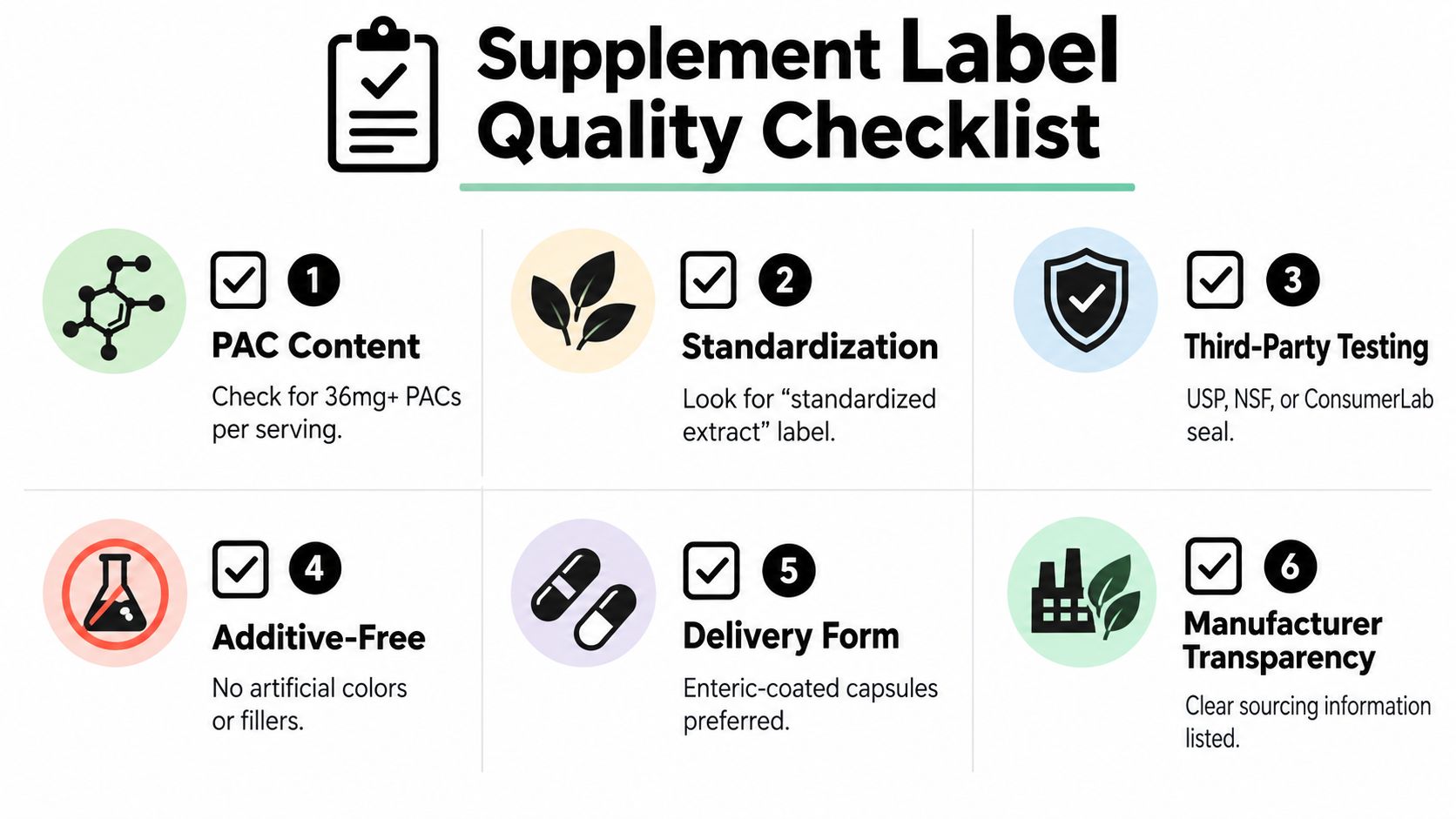
Quality proof beats polished packaging
Amazon listings can make comparison especially difficult because the most visible information often concerns capsule count, reviews, or broad benefit language. Those details don't tell you whether the product discloses PAC content or verifies its cranberry identity.
The Momotaro Apotheca resource on UTI prevention offers another consumer-oriented perspective on prevention supplements. Use resources like that to generate questions, then return to the actual Supplement Facts panel, testing documents, and medical guidance relevant to your situation.
Label test: If a product makes you calculate, guess, or interpret a proprietary blend to find the PAC dose, choose a more transparent option.
A clean label is helpful, but clean isn't the same as clinically relevant. The strongest purchase decision combines ingredient transparency, a measurable PAC marker, credible testing, and a delivery format that fits your routine.
Designing Your Daily Prevention Routine
Cranberry works as a prevention strategy only when the routine is consistent. Evidence has examined daily use over 12 to 24 weeks, rather than taking a capsule only after discomfort begins. As noted earlier, that research provides context for using cranberry as a planned anti-adhesion tool, not as a treatment for an active infection.
Build the routine around actions you can repeat:
- Take the full daily serving: Follow the product directions, and confirm that the listed PAC amount applies to the complete serving rather than one capsule.
- Use a consistent cue: Pair the supplement with a regular meal or another daily habit, unless the label or your clinician advises different timing.
- Support normal urine flow: Maintain reasonable hydration for your body and medical situation. If you have fluid restrictions, follow your care team's instructions.
- Track symptoms separately: Prevention should never delay evaluation of burning, fever, flank pain, blood in the urine, or worsening urgency.
- Review medications and conditions: Ask a healthcare professional about cranberry if you take medication, are pregnant, have a history of kidney stones, or manage a chronic condition.
For practical ideas beyond supplementation, review these natural UTI prevention tips for 2026. The purchasing priority is clear: select a standardized PAC product with transparent testing, use it consistently when appropriate, and keep prevention separate from medical treatment.
A probiotic can complement cranberry when digestive or broader microbiome support is also a goal. Its presence does not establish that the product supports urinary health. Match each formula to a specific outcome, check the label, and seek professional guidance if infections continue.
GutRx offers women's digestive, vaginal, and urinary support through formulas that combine targeted ingredients with third-party testing and downloadable Certificates of Analysis. Visit GutRx to compare options for a transparent routine that fits your urinary and broader microbiome goals.


