

The popular advice is simple: take a probiotic, improve your gut, and expect better memory, mood, and focus. The evidence is more selective. Probiotics for brain health may influence brain activity and cognitive outcomes, but benefits appear to depend on the person, the symptom cluster, the formulation, and the time taken.
The strongest current signal isn't a universal memory boost for healthy adults. It points toward targeted support for people with digestive dysfunction, emotional symptoms, sleep disruption, cognitive impairment, or other signs of gut-brain dysregulation. A useful buying decision therefore starts with a better question: who is most likely to benefit, from which formulation, and after how long?
Table of Contents
- Moving Beyond the Universal Brain Booster Myth
- Mapping the Gut-Brain Axis Communication Network
- Evaluating Key Probiotic Strains for Cognitive Support
- How Digestive Comfort Influences Mental Clarity
- Understanding Dosing Thresholds and Timelines
- Selecting a High-Quality Brain-Gut Supplement
- Building Your Daily Gut-Brain Resilience Routine
Moving Beyond the Universal Brain Booster Myth
Live microorganisms alone do not make a probiotic a brain supplement. The 2024 systematic review of randomized fMRI studies found that probiotics can alter brain function, including activity in regions involved in emotional regulation and cognitive control. In clinical populations, reported changes included normalization of brain activity in major depressive disorder and IBS. That supports a biological gut-to-brain pathway, while leaving a more limited conclusion: no product should be expected to improve memory for every user.
The relevant outcome may not be memory. Mood, stress reactivity, sleep, digestive comfort, and formal cognitive performance are different endpoints. A formulation that reduces gut-related discomfort may make concentration easier without increasing memory capacity. Another may influence emotional processing while producing no noticeable change in everyday focus. The likely beneficiary depends on both the symptom cluster and the formulation.
Who appears most likely to benefit
The clearest cognitive signal currently appears among older adults and people with cognitive impairment, rather than younger adults without measurable impairment. One 2026 meta-analysis reported improvements in global cognition, processing speed, memory, and spatial ability in older adults, particularly after about 12 weeks and with roughly 2×10¹⁰ CFU daily. A separate 2026 meta-analysis found the largest effects among people with cognitive impairment, especially with single-strain products and interventions lasting at least 12 weeks. These findings are summarized in the meta-analysis indexed by PubMed.
Twelve weeks is therefore a practical minimum for judging cognitive outcomes, not a promise that benefits will appear on schedule. Shorter trials may still reveal changes in digestive comfort, sleep, or mood, but they provide less basis for evaluating memory or processing speed.
For people seeking help with brain fog, stress, or low energy without measurable impairment, the evidence is less decisive. It does not support promising a dramatic cognitive transformation. It does support tracking whether digestive symptoms, sleep quality, emotional regulation, or inflammation-related complaints improve before treating “brain health” as a single endpoint.
Practical rule: Choose a probiotic around the problem you want to monitor, not around the broadest promise on the label.
The evidence on high-CFU probiotics also warrants careful interpretation. A higher count does not replace strain identification, an appropriate delivery system, quality testing, or a duration matched to the outcome being studied. For brain health, targeted and gradual support is a more defensible expectation than an instant nootropic effect.
Mapping the Gut-Brain Axis Communication Network
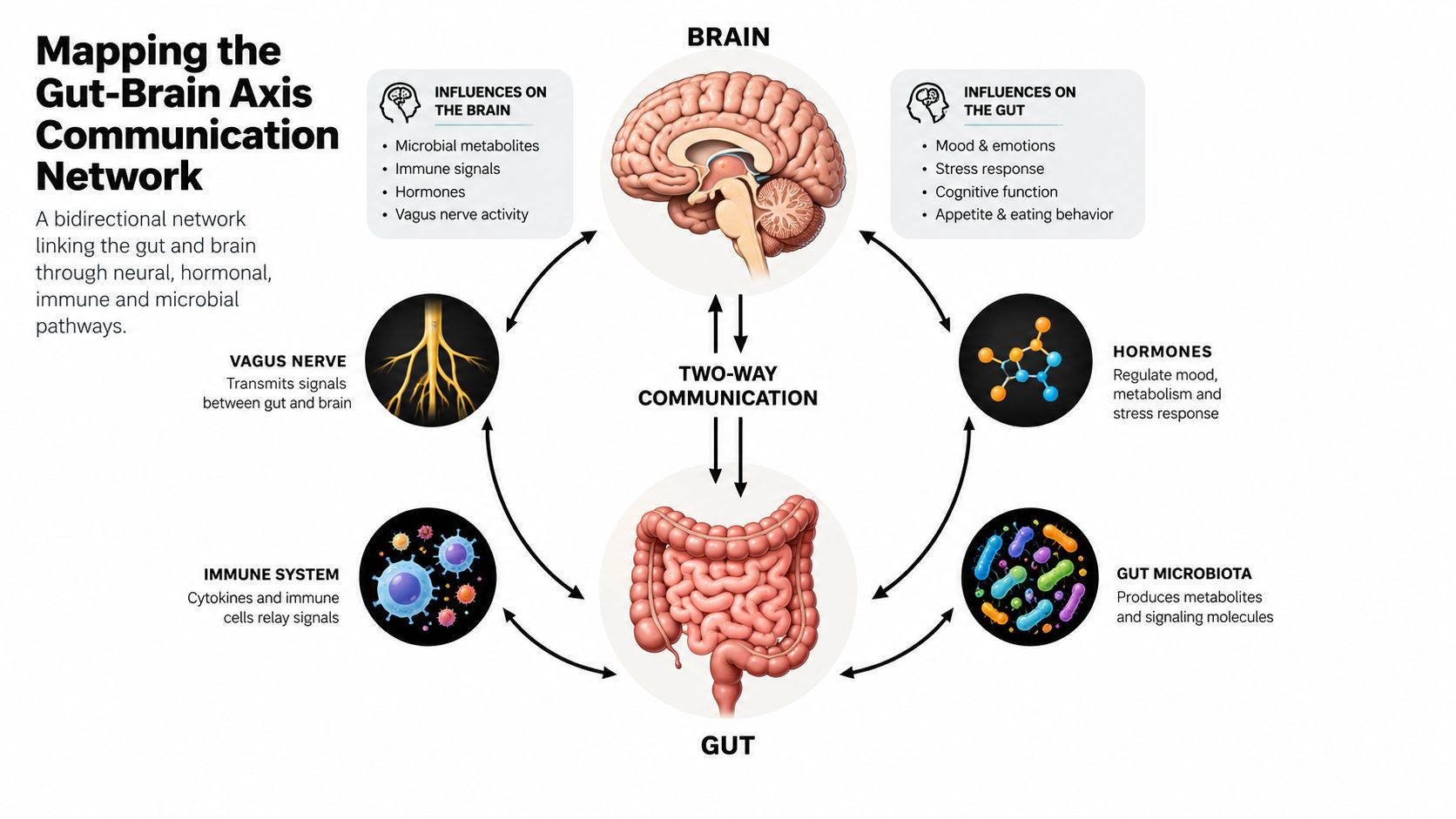
The gut-brain axis works less like a single wire and more like a communications network. The digestive tract contains its own nervous system, the microbiome produces biologically active compounds, immune cells monitor the intestinal environment, and the brain sends signals back that influence motility, secretion, appetite, and stress responses. These channels operate in both directions.
The vagus nerve functions like a rapid information route between the digestive tract and the brain. It carries signals about what is happening in the gut, while hormonal and immune pathways provide slower, broader updates. Microbial metabolites add another layer. Compounds produced from fermentation and dietary components can influence intestinal cells, immune signaling, and the chemical environment in which neural communication occurs.
Why the gut barrier matters
A balanced intestinal environment helps keep microbial material and immune surveillance in the right place. When gut biology becomes disrupted, immune activation and barrier changes may alter the signals reaching the central nervous system. That doesn't mean every digestive symptom causes brain inflammation, and the phrase “leaky gut” shouldn't be used as a universal explanation for fatigue or poor concentration.
The more defensible interpretation is narrower. Changes in the gut can modify neural, immune, hormonal, and metabolic signaling, and these signals may affect emotional processing, sleep, and cognition in susceptible people. The 2024 fMRI review found changes in regions including the amygdala, precuneus, and orbitofrontal cortex, supporting the idea that probiotic effects can be observed in brain function rather than only in subjective digestive reports.
Translating biology into practical choices
This network helps explain why a person may notice better mental clarity only after digestive symptoms improve. It also explains why a probiotic for sleep or stress may be evaluated differently from a product designed for constipation or diarrhea support. The relevant outcome may be fewer nighttime disruptions, less emotional reactivity, or reduced post-meal discomfort rather than a measurable change on a memory test.
For readers comparing options, probiotic supplements for rest can provide additional context on the relationship between digestive support and sleep-focused routines. Sleep is not interchangeable with cognition, but poor sleep can make attention and recall feel worse, so it belongs in the same symptom map.
A visual overview of the pathway is also available in this gut-brain axis diagram. The practical takeaway is simple: the gut-brain axis is biologically plausible, but its effects are specific, two-way, and dependent on the person and intervention.
Evaluating Key Probiotic Strains for Cognitive Support
"Probiotic" describes a category, not a single intervention. Different strains can have different survival characteristics, metabolic activity, and effects on host signaling. A blend of Lactobacillus and Bifidobacterium strains shouldn't be treated as equivalent to a single-strain product just because both appear on a supplement label.
The 2024 imaging review is useful here because it examined objective brain outcomes rather than relying only on general wellness claims. It reported probiotic-related changes in brain activity associated with emotional regulation and cognitive control, with findings in regions such as the amygdala, precuneus, and orbitofrontal cortex. Those findings support the possibility of a psychobiotic effect, but they don't identify one universal strain that works for every brain-related outcome.
Traditional psychobiotics and next-generation organisms
Traditional cognitive-support formulations often focus on selected Lactobacillus and Bifidobacterium strains. Their potential relevance may involve stress signaling, emotional processing, and the gut environment. The evidence is strongest when the strain, dose, population, and outcome are clearly specified.
Next-generation organisms such as Akkermansia muciniphila and Christensenella minuta are often discussed through a different lens. Their relevance is primarily connected to the intestinal barrier and metabolic environment, which may indirectly influence the signals involved in brain health. That doesn't make them proven treatments for memory loss or depression. It means they may fit a broader strategy focused on digestive balance, immune signaling, and metabolic resilience.
Buyers should resist a common shortcut at this point. A product containing a fashionable organism isn't automatically clinically validated for cognition. The label should make clear which strain or organism is present, what outcome it is intended to support, and whether the evidence matches the user's situation.
What strain specificity changes
A targeted formula can be easier to evaluate because the user can track a defined goal. For example, someone with digestive symptoms and stress-related brain fog might monitor bloating, sleep quality, emotional steadiness, and focus separately. Someone seeking support for early memory concerns should discuss the issue with a qualified clinician rather than treating a supplement as a substitute for assessment. General educational context is available in this resource on cognitive support for early memory loss.
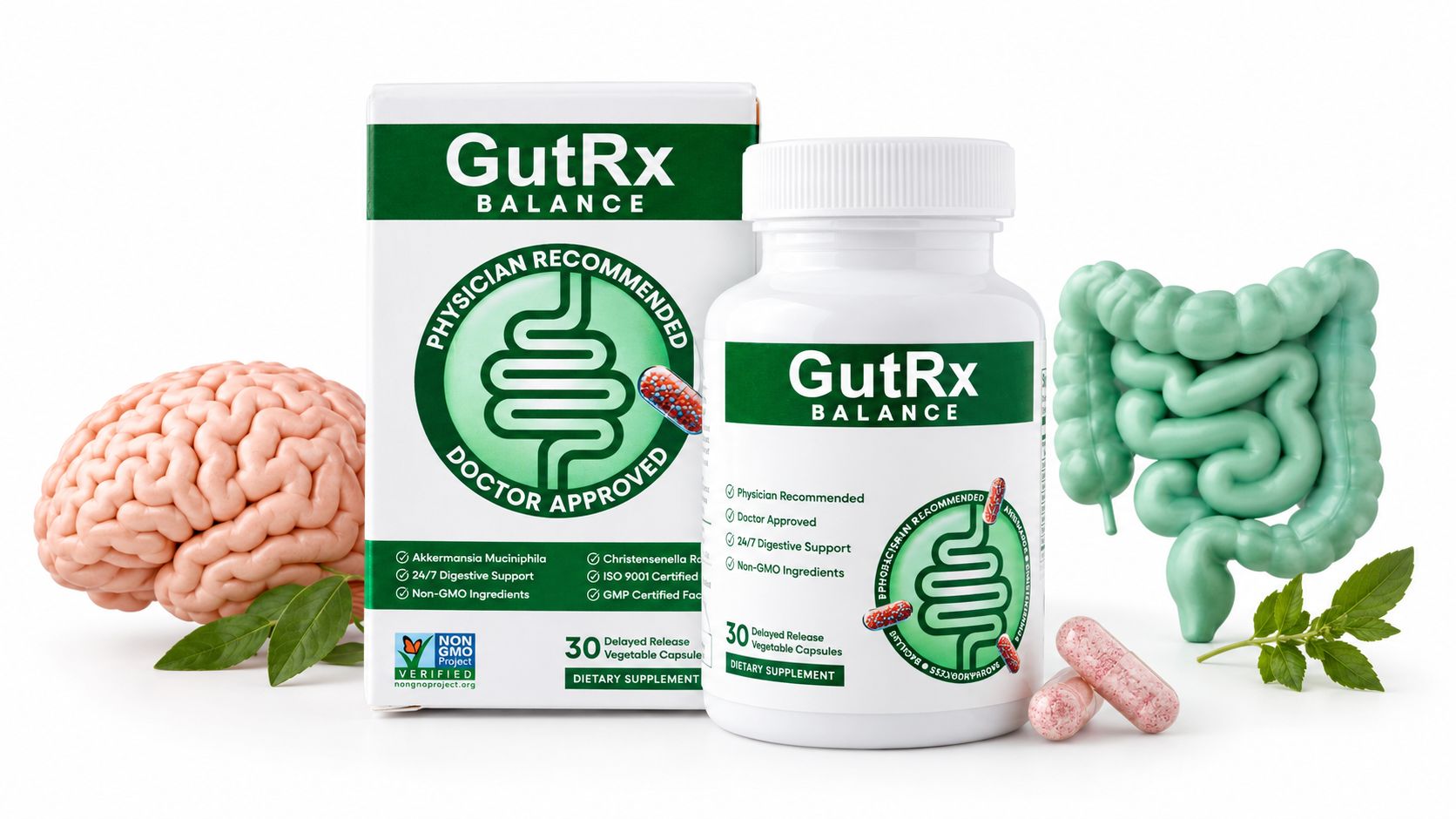
GutRx Balance offers 30 billion CFUs per capsule with next-generation probiotics for gut health, digestive balance, and immune support, according to its product information. That description supports a digestive and systemic positioning, but it shouldn't be converted into a promise of improved cognition without product-specific clinical evidence.
How Digestive Comfort Influences Mental Clarity
Brain fog often gets treated as a purely neurological complaint. For some people, it may be partly a digestive burden. Repeated bloating, irregular bowel habits, abdominal discomfort, or difficult post-meal symptoms can occupy attention, interrupt sleep, and make ordinary concentration feel more demanding.
That doesn't prove that every episode of brain fog originates in the gut. It does create a practical clinical question: is the person trying to improve cognition, or trying to remove a recurring physical distraction that interferes with cognition? The answer changes which supplement category makes sense.
When a probiotic may be relevant
For IBS-related symptoms, the evidence is strain- and outcome-specific. The World Gastroenterology Organisation reports that some probiotics can provide global symptom relief and may reduce bloating and flatulence, while also noting that the duration of benefit and the most effective species remain unclear. It identifies trial evidence for Bifidobacterium lactis DN-173010, VSL#3, and Bifidobacterium infantis 35624 in particular symptom areas.
The NIH summary of IBS evidence describes a 2020 review of 35 studies involving 3,452 people with IBS. Probiotics taken for 4 weeks may help abdominal pain, bloating, and gas, although results vary by product and outcome. A 2022 review involving 757 people with constipation-predominant IBS found better stool consistency but no reduction in pain or bloating and no improvement in quality of life.
That pattern matters for buyers. A probiotic for bloating isn't necessarily the best probiotic for constipation, and a formula that supports digestive balance may not address post-meal gas caused by poorly digested carbohydrates.
When digestive enzymes may fit better
Enzymes and probiotics solve different problems. Probiotics aim to introduce live microorganisms that may influence the intestinal ecosystem. Enzymes help break down specific food components before they create downstream digestive symptoms.
A 2023 peer-reviewed study found that an enzyme mix for FODMAP digestion restored microbial diversity, improved FODMAP digestibility, and reduced gas pressure compared with undigested FODMAP. The optimized mix improved digestion of lactose, fructans, and galactans, providing a biological rationale for digestive enzymes used with dairy and FODMAP-containing foods.
| Symptom pattern | More logical first question |
|---|---|
| Persistent bloating with irregularity | Is a strain-specific probiotic appropriate for the dominant bowel pattern? |
| Discomfort after dairy or FODMAP foods | Would targeted digestive enzymes improve breakdown of the problem carbohydrate? |
| Brain fog alongside poor sleep | Is sleep disruption amplifying attention and mood symptoms? |
| New, severe, or persistent symptoms | Does the person need clinical evaluation before self-directed supplementation? |
The insight is easy to miss: mental clarity may improve because the gut becomes less disruptive, not because a supplement acts like a conventional stimulant.
Understanding Dosing Thresholds and Timelines
Cognitive effects should be judged on a slower schedule than digestive tolerance. A 2025 meta-analysis of randomized clinical trials reported significant cognitive improvement after 12 weeks, but not after 8 weeks. That pattern supports a time-dependent effect, while leaving open whether different products require different durations or whether every user responds.
The evidence also points toward selective benefit rather than a universal brain effect. Support is stronger for outcomes such as anxiety, depressive symptoms, and cognition among higher-risk or dysbiotic populations. A probiotic that produces no noticeable change within several days has not necessarily failed, because early digestive responses and later cognitive outcomes follow different timelines.
Clinical Timeline Expectations for Gut-Brain Interventions
| Timeframe | Primary Gut Changes | Expected Cognitive / Mood Shifts |
|---|---|---|
| Early routine | The person establishes tolerance and records digestive responses | There is not enough evidence for a reliable cognitive conclusion |
| Around 8 weeks | Gut-related effects may become clearer for some users, depending on the product and symptoms | A cognitive benefit remains uncertain, and the 2025 meta-analysis found no significant effect at this point (clinical trial meta-analysis) |
| Around 12 weeks | Sustained use creates a more appropriate window for assessing the intended intervention | The same meta-analysis reported significant cognitive improvement after 12 weeks, while other analyses found benefits in older adults and people with cognitive impairment after about 12 weeks, as noted in Section 1 |
| After the planned trial | The user compares tracked symptoms with baseline instead of relying on memory | Continue, change, or stop according to the target outcome and professional advice |
The practical implication is clear: 12 weeks is a minimum practical evaluation window for cognitive outcomes supported by the current evidence, especially when the user resembles the studied populations. It is a threshold for fair assessment, not a promise of improvement. Younger, healthy adults may experience no measurable cognitive change despite consistent use.
A useful trial therefore begins with defined outcomes. Record one digestive symptom, one sleep measure, and one cognitive or mood measure at baseline and throughout the trial. This reduces the risk that ordinary day-to-day variation will be mistaken for a supplement effect.
For consumers comparing gut health supplements in the UK, the same timing principle applies across markets. Examine the strain profile, intended outcome, and planned duration rather than judging a product by its CFU headline alone. Who benefits matters as much as whether probiotics work in general.
Selecting a High-Quality Brain-Gut Supplement
A brain-focused probiotic should pass a stricter test than “contains beneficial bacteria.” The NIH Office of Dietary Supplements defines probiotics as live microorganisms that, when administered in adequate amounts, confer a health benefit on the host. It distinguishes synbiotics, which contain prebiotics and probiotic microorganisms, from postbiotics, which contain preparations of dead or fragmented microorganisms, with or without their metabolites, that confer a health benefit. The definitions are provided in the NIH professional fact sheet on probiotics.
Start with the strain or organism. A label that lists only species names gives less decision value than one that identifies the precise strain and explains the intended use. If a product markets itself for mood, cognition, or stress, ask whether its evidence measures those outcomes or only general digestive markers.
The quality checklist
- Strain identity: Look for a clearly named strain or organism and a rationale connected to the intended outcome.
- Delivery system: Delayed-release or enteric-coated capsules may help protect live microorganisms from stomach conditions, but the label should explain the design rather than implying that coating alone proves effectiveness.
- Potency: CFU count matters, yet a larger number isn't automatically better. Compare the declared amount, the strain profile, and the evidence supporting the formulation.
- Prebiotic fit: A synbiotic can combine microorganisms with a prebiotic substrate, but the added ingredient should suit the user's tolerance. Some fermentable ingredients may worsen symptoms in sensitive people.
- Independent verification: Third-party testing and downloadable Certificates of Analysis can help verify identity, potency, purity, and the absence of unwanted contaminants.
- Formula simplicity: Check excipients, allergens, dietary compatibility, and storage requirements. A shelf-stable product may be convenient, but stability should be supported by testing rather than assumed from packaging.
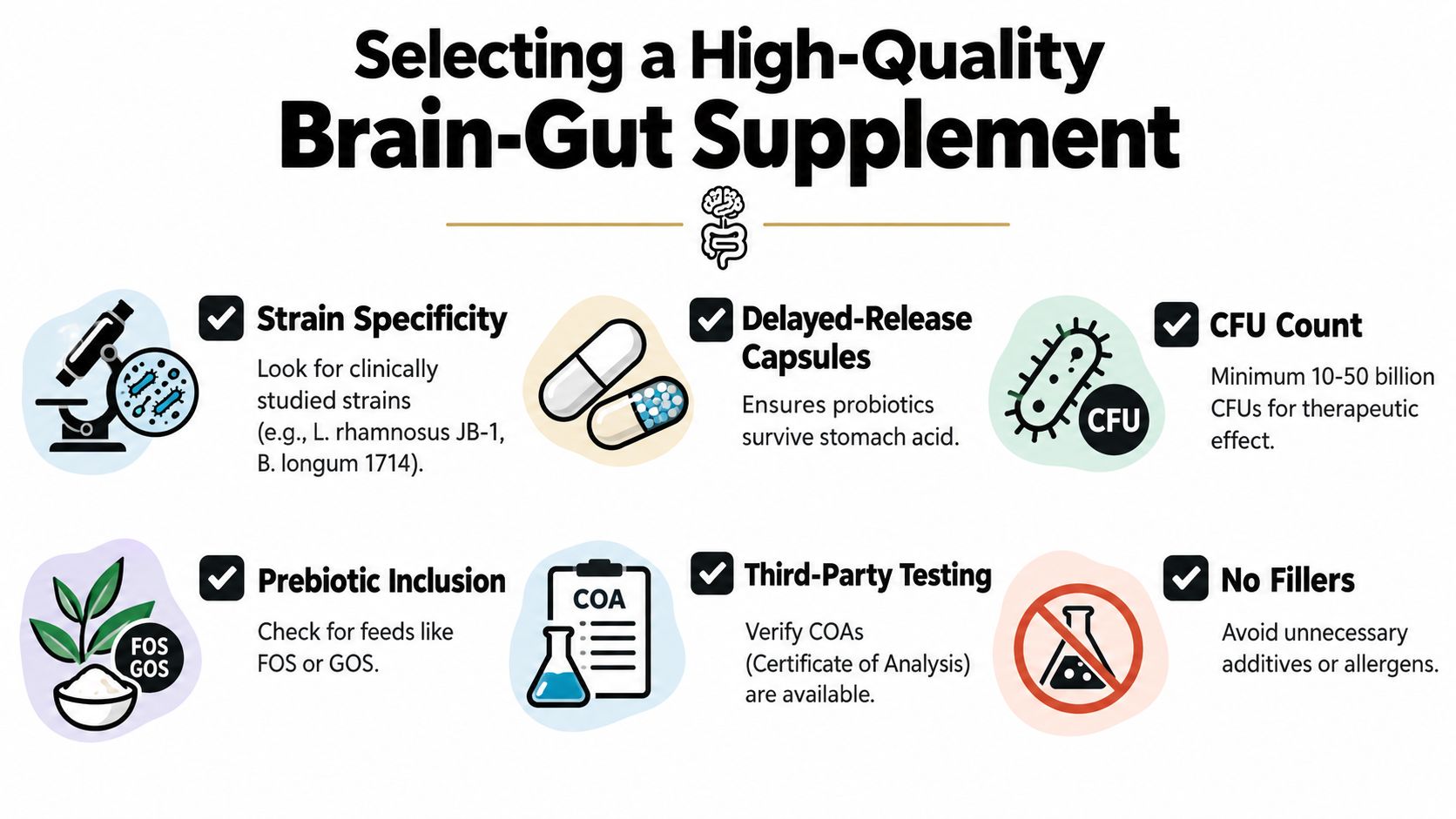
The gut-brain axis supplement guide can help organize these criteria before comparing products. The key is to separate proof of product quality from proof of a specific brain outcome. A downloadable COA may show that a product contains what it says. It doesn't, by itself, prove that the product improves memory or mood.
Building Your Daily Gut-Brain Resilience Routine
A practical routine starts with one defined target. Choose digestive comfort, bowel regularity, sleep quality, stress resilience, or everyday focus as the primary outcome, then track the others as secondary observations. This prevents a broad “feel better” goal from turning into an unreliable supplement experiment.
Take the product according to its label and keep the timing consistent. If heavy meals or specific foods trigger discomfort, a digestive enzyme may be more relevant at mealtime than a daily probiotic. The enzyme evidence for lactose, fructans, and galactans supports matching the tool to the food problem rather than expecting a probiotic to handle every form of post-meal bloating.
Use a simple record with three lines:
- Digestive response: bloating, gas, stool pattern, or abdominal discomfort.
- Brain-related response: focus, perceived brain fog, mood stability, or stress reactivity.
- Recovery response: sleep quality and next-day energy.
Give cognitive outcomes a sufficiently long evaluation window, particularly when the goal resembles the 12-week endpoint reported in clinical evidence. Stop and seek medical advice for concerning symptoms, significant deterioration, or problems that need diagnosis rather than supplementation.
The most defensible conclusion is not that probiotics are universal brain boosters. They may be useful tools within a targeted gut-brain plan, especially when digestive symptoms, sleep disruption, emotional regulation, or cognitive impairment define the problem.
GutRx offers lab-grade synbiotic and enzyme formulas designed around digestive balance, next-generation strains, and third-party testing with downloadable Certificates of Analysis. Visit GutRx to compare options for gut-brain support and match the product category to the symptoms you want to track.


