

If IBS gas and bloating keep coming back, the question isn't just “What foods should I cut?” It's “Is this really excess gas, or is my gut handling normal gas in a way that feels and looks worse than it should?”
That distinction matters because IBS bloating can come from fermentation, slow or uneven gas clearance, and a sensitive gut-brain response, not just from eating something “bad.” In IBS, bloating is common across subtypes, and it can show up as a feeling of fullness, visible abdominal distension, or both, which is why the fix isn't the same for everyone.
Table of Contents
- Why IBS Causes Gas and Bloating in the First Place
- The Three Mechanisms Behind IBS Bloating
- Bloating Versus Distension and Why It Matters
- Common Triggers and How to Map Your Own Pattern
- A Stepwise Relief Plan You Can Actually Follow
- When to See a Doctor and What to Expect
- Daily Habits That Support the Gut-Brain Axis
Why IBS Causes Gas and Bloating in the First Place
If IBS gas and bloating keep coming back, the first question is whether the gut is making extra gas or handling normal gas poorly. In IBS, those two problems often overlap. A normal meal can lead to pressure, fullness, rumbling, or visible swelling that feels out of proportion to what you ate.
The pattern also changes by subtype. IBS-C leans toward constipation and slower transit, IBS-D leans toward diarrhea and faster transit, and IBS-M swings between both. That matters because someone with IBS-C may be more likely to retain gas, while someone with IBS-D may notice urgency and post-meal discomfort more often.
Bloating is common enough to be a core IBS feature, not a minor add-on. A community study found bloating in 21% of subjects overall and in 64% of people with IBS, while visible distension still appeared in 8.9% of the population; the same study also reported that 82.5% of 337 patients had bloating, with symptoms more common in women than men AJG community study.
Practical rule: if bloating shows up after meals, with stress, or during constipation, do not assume the problem is “too much gas.” The issue may be how your gut handles ordinary gas.
A simple way to frame the rest of this topic is to match the symptom to the mechanism. If the main problem is too much fermentation, the lever is food and enzymes. If the main problem is gas retention, the lever is motility and evacuation. If the main problem is sensitivity, the lever is calming the gut-brain response and reducing the triggers that make normal sensations feel louder.
The Three Mechanisms Behind IBS Bloating
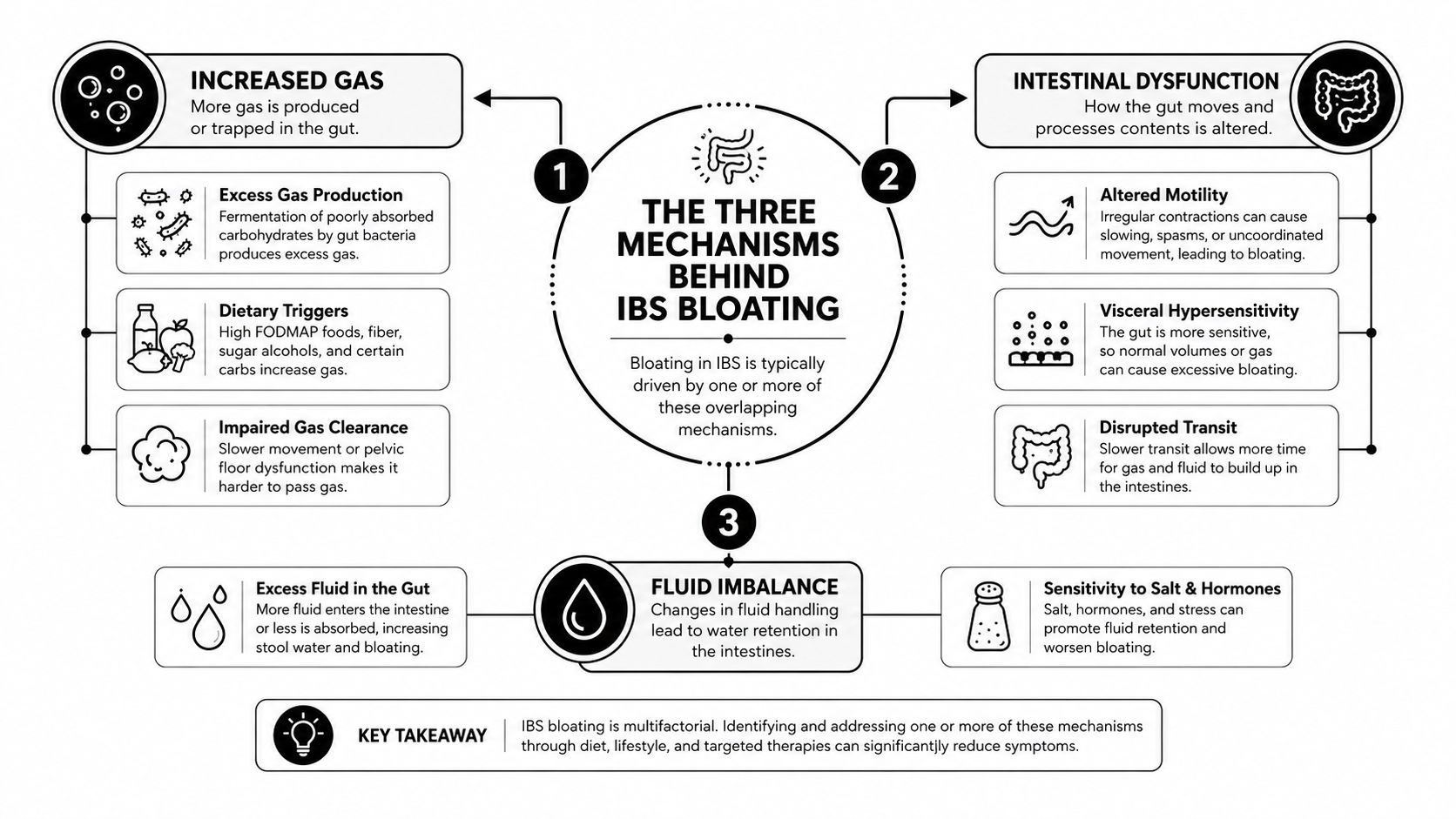
1. Too Much Fermentation
Poorly absorbed carbohydrates can reach the colon and get fermented by gut bacteria, which produces hydrogen, methane, and carbon dioxide. That process can make you feel gassy, crampy, and bloated, especially after high-FODMAP foods or lactose in people who don't break it down well food fermentation review.
This is the part many know about, but it's only one piece of the puzzle. Fermentation matters because it increases gas load, yet symptoms don't always match the amount of gas produced. The same meal can feel fine one day and awful the next, depending on what your gut is doing with that gas.
2. Gas That Doesn't Clear Well
In IBS, gas can be retained because transit and clearance are off. Controlled gas-infusion studies show that symptoms can appear because of impaired gas transit, not just because more gas was made, which means a gut can feel distended even when gas volume isn't extreme gas handling review.
A sink analogy helps explain the process. Fermentation is the faucet, gas clearance is the drain, and the symptom flare happens when both don't cooperate. Even modest gas can back up if the “drain” is partly blocked or slow.
3. A Gut That Feels Too Much
The third mechanism is visceral hypersensitivity, plus the muscle pattern called abdomino-phrenic dyssynergia. In plain language, the diaphragm drops and the abdominal wall relaxes when it should be bracing, so the belly can visibly push outward even without a dramatic gas increase abdomino-phrenic review.
That's why two people can eat the same meal and have very different reactions. One feels mild pressure, another feels intense discomfort and sees the abdomen swell. The sensor is too sensitive, so the body reacts like the signal is bigger than it is.
Which mechanism sounds most like you? More after eating means fermentation. More with constipation means gas clearance. More with stress, tight clothes, or a “full but not really gassy” feeling means sensitivity and muscle coordination may be part of it.
Bloating Versus Distension and Why It Matters
Bloating and visible distension aren't the same thing, and IBS content often blurs them together. Bloating is the sensation of pressure, fullness, or gas buildup. Distension is the measurable change, your belly gets bigger.
A good analogy is a pressure gauge versus a balloon. The gauge can read high even if the balloon hasn't changed much, and the balloon can swell even when the pressure feels only moderate. That's why someone can feel miserable without a dramatic change in appearance, or look visibly swollen without describing severe pain.
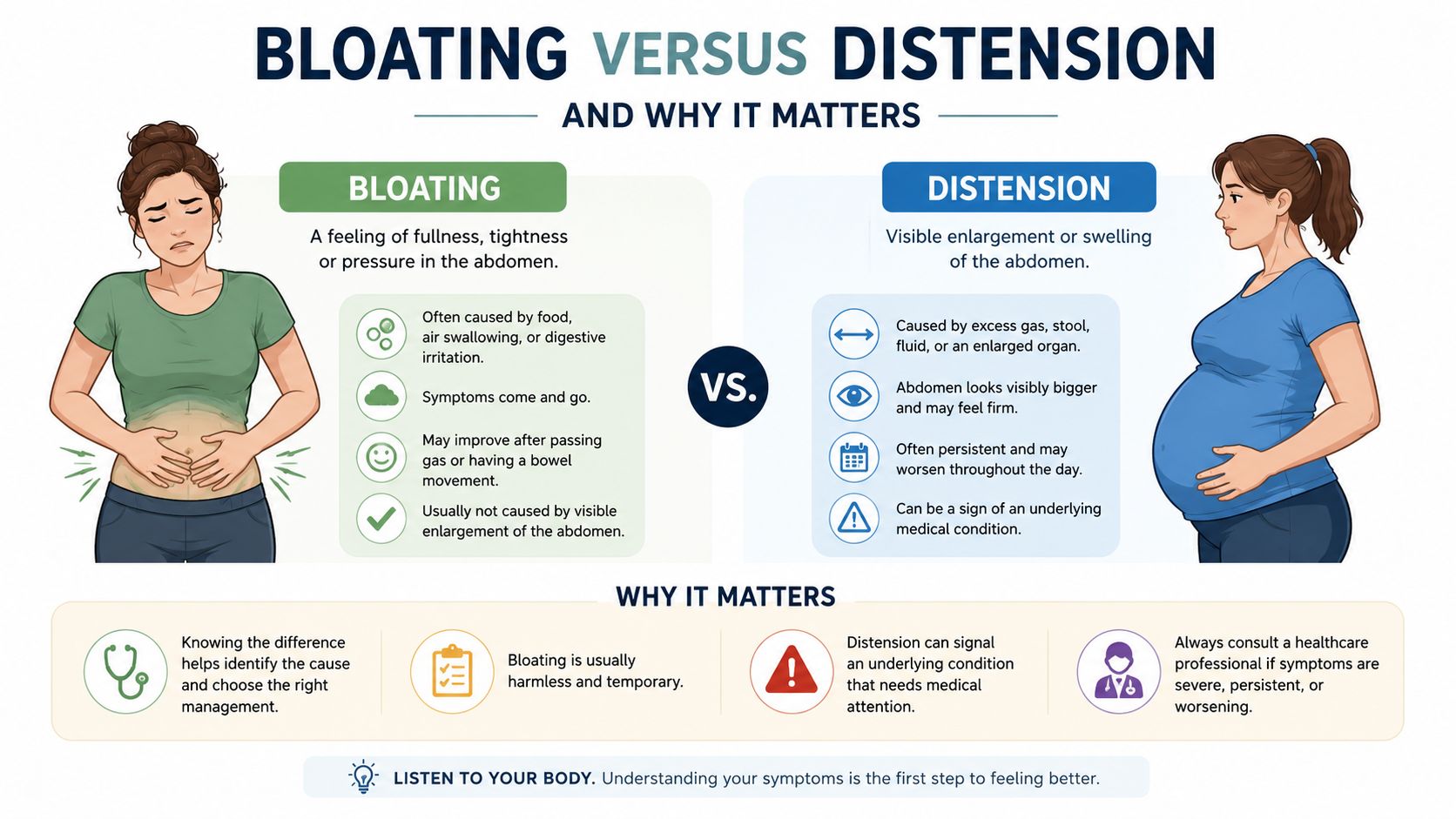
A major review says bloating and distension should be treated as separate symptoms review on bloating and distension. That distinction helps explain why some people say, “I'm bloated all day,” while others say, “My stomach gets bigger after lunch,” even when both use the same word.
Why the Visible Change Can Happen
Visible distension often involves the diaphragm and abdominal wall responding the wrong way, which is the abdomino-phrenic pattern noted earlier. Stress, posture, and a tense workday can make that response worse, so a meeting, long sitting stretch, or anxious day can leave the abdomen feeling tight and looking fuller.
A simple real-world pattern shows up often. Someone eats lunch, returns to a desk, sits hunched for hours, and by mid-afternoon the waistline feels tighter. That doesn't automatically mean they made a ton of extra gas, it may mean the body handled normal gas poorly and the abdominal wall didn't cooperate.
Track the symptom, not just the food. If you write down whether the problem is a feeling, a visible change, or both, you'll get a much clearer picture of what needs help.
That clarity matters because the best fix isn't always the same. A feeling-only pattern often responds to sensitivity and fermentation control, while visible distension may need movement, breath work, and better gas handling.
Common Triggers and How to Map Your Own Pattern
The fastest way to get lost with IBS is to blame one food for everything. The better approach is to look for clusters, because bloating usually comes from a mix of meal composition, eating pace, stress, and the way your gut handles fermentation.
High-FODMAP foods are the usual suspects, especially onion, garlic, beans, wheat, certain fruits, and dairy. Carbonated drinks can add gas directly, large meals can overwhelm digestion, and fast eating or gum chewing can increase swallowed air. Stress spikes can make the gut feel more reactive, even when the meal itself hasn't changed.
What Fermentation Means in Plain Language
Fermentation is just gut bacteria breaking down carbs you didn't absorb well. That process can produce gas and fluid shifts, which is why a meal can lead to bloating even if it doesn't seem especially “greasy” or huge. The trigger isn't always the food category itself, it's how your body and microbes process it.
The low-FODMAP approach gets used often because it targets that fermentation load. For a clear overview of enzyme support around hard-to-digest foods, see this guide on alpha-galactosidase supplement use.
A practical tracking method works better than guesswork. For two weeks, log meals, symptoms on a 0 to 10 scale, stool changes, and stress at roughly the same times each day. Then look for patterns, like “bloating spikes after bean-heavy dinners” or “distension gets worse on tense workdays,” instead of trying to prove one single cause.
| Common Trigger | Why It Causes Bloating | Easier Starter Swap |
|---|---|---|
| Beans and lentils | More fermentable carbs reach gut bacteria | Smaller portions, or use enzyme support with meals |
| Onion and garlic | High-FODMAP alliums ferment easily | Cook with infused oils or milder seasoning |
| Carbonated drinks | Add swallowed gas and pressure | Flat water or herbal tea |
| Fast meals | More air swallowing, less mindful digestion | Slow down and chew thoroughly |
| Large dairy portions | Lactose can ferment in sensitive guts | Smaller servings or lactose-reduced options |
Video guidance can help if you learn visually.
A Stepwise Relief Plan You Can Actually Follow
Which lever should you try first if IBS bloating keeps returning? Start with the simplest one, then add the next only if symptoms keep showing up. For many people, that means adjusting food patterns first, then using targeted meal support, then considering microbiome support. Skipping straight to supplements can help in some cases, but it can also leave the main trigger untouched.
Step 1. Try a structured low-FODMAP trial
A short-term low-FODMAP trial is meant to be temporary, not permanent. The practical version is a 4 to 6 week elimination phase, then reintroduction one food at a time so you can identify what matters for your body low-FODMAP clinical guidance. That structure matters because long-term avoidance can become unnecessarily restrictive, especially if the issue is only a few fermentable foods.
Step 2. Use digestive enzymes for meal-specific discomfort
Digestive enzymes make the most sense when the problem shows up after specific meals. They are often used for harder-to-digest carbs, dairy, fiber-heavy meals, or mixed plates that leave you gassy and heavy. If your symptoms are linked to meals, enzyme support can fit more cleanly than changing your whole diet. For a clear overview of enzyme support around hard-to-digest foods, see this guide on digestive enzymes for IBS.
Step 3. Add a targeted probiotic or synbiotic if needed
If bloating keeps returning, a probiotic or synbiotic may help support another part of the picture, especially when the issue includes stool irregularity, gas handling, or a stressed gut-brain pattern. The evidence base is still strain- and condition-specific, so the safer way to think about these products is may support rather than will fix. In the IBS literature, probiotics and products such as Saccharomyces boulardii have been used for symptom support, and the choice matters more than the label category IBS management review.
One option in this category is GutRx, which offers a prebiotic and probiotic supplement described as helping ease bloating and gas, along with enzyme support for meal-related discomfort. That kind of product fits best when you have already noticed a pattern and want a more targeted next step.
Timing matters. Enzymes are usually judged over a few meals to a couple of weeks. Probiotics need more time, so give them time before deciding they are not helping.
A realistic timeline helps people avoid quitting too early. Enzyme support often gets assessed over 2 to 4 weeks, while probiotics are usually given 4 to 8 weeks before judging whether they are worth keeping.
When to See a Doctor and What to Expect
Persistent bloating isn't something you have to self-manage forever. If symptoms are lingering, getting worse, or not improving after a sensible plan, a clinician can help sort out whether this is IBS, food intolerance, constipation, another gut disorder, or something else.
A good appointment starts with the basics. A clinician will usually ask how often bloating happens, when it shows up, whether it follows meals, what your stool pattern looks like, and whether you've had changes in weight or family history concerns. The exam often includes a physical assessment, and then testing is chosen based on the story.
Typical workup may include bloodwork, breath tests for lactose intolerance or SIBO when appropriate, and scopes if red flags are present. Red flags include unintentional weight loss, blood in the stool, persistent diarrhea at night, anemia, new onset after age 50, and a family history of GI cancers. Those signs deserve faster attention, not more guesswork.
Seeking care isn't failure. If you've tried a smart plan for more than 3 months and symptoms are still interfering with daily life, that's a good reason to get evaluated.
Daily Habits That Support the Gut-Brain Axis
Daily habits don't replace diet or testing, but they can change how much gas your gut moves and how strongly you feel it. The habits that matter most are the boring ones, meal pacing, walking, stress downshifts, and sleep consistency.
Meal pacing is underrated. Eating over 15 to 20 minutes and chewing well gives digestion a fairer start, and it can reduce the air swallowing that makes bloating worse. A short walk after larger meals also helps gas transit, which matters when the problem is gas retention rather than gas production.
A Simple Routine That Fits Real Life
- Take a 10 to 20 minute walk after larger meals. Movement helps gas move through the gut instead of sitting there.
- Use one breathing drill before or after meals. Slower breathing can calm the abdomino-phrenic response.
- Keep sleep and wake times steady. Regular sleep supports motility and reduces the “off” feeling that often comes with flares.
- Limit rushed meals and multitasking. Focused eating usually means less air, less strain, and fewer post-meal symptoms.
The stress piece matters because the gut-brain axis doesn't respond well to chaos. Short mindfulness practices, breathing drills, and predictable sleep can all support a steadier digestive pattern, especially when symptoms flare during pressure-filled days. The goal isn't to be perfectly relaxed, it's to stop layering extra signals onto an already sensitive system.
For a visual overview of that connection, see this gut-brain axis diagram. If you want to pair the routine with a more structured supplement approach, GutRx offers digestive support products designed around bloating, gas, and meal-related discomfort, and you can review the details at GutRx.
Start with one meal, one walk, and one tracking habit this week. Then build from there, because the best IBS plan is the one you can repeat.


