

A strong immune system is usually built long before you feel sick. The most practical way to support your immune system is to keep the gut, sleep, stress response, movement, and nutrient status working together, because that is where resilience is created. A gut-brain-immune approach starts with the gut, because digestion, microbial balance, and barrier function shape how the rest of the body responds to stress and recovery. If you want a clearer picture of that connection, this overview of the gut-brain axis and supplements gives useful context for the rest of the protocol.
NIH guidance also links adequate intake of vitamins A, C, D, E, selenium, and zinc with proper immune function, and deficiency can weaken immunity and increase infection susceptibility. That is why immune support works better as a systems approach than as a single supplement fix.
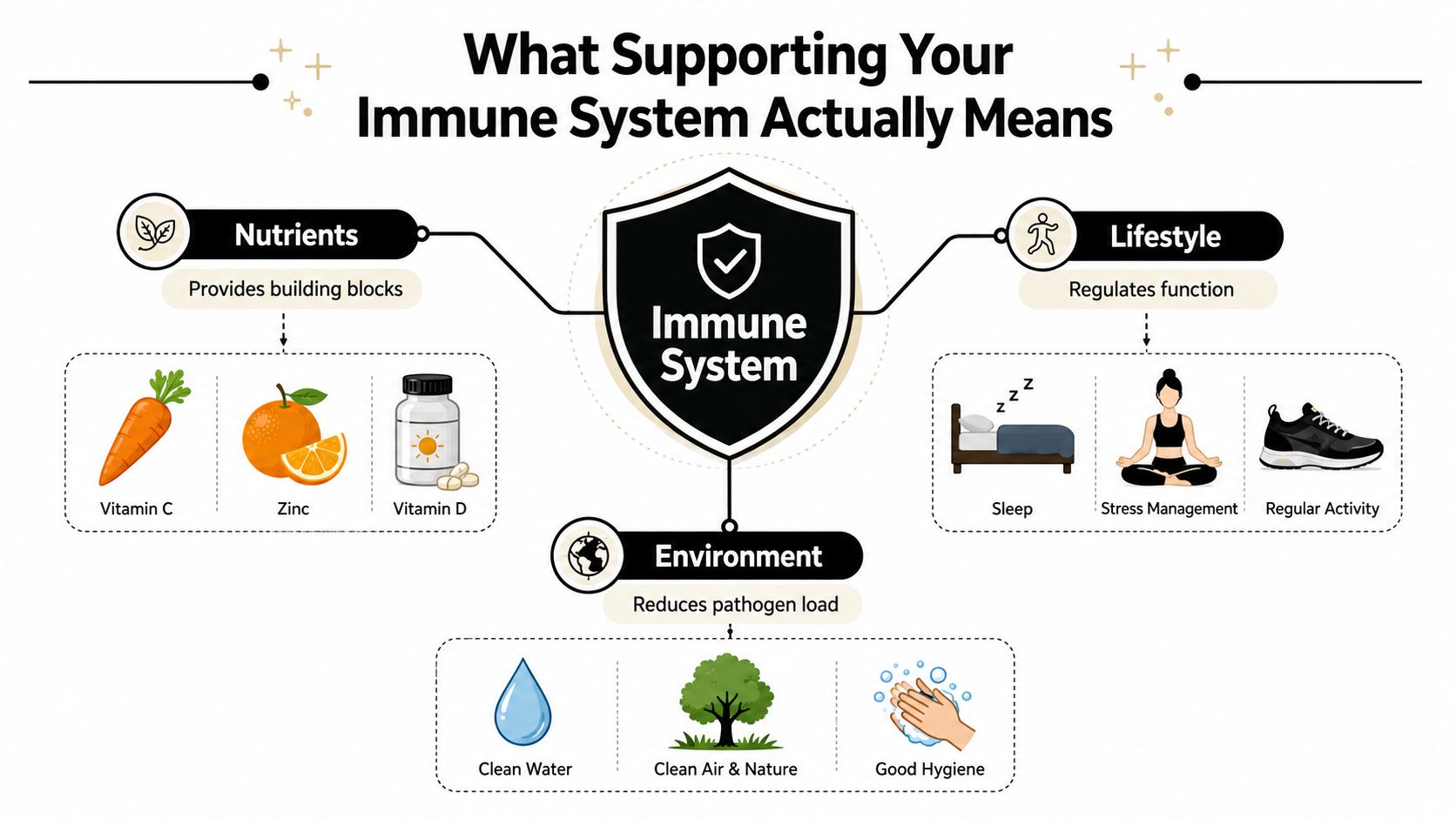
Table of Contents
- What Supporting Your Immune System Actually Means
- Why the Gut-Brain-Immune Axis Matters
- Build an Immune-Supportive Diet
- Sleep, Stress, and Movement as Immune Inputs
- Probiotics, Prebiotics, and Digestive Enzymes
- Vaccinations and Everyday Hygiene
- A 30-Day Immune Support Plan and When to See a Clinician
What Supporting Your Immune System Actually Means
Supporting your immune system means clearing the bottlenecks that keep it from doing its job well. It does not mean trying to “supercharge” immunity, because that is not a useful goal, and it is not how immune function works in daily life.
The better framing is baseline resilience. When the body has enough protein, enough key micronutrients, adequate sleep, regular movement, and less exposure to tobacco and heavy alcohol, it usually defends itself more effectively. The CDC ties healthy lifestyle habits to enhanced immunity, and Harvard Health lists regular moderate exercise, 7 to 9 hours of sleep nightly, smoking cessation, alcohol moderation, stress management, and vaccination as core behaviors that keep immune function on track (CDC, Harvard Health).
The Real Goal
The goal is not invincibility. It is fewer avoidable infections, better recovery, and less strain on the immune system from preventable deficiencies and habits.
That matters because common nutrient shortfalls are widespread. In U.S. adults, one analysis found inadequacy prevalence of 45% for vitamin A, 46% for vitamin C, 95% for vitamin D, 84% for vitamin E, and 15% for zinc (NIH Office of Dietary Supplements). Another review summarizing NHANES data reported 93% did not meet the estimated average requirement for vitamin E, 56% for magnesium, 44% for vitamin A, 31% for vitamin C, 14% for vitamin B6, and 12% for zinc. That is why a nutrient-dense diet usually beats chasing a single “immune booster.”
Practical rule: if the body is underfed, under-slept, and over-stressed, no supplement can compensate for the whole pattern.
One useful way to start is to look at the nutrients that are most often missed and fill them through food first. If diet alone is not closing the gap, a targeted option such as zinc and vitamin D support may make more sense than a broad supplement stack.
The gut-first version of this picture comes next, because digestive health is where many of these inputs are processed, absorbed, and translated into immune readiness.
Why the Gut-Brain-Immune Axis Matters
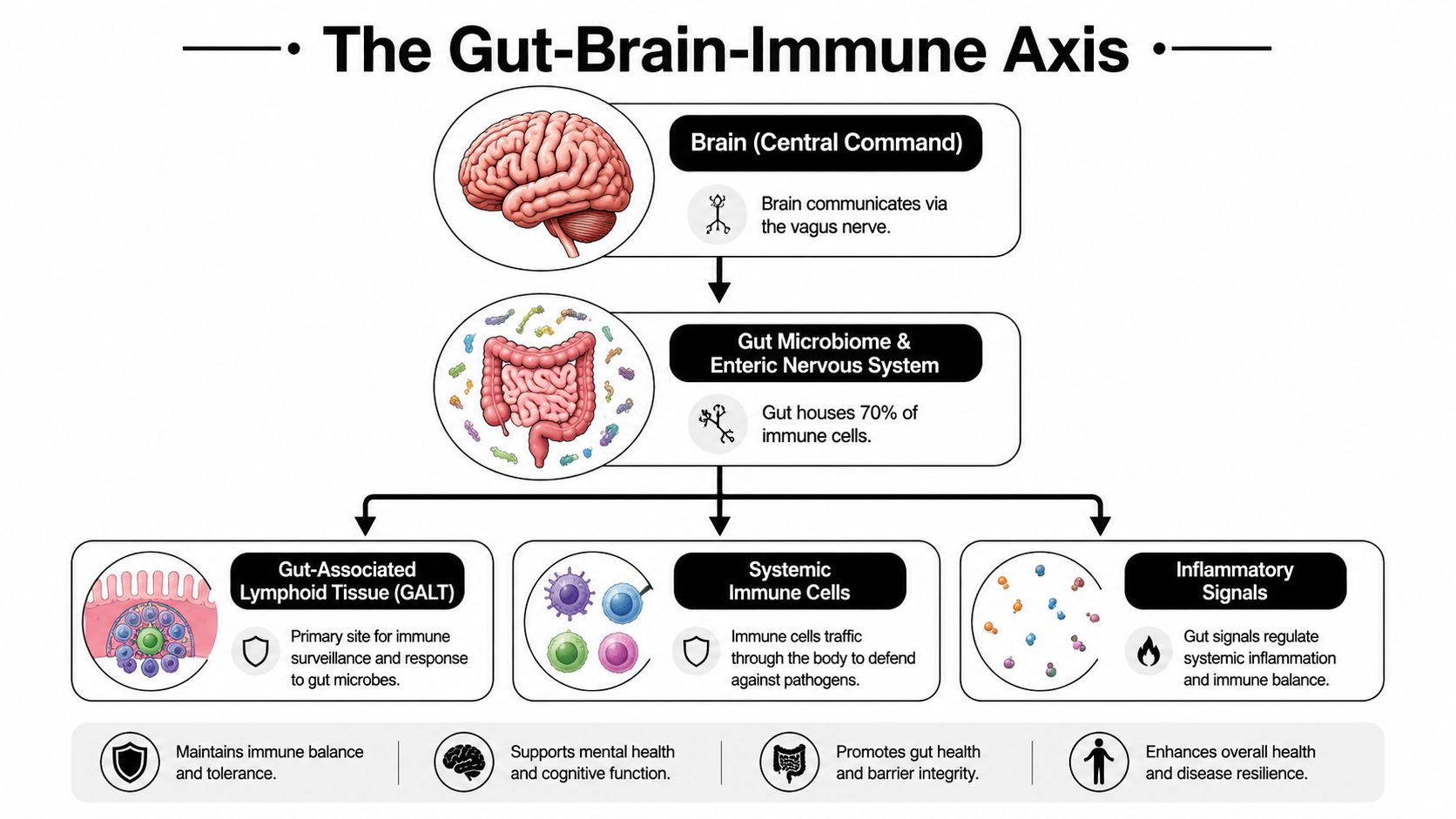
The gut is where immune support starts to become concrete. The digestive tract isn't just handling food, it's also a major interface between microbes, barrier tissue, and immune signaling, so bloating, irregularity, and post-meal discomfort can be more than nuisance symptoms.
Microbiome balance affects how the gut lining behaves, how inflammatory signals are handled, and how comfortably someone tolerates meals. Cleveland Clinic notes that stress, sleep loss, and chronic conditions can weaken immune function, which is one reason gut symptoms and immune resilience often travel together in real life (Cleveland Clinic).
The practical takeaway is simple. If someone eats in a way that inflames the gut, sleeps badly, or stays chronically stressed, immune support becomes harder to sustain. That's also why gut-focused products are often sold for comfort first and immune support second, because the same digestive environment influences both.
What to pay attention to
Digestive symptoms matter because they can hint at a broader pattern of strain. A person with frequent bloating or irregularity may not need a “stronger immune system” so much as a better gut environment that lets normal defenses work without constant friction.
That's where the gut-brain-immune axis becomes more than a concept. The brain responds to stress, the gut responds to diet and motility, and immune tissue responds to both.
The earliest intervention is usually not a supplement. It's getting the daily inputs right so the gut doesn't keep sending distress signals. For readers who want a broader supplement lens on that pathway, this gut-brain axis overview fits naturally with the biology here.
Gut symptoms aren't always immune symptoms, but they can be part of the same pattern when stress, sleep, and diet are all off at once.
Build an Immune-Supportive Diet
Diet is the least exciting part of immune support, and also the part many people underdo. The body does better with steady nutrient intake than with rescue dosing after you already feel run down.
Start with protein and fiber
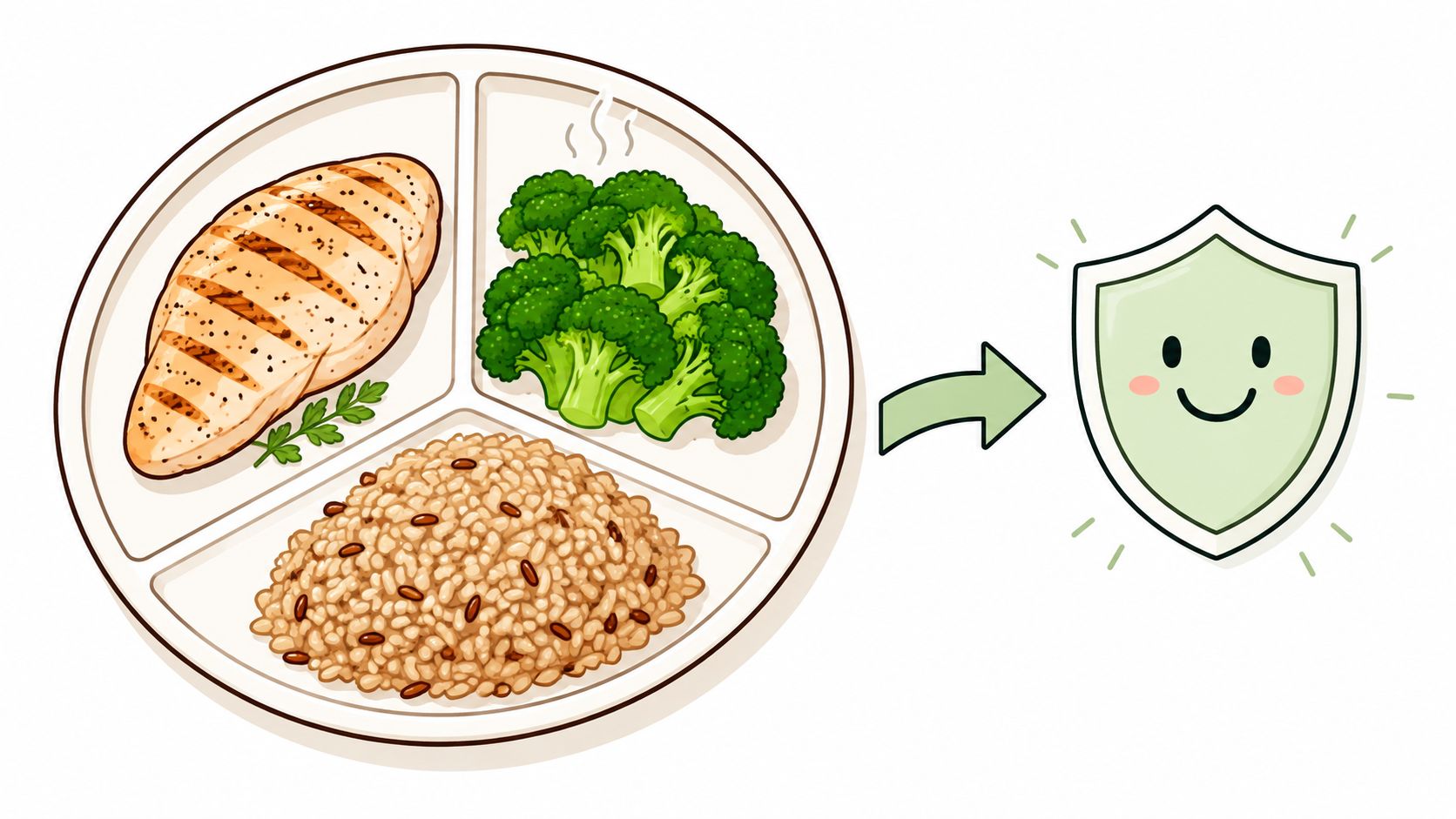
A practical plate starts with adequate protein, because immune cells need amino acids to build and repair tissue. Immune-focused reviews also point to glutamine, arginine, and BCAAs as relevant building blocks, while fiber supports the microbiome side of the equation (PMC review).
From there, add whole-food fiber, then round out the plate with fruits and vegetables. That pattern gives the gut a more stable fuel supply and reduces the odds that every meal becomes another stressor.
The main micronutrients are familiar for a reason. Vitamins A, C, D, E, selenium, and zinc support proper immune function, and clinical deficiencies in those nutrients weaken immunity. A nutrient-dense eating pattern matters more than trying to force one isolated ingredient to do all the work.
Keep the food pattern anti-inflammatory
A useful immune-supportive pattern emphasizes whole grains, vegetables, fruits, and omega-3-rich foods while keeping refined sugar and low-fiber ultra-processed foods in check. The goal is to reduce dietary inputs that keep inflammation and digestive instability unnecessarily high.
Fermented foods and prebiotic fibers can help here too, but they work best as part of the pattern, not as a stand-alone fix. If someone tolerates yogurt, kefir, beans, oats, or cooled starches, those foods can support both microbial diversity and day-to-day meal consistency.
For readers who want to narrow the diet discussion to zinc and vitamin D, this guide to zinc and vitamin D guidance is a useful starting point. The bigger win is still the full plate, because the body does better with reliable intake than with emergency supplements taken only when symptoms start.
Sleep, Stress, and Movement as Immune Inputs
A healthy immune system does not run on diet alone. Sleep, stress regulation, and movement shape the gut-brain-immune axis every day, which changes how well the body handles routine immune demands.
Sleep first, because it sets the floor
Harvard Nutrition Source says to aim for 7-9 hours of sleep nightly, and Harvard Health gives the same seven to nine hour range as part of habits that maintain a immune system. Sleep quality matters too, because a steady schedule gives the body a clearer recovery signal and usually supports deeper rest.
That makes sleep the first lever to fix. If bedtime shifts constantly, recovery stays fragmented, and the immune system gets mixed cues instead of a predictable rhythm.
Regular sleep timing is more important than “catching up” on weekends.
Then movement and stress control
Regular moderate activity belongs in the same category. A large literature review found regular physical activity was associated with a 31% lower risk of infectious disease and a 37% lower risk of infectious-disease-related mortality (CDC lifestyle guidance). That is not a supplement effect, it is a whole-system effect that likely reflects better circulation, better metabolic control, and less immune drift over time.
Stress management comes next. Chronic stress can disturb sleep, raise physiological load, and make healthy routines harder to keep, which is why breathing practices, meditation, prayer, or professional support can all be useful depending on the person. Harvard Health includes stress management among the core habits that support immune resilience.
A workable order looks like this:
- Lock in bedtime: keep the sleep window consistent before adding anything fancy.
- Move most days: use brisk walking, cycling, strength work, or anything moderate enough to repeat.
- Add a short reset: use breathing or mindfulness to lower the friction that keeps sleep and exercise from sticking.
The main mistake is overdoing it. Long workouts, erratic schedules, or chronic sleep debt can blunt the benefits of otherwise good nutrition, and that trade-off matters more than people admit.
Probiotics, Prebiotics, and Digestive Enzymes
Gut-first immune support becomes a supplement decision instead of a vague wellness habit. The right product depends on whether the problem is regularity, bloating, post-meal discomfort, or a broader pattern of gut imbalance.
Match the product to the job
Probiotics help introduce beneficial microbes. Prebiotics feed them. Synbiotics combine both. Postbiotics refer to beneficial microbial byproducts, and digestive enzymes help break down food when meals feel heavy or hard to tolerate.
| Supplement Type | Primary Role | Best For |
|---|---|---|
| Probiotic | Adds live beneficial strains | Daily gut maintenance, microbiome support |
| Prebiotic | Feeds beneficial microbes | Regularity, microbiome nourishment |
| Synbiotic | Combines probiotic and prebiotic | Broader gut support in one formula |
| Postbiotic | Provides microbial byproducts | Gut barrier and balance support |
| Digestive enzyme | Helps break down food | Meal-related bloating, dairy or FODMAP discomfort |
A clinically minded shopper should look for strain specificity, third-party testing, downloadable Certificates of Analysis, and delivery systems that protect the capsule through stomach acid when relevant. Those are quality markers, not marketing fluff. They matter because the wrong product can be expensive fiber, while the right one may fit a specific symptom pattern better.
For a GutRx example in the probiotic category, GutRx Daily is positioned as a probiotic and prebiotic supplement that supports immune function, while other formulas in the space may focus more narrowly on gut comfort or meal support. That's the level of differentiation buyers should look for, symptom first, formula second, brand last.
When supplements make sense
Supplements can be useful when diet is already decent but symptoms keep showing up, or when travel, stress, and irregular meals make consistency hard. They're less useful as a substitute for sleep, food quality, or movement.
Safety still matters. People who are immunocompromised or taking medication should check with a clinician before starting any probiotic or enzyme product, especially if symptoms are severe or unexplained. The goal is support, not trial-and-error stacking.
Postbiotic benefits are worth reading if the buyer is trying to decide whether a probiotic, postbiotic, or synbiotic fits the problem best.
Vaccinations and Everyday Hygiene
Vaccination and hygiene sit on the outside of immune support, but they reduce the amount of threat the immune system has to handle. That lowers background load, which gives diet, sleep, and recovery a better chance to do their work.
Vaccines prime the system
Vaccination primes the immune system before exposure. That is a different job from a supplement, which cannot train the body to recognize a pathogen ahead of time.
The trade-off is simple. If someone skips vaccines but spends heavily on supplements, the money is going toward the weaker part of the strategy.
Hygiene lowers exposure
Basic hygiene still works because it cuts down the pathogen load the body has to process. Handwashing, safe food handling, cleaning frequently touched surfaces, and staying home when symptomatic all make infections less likely to spread through a household or workplace.
Rule of thumb: use supplements to support biology, and use hygiene to reduce exposure.
Smoking cessation and alcohol moderation belong in the same immune-support picture, as noted earlier. They matter because they affect resilience throughout the day, not only during cold season.
This is the least glamorous part of the plan, but it pays off because it is simple, repeatable, and cheap compared with the cost of getting sick in the first place.
A 30-Day Immune Support Plan and When to See a Clinician
A good plan doesn't ask you to change everything at once. It asks you to stack the highest-return behaviors first, then see what still needs support.
A realistic 30-day sequence
Week 1: fix sleep timing and hydration. Keep the bedtime and wake time as steady as possible, and make sure meals and fluids are regular enough that energy doesn't swing wildly.
Week 2: upgrade the plate and add movement. Build meals around protein, fiber, and micronutrient-dense foods, then add moderate activity on most days.
Week 3: consider targeted supplementation if symptoms or diet gaps still remain. This is the stage for a probiotic, synbiotic, postbiotic, or enzyme product when the problem is clearly digestive and the formula matches the need.
Week 4: audit vaccination status and hygiene routines. Check the basics, because external protection still matters even when the inside of the plan is dialed in.
When to get checked
Persistent fatigue, recurrent infections, slow wound healing, or unexplained weight changes deserve clinical attention. Those patterns can point to a nutrient problem, a sleep problem, a chronic condition, or something else that needs workup instead of more supplements.
A sensible supplement checklist is short:
- Clear use case: the formula fits a symptom or goal.
- Quality markers: third-party testing and transparent labeling.
- Delivery design: delayed-release or other protection when appropriate.
- Tolerance: the product doesn't worsen bloating, cramping, or stool changes.
The biggest mistake is expecting one product to overwrite months of inconsistency. The most durable immune support comes from steady habits that make the gut calmer, the body better fed, and recovery more predictable.
If you want a gut-first way to support immune health, visit GutRx and look for formulas built around digestive balance, microbiome support, and transparent quality testing. Their probiotic and enzyme options are designed to fit the same daily patterns covered here, especially when bloating, irregularity, or meal-related discomfort are part of the picture.


