

You know the feeling, a sour burn climbs into your chest after a meal, your throat feels raw when you lie down, and suddenly sleep sounds impossible. How to ease acid reflux starts with understanding what's happening in your body, then matching the fix to the trigger instead of guessing.
Acid reflux happens when stomach contents move upward into the esophagus because the valve at the bottom, the lower esophageal sphincter, isn't sealing tightly enough. That backflow can create heartburn, regurgitation, or a tight, uncomfortable pressure after eating.
The good news is that reflux is common and often manageable with the right routine. A 2020 meta-analysis of 96 studies from 37 countries estimated the global pooled prevalence of GERD at 13.98%, with regional differences of 19.55% in North America, 14.12% in Europe, and 12.92% in Asia; weekly symptoms were most common in North America at 19.8% (PMC meta-analysis). That doesn't make the symptoms any less annoying, but it does mean you're not dealing with some rare or mysterious problem.
Table of Contents
- Understanding Acid Reflux and Its Triggers
- Immediate Relief Strategies for Active Symptoms
- Building an Anti-Reflux Diet
- Crucial Lifestyle Changes Beyond Your Plate
- Optimizing Your Sleep to Prevent Nighttime Reflux
- Supporting Gut Health and Knowing When to See a Doctor
Understanding Acid Reflux and Its Triggers
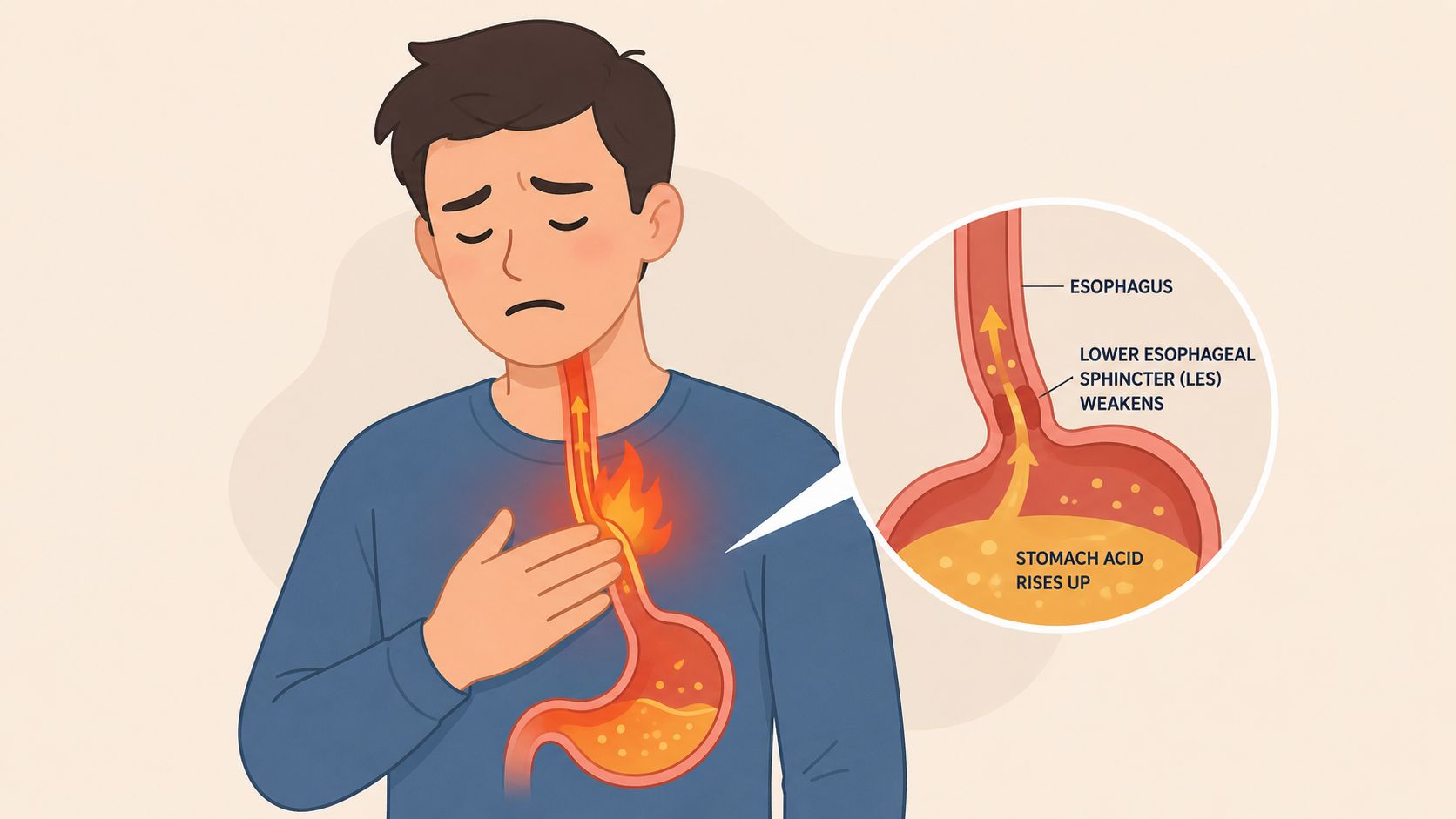
Acid reflux isn't just about “too much acid.” It usually starts with pressure, timing, or positioning that lets stomach contents slip upward when they shouldn't. When the lower esophageal sphincter relaxes at the wrong time, acid can reach the esophagus and irritate tissue that isn't built to handle it.
That's why the same meal can feel fine one day and miserable the next. Fatty foods, large late dinners, alcohol, caffeine, and peppermint can all make reflux more likely because they either slow stomach emptying or make the valve more likely to loosen. Johns Hopkins also notes that weight loss if overweight is the most effective lifestyle change among the options it lists, which points to how much abdominal pressure matters in day-to-day reflux control (Johns Hopkins Medicine).
Practical rule: reflux management works best when you think in layers, not single triggers. Meal size, body position, and abdominal pressure all interact.
For many people, the problem is less “acid” in the abstract and more the combination of a full stomach, a relaxed valve, and a bad posture for digestion. A heavy dinner eaten late, followed by lying down, is a classic setup for symptoms. That's why the most useful plan is specific, not generic.
The earlier you can map your own pattern, the faster you can control it. A few people mainly react to spicy food, while others flare after carbonated drinks or after eating too much too fast. One of the simplest ways to ease acid reflux is to stop treating all reflux the same and start noticing what happened in the hours before the burn started.
For broader digestion support ideas that complement reflux management, see natural remedies for digestive issues.
Immediate Relief Strategies for Active Symptoms
A reflux flare can feel urgent, and the quickest way to reduce the burn is to cut the pressure that pushes stomach contents upward. Standing up straight or sitting tall often helps because lying flat gives acid an easier path back into the esophagus.
Fast actions that can help right away
- Get upright: Stay standing or seated with a tall posture. Gravity helps keep stomach contents down when the valve is already irritated.
- Loosen your waistband: Tight clothing around the abdomen adds pressure and can make symptoms feel worse.
- Sip plain, non-carbonated water: Small sips may help wash acid down without adding gas or stretching the stomach.
- Pause the workout: If symptoms start after eating, high-intensity movement can be a poor trade until the episode settles.
- Wait before eating more: A second round of food often worsens things when the stomach already feels full.
A baking soda solution is sometimes used as a short-term neutralizer, but it should stay a rare stopgap, not a routine response. If you keep reaching for it, the better question is what is driving the reflux in the first place.
That includes meal size, body position, and how well the stomach is emptying. For some people, slower gastric emptying keeps food and acid sitting in the stomach longer, which raises the chance of backflow. A closer look at how butyrate may support gastric emptying and ease post-meal discomfort can help connect short-term symptom control with longer-term digestive balance.
Immediate relief measures can take the edge off, but they do not replace a better meal pattern, better sleep positioning, or a review of the trigger you just ran into. Plain water and posture changes will not solve every flare, yet they often buy enough relief to keep the episode from escalating.
Building an Anti-Reflux Diet
Foods That Soothe
The most useful reflux diet is usually plain in the best sense. It centers on smaller meals, less grease, and foods that are less likely to sit heavily in the stomach. Johns Hopkins recommends smaller meal size, stopping food 2 to 3 hours before lying down, and limiting common triggers such as fatty foods, alcohol, peppermint, caffeine, carbonated drinks, and large late meals.
That does not mean you need to strip your diet down to a rigid elimination plan. It means building meals around foods that are gentler on the stomach and less likely to relax the sphincter or raise pressure after eating. Non-citrus fruit, oatmeal, rice, lean proteins, and cooked vegetables are common starting points because they are usually easier to tolerate than greasy, spicy, or highly acidic meals.
There is also a long-term angle that gets missed. A calmer eating pattern can support digestion day to day, and a steadier gut microbiome may help the digestive system handle meals with less irritation over time. That does not replace trigger management, but it can fit into the same plan when you are trying to reduce flare-ups without making every meal feel restrictive.
Foods That Trigger
The most common trigger foods are the ones that are heavy, acidic, or known to loosen the valve. Fatty and fried foods tend to linger longer in the stomach, which gives acid more time to move upward. Spicy foods, tomato-based sauces, vinegar-heavy dishes, chocolate, onions, and peppermint are frequent troublemakers too.
| Foods to Enjoy | Common Trigger Foods to Limit |
|---|---|
| Oatmeal, brown rice, whole-grain bread | Fried foods, greasy takeout |
| Bananas, melons, apples, pears | Citrus fruits, citrus juices |
| Lean proteins like grilled fish or baked poultry | Heavy red-meat meals, large portions |
| Steamed or roasted vegetables | Tomato sauce, vinegar-heavy dishes |
| Water, non-caffeinated drinks | Coffee, soda, alcohol, carbonated drinks |
A better reflux plate usually means fewer surprises later. If a meal feels light when you finish it, does not leave you overfull, and does not trigger that familiar burn when you lie down, you are moving in the right direction. Personal pattern matters more than chasing a perfect universal list, because tolerance varies and digestion changes from one day to the next.
If one food keeps showing up as a problem, test it in a smaller amount or leave it out for a while and see whether symptoms settle. That kind of practical tracking helps separate true triggers from meals that only seem suspicious because they happened during a flare.
Crucial Lifestyle Changes Beyond Your Plate
Weight, pressure, and clothing
If reflux keeps showing up even when meals are fairly sensible, pressure may be part of the problem. Extra abdominal pressure can push against the stomach and make reflux easier, which is why weight loss if overweight consistently comes up in clinical guidance. Tight waistbands can create a similar effect in the short term, especially after meals.
Smoking and alcohol deserve the same honest review. Both can make reflux harder to control by affecting the valve and irritating the digestive tract, which is why diet changes alone often fall short.
Stress and symptom timing
Stress does not create every reflux episode, but it can change how strongly symptoms register and how long they linger after a flare. People who clench their abdomen, eat on the run, or stay tense after dinner often create the kind of conditions that let reflux hang around.
Helpful mindset: reduce the load on the system instead of chasing perfect digestion.
Slower meals, fewer late-night snacks, and less pressure around the waist all support the same goal. The changes are small on their own, but together they can make reflux less reactive over time.
Medications deserve a review
Medication-triggered reflux is easy to miss. Harvard notes that many common drugs can worsen reflux and advises people to “check your medications” with a clinician if symptoms keep coming back (Harvard Health). People often keep changing their meals while overlooking a prescription or OTC product that may be part of the problem.
If reflux feels persistent, bring a full medication list to your next appointment, including supplements and occasional OTC products. Ask which of them could be relaxing the esophagus or raising reflux risk. That conversation can save a lot of guesswork.
Gut balance also fits into this picture. Reflux control is not only about avoiding trigger foods, it is also about creating digestive conditions that are calmer from day to day. A more stable gut environment may support symptom control over time, which is why some people also review meal timing, stress, and supplements such as how to time digestive enzymes as part of a broader routine.
Optimizing Your Sleep to Prevent Nighttime Reflux
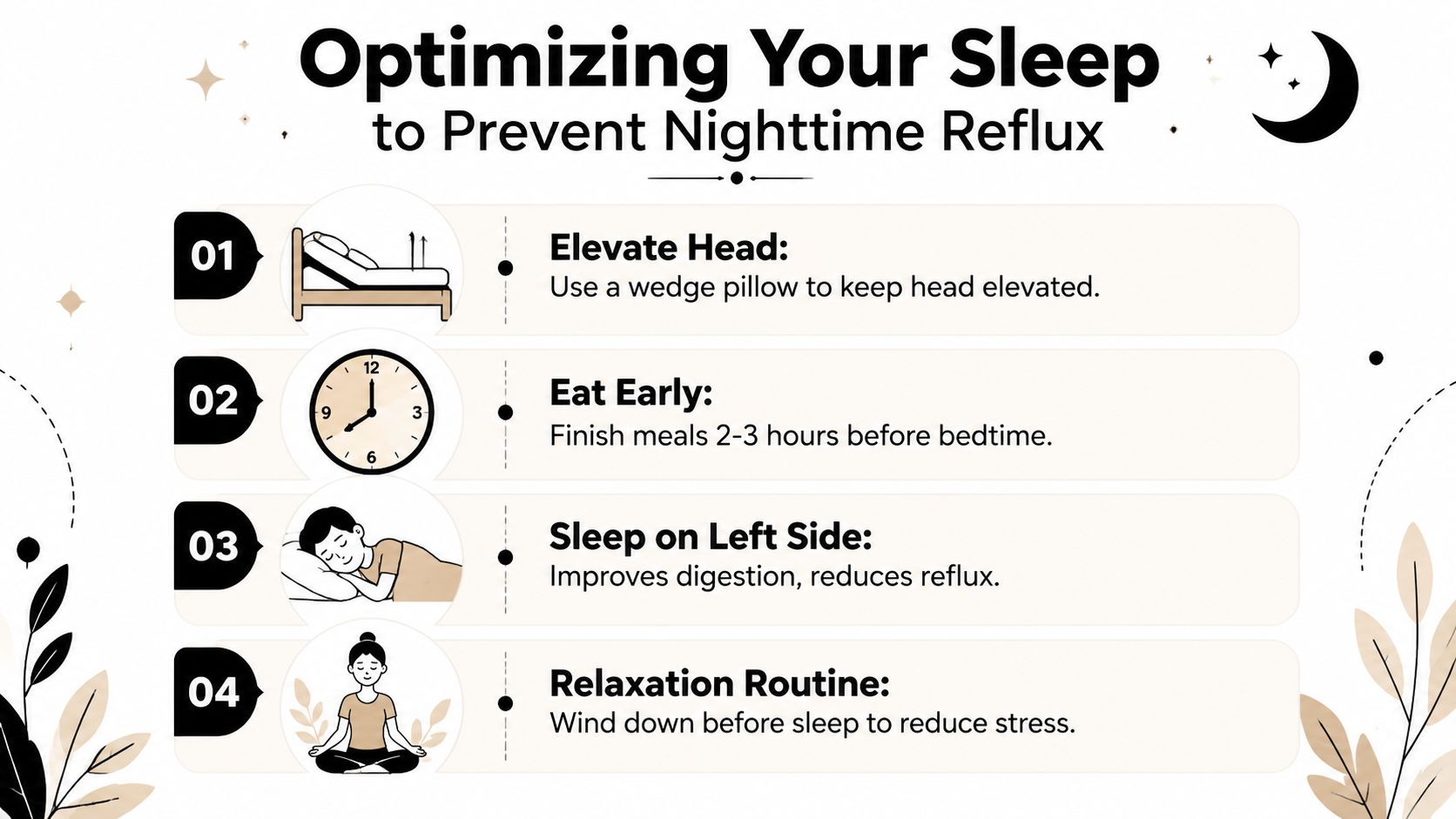
Nighttime reflux needs its own plan because lying flat changes the physics. Mayo Clinic recommends avoiding recumbence for at least 3 hours after eating, raising the head of the bed by 6 to 9 inches (15 to 23 cm) with blocks or a wedge, and sleeping on the left side to reduce symptoms. It also notes that extra pillows are ineffective, because they don't raise the whole upper body enough (Mayo Clinic).
The bed itself matters more than pillow stacking. A wedge or bed risers create a steadier incline, which helps keep acid where it belongs instead of pooling toward the esophagus when you're asleep. If you've tried adding two or three pillows and still woke up burning, that's why.
A useful nighttime routine is simple. Finish dinner early, let the stomach settle, then go to bed with your torso raised and your left side as the starting position. That setup can reduce the odds that you'll wake up with a sour taste, throat irritation, or chest discomfort.
The best version of this habit is one you can repeat every night without thinking too hard about it. If you want a meal-timing lens that supports this routine, the article on best time to take digestive enzymes can help you connect dinner timing with digestion support.
Supporting Gut Health and Knowing When to See a Doctor
Acid reflux that keeps returning can overlap with broader digestive imbalance, so it helps to think beyond the burn itself. A balanced gut environment supports more predictable digestion, and that matters because symptom control often works better when the whole digestive system is calmer, not just when one trigger food is removed.
Seek medical care if reflux comes with trouble swallowing, a chronic sore throat, vomiting, chest pain that worries you, or unexplained weight loss. Those are not routine comfort issues, and they deserve a clinician's evaluation. If symptoms are frequent, persistent, or getting worse, prescription treatments such as PPIs are commonly part of medical management, but they should be discussed with a professional who can match the plan to the cause.
Long-term digestive resilience often comes from combining symptom control with routine support that keeps the gut environment steadier. That can include food timing, trigger awareness, and, for some people, a clinician-approved approach to probiotics, prebiotics, or digestive enzymes when meal-related discomfort is part of the picture. Gut support isn't a replacement for reflux care, but it can be a useful part of a broader plan when digestion feels fragile.
GutRx offers lab-tested digestive support products, including formulas designed for meal-related discomfort and daily gut balance, which may fit people who want a structured routine alongside lifestyle changes. If you're ready to make reflux management more practical and less reactive, visit GutRx to explore options that align with this topic and your day-to-day digestion goals.


