

Feeling better isn't enough to prove a probiotic is working. The useful answer comes from matching the symptom, strain, and time window, then checking whether the change holds.
That distinction matters because probiotic effects are highly strain-specific and endpoint-specific. A product that may support diarrhea won't necessarily help bloating, constipation, mood, vaginal concerns, or urinary symptoms. The right question isn't “Are probiotics working?” It's “Working for which symptom, with which strain, and over what time window?”
Table of Contents
- Reframing What “Working” Means for Probiotics
- Tracking the Right Symptoms and Daily Signals
- Realistic Timelines by Symptom and Strain Type
- Using Objective Tests to Confirm Your Results
- Diet, Medications, and Lifestyle Factors That Confound Results
- When to Adjust Your Dose, Switch Strains, or Pause
- Red Flags, Clinician Checkpoints, and Your Next Step
Reframing What “Working” Means for Probiotics
“Feeling better” is a weak test. Digestive symptoms shift with meals, stress, medication use, and ordinary day-to-day variation. One comfortable morning cannot prove a probiotic caused the change, while one difficult day cannot prove it failed.
Use a strain-specific, symptom-matched, time-windowed test instead. The NIH probiotic fact sheet reports that probiotics may reduce some IBS symptoms, while noting that formal recommendations are not established for healthy people. A recent evidence summary on probiotic effectiveness describes possible reductions in diarrhea, nausea, epigastric pain, and bloating, but also highlights substantial variation between studies and generally low study quality.
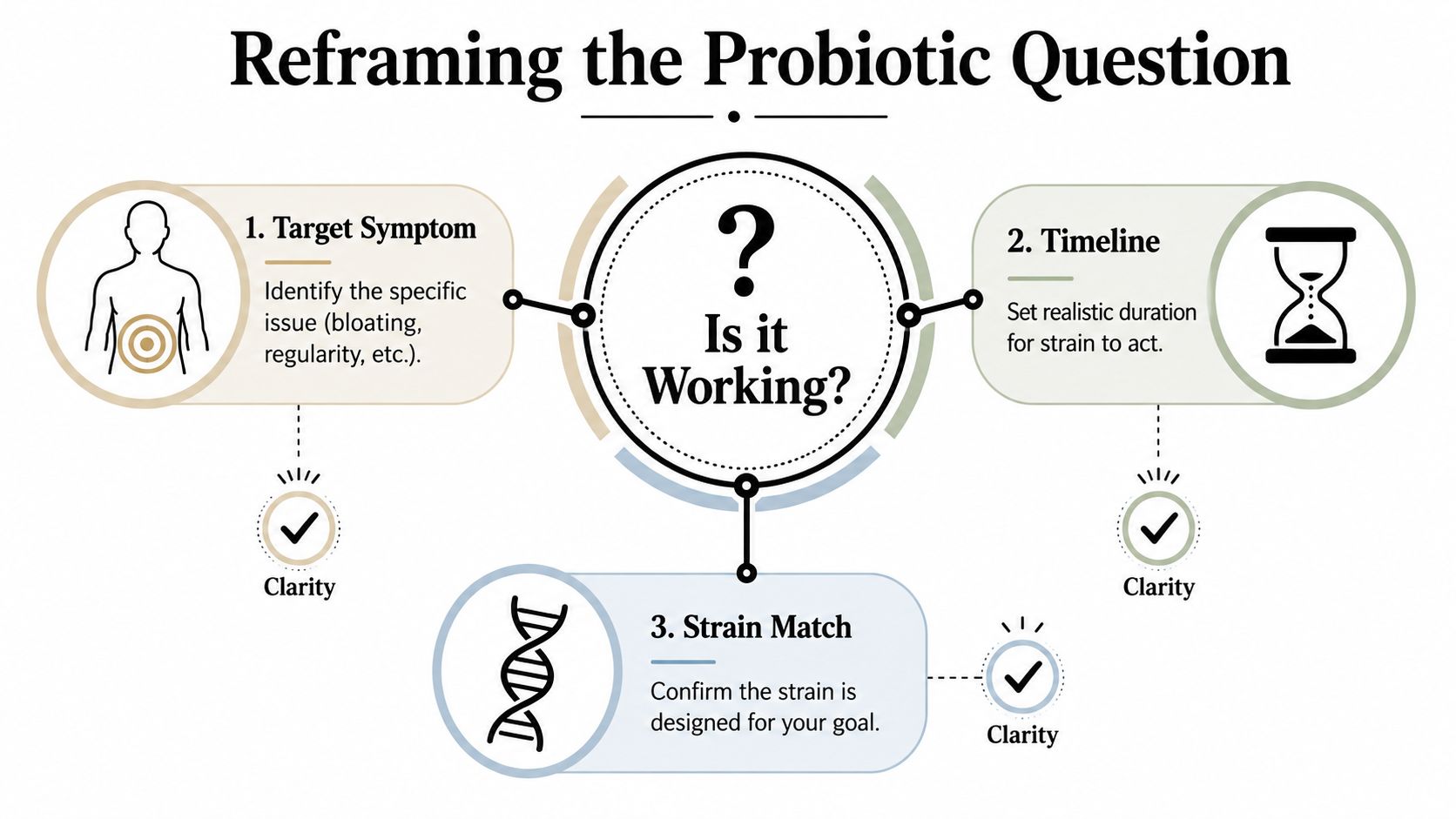
Set the endpoint before judging the product:
- Target symptom: Choose one main outcome, such as post-meal bloating, irregularity, loose stools, or gas.
- Strain match: Check whether the formula includes a strain studied or selected for that goal. A long ingredient list is not proof of a better fit.
- Time window: Allow enough time for that symptom and strain pairing to produce a repeatable pattern.
Lactobacillus rhamnosus GG, Saccharomyces boulardii, and a multi-strain Bifidobacterium blend are not interchangeable. Their research relevance differs by goal, including post-antibiotic digestive recovery, IBS-style bloating, lactose digestion, and immune function. A product can fit one endpoint and offer little relevance to another.
Track one primary symptom, one secondary signal, and the factors that may distort the result. This keeps the trial focused and separates a real, repeatable response from general fluctuations in how you feel.
Tracking the Right Symptoms and Daily Signals
Your first job is to create a baseline. Don't rely on memory. People tend to remember the worst symptom days and the most recent meal, which makes a supplement trial look more dramatic or more disappointing than it really is.
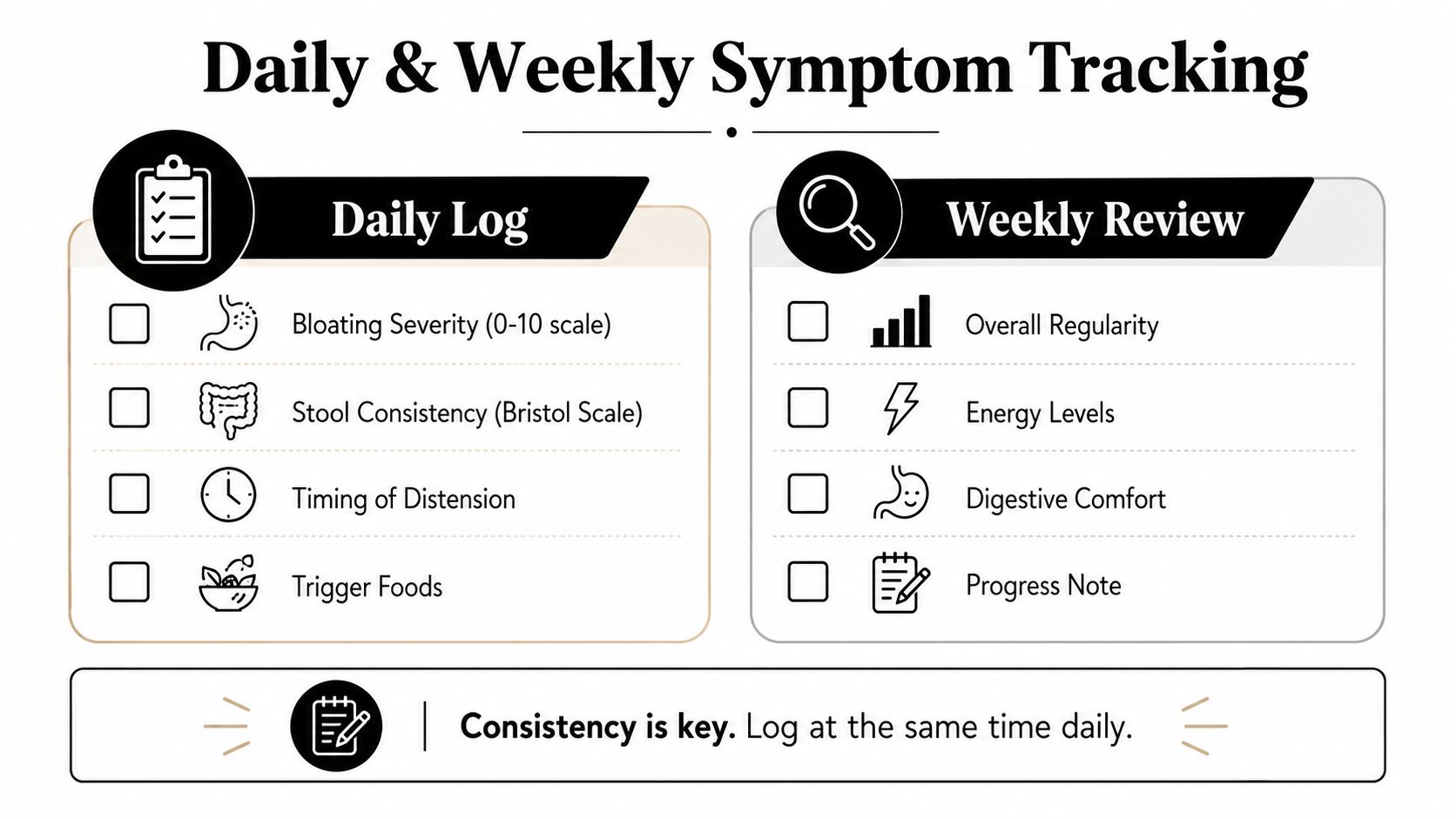
Use a 60-second daily journal. Record the same information at roughly the same point each day, then review the pattern weekly.
Start with the symptom you actually want to change
For bloating, write down:
- Severity: Use a 0–10 scale for bloating after meals.
- Timing: Note whether distension appears immediately, later in the day, or after a specific meal.
- Triggers: Record foods that repeatedly precede discomfort, without assuming every suspected food is the cause.
For regularity, note stool frequency, ease of evacuation, and straining. A bowel movement that happens often but requires significant effort isn't the same as comfortable regularity.
Stool appearance gives you a useful anchor. The Bristol Stool Scale can help you describe consistency consistently, with Types 3 and 4 commonly used as a practical target range. Don't turn the scale into a pass or fail test. Look for a sustained shift toward a more comfortable pattern.
Add signals that don't show up in the bathroom
Gut-brain effects can be subtle. Track morning energy, afternoon slumps, and sleep quality rather than declaring that a probiotic improved your mood after one good morning. For skin clarity, post-antibiotic resilience, seasonal immune response, vaginal concerns, or urinary symptoms, take a weekly snapshot instead of forcing a daily interpretation.
Meaningful progress might look like a 30–50% drop in bloating scores, a one-type Bristol shift, or two extra bowel movements per week. Those examples can help you define an endpoint, but they aren't universal promises. Your target should reflect the symptom you started with.
If regularity is your main concern, GutRx DAILY is described as using strains selected to help shape and move your #2, with prebiotics intended to feed those probiotics for benefits that build over time. Use that product description as a reason to track stool comfort and regularity, not as a reason to expect every digestive symptom to change.
For more context on evaluating bloating and digestion, read how probiotic supplements support digestion and reduce bloating.
Realistic Timelines by Symptom and Strain Type
A probiotic isn't a universal fast-acting digestive aid. Some goals involve an acute symptom, while others involve slower changes in microbial activity, host response, or the broader gut environment. Expecting every formula to deliver a dramatic change in the first few days is how people abandon a potentially useful product too early.
The timeline below is a practical framework, not a guarantee. The correct window still depends on the named strain, dose, product quality, symptom cause, and your routine.
| Symptom Goal | Strain Type | Expected Onset | Peak Window |
|---|---|---|---|
| Loose stools or antibiotic-associated diarrhea support | Yeast-based or targeted bacterial strain | Day 1–7 | Early trial period |
| Bloating, gas, or regularity | Multi-strain Bifidobacterium and Lactobacillus blend | Day 7–21 | Several weeks |
| Mood-related, skin, or immune-related signals | Strain-specific formulations | Week 3–8 | Week 3–8 and beyond |
| Longer-lasting ecosystem support | Spore-based Bacillus strains | Variable | May persist after use ends |
| Ongoing daily digestive support | Traditional Lactobacillus strains | Variable | Often requires continuous dosing |
Saccharomyces boulardii and Lactobacillus rhamnosus GG are often discussed for short-term loose-stool or antibiotic-associated diarrhea support. Multi-strain Bifidobacterium and Lactobacillus formulas are more commonly evaluated for patterns such as bloating, gas, and regularity over a longer trial.
The delivery category also matters. Yeast-based probiotics may move through the system faster, spore-based Bacillus strains may persist after stopping, and traditional Lactobacillus strains often need continued dosing. Don't treat those differences as interchangeable proof that one category is superior.
Practical rule: Don't quit at day 10 just because a slow-moving symptom hasn't changed, and don't keep taking a poorly matched strain indefinitely because the label promises broad gut support.
Your symptom log should determine whether the trial is moving in the right direction. The guide to how long it takes to heal your gut can provide additional context, but no generic timeline can replace a strain-specific goal and consistent tracking.
Using Objective Tests to Confirm Your Results
Symptom tracking is the starting point, not the only possible evidence. If the result is subtle, non-digestive, or clinically important, objective testing may help. But testing doesn't automatically prove that a probiotic caused a change.
Stool panels show a snapshot
Stool microbiome panels may report microbial diversity, the abundance of selected organisms, and markers such as calprotectin or short-chain fatty acids, depending on the laboratory. Reviews of emerging precision probiotic research also point toward microbiome-based markers, host genetics, bile-acid transformation, and short-chain-fatty-acid production capacity as possible ways to predict response.
The limitation is substantial. A single stool sample captures one moment, laboratory methods differ, and the presence of a microorganism doesn't prove that it produced the outcome you care about. Use a stool panel when persistent symptoms deserve a broader evaluation, or when a clinician is monitoring an inflammatory or gastrointestinal concern.
Breath tests measure function
Hydrogen and methane breath tests can assess patterns associated with small intestinal bacterial overgrowth and carbohydrate malabsorption. They don't tell you whether a probiotic colonized your gut. They tell you how your system is handling a test substrate under specific conditions.
That distinction makes breath testing more useful for a suspected functional problem than for verifying a supplement's general effectiveness.
| Test Type | What It Measures | Best For | Limitations | Typical Cost |
|---|---|---|---|---|
| Stool microbiome panel | Microbial patterns and selected stool markers | Persistent symptoms or clinician-guided monitoring | Snapshot only, variable laboratory methods, limited proof of causation | Varies by lab and setting |
| Hydrogen-methane breath test | Gas production after a test substrate | Suspected small intestinal bacterial overgrowth or carbohydrate malabsorption | Measures function, not probiotic colonization | Varies by provider and setting |
Ask a clinician which markers are clinically relevant before ordering a panel. Don't buy a test just because it produces a long report. Objective data should complement your symptom journal, medication history, diet changes, and examination.
If symptoms continue despite a consistent, well-matched routine, testing may be more useful than adding another strain at random. It can help identify whether the issue is malabsorption, bacterial overgrowth, inflammation, or something unrelated to probiotics.
Diet, Medications, and Lifestyle Factors That Confound Results
A probiotic can be well matched and still appear ineffective if the surrounding routine keeps changing. Your digestive system responds to food patterns, medications, stress, sleep, hydration, and physical strain. Log those variables before you blame the capsule.
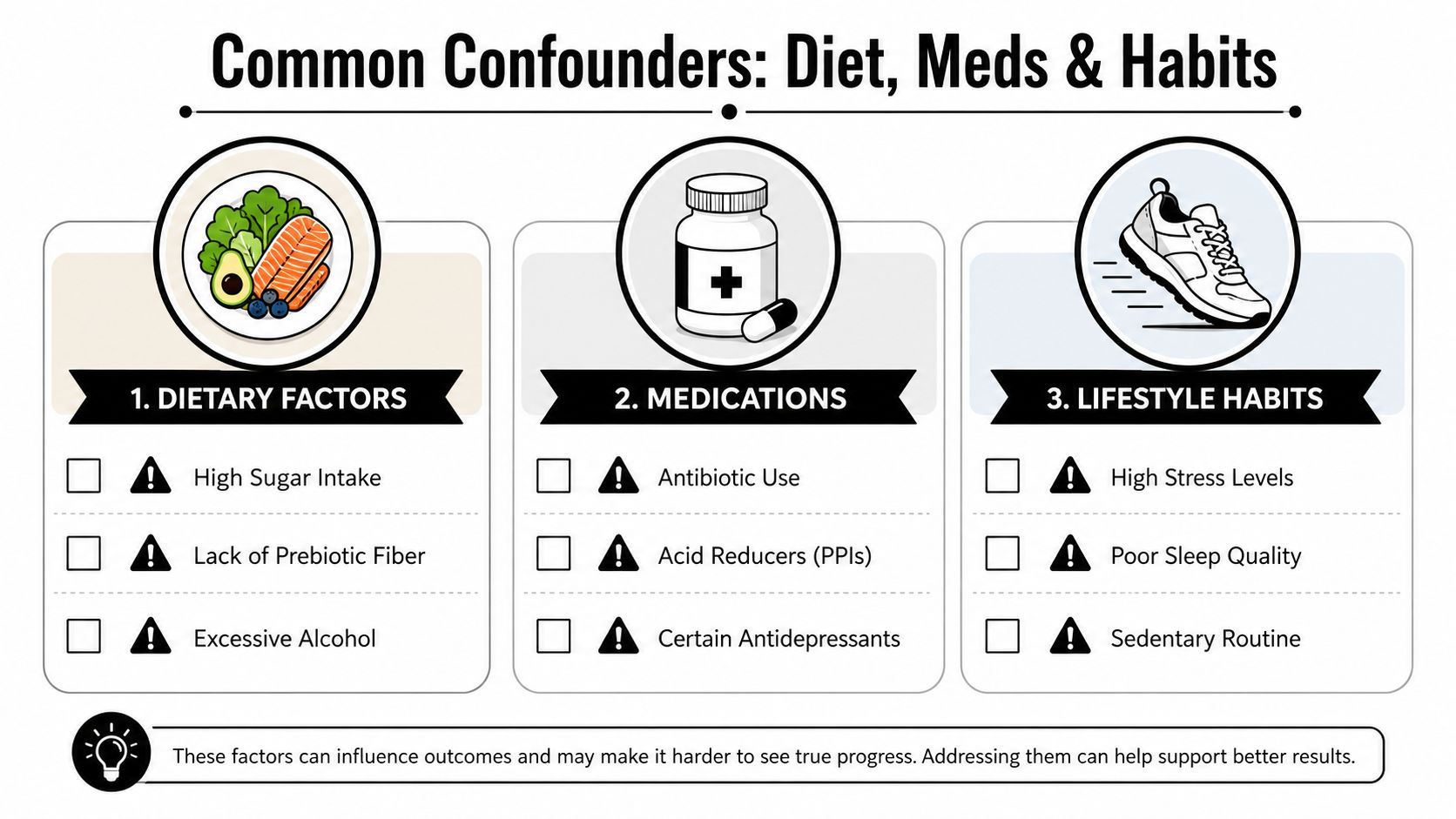
Keep a short confounder checklist
- Fiber intake: Note whether your meals include consistent prebiotic fiber. Some probiotic formulas include prebiotics, but your overall diet still shapes the environment.
- Water intake: Record unusually low intake, especially when regularity is the target.
- Sleep: Mark poor sleep and late nights, since fatigue can alter how you perceive pain, energy, and bowel symptoms.
- Alcohol: Note drinking days and larger-than-usual intake.
- Medication changes: Record antibiotics, acid reducers such as proton pump inhibitors, NSAIDs, metformin, antidepressants, and any new prescription.
A diet high in sugar or ultra-processed foods may make digestive patterns harder to interpret. Low fiber can limit available fuel for beneficial microbes, while alcohol, chronic sleep loss, and intense exercise stress can amplify symptoms independently of the supplement.
Antibiotics deserve special attention. Taking them during a probiotic trial can alter the gut environment and affect introduced bacteria. Don't change a prescribed medication schedule to accommodate a supplement. Ask your clinician or pharmacist how to separate products, whether that makes sense for your specific medication, and whether pausing is appropriate.
Keep the tracking burden low. A few consistent notes are more useful than an elaborate spreadsheet you abandon after several days. If your bloating score rises after a new meal pattern, your sleep worsens, and you start an antibiotic at the same time, you don't have a clean probiotic trial.
When to Adjust Your Dose, Switch Strains, or Pause
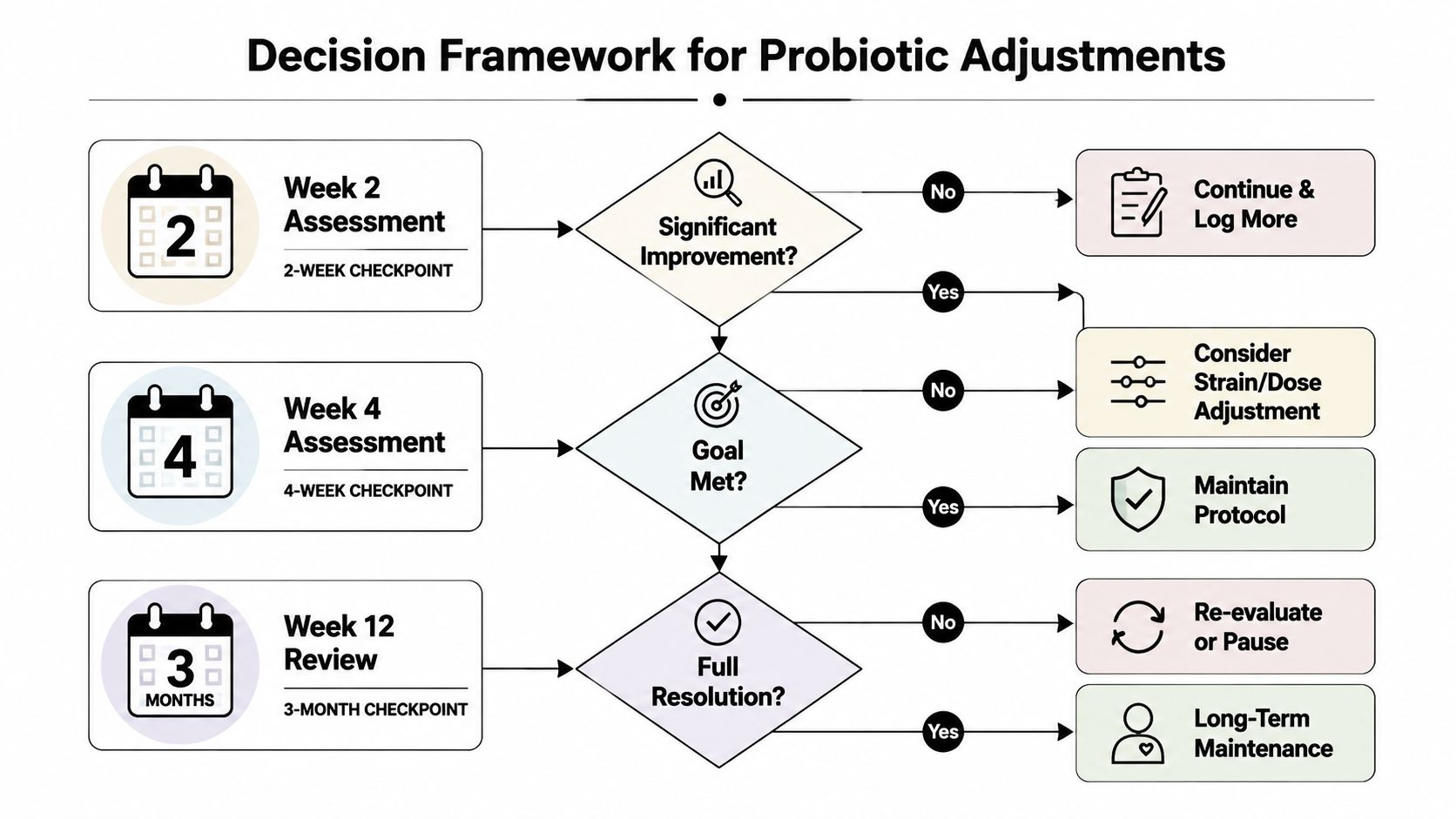
The best adjustment decision combines three things: your symptom log, the expected timeline, and any objective information available. Changing products every few days destroys that information. Use planned decision points instead.
At week 2, look for tolerability and direction
Mild early bloating or gas can mean the dose is too aggressive, the formula contains a fermentable ingredient you don't tolerate, or the strain isn't a good match. Check the label, review the serving instructions, and consider a clinician-guided dose adjustment rather than doubling down.
If symptoms are severe, steadily worsening, or accompanied by warning signs, don't frame them as a normal adjustment period.
At week 4, judge the match
If you've used the product consistently, selected it for the symptom you care about, and controlled major confounders, no meaningful change by week 4 suggests a mismatch. Switch from a general daily probiotic to a more targeted formula, or from a multi-strain product to a simpler formula that makes the response easier to interpret.
A partial response is different from no response. If one symptom improves while another doesn't, don't assume the entire product failed. The evidence is endpoint-specific, so the next move may be to keep the helpful component and address the remaining symptom separately.
At week 12, decide whether to maintain or rethink
By week 12, you should have enough tracking history to decide whether the routine deserves a place in your daily plan. Partial improvement may justify adding a complementary approach, but layering multiple products at once makes it difficult to identify what helped.
Change one variable at a time. If you add a prebiotic, switch strains, raise the dose, and change your diet together, you won't know which decision affected the result.
Pause during an antibiotic course or acute illness only after discussing the plan with a healthcare professional when appropriate. Persistent symptoms deserve evaluation, not an endless rotation of high-potency products. If you're comparing dose options, use high-CFU probiotic guidance to think about formulation and fit, not just the largest number on the label.
Red Flags, Clinician Checkpoints, and Your Next Step
Probiotics aren't a substitute for diagnosing persistent or alarming symptoms. Stop self-experimenting and seek medical care for persistent diarrhea beyond 14 days, new abdominal pain, blood in stool, fever, or a paradoxical worsening of symptoms. Breathing difficulty, swelling, or another sign of a serious reaction requires prompt medical attention.
Talk with a clinician before starting or continuing a probiotic if you're immunocompromised, taking immunosuppressants or antifungals, living with short bowel syndrome, or dealing with unresolved gastrointestinal symptoms after 8 to 12 weeks of consistent use. People in these groups need individualized risk assessment, not a generic Amazon review.
Bring useful information to the appointment
Prepare a concise handoff:
- Product identity: Brand, product name, and every named strain.
- Dose: Serving size and stated CFU amount, if listed.
- Duration: Start date, missed doses, and any pauses.
- Symptoms: Baseline notes, current pattern, and the exact endpoint you tracked.
- Context: Diet changes, medication changes, antibiotics, alcohol, sleep disruption, and illness.
A clinician can then decide whether to extend the trial, change the strain, investigate another cause, or stop the supplement. Ask about third-party testing, strain verification, delayed-release protection, and downloadable Certificates of Analysis when you're comparing products. Those quality signals don't prove a formula will work for you, but they can make the product easier to evaluate.
Precision probiotic research is moving beyond stool frequency. Emerging work considers microbial markers, host genetics, bile-acid transformation, and short-chain-fatty-acid production capacity. Reviews also describe measurable biomarkers in specific diseases, including reduced inflammatory signaling markers after probiotic therapy in ulcerative colitis, and growing interest in synbiotics that may improve microbial diversity before obvious symptoms change. These findings support careful evaluation, not self-diagnosis.
The practical answer to how to know if probiotics are working is simple: define one symptom, identify the strain match, track consistently, allow a sensible window, and stop guessing when red flags appear.
GutRx offers targeted digestive support across daily regularity and broader digestive balance, with product information that includes strain focus and formulation details. Visit GutRx to compare the available options, then choose a product that matches the symptom you're tracking.


