

You finish dinner, loosen your waistband, and feel pressure building across your abdomen. Sometimes the discomfort comes with burping or passing gas. Other times, your stomach looks distended even though you haven't eaten an unusually large meal. Effective bloating and gas relief depends on the driver, not on treating every episode as excess gas.
Bloating is widespread enough to deserve a careful, symptom-based approach. A population-based U.S. study found age- and sex-adjusted bloating prevalence of 19.0%, while visible abdominal distention affected 8.9% of people in the community. About half of those with bloating also had visible distention, according to the study published in Gut. A global Rome Foundation analysis found that nearly 18% of people experience bloating at least weekly, and a U.S. survey of 88,795 adults found that 13.9% reported bloating during the previous seven days, as reported in the study indexed by PubMed.
Table of Contents
- Understanding the Real Drivers of Bloating and Gas
- Dietary Triggers and Functional Gut Patterns
- Immediate Relief Tactics That Actually Help
- Prevention Strategies Built for Long-Term Comfort
- What the Latest Evidence Reveals About Relief Options
- When to Seek Medical Guidance for Persistent Bloating
Understanding the Real Drivers of Bloating and Gas
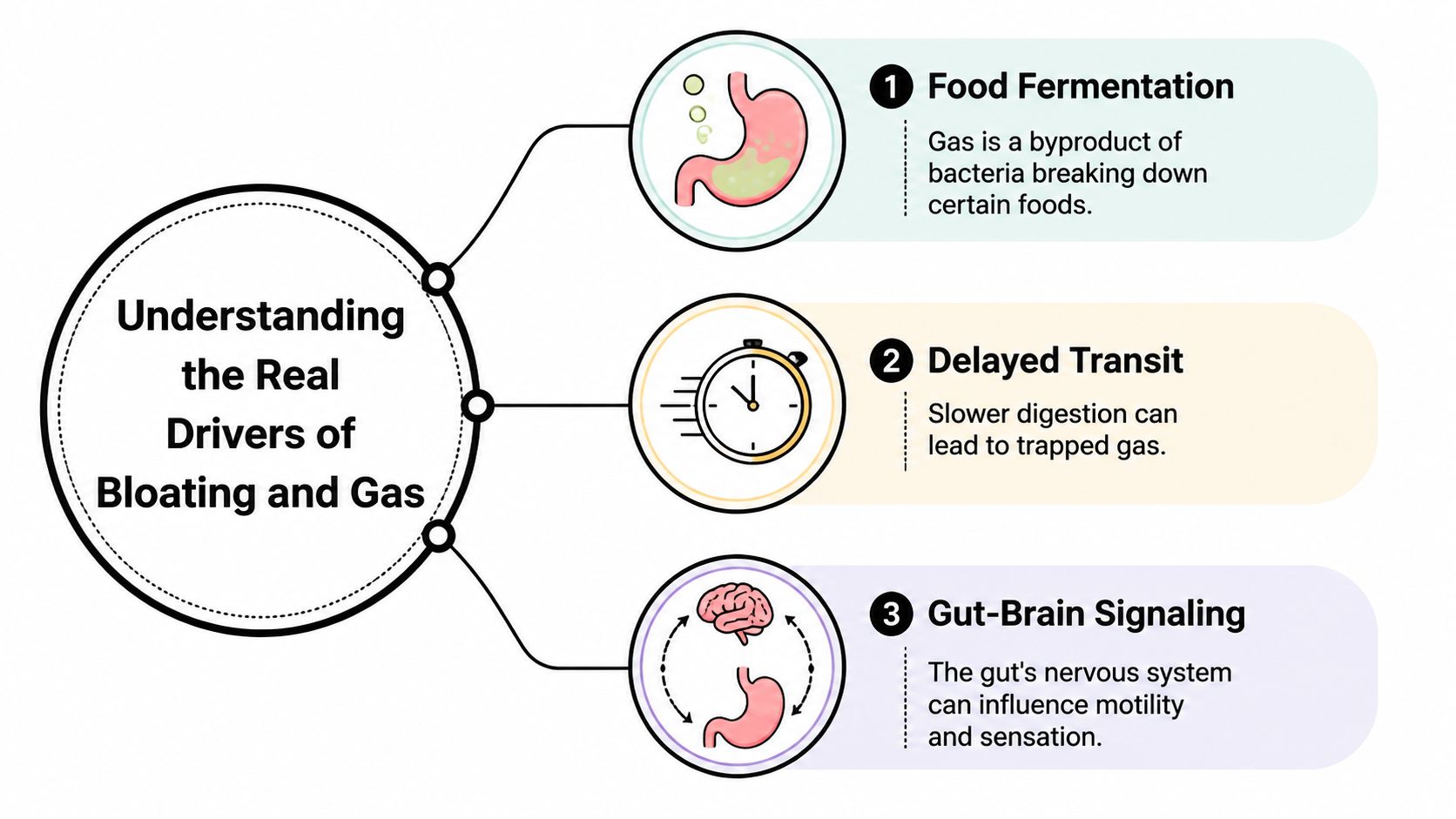
Consider two people who feel bloated after the same meal. One ate beans and wheat, then developed pressure as intestinal microbes fermented poorly absorbed carbohydrates. The other has constipation and feels full because stool and gas move slowly. A third person may have normal gas volume but heightened gut sensitivity, so ordinary stretching feels painful.
Those experiences can look identical from the outside, but the useful response differs. Bloating is a sensation of fullness, pressure, or enlargement, while distention refers to a visible increase in abdominal size. Gas may contribute to either symptom, but it isn't always the entire explanation.
Fermentation and gas production
Certain carbohydrates reach the colon without being fully absorbed. Bacteria then ferment them, producing gas and drawing water into the intestine. That combination can create pressure, rumbling, and post-meal distention. The amount of gas isn't the only factor. How quickly it moves, how the abdominal muscles respond, and how sensitive the gut nerves are can change the experience substantially.
A microbiome shift may also alter how meal components are fermented. This is one reason a food that once felt comfortable may later trigger symptoms, especially when bloating appears alongside irregular bowel habits.
Transit and retention
Slowed movement through the digestive tract can make gas harder to pass. Constipation-driven bloating often comes with infrequent stools, straining, hard stool, or a sense of incomplete emptying. Treating only the gas may offer limited benefit if the larger problem is transit.
The gut and brain communicate continuously. Stress can affect motility and amplify visceral sensitivity, meaning the nervous system may interpret ordinary intestinal stretching as discomfort. That doesn't make symptoms imaginary. It means gas production, movement, and perception are separate parts of the same digestive experience.
Practical rule: Before choosing a supplement, ask whether your main pattern is food-triggered fermentation, slowed transit, loose stools, or discomfort that seems disproportionate to what you ate.
Dietary Triggers and Functional Gut Patterns
Dietary triggers usually fall into recognizable groups, but a trigger isn't automatically a permanent intolerance. A large meal containing onions, garlic, legumes, certain fruits, or wheat may deliver fermentable carbohydrates that increase water and gas in the intestine. Dairy can cause symptoms when lactose isn't digested efficiently. Carbonated drinks, chewing gum, eating quickly, and talking while eating can increase swallowed air.
A symptom diary can help separate coincidence from a repeatable pattern. Record the meal, timing, stool pattern, abdominal pressure, and whether symptoms improve after passing stool or gas. Keep the record practical. The aim isn't to monitor every bite forever, but to generate a testable hypothesis.
Use restriction as an experiment
The low-FODMAP diet has some of the strongest dietary evidence for bloating in IBS. A clinical review reported symptom improvement in at least 75% of IBS patients, with bloating reductions of roughly 50% to 82% after FODMAP restriction, as detailed in this clinical review. The mechanism is straightforward. Restriction lowers poorly absorbed, fermentable carbohydrates, reducing both osmotic water retention and microbial gas production.
The important point is structure. A short, organized elimination phase followed by reintroduction and titration is more useful than permanently removing broad food categories. Reintroduction helps identify which foods, portions, or combinations matter for you while preserving dietary variety.
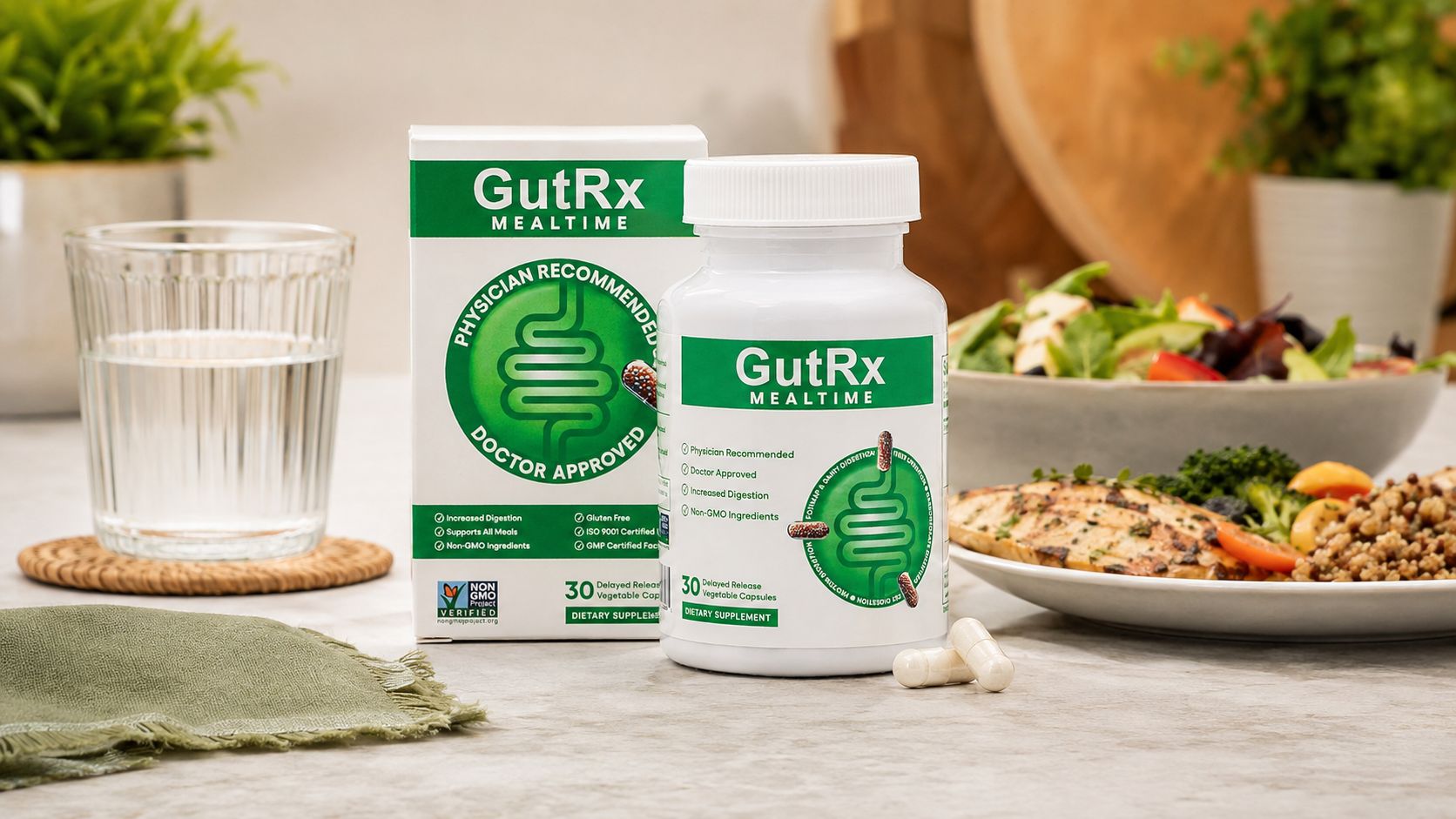
For people who notice symptoms after beans and similar foods, the educational guide on alpha-galactosidase supplements explains how targeted enzyme support may fit into a food-specific strategy. GutRx MEALTIME is described by its product information as a digestive enzyme supplement designed to support digestion, reduce bloating, and enhance nutrient absorption.
Separate IBS patterns from simple intolerance
IBS can include bloating with constipation, diarrhea, or alternating bowel patterns. Functional dyspepsia can create upper-abdominal fullness and discomfort that people may mistake for intestinal gas. The distinction matters because an enzyme aimed at a particular meal won't correct constipation-associated retention, and a broad probiotic won't necessarily address every food-triggered episode.
A clinician can help assess whether the dominant issue involves fermentation, transit, visceral sensitivity, or another gastrointestinal condition. That assessment becomes more important when symptoms persist despite a careful dietary trial.
Immediate Relief Tactics That Actually Help
A sudden episode after a meal often feels like pressure building faster than you can relieve it. Start with low-risk steps that support movement: take a gentle walk, loosen tight clothing, change position, and give digestion time. These measures may help gas move through the intestine, but they do not identify whether fermentation, delayed transit, or food intolerance caused the episode.

Match the tool to the symptom
| Option | More relevant when | Important limitation |
|---|---|---|
| Gentle movement | Pressure follows a meal and you feel sluggish | It will not identify a recurring food trigger |
| Targeted digestive enzyme | A predictable food causes discomfort | It only acts on the food component that enzyme can break down |
| Simethicone-containing product | Gas bubbles and pressure are the main complaint | Evidence for gas-reducing agents is limited for broader bloating patterns |
| Constipation-focused care | Bloating appears with difficult or incomplete stools | Gas-only treatment may miss delayed transit |
| Peppermint oil | IBS-related cramping or discomfort is prominent | It may not suit people whose main problem is reflux |
Antacids address acid-related symptoms such as heartburn, not trapped intestinal gas. Simethicone may fit episodes dominated by gas bubbles and pressure, although its role is narrower than therapies aimed at improving food tolerance or bowel transit. Reducing the sensation of gas isn't the same as correcting fermentation, constipation, or food intolerance.
A randomized study of a digestive-enzyme and herbal blend reported 58% less abdominal distension at 30 minutes and 68% less at 90 minutes than placebo, according to the trial report. The result supports timed, meal-specific enzyme use as a possible short-term option. It does not show that every enzyme product works for every person.
Use this practical guide to reducing bloating fast for a checklist of immediate approaches. If you're pregnant, taking medication, or managing a chronic condition, check with a qualified healthcare professional before using supplements or over-the-counter products.
Prevention Strategies Built for Long-Term Comfort
Long-term comfort comes from matching prevention to your recurring pattern. Start with the smallest change that can test the strongest hypothesis. If meals trigger pressure, examine fermentable foods and eating speed. If constipation accompanies bloating, prioritize bowel regularity. If symptoms vary with stress, include gut-brain strategies rather than treating food as the only variable.
Build a focused routine
A practical prevention plan can include:
-
Test meals, don't fear them. Use a structured low-FODMAP process when IBS-type bloating is persistent, ideally with professional guidance. Reintroduce foods so your routine remains as diverse as possible.
-
Support transit gradually. If constipation is part of the pattern, address fluid intake, movement, and an appropriate bowel routine. Add fiber cautiously because a rapid increase can worsen gas for some people.
-
Choose probiotics by formulation. A 2020 meta-analysis found that multispecies probiotics significantly reduced bloating, while single-species products did not show a statistically significant reduction in that analysis, as reported in the PubMed review. That doesn't mean every multispecies formula will help, but it argues against choosing only by a high CFU number.
-
Use meal-specific enzymes selectively. Enzymes may make sense when the same food repeatedly causes symptoms. They shouldn't be used as permission to ignore persistent diarrhea, pain, or unexplained weight change.
-
Review the trial period. Probiotics aren't instant diagnostic tools. Track bloating, stool pattern, urgency, and discomfort together, then stop or reassess if the product isn't helping.
| Approach | Best For | Evidence Notes |
|---|---|---|
| Structured low-FODMAP trial | Food-triggered IBS bloating | The dietary approach with consistent superiority to usual diet for bloating and distention in the cited evidence |
| Multispecies probiotic | People seeking microbiome-focused bloating support | Benefit can depend on strains and formulation, with stronger signal than single-species use in one meta-analysis |
| Specific studied strain or blend | Buyers comparing products beyond generic “probiotic” labels | Certain strains and blends performed better than placebo in a 2023 network meta-analysis |
| Enzyme support | Predictable meal-related discomfort | Most useful when the suspected food component matches the enzyme's purpose |
| Synbiotic routine | People considering combined prebiotic and probiotic support | Prebiotic substrates may increase fermentation in some people, so tolerance should guide use |
A product such as GutRx Balance is listed with 30 billion CFUs per capsule and next-generation probiotics for digestive balance and immune support. Treat that kind of product as one formulation option, not a universal answer. Product quality questions still matter, including strain identification, storage instructions, delayed-release design, and third-party testing.
What the Latest Evidence Reveals About Relief Options
If bloating appears after fermentable carbohydrates, the useful question is different from the one asked during constipation-related retention. Relief depends on the process involved: fermentation, slowed transit, altered microbiome activity, or visceral hypersensitivity. A person may feel better because the gut reacts less strongly, even when the amount of gas or its evacuation has not changed.
Targeted therapies show why the distinction matters. In selected nonconstipated IBS patients, rifaximin at 550 mg three times daily produced significantly better adequate relief of bloating than placebo in the TARGET 1 and TARGET 2 double-blind trials involving 1,260 patients, according to the trial analysis. This remains a clinician-guided prescription question, not a basis for self-treatment.
Peppermint oil is the only plant-derived therapy consistently recommended across global guidelines for adult and pediatric IBS, according to a 2025 evidence update. Peppermint-like botanical options may improve tolerance of gas without reducing gas retention or evacuation. Symptom relief therefore does not necessarily mean that the intestine contains less gas.
Probiotics require formulation discipline
A probiotic label alone says little about likely benefit. The 2025 update found that some combinations and specific strains may improve IBS symptoms, including bloating, but overall confidence remained low to very low. Trials also support assessing a product over a limited trial period rather than treating it as a permanent solution.
The strain and formulation matter. A 2023 network meta-analysis identified Lactobacillus plantarum CCFM8610, Lactobacillus plantarum 299v, VSL#3, Bifidobacterium bifidum MIMBb75, and the BL + LR combination as significantly better than placebo for abdominal bloating in IBS trials, as reported in the network meta-analysis. Results from other pooled research are less consistent. A 2022 review of constipation-predominant IBS found improvements in stool consistency and certain bacterial measures, while effects on bloating, pain, quality of life, and adverse events were not consistently significant, as described in the systematic review.
For a strain-focused overview, see this guide to probiotics for gas relief. Compare the intended symptom, named strains, delivery system, and testing documentation. A larger organism count does not by itself show that a product will improve tolerance or address the driver of symptoms.
When to Seek Medical Guidance for Persistent Bloating
Occasional bloating often follows an identifiable meal or bowel change. Persistent, worsening, or disruptive bloating deserves medical attention, especially when home experiments haven't helped. A clinician can distinguish functional symptoms from conditions involving food malabsorption, inflammatory disease, structural problems, or other causes that supplements can't resolve.
Seek prompt medical guidance for bloating accompanied by:
- Unintentional weight loss
- Blood in the stool or other gastrointestinal bleeding
- Persistent vomiting
- Severe or continuing abdominal pain
- Chronic diarrhea or constipation
- A new pattern that keeps returning or interferes with daily activities
These warning signs are described in the gastroenterology overview from Houston Methodist. They don't prove a serious disease, but they change the decision from trial-and-error self-care to professional evaluation.
A medical visit usually starts with a detailed symptom and stool history. Depending on the pattern, a clinician may consider testing for food intolerance or bacterial overgrowth, evaluation for structural problems, or other targeted investigations. Bring a short record of meals, timing, bowel movements, medications, supplements, and associated symptoms. That information can make it easier to identify whether the central issue is fermentation, transit, sensitivity, or something outside those categories.
A supplement can support a plan, but it shouldn't delay evaluation of a persistent or alarming symptom pattern.
GutRx offers probiotic and digestive-support products organized around needs such as digestive balance, regularity, and meal-related discomfort, with product information describing third-party testing and strain-focused formulations. Visit GutRx to compare the available options with your symptom pattern, and discuss persistent symptoms with a healthcare professional before relying on supplementation alone.


