

You've tried a daily probiotic, removed dairy, cut out gluten, and still feel bloated or irregular. The missing piece may not be another generic capsule or a longer elimination diet. Akkermansia muciniphila, a mucus-associated gut bacterium, responds to the overall environment you create with food, movement, and carefully selected prebiotic support.
The practical answer to how to increase Akkermansia muciniphila is more specific than “eat more fiber.” Human evidence points most clearly toward resistant starch, selected prebiotic substrates, and regular moderate exercise, while responses depend heavily on your starting level and the rest of your diet. Here's how to separate useful levers from overhyped promises, then turn the evidence into an 8 to 12 week plan you can follow.
Table of Contents
- Why Akkermansia Muciniphila Matters for Your Gut
- Feed Akkermansia with the Right Fibers and Resistant Starch
- Polyphenols and Prebiotic Blends That Move the Needle
- Exercise, Fasting, and Meal Timing for Akkermansia Growth
- The Baseline Problem Why More Is Not Always Better
- Medications, Postbiotics, and Smart Supplementation Choices
- Your 8 to 12 Week Akkermansia Action Plan
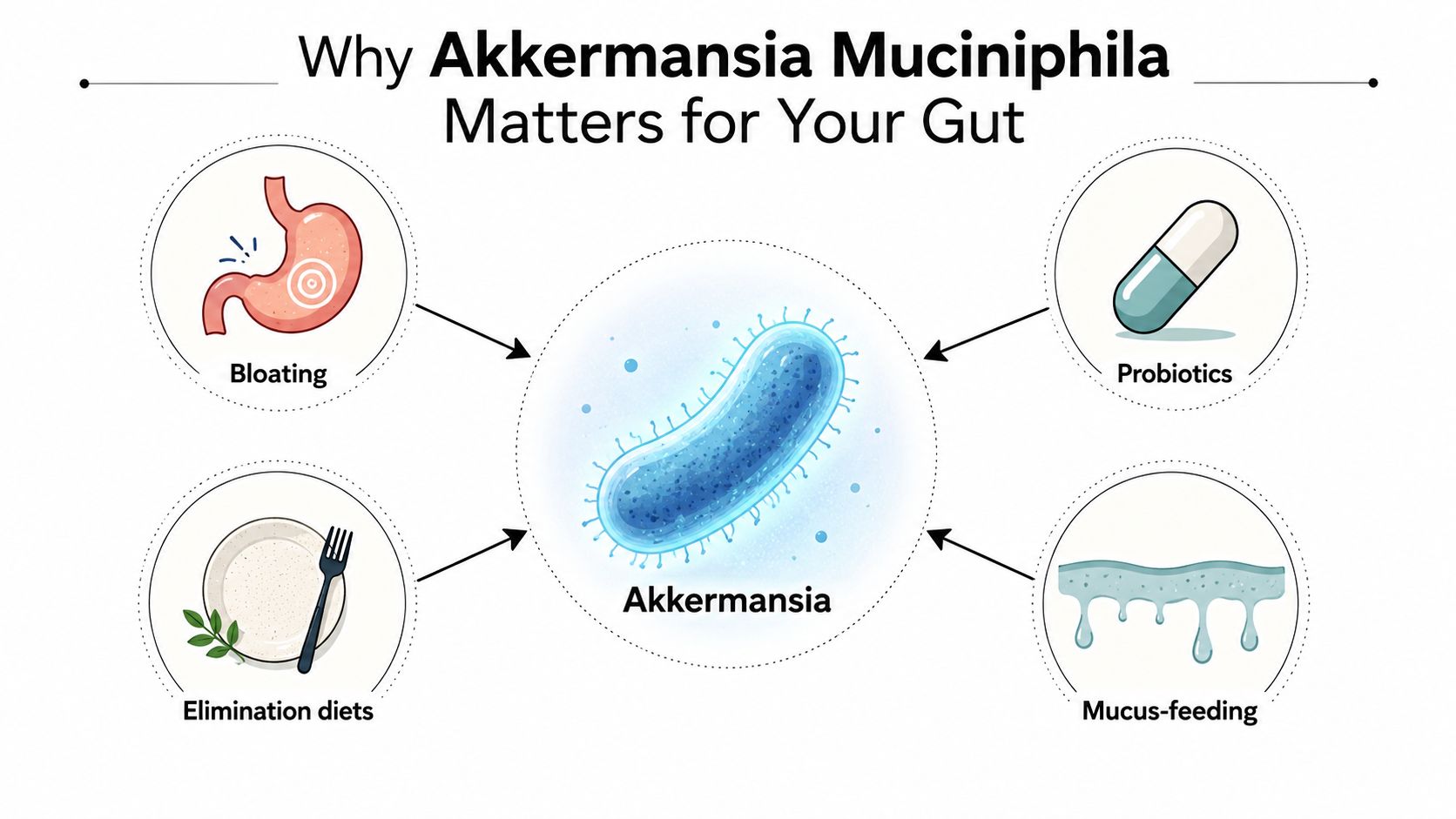
Why Akkermansia Muciniphila Matters for Your Gut
After months of bloating, constipation, or irregular stools, it is easy to focus on one microbiome result and treat it as the answer. Akkermansia muciniphila is worth understanding, but it cannot explain every digestive symptom or serve as a stand-alone treatment.
Akkermansia is a Gram-negative anaerobic bacterium found in the intestinal mucus layer. It uses components of mucin within its nutrient environment, participates in mucin turnover, and produces short-chain fatty acids, including propionate. Its position matters because the mucus layer helps keep intestinal microbes separate from the gut lining.
Lower Akkermansia abundance has been studied alongside obesity, type 2 diabetes, and low-grade inflammation. These findings are associations, not proof that raising Akkermansia alone prevents or reverses disease. Early human intervention research is more promising, while still pointing toward a whole-microbiome strategy rather than a single-bacterium solution.
Akkermansia responds to its surroundings. Available substrates, mucin biology, neighboring organisms, metabolic health, and baseline abundance can all affect the result. A low-FODMAP diet may also reduce some fermentable inputs and backfire for certain people if maintained without a clear reason or careful reintroduction. Generic fiber is not automatically the answer, and supplementation is not universally necessary.
What the organism can and can't tell you
Akkermansia is best viewed as one signal of a favorable gut environment. A higher level is not automatically better, and a lower measurement does not identify the cause of bloating, constipation, diarrhea, or discomfort.
This Akkermansia probiotic benefits overview provides useful context. In practice, increase fermentable substrates gradually, move consistently, and judge progress by digestion and broader health markers, not one laboratory result.
Practical rule: Support the ecosystem Akkermansia needs. Do not make one bacterial name responsible for your entire gut.
Feed Akkermansia with the Right Fibers and Resistant Starch
If you add fiber quickly and end up bloated, the answer is not always more fiber. Resistant starch deserves priority because human studies support its ability to increase Akkermansia, although responses still depend on the person and the rest of the diet. Unlike fully digestible starch, it reaches the colon in a form gut microbes can ferment. The 2022 Frontiers review identifies resistant starch and xylo-oligosaccharides among the prebiotics with human evidence for increasing Akkermansia, while noting variation between interventions and populations (Frontiers review).
Start with cooked-then-cooled potatoes or rice, green banana flour, or another resistant-starch ingredient. Cooling changes the starch structure, but tolerance remains individual. Use a modest serving, keep it consistent, and increase it only when gas and stool changes remain manageable.
| Substrate | Daily dose | Food sources | Key trial notes |
|---|---|---|---|
| Resistant starch type 3 | 9 g/day | Cooked-then-cooled potatoes or rice | In Thai adults with chronic constipation, 12 weeks of resistant starch type 3 significantly increased Akkermansia and other beneficial genera (Scientific Reports trial) |
| Resistant starch and wheat bran foods | Not specified in the cited review | Resistant-starch foods and wheat bran | A crossover trial found no increase in relative or absolute Akkermansia abundance, showing that high-fiber approaches don't always work (2019 systematic review) |
| Xylo-oligosaccharides | Not specified in the cited review | XOS-containing prebiotic products | An exploratory human study increased Akkermansia spp. and Bifidobacteria |
| Inulin, polydextrose, or related substrates | Not specified in the cited review | Chicory inulin, formulated prebiotics | Reported increases exist, but responses depend on the complete diet and individual tolerance |
The table makes the practical point clear: fiber quantity isn't the same as fiber effect. A substrate may support Bifidobacteria or short-chain fatty acid production without measurably increasing Akkermansia. A 2022 randomized dietary study found an increase with a high resistant-starch diet, while other studies have reported neutral results.

For a structured option, this guide to prebiotic fiber supplements can help you compare approaches. GutRx FIBER+ is described as a digestive fiber powder for digestive support. Use it as an addition to a gradual food-based increase, not as a reason to raise fiber rapidly, especially if bloating is already an issue.
Strict low-FODMAP eating adds a trade-off that many Akkermansia guides overlook. It can help manage symptoms for some people in the short term, yet limiting fermentable carbohydrates may reduce Akkermansia. A review of dietary intervention studies identifies fructo-oligosaccharides as a relatively consistent prebiotic option and reports higher Akkermansia with higher FODMAP intake in human research. If low-FODMAP restriction is necessary, plan reintroduction with a qualified clinician rather than treating permanent restriction as a microbiome target.
Polyphenols and Prebiotic Blends That Move the Needle
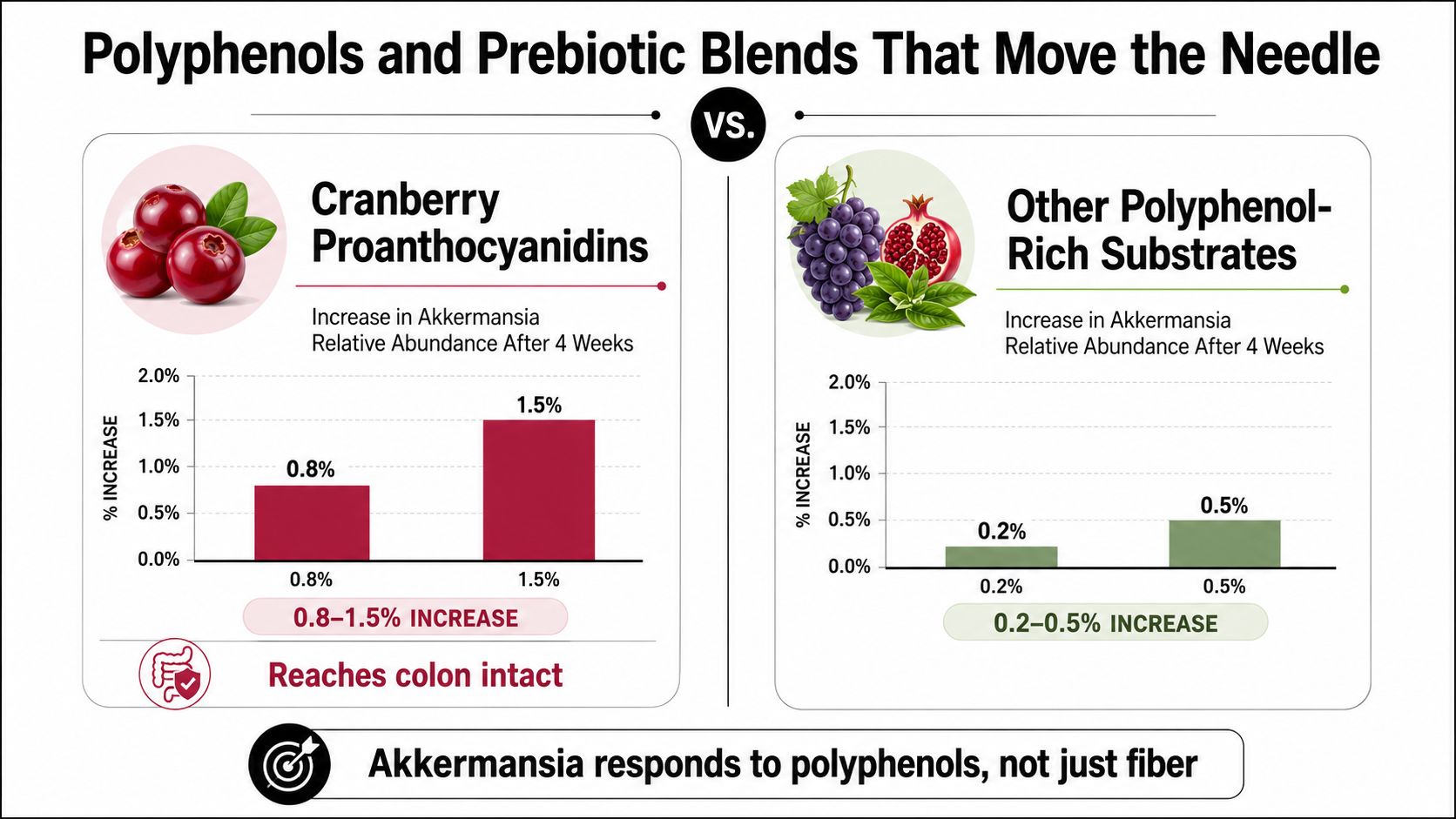
Akkermansia responds to more than starch and fiber. Polyphenols, plant compounds in cranberries, pomegranate, grapes, tea, berries, and cocoa, can reach the colon and interact with the microbial environment. The practical question is not whether every colorful plant raises Akkermansia. It is which compounds have human signals and which remain preliminary.
Cranberry-derived proanthocyanidins have the clearest human interest among the examples discussed here. Pomegranate extract and green tea catechins also appear in the evidence base. Resveratrol and grape-seed proanthocyanidins remain more convincing in animal models than as established human interventions. As noted in the earlier Frontiers review, some supplement studies report higher abundance with pomegranate extract or resveratrol, but those results should not be treated as equivalent to proven clinical benefits.
Food first, standardized supplements second
Use whole-food sources where practical. Unsweetened cranberries are intensely tart, so berries, a low-sugar cranberry preparation, pomegranate arils, or green tea may be easier to maintain. Juice and extracts do not necessarily provide the same polyphenol profile as the ingredient tested in a trial.
Some products combine a polyphenol with a prebiotic, such as cranberry with agave inulin or pomegranate with omega fatty acids. The rationale is reasonable: one ingredient may provide a microbial substrate while another changes the surrounding environment. Small trials and formulation differences still make broad claims premature.
Concentrated tannins and other polyphenols may interfere with iron absorption around meals. If you have iron deficiency, take iron medication, or use a standardized extract, ask a clinician or pharmacist about timing. Look for labels that identify the plant source and degree of standardization rather than relying on a vague term such as “antioxidant blend.”
For combined digestive, vaginal, and urinary support, GutRx WOMEN'S is described as containing 28 billion CFUs, prebiotics, and cranberry, with gluten-free and dairy-free positioning. That description does not show that the product raises Akkermansia. Keep its broader support purpose separate from evidence for a validated Akkermansia intervention.
Exercise, Fasting, and Meal Timing for Akkermansia Growth
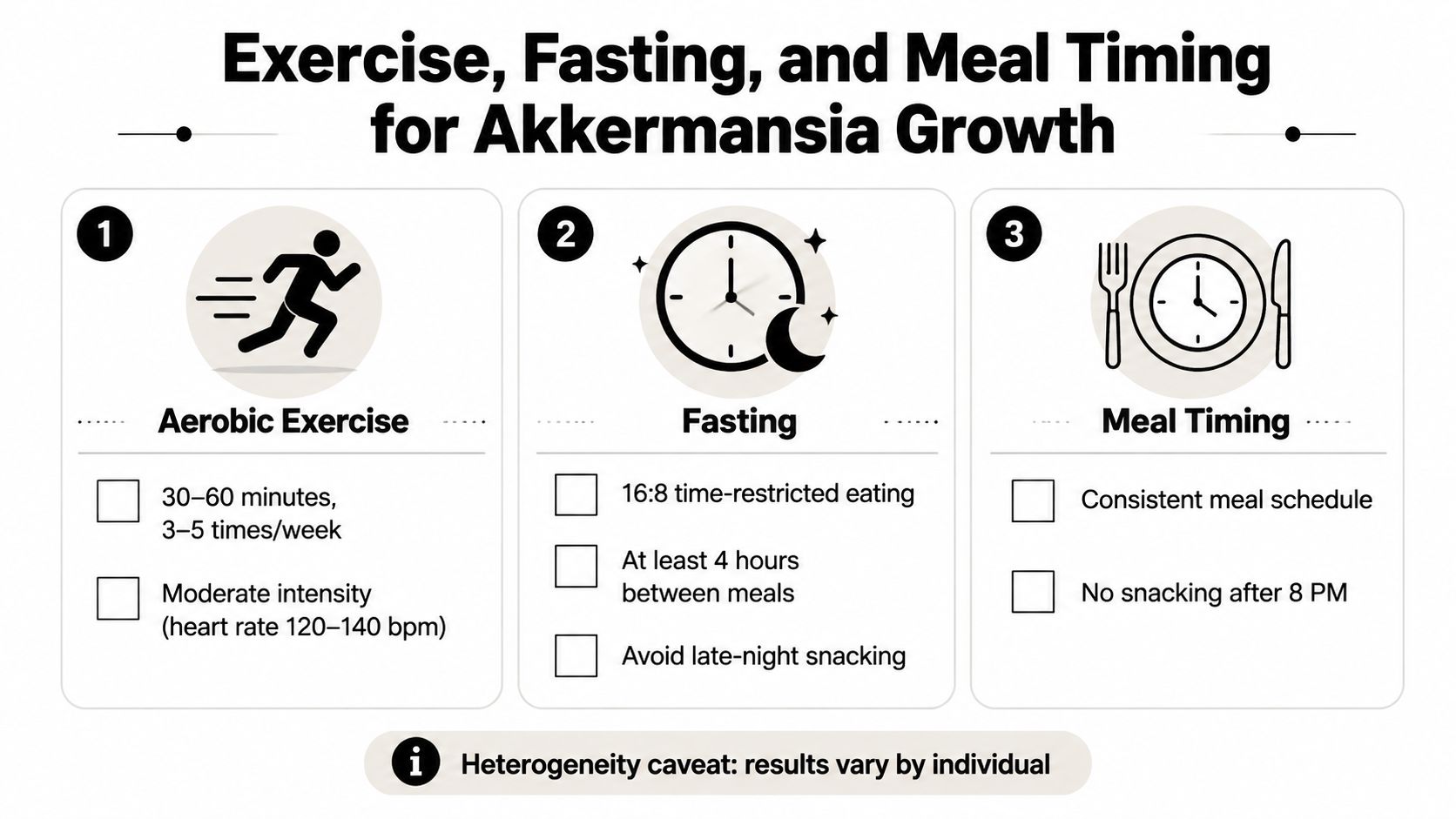
A 2024 systematic review found mixed results across human exercise studies: 6 reported an increase, 5 a decrease, and 2 no significant difference in A. muciniphila (PubMed systematic review). Exercise may help, but the response depends on the person, training pattern, diet, and starting microbiome.
One randomized trial in 24 sedentary overweight women found that 6 weeks of light-to-moderate resistance exercise increased A. muciniphila and reduced Proteobacteria. Broader evidence has also reported exercise-related increases in both cross-sectional and longitudinal research. These findings support regular movement, not a promise that any workout will raise Akkermansia.
A sensible movement protocol
Choose moderate activity you can repeat. Brisk walking, cycling, swimming, or continuous resistance sessions are practical options. Keep the effort sustainable, with breathing and recovery under control.
- Build consistency: Schedule moderate sessions across the week instead of relying on occasional punishing workouts.
- Protect recovery: Increase training gradually if poor sleep, unusual fatigue, or digestive distress develops.
- Account for baseline differences: Age, obesity status, fitness, and diet may alter the response.
The fasting evidence is less settled. Time-restricted eating and longer fasts have produced interesting findings in rodents, but the human evidence provided here does not establish a universal fasting protocol for raising Akkermansia. A regular meal schedule may support circadian and digestive routines, yet meal timing should not be treated as a guaranteed microbiome switch.
For a daily probiotic aimed at digestive balance, GutRx BALANCE is described as providing 30 billion CFUs per capsule, with next-generation probiotics positioned for gut health, digestive balance, and immune support. That product description does not prove Akkermansia colonization or a specific interaction with exercise.
A practical weekly approach is moderate movement on most days and regular meals. Avoid aggressive fasting if you are pregnant, managing diabetes, recovering from disordered eating, or taking medication that requires food. Track energy, sleep, stool form, and digestive comfort. These measures are more useful than chasing a predicted change that may not apply to your baseline.
The Baseline Problem Why More Is Not Always Better
Baseline dependence is the single most counterintuitive finding in the Akkermansia literature. In a 12-week randomized trial involving overweight or obese people with type 2 diabetes, Akkermansia supplementation improved body weight, fat mass, and HbA1c only among participants with low baseline Akkermansia. Those with high baseline levels showed poor colonization and no significant clinical benefit (baseline-dependent trial).
That result changes the buying question. Instead of asking which product raises Akkermansia the most, ask whether this pathway is relevant to you and whether you can tolerate the intervention. A person with metabolic concerns and low baseline abundance may respond differently from someone whose microbiome already appears relatively favorable.
Symptoms cannot diagnose Akkermansia status. Stable weight, regular stools, and favorable glucose markers may suggest that your broader metabolic and digestive environment is functioning well, but they do not measure this organism. Stool testing can show a trend, yet methods and interpretation vary. Treat the result as context, not a verdict.
| Baseline status | Signals | Recommended Akkermansia strategy |
|---|---|---|
| Possibly low or disrupted | Persistent digestive irregularity, poor diet variety, or a low Akkermansia stool-test result | Start with gradual resistant starch, selected prebiotic foods, and consistent movement |
| Unclear | Mixed symptoms, no baseline test, or recent dietary and medication changes | Use food and lifestyle changes first, then reassess comfort and routine |
| Apparently adequate | Stable digestion, favorable broader health markers, and higher baseline test result | Avoid aggressive supplement stacking to increase one genus |
| Clinically complex | Diabetes, immunosuppression, pregnancy, or significant gastrointestinal disease | Discuss dietary changes and supplements with a qualified clinician |
A low-FODMAP diet can also complicate this goal. It may ease symptoms for some people, but restricting fermentable foods for too long can reduce dietary variety and remove substrates that support microbial activity. Reintroduction should be considered with professional guidance when appropriate.
Akkermansia is one member of a balanced ecosystem, not a single dial. More may help in some contexts, do little in others, or distract from the actual cause of symptoms. Use baseline information, tolerance, and broader health markers to decide whether increasing it is worth pursuing.
Medications, Postbiotics, and Smart Supplementation Choices
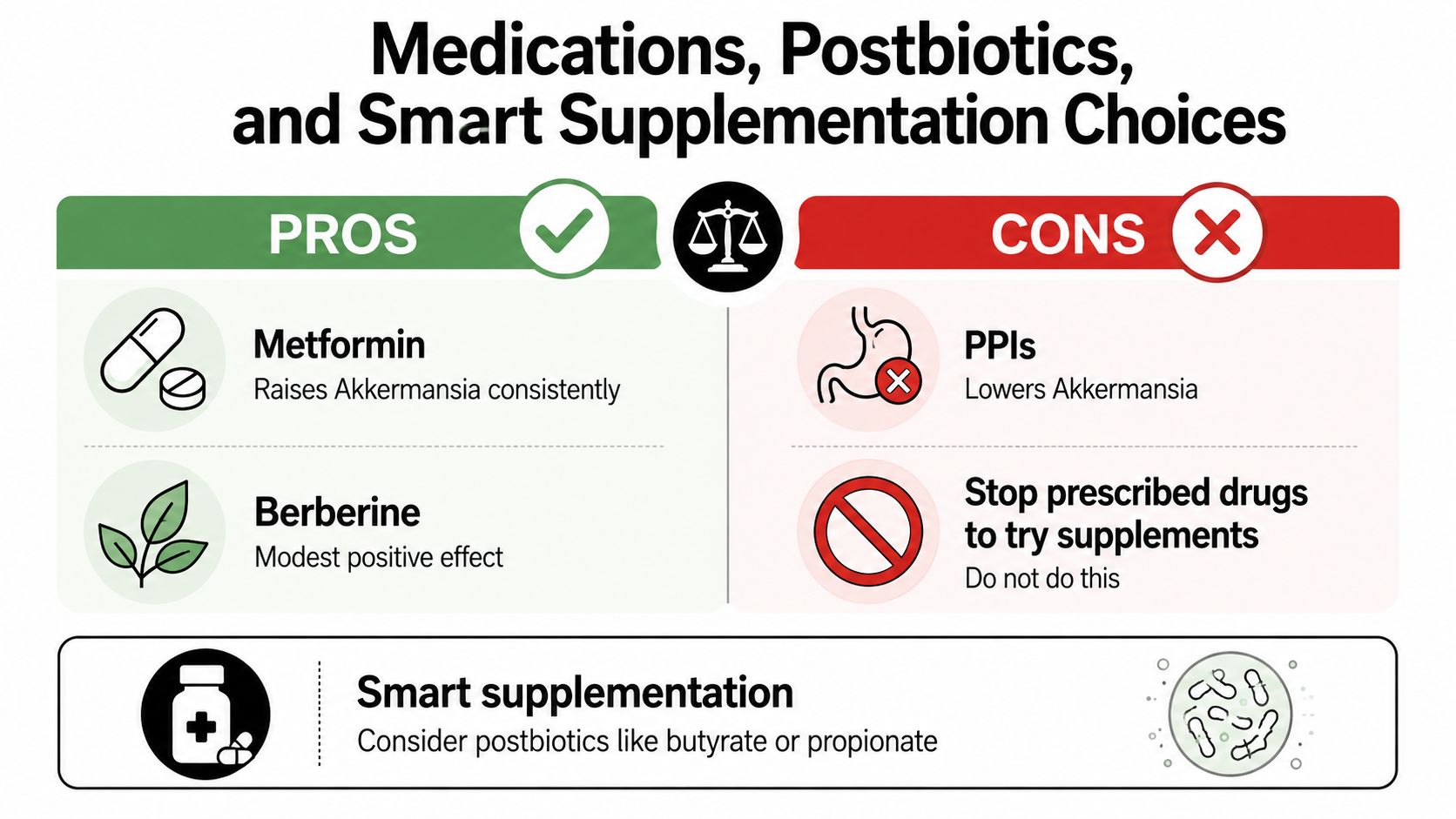
Medication effects belong in the discussion, but they are not a reason to alter treatment independently. Metformin has been reported to raise Akkermansia consistently, while proton pump inhibitors have been associated with lower levels and berberine with more modest effects. These patterns do not justify changing a prescription without medical supervision. Never stop a prescribed medication to chase a microbiome result.
Postbiotics differ from live probiotics. Pasteurized Akkermansia products have early human evidence, including research on weight-related outcomes, but the evidence remains limited and depends on the formulation. A live Akkermansia capsule may sound more intuitive, yet live delivery does not guarantee durable colonization. Human evidence for colonization is also weaker than many product pages imply.
How to evaluate a product
Judge a product by verification, handling, and fit rather than by the size of its ingredient panel.
- Identity testing: Look for third-party DNA verification of the named strain or organism.
- Potency at expiry: A CFU claim should state whether it applies at manufacture or through the labeled expiry date.
- Delivery conditions: Live products may require cold-chain handling. Shelf-stable formats should provide clear storage instructions.
- Prebiotic pairing: A synbiotic combination containing FOS or inulin may supply the substrate intended to complement a live or pasteurized intervention.
- Documentation: Product-specific certificates of analysis can help verify identity, purity, and potency when the documentation is complete.
The postbiotics benefits guide explains why non-live microbial preparations are being studied. “Postbiotic” alone does not establish an Akkermansia-specific benefit, so check the exact preparation, dose, testing, and intended use on the label.
Novel postbiotics and targeted supplements warrant extra caution if you are immunocompromised, pregnant, or taking immunosuppressants. Ask a clinician before trying them, then give one structured intervention enough time to assess tolerance and response. An 8-week randomized prebiotic formula trial significantly increased relative A. muciniphila abundance, with a median increase of about 2.1-fold from baseline in the intervention group and Wilcoxon p = 0.003 (randomized prebiotic trial). The finding is encouraging, but it does not show that every blend, dose, or person will respond the same way. Avoid aggressive supplement stacking to chase one genus.
Your 8 to 12 Week Akkermansia Action Plan
Start with one change at a time. If you introduce resistant starch, a polyphenol extract, multiple supplements, and a new exercise routine together, you won't know which intervention helped or caused gas, loose stools, constipation, or no change.
Weeks 1 to 3
Log your usual fiber intake, bowel habits, digestive comfort, current probiotic use, and recent antibiotic exposure. Add one resistant-starch food, such as cooled potatoes or green banana flour, in a modest portion. Increase slowly rather than forcing a large serving on the first day.
Add one polyphenol-rich food you can repeat, such as berries, cranberries, pomegranate, or green tea. Food is easier to evaluate than a complex supplement because the ingredient and serving are visible.
Weeks 4 to 7
If your gut is tolerating the first phase, layer in regular moderate-intensity exercise. Walking, cycling, swimming, and controlled resistance training are reasonable choices. Keep the meal schedule consistent and avoid using fasting to compensate for an overly restrictive diet.
Use these checkpoints:
- Gut comfort: Is bloating less disruptive, unchanged, or worse?
- Stool pattern: Are bowel movements becoming more predictable?
- Energy and sleep: Do you recover well from activity?
- Body signals: If relevant, monitor waist circumference or clinician-approved fasting glucose and lipid markers.
- Tolerance: Any persistent pain, bleeding, unexplained weight loss, or significant diarrhea needs medical evaluation, not a supplement experiment.
Weeks 8 to 12
Reassess the whole pattern. If digestion and energy are improving, maintain the habits instead of adding more products. If the dietary levers plateau and you have a clear reason to pursue targeted support, consider a third-party-tested synbiotic or pasteurized Akkermansia product with clinician input.
Re-evaluate sooner if persistent bloating develops, a new medication changes your digestion, or you miss the routine repeatedly. A microbiome strategy should make your life more manageable, not turn every meal into a laboratory protocol.
The best answer to how to increase Akkermansia muciniphila is therefore measured and personalized: feed the right substrates, move consistently, respect baseline status, and treat supplements as optional support rather than the foundation.
GutRx offers targeted digestive support options, including fiber, probiotic, and synbiotic formulations that can complement a food-first Akkermansia routine. Review the available approaches at GutRx, then choose based on your symptoms, ingredient needs, testing documentation, and clinician guidance.


