

Cellular repair supplements are products designed to support pathways involved in DNA maintenance, mitochondrial function, autophagy, and oxidative balance. The biggest misconception is that raising a biomarker automatically means better health, and current human evidence doesn't support that leap.
The category is built around a compelling idea. Cells constantly clear damaged material, recycle components, maintain energy production, and respond to DNA stress. But a supplement that changes a blood marker hasn't automatically improved sleep, strength, cognition, disease risk, or lifespan. That distinction should decide what you buy.
Table of Contents
- The Cellular Repair Pitch Is Bigger Than the Evidence
- What Cellular Repair Actually Means Inside Your Cells
- The Five Ingredient Families That Drive the Category
- From Biomarkers to Real-World Results
- How to Read a Cellular Repair Supplement Label
- Matching Formulas to Real Buyer Goals
- Safety, Interactions, and Common Misconceptions
- A Simple Decision Framework Before You Buy
The Cellular Repair Pitch Is Bigger Than the Evidence
Most cellular repair marketing confuses biomarker movement with meaningful health outcomes. NAD+ precursors may raise NAD+-related markers, spermidine may engage autophagy-related proteins, and antioxidant formulas may alter measures of oxidative stress. Those findings can be biologically interesting without proving that a healthy person will age more slowly or feel dramatically different.
The most common overstatement follows a predictable pattern:
- Animal results become human promises. A mouse longevity study gets translated into “supports human lifespan,” even though the supplement, dose, metabolism, and disease model may not match human use.
- Cell-culture mechanisms become product claims. A compound that protects isolated cells under laboratory stress doesn't automatically work the same way after digestion and metabolism.
- Pharmaceutical language replaces dosing discipline. Words such as repair, rejuvenate, detox, and reverse sound precise, but they often conceal uncertainty about the actual ingredient amount, tissue exposure, and clinical endpoint.
The market itself shows how powerful the promise has become. One industry estimate values the worldwide NAD+ supplements market at USD 840.15 million in 2025 and projects USD 2.09 billion by 2032, implying a 13.92% CAGR over that period, while another estimate places the broader NAD products market at USD 3.45 billion in 2024 and projects USD 12.19 billion by 2033 at a 15.1% CAGR. Those are market projections, not proof that the products deliver broad anti-aging benefits. The NAD+ supplement market estimate helps explain demand, not settle the clinical question.
Practical rule: If an advertisement proves only that a compound changes a marker, treat it as a mechanism claim, not an outcome claim.
This guide uses a stricter filter. It separates ingredients with human trial support from compounds backed mainly by theory, animal research, or tiny exploratory studies. It also treats the label as evidence. A transparent dose, identifiable ingredient, credible testing, and accessible batch documentation matter more than a long ingredient list.
What Cellular Repair Actually Means Inside Your Cells
Think of a cell as a building that never closes for renovation. Demolition crews remove damaged proteins and organelles. Electricians keep the mitochondria producing usable energy. Inspectors detect DNA errors and oxidative damage. Recycling teams break down worn-out material so the cell can reuse useful components instead of letting debris accumulate.
Cellular repair supplements generally target four overlapping systems:
- DNA damage response and repair. Cells detect and correct damage to genetic material. A broad-spectrum randomized, double-blind trial found that participants aged 35 and above had an average decrease in the DNA-damage marker 8-hydroxydeoxyguanosine of 7.09 ng/mL versus placebo, with a 95% confidence interval of -13.3 to -0.9 and p = 0.03. That is a measured biomarker result, not evidence of longer life. The randomized trial and biomarker findings provide a useful example of the difference.
- Mitochondrial function. Mitochondria turn nutrients into cellular energy. NAD+ supports energy metabolism, and reviews describe connections between restored NAD+, mitochondrial function, SIRT1/SIRT3-linked mitophagy, and autophagy-dependent clearance of damaged material. The review of NAD+ and cellular quality control explains the proposed chain without turning it into a guaranteed consumer outcome.
- Autophagy and mitophagy. Autophagy is the cell's internal cleanup and recycling process. Mitophagy applies that process specifically to damaged mitochondria. If cleanup slows, defective proteins and organelles can remain in circulation inside the cell.
- Redox balance. Antioxidant and detoxification systems help manage reactive molecules. The goal isn't to eliminate every reactive molecule, because cells also use some of these signals. The sensible goal is maintaining balance, not chasing an “antioxidant” label.
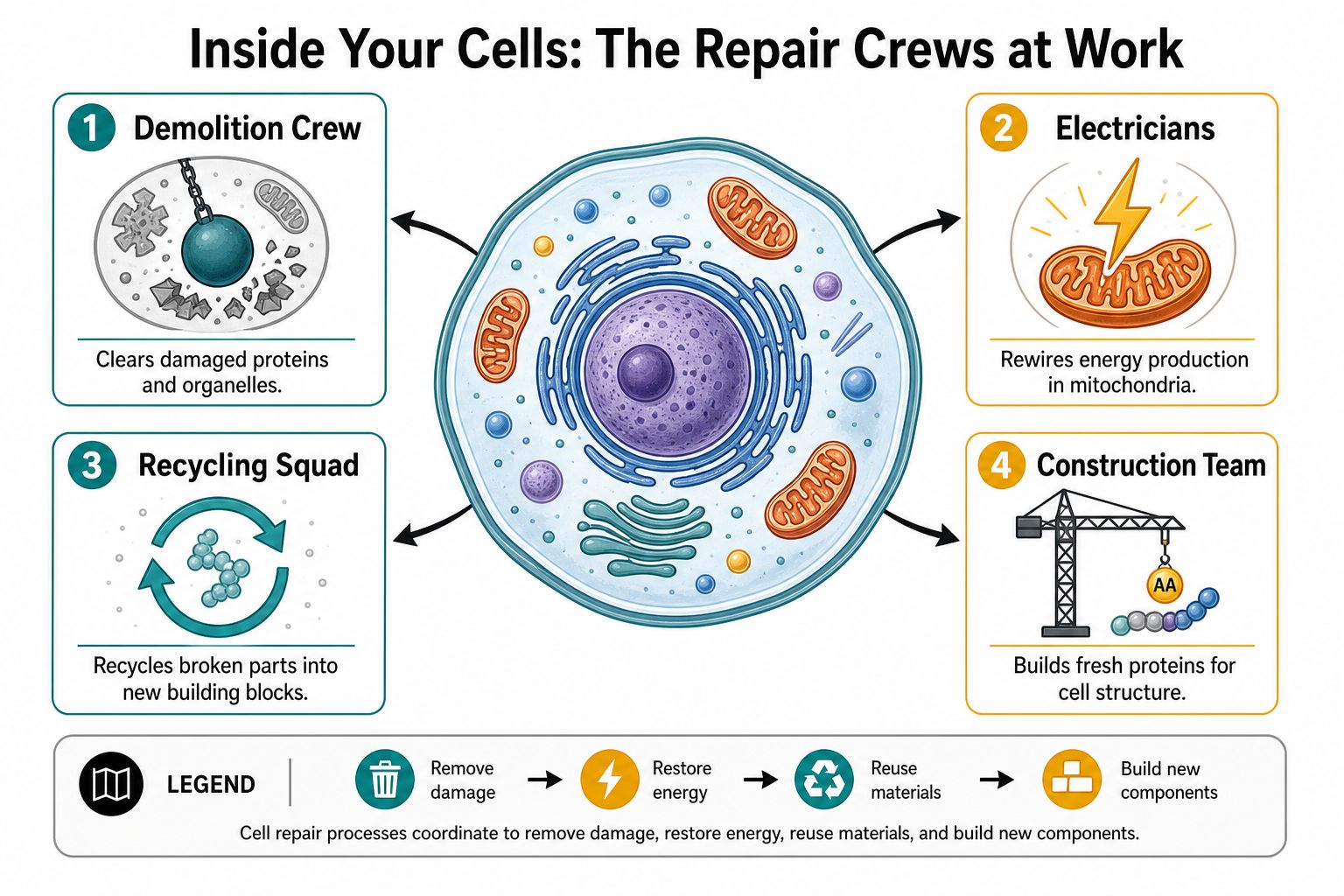
The pathways interact, but one pathway can't compensate for every weakness. Increasing antioxidant capacity won't necessarily restore mitochondrial quality control. Raising NAD+ won't automatically correct poor sleep, inactivity, nutrient deficiency, or an untreated medical problem. Buyers need to ask what the formula is designed to influence and whether human studies measured the outcome they care about.
For readers interested in barrier biology rather than longevity marketing, this explanation of intestinal lining repair offers a related way to think about cellular maintenance. The same discipline applies: define the pathway, identify the evidence, then avoid promising more than the data supports.
The Five Ingredient Families That Drive the Category
Store shelves group very different compounds under one attractive phrase, cellular repair. They shouldn't receive equal billing.
NAD+ precursors
Nicotinamide riboside, nicotinamide mononucleotide, and niacinamide are used to support NAD+ production. Reviews report that precursors such as NR and NMN can raise mitochondrial NAD+ and improve cell viability in mammalian systems, while also linking NAD+ restoration with mitochondrial quality control and autophagy. Human research is strongest for biomarker changes, not proven longevity or broad functional improvement. The evidence tier is promising but incomplete.
Antioxidants and glutathione supporters
CoQ10, alpha-lipoic acid, NAC, and vitamin C target redox balance or antioxidant systems. Among common mitochondrial supplements, independent summaries identify CoQ10 as having the strongest clinical support, while many PQQ and blended formulas rely heavily on animal data or small human studies. An observational study also associated CoQ10 use with reduced baseline DNA damage, but association isn't the same as a randomized treatment effect. The cellular repair supplement evidence review is useful for separating CoQ10 from weaker blend claims.
Polyphenols and senolytics
Resveratrol, fisetin, curcumin, and EGCG are often marketed as compounds that influence inflammation, oxidative stress, cellular signaling, or senescent cells. Human evidence varies sharply by compound and endpoint. A label that says “senolytic” doesn't tell you whether a product has demonstrated a meaningful human outcome. This family belongs in the mechanistically interesting, outcome-dependent tier.
Bioactive peptides and growth factors
Collagen peptides have a more practical role in connective-tissue and skin-focused formulations, while BPC-157, epithalon, and GHK-Cu are frequently presented with much broader repair language. The human evidence is uneven, and peptide marketing often outruns controlled clinical data. Treat this group as highly formulation-specific, not as a single evidence-backed category.
Autophagy and longevity cofactors
Spermidine and urolithin A are usually positioned around cellular recycling and mitochondrial quality. Taurine is often included in longevity stacks, but a theoretical mechanism isn't a substitute for a demonstrated human outcome. Spermidine has a clearer human mechanistic signal than many competitors. In an ex vivo study, supplementation restored autophagy and T-cell function through the eIF5A/TFEB pathway. A later pilot study reported that 3.3 mg/day increased Beclin-1 by 7.3%, ULK-1 by 13.4%, and BDNF by 12.1% versus baseline. Those are pathway-related signals, and the authors' evidence base remains early. The human spermidine study supports interest, not a blanket anti-aging promise.
| Ingredient Family | Primary Mechanism | Typical Studied Dose | Human Evidence Strength | Reality Check |
|---|---|---|---|---|
| NAD+ precursors | Supports NAD+ production and mitochondrial quality control | Varies by compound and study | Biomarker-focused, promising but incomplete | A raised NAD+-related marker isn't proven longevity |
| Antioxidants and glutathione supporters | Redox balance and oxidative-stress management | Varies widely | Strongest for selected ingredients such as CoQ10 | “Antioxidant” doesn't identify a clinical outcome |
| Polyphenols and senolytics | Signaling, inflammation, and cellular stress pathways | Varies widely | Mixed and endpoint-specific | Animal data shouldn't be sold as human rejuvenation |
| Peptides and growth factors | Tissue signaling and structural support | Highly variable | Uneven, often limited | Broad repair language is a warning sign |
| Autophagy and longevity cofactors | Cellular recycling and mitochondrial quality control | Spermidine pilot used 3.3 mg/day | Early human mechanistic evidence | Interesting pathway engagement still needs stronger outcomes |
A formula can be sensible without containing every family. If you want a broader nutrition foundation, zinc and vitamin D's role in health is a better starting point than blindly adding a large longevity stack.
From Biomarkers to Real-World Results
The question buyers should ask isn't “Does this increase NAD+?” It's “What measurable result did the human trial improve?”
That distinction matters because oral NR and NMN can be biologically active while human outcomes remain mixed. Current evidence doesn't reliably show that raising NAD+-related markers improves sleep, insulin sensitivity, muscle strength, or broad anti-aging outcomes. A recent evidence-focused discussion of NMN and NAD+ precursors describes the field as promising but unproven for broad healthspan claims, with no convincing superiority on clinical endpoints yet.
| Ingredient | Biomarker Strength | Human Outcome Evidence |
|---|---|---|
| NR and NMN | Clearer evidence for NAD+-related marker changes | Inconsistent evidence for broad function and longevity |
| Spermidine | Human signals in autophagy-related proteins and BDNF | Early, limited outcomes evidence |
| CoQ10 | Clinical support for selected mitochondrial and energy-related uses | More credible than many blend ingredients, but goal-specific |
| Polyphenols | Can influence oxidative or inflammatory markers | Depends heavily on compound, formulation, and endpoint |
| PQQ and many blended stacks | Often mechanistic or animal-led | Limited reliable human outcome evidence |
Several factors can separate a laboratory response from a noticeable benefit. Trials may be short, participants may already be relatively healthy, and a healthy baseline can leave little room for improvement. A marker can move before a functional change appears, or it can move without producing a useful change at all.
Match the supplement to the outcome, not the outcome to the supplement.
If your goal is energy, look for a study that measured energy, fatigue, exercise performance, or another relevant functional endpoint. If your goal is skin, examine skin outcomes rather than a blood antioxidant marker. If your goal is longevity, recognize that no oral precursor has established that result in humans.
Exercise deserves a place in this calculation. Independent summaries identify it as the most established way to improve mitochondrial function in humans, which makes supplement benefits more situational than universal. A cellular repair product may complement a sound routine, but it shouldn't replace the basic inputs that already have stronger human support.
How to Read a Cellular Repair Supplement Label
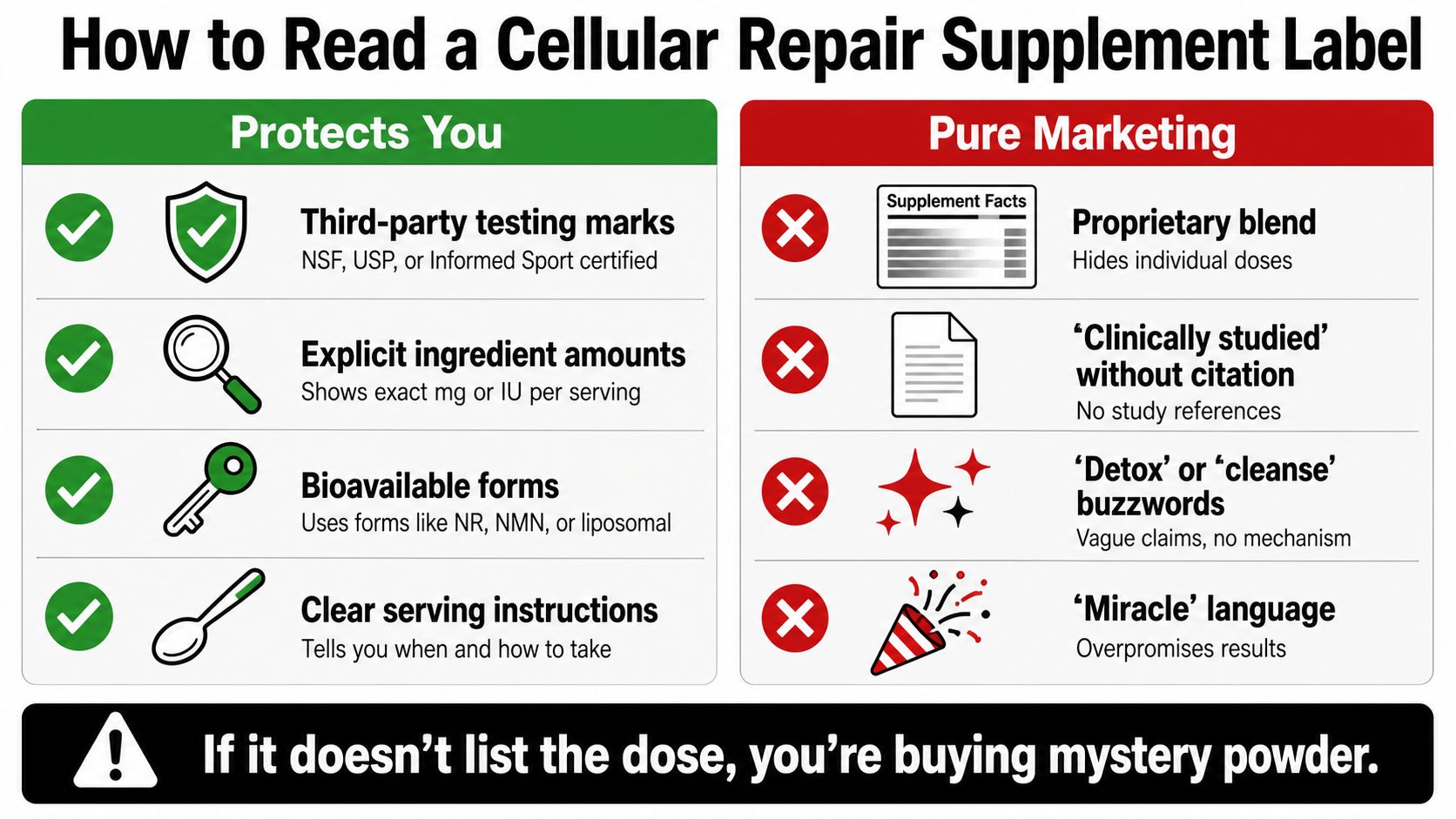
A fancy label can still hide a weak product. Start with the information that lets you identify what you are taking, how much you're taking, and whether the contents match the claim.
What protects the buyer
Third-party marks can add useful quality control, but they aren't interchangeable. NSF, USP, Informed Sport, and ConsumerLab use different testing and verification approaches. Depending on the program, testing may address label accuracy, contaminants, manufacturing controls, or banned substances. Don't treat a logo as proof that the formula works clinically.
A Certificate of Analysis, or COA, should identify the batch and show results relevant to the product, including ingredient identity, potency, microbes, and heavy metals where applicable. A QR code that leads only to a homepage isn't meaningful batch transparency. This guide to understanding a Certificate of Analysis explains the document buyers should expect.
What signals marketing fog
- Proprietary blend: Hides individual doses, so you can't tell whether an expensive active is present at a meaningful amount.
- Clinically studied: Names no study, ingredient form, dose, or population.
- Antioxidant-rich: Describes a concept rather than identifying the compound and amount.
- Detox or cleanse: Implies a broad biological effect without defining a mechanism or endpoint.
- Miracle or rejuvenation: Overpromises what the human data can't establish.
Delivery form deserves scrutiny, too. Delayed-release capsules may be relevant for acid-sensitive compounds, but the capsule alone doesn't prove superior absorption. Liposomal formats are marketed for glutathione and curcumin, yet “liposomal” isn't a guarantee of better clinical results. Sublingual and oral peptide claims also require attention to the actual compound, stability, and human evidence.
For a gut-focused alternative to a cellular longevity stack, GutRx BALANCE offers 30 billion CFUs per capsule with next-generation probiotics for gut health, digestive balance, and immune support. That product category uses a different target, so don't assume a probiotic and an NAD+ precursor are interchangeable just because both are sold as wellness supplements.
A good label should answer these questions without a customer-service exchange:
- What is the exact ingredient form?
- What is the amount per serving?
- Is the batch independently tested?
- Can you access the COA?
- Does the cited study use the same form and a comparable dose?
- Is the product making an outcome claim that the study never measured?
Matching Formulas to Real Buyer Goals
Start with the outcome, then choose the smallest formula that can plausibly address it. “Cellular repair” is too broad to guide a purchase by itself.
The daily maintenance buyer
A healthy adult seeking general longevity support may prefer a moderate-dose NAD+ precursor paired with a carefully chosen polyphenol. Key considerations are an explicit dose, third-party testing, and a study that uses the same ingredient form. A large stack isn't automatically more complete. It may make it impossible to identify what helps or causes side effects.
The targeted-support buyer
Someone older than the typical wellness shopper, or someone rebuilding a routine after a health event, should focus on clinical oversight and a specific goal. A formula might combine NR or NMN with spermidine and a vascular-focused polyphenol, but “higher dose” isn't a recommendation by itself. Existing medication, liver or kidney history, and the reason for supplementation should determine whether this is appropriate.
The budget-first buyer
Buyers with limited budgets shouldn't pay for a jar full of fashionable ingredients. A standalone, well-tested ingredient with a clear label is easier to evaluate than a bloated proprietary blend. Food-first sources of polyphenols and a consistent exercise routine may offer a more rational foundation than adding multiple expensive capsules.
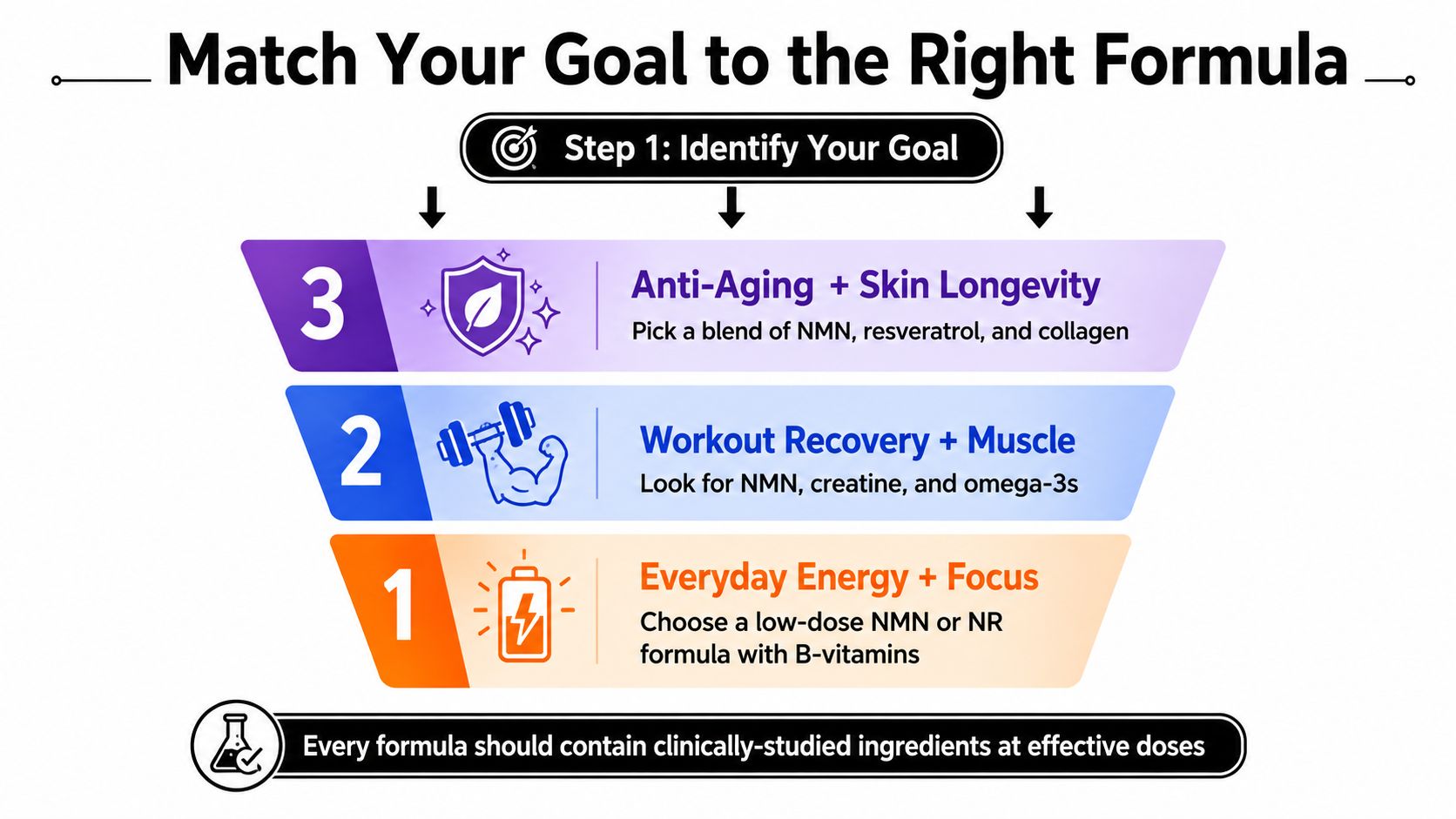
Stacking can make sense when the mechanisms and goals are distinct, such as pairing an NAD+ precursor with a polyphenol. It becomes poor buying when each ingredient repeats the same promise, the doses are hidden, or no one is tracking the response. Introduce one change at a time, especially when you're taking medication.
Choose a single ingredient when the goal is narrow, the budget matters, or you want a clean personal experiment. Choose a multi-ingredient formula only when every active has a visible dose, a reason to be present, and testing of the finished product rather than only a raw-material certificate.
Safety, Interactions, and Common Misconceptions
“More is better” is one of the least reliable rules in supplement buying. Stacking NR, TMG, resveratrol, glutathione, green-tea extracts, and multiple antioxidant compounds can increase cost and complexity without proving a better result.
Clinical clearance matters before using aggressive stacks if you're taking blood thinners, MAOIs or SSRIs, chemotherapy, or immunosuppressants. It also matters during pregnancy and with a history of liver or kidney disease. BPC-157 and similar peptides deserve particular caution because limited human evidence doesn't justify casual self-experimentation.
| Ingredient Class | Potential Interaction or Concern | Talk to a Clinician If… |
|---|---|---|
| Resveratrol, garlic, and ginkgo | May increase concern around bleeding when combined with blood thinners | You take anticoagulant or antiplatelet medication |
| Green-tea extracts | Concentrated extracts may create stimulant or liver-related concerns | You use multiple stimulants or have liver disease |
| Peptides such as BPC-157 | Limited human evidence and uncertain interaction profile | You take SSRIs, MAOIs, immunosuppressants, or cancer therapy |
| Multi-antioxidant stacks | Overlap can increase cost and complicate side-effect tracking | You have chronic disease or take several medicines |
| Any new formula | Individual intolerance, including gastrointestinal symptoms | You develop unusual bruising, rapid heartbeat, joint swelling, dark urine, or persistent gastrointestinal pain |
Three myths need retiring. Expensive liposomal delivery doesn't automatically beat a standard capsule. NAD+ IV drips aren't established as a safer shortcut than oral precursors. A raised blood biomarker isn't the same thing as anti-aging.
Stop a new supplement and contact a clinician if red-flag symptoms appear. Report every supplement to a prescribing clinician, keep the label and batch information, and don't cycle or stack products by instinct. A careful record beats a complicated protocol.
A Simple Decision Framework Before You Buy
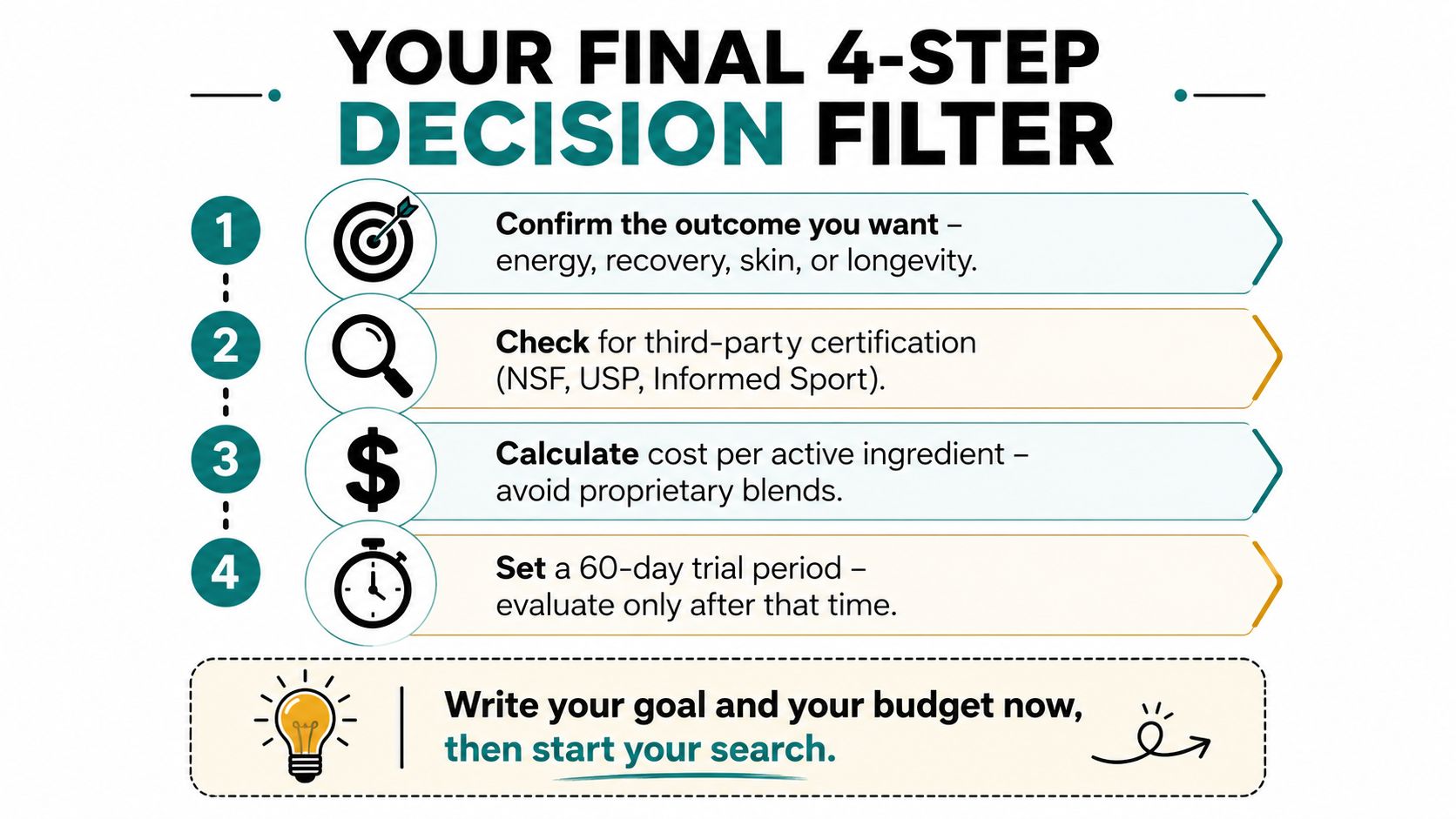
Use this four-step filter:
- Define the outcome. Choose energy, recovery, skin, or longevity. Don't use “cellular repair” as the outcome.
- Select one or two relevant ingredients. Prefer compounds with human evidence connected to your goal.
- Verify the product. Look for clear doses, credible third-party testing, and accessible batch documentation.
- Run a controlled trial. Start conservatively, change one variable, and assess over a defined period rather than judging after a single serving.
For daily maintenance, an NMN or resveratrol product taken with food may be a reasonable starting profile, provided the label and personal health context support it. Targeted support may involve discussing TMG alongside NR with a clinician when methylation is a concern. Budget-conscious buyers should put polyphenol-rich whole foods and exercise first, then add one transparent supplement if a specific gap remains.
Common buyer questions have straightforward answers:
- How long before effects show? It depends on the ingredient and endpoint. Biomarkers may change before a person notices a functional difference, and some products may never produce a noticeable benefit.
- Should you cycle? There isn't a universal cycling rule. Use the product's evidence, your clinician's advice, and your response.
- Do NAD+ precursors work differently in your 30s and 60s? Age may affect baseline biology, but current evidence doesn't justify promising the same result to every age group.
- What lab test confirms a response? A biomarker test can show biological movement, but it doesn't prove better health unless the relevant clinical outcome also improves.
If a product can't pass your label check, it doesn't earn a place in your routine, regardless of the clinical study cited in the ad.
GutRx offers targeted digestive formulas built around probiotics, synbiotics, and enzymes, including products designed for daily regularity, digestive balance, and meal-related discomfort. Visit GutRx to compare transparent formulations and choose a gut-support product based on your actual goal, not a vague cellular-repair promise.


