

Most advice on how to improve gut motility starts and ends with “take more fiber and drink more water.” That's useful for some people, but it fails when the primary bottleneck is medication, pelvic-floor coordination, altered gut-brain signaling, inflammation, or slow transit. Gut motility is a coordinated system, not a single nutrient problem.
The practical approach is to begin with affordable daily habits, match supplements to a specific symptom pattern, and stop self-treatment when persistent symptoms suggest a motility disorder. Clinical guidance consistently places adequate fiber, fluids, and activity at the foundation, while more targeted options such as polyethylene glycol, psyllium, biofeedback, and prescription prokinetics belong later in the decision process (World Gastroenterology Organisation constipation guidance).
Table of Contents
- Why Slow Gut Motility Is Usually Not Just a Fiber Problem
- The Lifestyle Levers That Move the Needle First
- Probiotics, Synbiotics, and Enzymes That Actually Have Evidence
- A Practical Daily and Weekly Motility Protocol
- Troubleshooting When Nothing Seems to Work
- Red Flags That Mean It Is Time to See a Clinician
- Your Prioritized Action Plan and Decision Rules
Why Slow Gut Motility Is Usually Not Just a Fiber Problem
Fiber can support bowel function, but it can't compensate for every problem affecting movement through the digestive tract. Motility depends on coordinated activity from enteric neurons, smooth muscle, interstitial cells of Cajal, immune signaling, meal-related hormones, and the gut microbiome. Recent reviews describe microbiota and immune communication as active regulators of motility, not merely consequences of constipation (review of microbiota and motility regulation).
That system explains why two people can eat similar diets and have opposite responses. One may need more stool-forming fiber. Another may already be fermenting fiber aggressively in a sluggish or sensitive gut, making bloating worse. A third may feel an urge to go but can't empty because the pelvic floor tightens instead of relaxing.
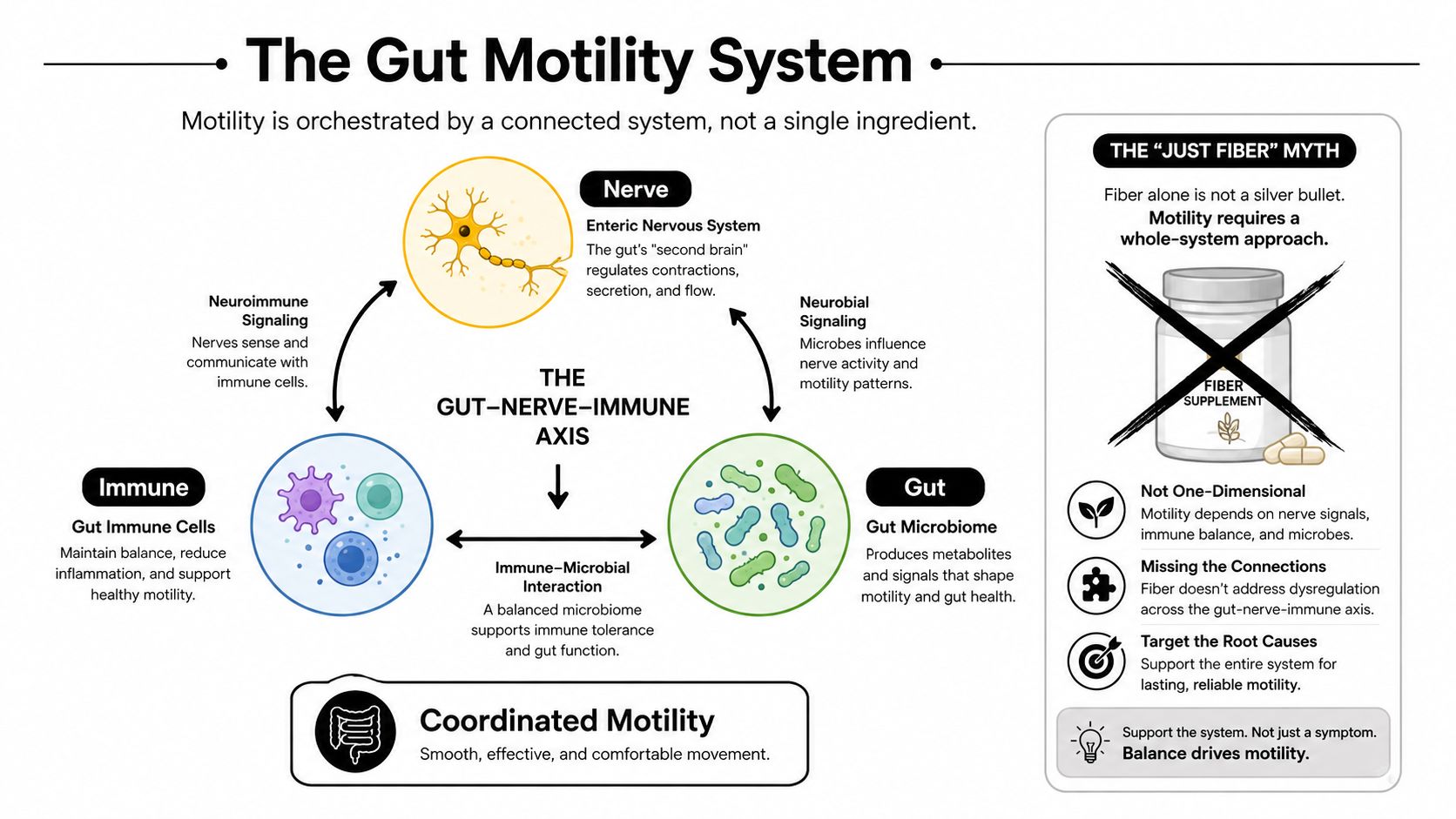
The main bottlenecks to consider
- Diet structure: Too little fiber, inconsistent meals, or a pattern that supplies little stool volume can slow bowel function.
- Hydration and movement: Fiber works less reliably when fluid intake is inadequate or mobility is limited. Clinical summaries specifically emphasize adequate fluid and ambulation when using fiber (clinical review of constipation management).
- Medication effects: Opioids and anticholinergic medicines can reduce motility. Some people also notice changes after starting other prescription treatments, so medication review matters more than guessing.
- Hormonal and metabolic contributors: Hypothyroidism and diabetes can affect nerve and muscle function.
- Microbial and small-bowel factors: Dysbiosis or suspected small intestinal bacterial overgrowth may make fermentable fibers and some probiotics poorly tolerated.
- Pelvic-floor dyssynergia: The colon may propel stool normally while the outlet fails to relax at the right time.
- Sleep and autonomic stress: The gut responds to the nervous system's daily rhythm and stress load. Persistent sympathetic activation can make symptoms harder to settle.
Adding fiber blindly is therefore a poor escalation strategy. If bloating, pain, or incomplete evacuation dominates, identify the pattern before increasing the dose. For readers interested in the broader role of microbial metabolites, this overview of butyrate and post-meal digestive comfort offers useful context.
The Lifestyle Levers That Move the Needle First
The foundation is deliberately unglamorous: adequate fiber, enough fluid, regular movement, predictable meals, and a stable sleep schedule. The World Gastroenterology Organisation describes gradual fiber increases toward 20–30 g per day, alongside fluids and exercise, while U.S. guidance places typical adult fiber needs at 22–34 g per day, depending on age and sex (NIDDK fiber guidance). U.K. guidance uses an adult target of 18–30 g daily (NHS formulary constipation guidance).
Start with food. Oats, legumes, fruit, vegetables, nuts, and seeds provide different fiber types. If psyllium suits you, increase gradually and take it with sufficient fluid. Soluble fiber is often easier to titrate than a sudden large increase in bran or highly fermentable foods, especially when bloating is already prominent.
Use a staged routine rather than changing everything at once
| Lever | Target dose | Timing | Expected effect window |
|---|---|---|---|
| Fiber | Gradually work toward 20–30 g daily | Spread across meals | Reassess over several weeks |
| Fluids | Increase alongside fiber | Across the day | Stool softness may change gradually |
| Exercise | Regular walking and activity | Include movement after meals | Reassess within a few weeks |
| Meal rhythm | Consistent meals | Allow time between meals | Observe bowel-pattern changes |
| Sleep | Consistent overnight schedule | Keep wake time stable | Review alongside other habits |
The gastrocolic response is one reason many people find a bowel movement easier after breakfast or another meal. Give yourself time rather than suppressing the urge. A short walk after eating is a reasonable, low-cost experiment, particularly if your day is sedentary.

Stress management isn't a replacement for treating constipation, but it can reduce the nervous-system load that amplifies gut symptoms. Slow breathing, mindfulness, gentle yoga, and a consistent wind-down routine are practical options. Keep expectations realistic. These habits support the system; they don't diagnose or correct pelvic-floor dysfunction, obstruction, or medication-induced constipation.
GutRx BALANCE offers 30 billion CFUs per capsule with next-generation probiotics for gut health, digestive balance, and immune support. It may be considered as one option after the basic routine is stable, not as a substitute for adequate fluid, food-based fiber, or medical assessment.
For readers managing meal timing alongside metabolic goals, this guide to blood sugar support provides related dietary context without turning motility into a single-supplement problem.
Probiotics, Synbiotics, and Enzymes That Actually Have Evidence
A probiotic is not a generic motility treatment. Benefits depend on the strain, dose, product quality, duration, and symptom pattern. The American Gastroenterological Association and American College of Gastroenterology recommend fiber supplementation over no fiber, with psyllium singled out as the preferred option for many adults. Supporting reviews report that psyllium doses above 10 g daily performed best for several constipation outcomes and that at least 4 weeks of use was optimal for stool frequency and whole-gut transit (AGA and ACG constipation guideline).
Probiotic evidence is more uneven. A 2026 review found possible improvements in bowel frequency and stool consistency for some people with functional constipation, but rated overall certainty low to very low because studies use different strains, doses, durations, and outcomes (review of probiotics for constipation). That means a high-CFU label doesn't automatically make a product more suitable.
| Category | Evidence-backed option | Dose | Best use case |
|---|---|---|---|
| Fiber | Psyllium | Above 10 g daily in supporting reviews | Constipation with adequate fluid tolerance |
| Food-based fiber | Kiwifruit or prunes | 2–3 kiwifruits or 8–10 prunes daily | Food-first regularity support |
| Osmotic laxative | Polyethylene glycol | Use product or clinician guidance | Constipation that doesn't respond to basics |
| Probiotics | Strain-specific products | Follow the studied product label | Selected people seeking microbiome support |
| Enzymes | Lactase or alpha-galactosidase | Before the relevant meal, per label | Dairy or gas-producing food discomfort |
| Targeted therapy | Biofeedback | Clinician-directed | Pelvic-floor dyssynergia |
Digestive enzymes make the most sense when the trigger is identifiable. Lactase is relevant to lactose-containing foods, while alpha-galactosidase may help with meals rich in certain gas-producing carbohydrates. A broad enzyme blend shouldn't be treated as a universal answer to constipation. Enteric coating can protect enzymes from stomach acid, and digestive enzyme reviews note that lipase is irreversibly denatured at pH 4 or below (digestive enzyme supplementation review).
Synbiotics combine a probiotic with a prebiotic, but the prebiotic can also increase gas. Start one product at a time and give the response a fair trial before adding another. Magnesium oxide and senna have guideline support in appropriate constipation cases, while PEG has a strong recommendation in major guidance. Prescription options such as prucalopride require clinician input.
For a symptom-focused comparison of probiotic considerations, see this discussion of probiotics for IBS-C. The practical rule is simple: change one variable, record the response, and stop anything that predictably worsens pain, distension, or diarrhea.
A Practical Daily and Weekly Motility Protocol
A workable protocol should survive a normal workday. It shouldn't require a cabinet full of supplements or a rigid meal plan.
Start the morning with water and, if tolerated, a short walk. Breakfast can include a warm drink and a moderate serving of fiber-rich food. Spread fiber and fluids across meals instead of concentrating them in one oversized shake or bowl, which can increase bloating.
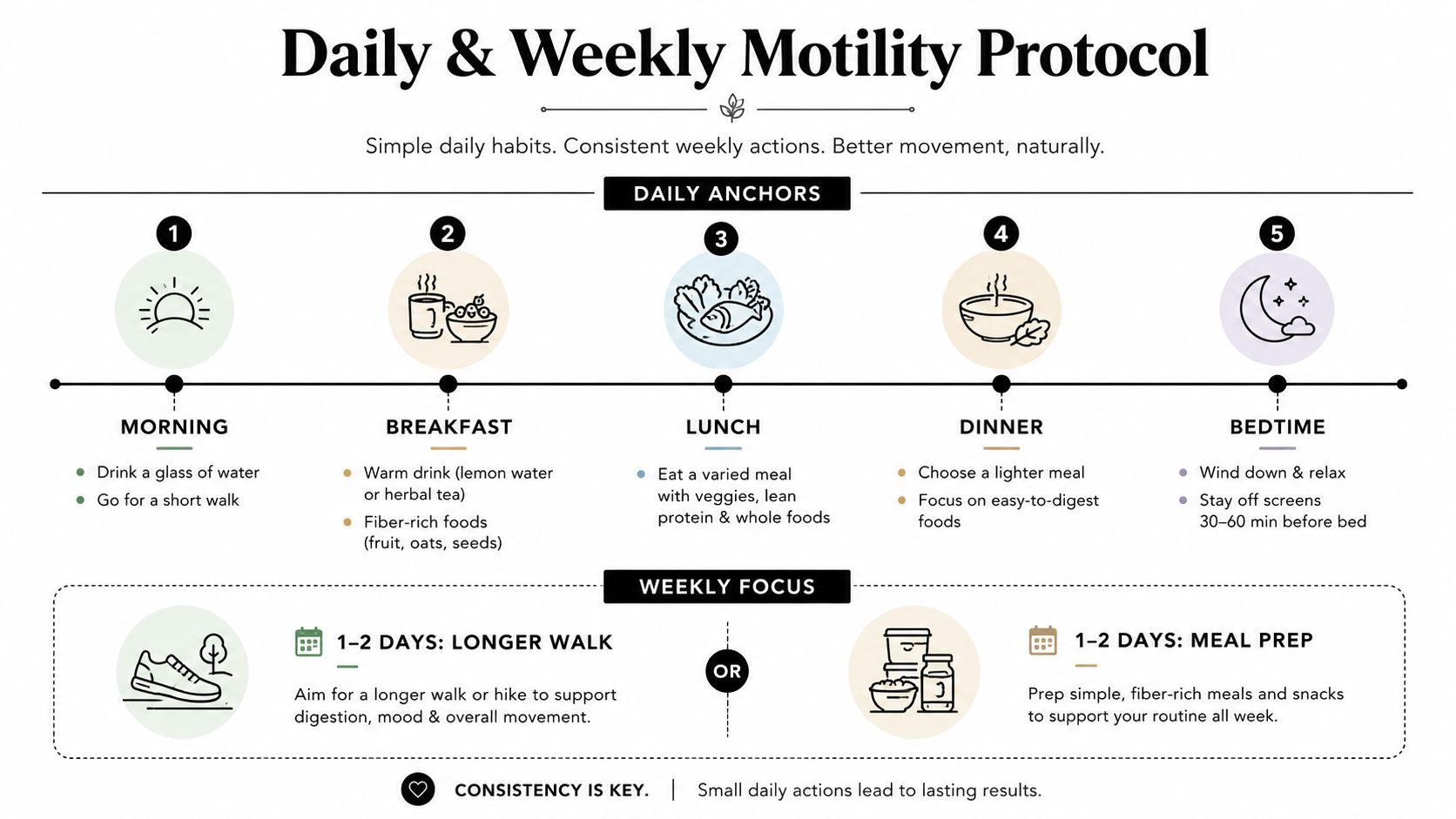
A schedule you can adjust
- Morning: Hydrate, walk if comfortable, and respond to the first bowel urge rather than delaying it.
- Breakfast: Choose a moderate fiber serving and avoid making the first meal excessively large.
- Lunch: Eat a balanced meal at a predictable time. Take a gentle walk afterward.
- Dinner: Keep portions and fat load moderate if fullness or reflux follows heavy meals.
- Evening: Finish with a calm routine and protect a consistent sleep schedule.
Clinical guidance commonly places daily fluid intake alongside fiber, but the correct amount depends on medical conditions and clinician advice. Don't force fluids if you have been told to restrict them. Likewise, don't push fiber upward if every increase produces marked pain or distension.
Each week, review stool frequency, stool form, straining, urgency, bloating, and medication changes. The purpose isn't perfection. It's pattern recognition. A new supplement, an iron product, a change in activity, or disrupted sleep can explain a shift that would otherwise be blamed on the microbiome.
If the routine doesn't help, discuss PEG or another appropriate treatment with a pharmacist or clinician rather than escalating fiber indefinitely. For pelvic-floor symptoms, laxatives alone may miss the problem. Biofeedback is the preferred treatment for defecatory disorders, and expert recommendations describe pelvic-floor retraining delivered in up to 6 sessions over about 3 months (biofeedback evidence and consensus document).
Troubleshooting When Nothing Seems to Work
Your symptom pattern often tells you which lever to revisit. Hard, infrequent stools with little bloating commonly point toward inadequate fiber, fluid, movement, or a medication effect. That pattern calls for a careful review of basics, not an immediate jump to a complex probiotic stack.
Bloating after adding fiber usually means the dose rose too quickly, the portion is too large, or the chosen fiber is highly fermentable for that person. Reduce to the last comfortable dose, allow symptoms to settle, and increase more slowly. If gas, urgency, or pain dominates, consider food triggers and discuss whether evaluation for conditions such as small intestinal bacterial overgrowth is appropriate.
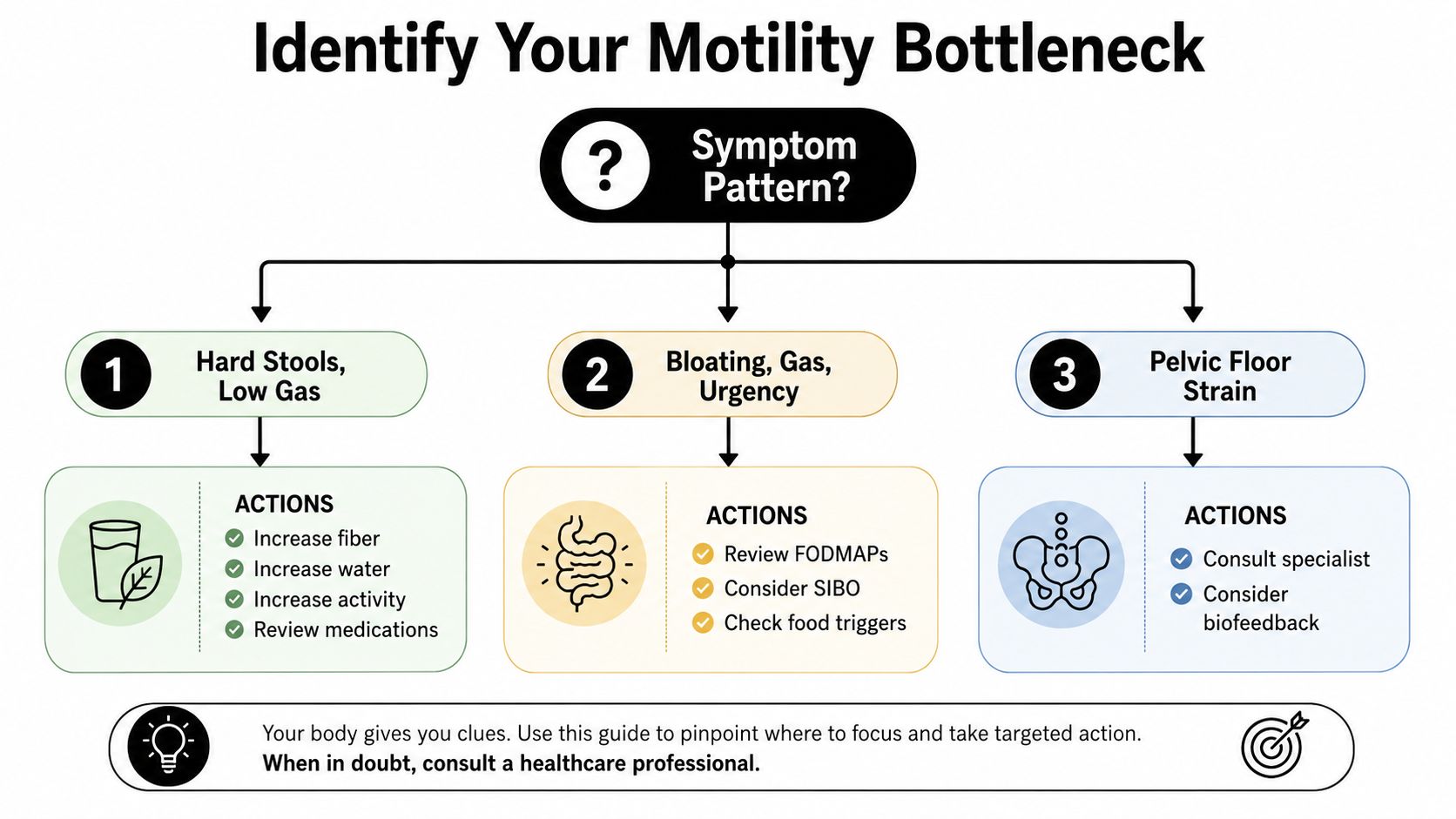
Match the response to the likely cause
A constant urge to strain despite soft stool, especially with incomplete emptying, raises concern for pelvic-floor dyssynergia rather than simple slow transit. Randomized data reported adequate relief at three months in 70% of people receiving biofeedback, compared with 23% receiving diazepam and 38% receiving placebo (biofeedback trial data). The key practical point is not to keep increasing laxatives when the outlet is the bottleneck.
Little response after a reasonable fiber and fluid trial may justify discussing an osmotic laxative such as PEG with a pharmacist or clinician. Upper-abdominal fullness, early satiety, nausea, or reflux deserves a different evaluation from ordinary constipation, because the issue may involve gastric emptying or upper gastrointestinal function.
Review opioids, anticholinergics, iron, calcium, and antidepressants with a professional before changing anything. Don't stop prescribed medication independently. Constipation alternating with diarrhea, progressive symptoms, blood, or unexplained weight loss also moves the problem beyond routine supplement experimentation.
Red Flags That Mean It Is Time to See a Clinician
Self-management is appropriate only while symptoms remain mild, stable, and consistent with a benign pattern. Seek prompt medical care for severe or rapidly worsening abdominal pain, persistent vomiting, inability to pass gas, marked swelling, black or bloody stools, fever, or fainting.

Arrange timely assessment when new constipation appears with unintentional weight loss, anemia, reduced appetite, or a family history of colorectal cancer or inflammatory bowel disease. Persistent or recurring bowel changes that disrupt daily life also deserve evaluation rather than repeated cycles of adding and removing supplements.
Neurologic and medication clues matter
Sudden constipation with weakness, numbness, or loss of bladder or bowel control may signal a nerve or spinal problem and needs urgent review. Tell the clinician about thyroid disease, diabetes, neurologic conditions, prior abdominal surgery, and every prescription or over-the-counter product.
Depending on the pattern, evaluation may include an abdominal and rectal examination, blood tests, transit testing, pelvic-floor assessment, or colonoscopy based on age and risk. A clinician may also consider whether symptoms reflect obstruction, medication effects, a functional disorder, or a neuropathic motility condition.
Prescription laxatives and prokinetics aren't universal solutions. They can interact with other treatments or cause harm in the wrong clinical setting, so use them under supervision.
Your Prioritized Action Plan and Decision Rules
Start with the inexpensive levers:
- Build fluid intake toward 1.5–2 L daily, unless a clinician has prescribed another amount.
- Gradually work toward the fiber range appropriate for you, using mixed soluble and insoluble sources rather than forcing a large dose immediately.
- Take a 10–15 minute walk after a meal if your symptoms and mobility allow.
- Keep sleep and wake times consistent, ideally within a 60-minute window.
- Run the lifestyle plan for 2 weeks before spending on multiple supplements.
If a specific problem remains, choose a targeted option. A synbiotic may suit someone seeking microbiome support, while an enzyme is more logical for a clearly meal-related trigger. Consider a prokinetic only after clinician input. Reassess habit adherence at 2 weeks and symptom change at 6 weeks. If there's no measurable improvement by week 6, arrange clinical evaluation, and seek care sooner for any red flag.
The rule of thumb is: match the intervention to the bottleneck, change one thing at a time, and don't use supplements to postpone evaluation of persistent or alarming symptoms.
GutRx offers targeted probiotic and digestive-support options for people evaluating daily gut support, digestive balance, and meal-related discomfort, with formulas including synbiotic and enzyme approaches. Visit GutRx to compare options with your symptom pattern in mind, while keeping lifestyle foundations and clinician guidance at the center of your plan.


