

One strain of Bifidobacterium longum can improve bowel regularity, while another may influence IBS symptoms, stress-related measures, or immune signaling. That's the central fact behind the benefits of Bifidobacterium longum: the species has meaningful human research, but the strain code, formulation, and target symptom determine what you can reasonably expect.
The evidence includes randomized, double-blind, placebo-controlled trials involving constipation, IBS with diarrhea, stool form, abdominal pain, quality of life, and gut-related anxiety measures. A 2023 systematic review also found that B. longum has been studied from early life through old age and may offer benefits alone or in multi-strain probiotic combinations, including possible support in the broader prevention context for noncommunicable diseases (systematic review of B. longum supplementation). The practical question isn't whether B. longum “works” in the abstract. It's which strain has evidence that matches your goal.
Table of Contents
- What Bifidobacterium Longum Actually Does for You
- Why B. Longum Matters Inside the Microbiome
- Digestive Benefits Backed by Human Trials
- Gut Barrier Protection and Immune Modulation
- Strain-Specific Effects Most Articles Miss
- Dose, Form, and Duration That Move the Needle
- Safety, Side Effects, and Single-Strain vs Multi-Strain
- Choosing the Right B. Longum for Your Goal
What Bifidobacterium Longum Actually Does for You
The strongest case for Bifidobacterium longum is not a broad promise of “better gut health.” It's a collection of strain-specific findings involving bowel regularity, IBS symptom burden, intestinal barrier activity, and immune signaling. Some research also points toward gut-brain effects, although those signals shouldn't be treated as proof that every B. longum supplement improves mood or sleep.
A systematic review published in 2023 synthesized trials spanning early life through adulthood and old age. It identified B. longum as the most abundant Bifidobacterium species in the infant gut and concluded that the species, either alone or in multi-strain products, may reduce the severity of certain diseases, including noncommunicable diseases (the 2023 systematic review). The review also placed this research within the United Nations 2030 Agenda, which calls for reducing premature mortality from noncommunicable diseases by one-third. That public-health context makes the research relevant, but it doesn't turn a supplement into a treatment.
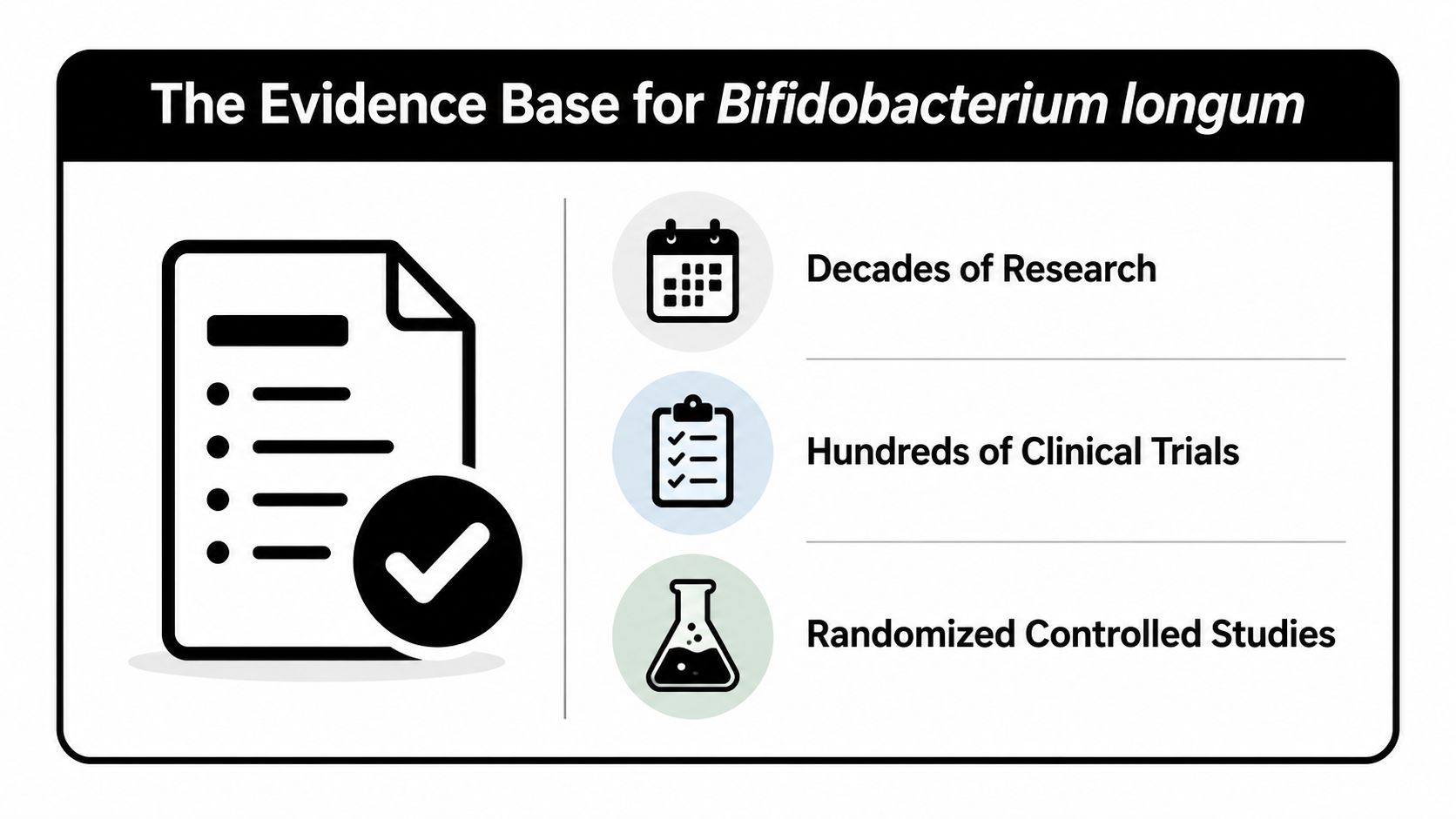
Five evidence pillars to keep in mind
- Gut motility: Several strains have been tested for constipation, stool frequency, stool form, straining, and evacuation difficulty.
- IBS symptom reduction: Clinical studies have measured abdominal pain, bloating, stool consistency, overall IBS severity, quality of life, and anxiety-related outcomes.
- Gut barrier support: Human data involving B. longum subsp. infantis EVC001 found lower fecal endotoxin and inflammatory markers, findings consistent with reduced intestinal inflammatory activity (infant colonization and barrier-related findings).
- Immune modulation: Research on B. longum BB536 found activation of peripheral plasmacytoid dendritic cells in healthy adults, suggesting an interaction with immune surveillance rather than a purely digestive effect.
- Emerging mood and metabolic signals: A 2025 review describes possible digestive, immune, and neurological pathways, while also emphasizing that outcomes vary by strain, dose, and target (2025 review of strain-dependent effects).
Practical rule: Treat “B. longum” as the species name, not the complete product description. The strain designation is the detail that makes the evidence useful.
Why B. Longum Matters Inside the Microbiome
Bifidobacterium longum is a Gram-positive, anaerobic bacterium that colonizes the human gut early in life. The 2023 review identifies it as the most abundant Bifidobacterium species in the infant gut, which helps explain why researchers study it across different life stages (review of B. longum across the lifespan).
A useful analogy is to think of B. longum as one of the original founders of a gut community. It arrives early, interacts with the surrounding microbes and intestinal lining, and helps shape the chemical environment in which other organisms live. That doesn't mean it permanently dominates every adult gut. Its abundance and activity can change with age, diet, medication exposure, and the rest of the microbiome.

Its work is mostly fermentation and communication
Different B. longum subspecies and strains specialize in different food sources. B. longum subsp. infantis, for example, is associated with the breakdown of human milk oligosaccharides in infancy, while other strains can use a broader range of dietary carbohydrates. Fermentation produces metabolites that can affect the intestinal environment and communicate with epithelial and immune cells.
That role differs from the way consumers often group all probiotics together. Lactobacillus and Bifidobacterium may both appear in a daily probiotic, but they aren't interchangeable labels. Each species contains multiple strains with distinct enzymes, adhesion traits, metabolites, and immune interactions.
B. longum is primarily associated with activity in the large intestine. In practical terms, that makes it especially relevant to stool quality, fermentation balance, bowel patterns, and mucosal health. It won't directly digest every meal in the small intestine, and it shouldn't be confused with a digestive enzyme designed to break down lactose, fat, protein, or other food components during eating.
Digestive Benefits Backed by Human Trials
Digestive research is where B. longum has the clearest practical relevance. The evidence doesn't support one universal strain for every complaint. Instead, it shows that particular strains and forms can influence specific IBS and constipation outcomes.
IBS with constipation and broader regularity
A 2021 review of B. longum W11 synthesized evidence from 7 in vitro or pharmacological studies and 7 clinical trials, including 1 randomized, double-blind, placebo-controlled trial. The review reported significant symptom reduction in IBS with constipation, supporting W11 as a clinically studied strain rather than a generic species-level ingredient (review of B. longum W11).
A later clinical summary of a constipation-variant IBS symbiotic study included 636 patients. Stool frequency increased from 2.9 to 4.1 times per week, while severe bloating declined from 62.9% to 9.6% and severe abdominal pain declined from 38.8% to 4.1% (clinical summary of the constipation-variant IBS study). Those figures describe that specific study and formulation. They shouldn't be transferred automatically to every product containing B. longum.
IBS with diarrhea
In a randomized, double-blind, placebo-controlled trial of 200 adults with diarrhea-predominant IBS, B. longum CECT 7347, also known as ES1, and its heat-treated postbiotic form both reduced symptom severity compared with placebo. Outcomes included IBS symptom severity, IBS quality of life, abdominal pain, stool consistency, and anxiety-related measures (full trial report).
This result matters because it separates strain-specific activity from the vague idea of general probiotic support. It also shows that a heat-treated form can produce measurable effects in a clinical setting, although live and non-live products have different biological purposes.
Constipation in otherwise healthy and older adults
A trial of 25 billion CFU of heat-killed B. longum CLA8013 taken for 2 weeks found increased defecation frequency in constipation-prone healthy adults. The intervention also improved stool volume, stool consistency, straining, and pain during defecation, with no adverse events attributed to the intervention (CLA8013 trial).
Another randomized, double-blind, placebo-controlled study involved 56 adults with chronic constipation. B. longum CCFM1112 given for 4 weeks reduced PAC-QOL scores and improved Bristol Stool Form Scale results, indicating better constipation-related quality of life and stool form (CCFM1112 constipation trial).
| Strain | Dose | Duration | Population | Primary outcome |
|---|---|---|---|---|
| W11 | Not specified in the verified summary | Not specified in the verified summary | IBS with constipation | Significant symptom reduction |
| CECT 7347, ES1 | Not specified in the verified summary | Not specified in the verified summary | 200 adults with IBS-D | Lower symptom severity across bowel, pain, quality-of-life, and anxiety-related measures |
| CLA8013 | 25 billion CFU | 2 weeks | Constipation-prone healthy adults | More frequent defecation and improved stool-related outcomes |
| CCFM1112 | Not specified in the verified summary | 4 weeks | 56 adults with chronic constipation | Better constipation-related quality of life and stool form |
| BB536 | 5 × 10^10 CFU | Up to 4 weeks | Older adults with chronic constipation | Better stool frequency and less failure of evacuation |
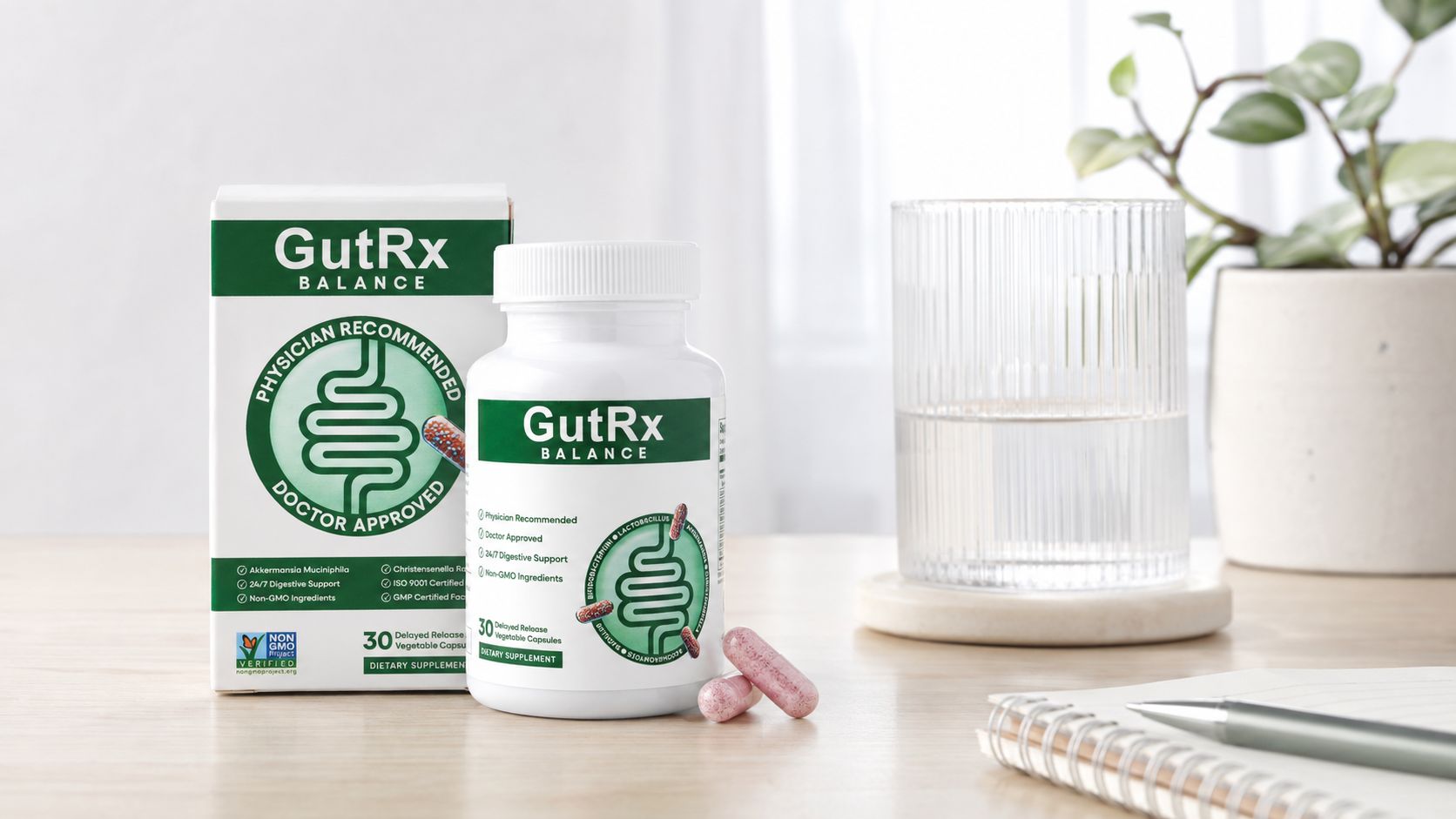
For readers comparing a commercial formula, GutRx BALANCE offers 30 billion CFUs per capsule with next-generation probiotics for gut health, digestive balance, and immune support. That product description alone doesn't establish that it reproduces the results of any one B. longum trial, so compare the label's exact strain information with your intended use.
Gut Barrier Protection and Immune Modulation
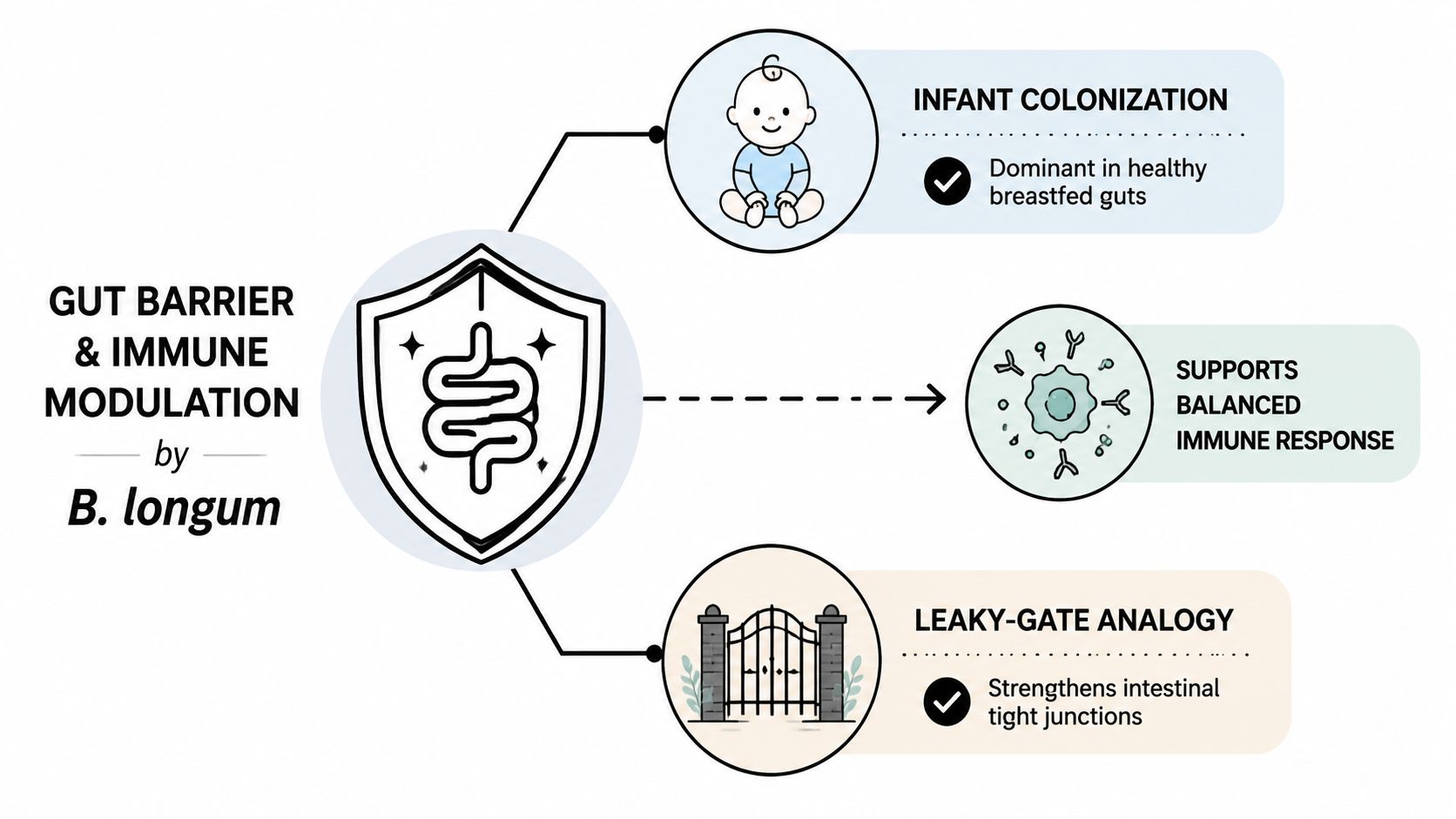
The gut barrier is a selective boundary. It lets nutrients and water move through while limiting unwanted microbial products from crossing into circulation. A simple way to picture it is a gate made from closely joined cells. When those connections function well, the gate controls traffic. When the barrier becomes more permeable, microbial molecules can interact more extensively with immune tissue.
Human data involving B. longum subsp. infantis EVC001 found a four-fold reduction in fecal endotoxin levels along with significant reductions in fecal inflammatory markers in an infant colonization study (EVC001 findings on endotoxin and inflammatory markers). These findings are consistent with lower microbial inflammatory exposure, but they don't prove that an adult supplement will produce the same response.
Immune signaling is part of the story
The immune system constantly samples information from the intestine. In healthy conditions, that communication helps the body respond to genuine threats without treating every food particle or resident microbe as an emergency. Independent immunology data on B. longum BB536 found activation of peripheral plasmacytoid dendritic cells in healthy adults, supporting an immune-modulating mechanism (BB536 immune study).
The clinical translation is cautious. A strain that affects barrier markers or dendritic-cell activity may be relevant to bloating, irregularity, and stress-sensitive gut symptoms, because intestinal barrier function and immune activation can influence symptom persistence. It doesn't mean B. longum cures inflammation, prevents infection, or guarantees fewer illnesses.
For readers interested in how microbial metabolites relate to intestinal function, the discussion of butyrate-producing bacteria provides useful context. The key distinction is that mechanistic findings explain how a probiotic might act, while human clinical endpoints tell you whether participants experienced a measurable change.
Effects remain strain-dependent. EVC001 and BB536 shouldn't be treated as interchangeable just because both belong to the same species.
Strain-Specific Effects Most Articles Miss
Most supplement labels stop at the species name. That's a problem because B. longum strains can differ in the outcomes they've been tested for, the populations studied, and the form used in the product.
The 2025 review of B. longum research describes possible effects across digestive, immune, neurological, and metabolic pathways. It also reports that B. longum 1714 improved sleep quality, daytime dysfunction, energy and vitality, and social functioning after 4 to 8 weeks, while BL21 produced mixed metabolic findings in overweight adults, with microbiota changes but no significant between-group weight-loss advantage in one 8-week trial (review of strain-dependent outcomes).
| Strain | Primary studied benefit | Population tested | Key reference |
|---|---|---|---|
| 1714 | Sleep, vitality, social functioning, and stress-related outcomes | Adults in human studies | 2025 strain review |
| BL21 | Metabolic and microbiota outcomes | Overweight adults | 2025 strain review |
| BB536 | Constipation and immune signaling | Older adults and healthy adults | BB536 constipation trial |
| ES1, CECT 7347 | IBS-D symptom severity, stool consistency, pain, and quality of life | 200 adults with diarrhea-predominant IBS | ES1 clinical trial |
| CCFM1112 | Constipation-related quality of life and stool form | 56 adults with chronic constipation | CCFM1112 clinical trial |
Some frequently repeated strain claims don't fit the verified evidence available here. For example, the approved data support BB536 for constipation and immune signaling, but they don't establish that BB536 has the deepest evidence for allergy reduction in children. They also don't establish BL21 as a constipation strain or CCFM1112 as a proven metabolic intervention.
Choosing a probiotic by species alone is like choosing a medication by drug family without checking the active ingredient.
Read the guide to Bifidobacterium strains alongside the product label. Look for the full alphanumeric designation, not just “B. longum,” and match that designation to the symptom studied.
Dose, Form, and Duration That Move the Needle
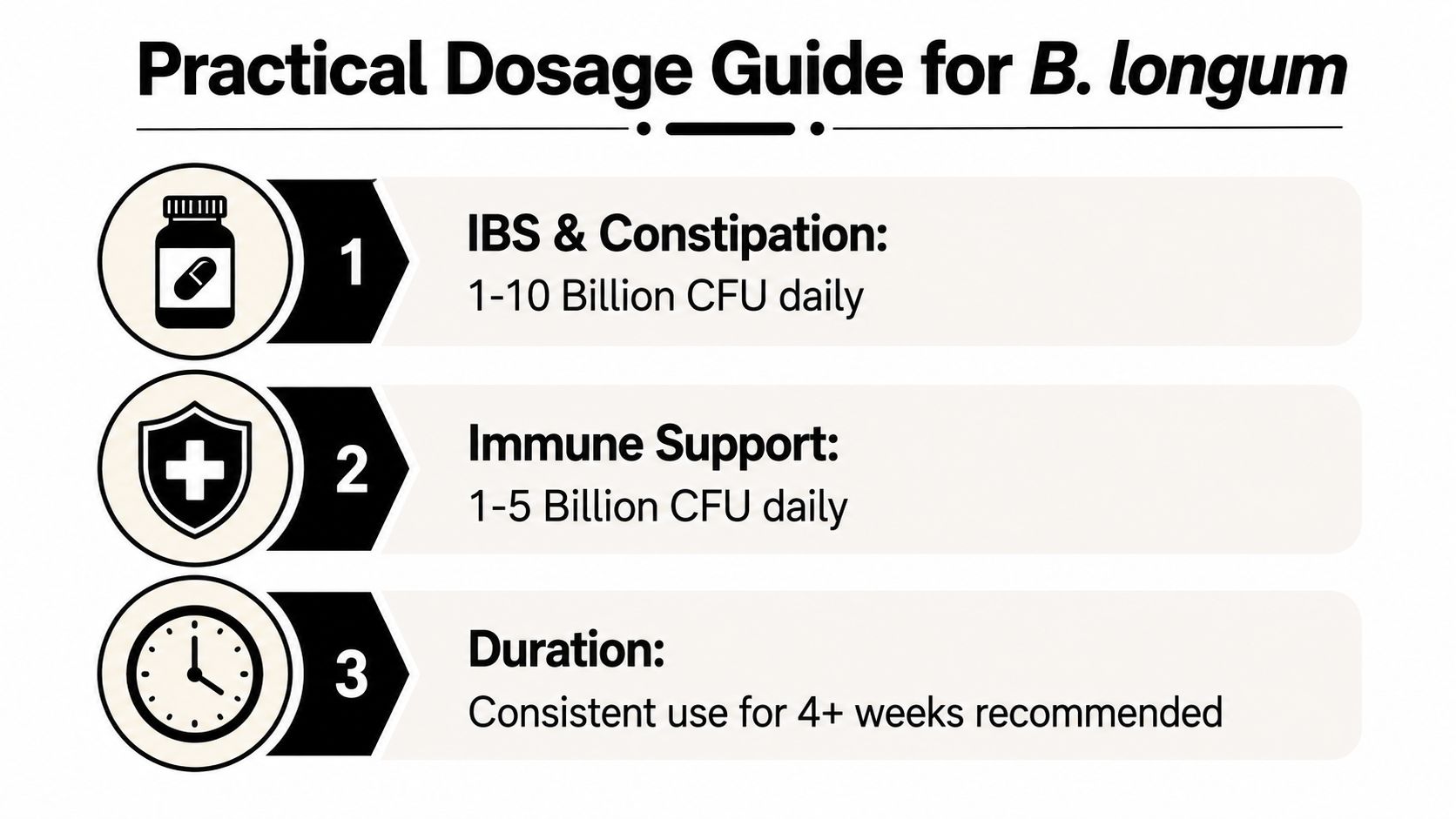
Dose matters, but it isn't the only variable. The most useful clinical examples include 25 billion CFU of heat-killed CLA8013 for 2 weeks, 5 × 10^10 CFU of BB536 daily for up to 4 weeks, and a live or heat-treated ES1 preparation tested in 200 adults with IBS-D (CLA8013 trial, BB536 constipation trial, ES1 trial). These doses belong to specific products and study designs. They aren't a universal prescription.
Use the label to judge the formulation
A product should tell you whether its CFU count is guaranteed at manufacture or at expiry. The latter gives you a more useful view of expected potency at the end of shelf life. Storage instructions also matter. Refrigerated, blister-packed, or nitrogen-flushed formats may help preserve viability, but packaging alone doesn't prove clinical effectiveness.
Live probiotics and heat-treated postbiotics serve different purposes. Live cells may provide colonization and ongoing microbial interaction, while heat-treated cells can retain structural components that interact with immune pathways without remaining viable. The ES1 trial is important because both the live strain and heat-treated form reduced IBS-D-related outcomes, but that doesn't mean every postbiotic acts like every live probiotic (ES1 live and heat-treated trial).
The right duration depends on the target outcome and the strain. Human studies have reported measurable results over periods ranging from 2 to 8 weeks, including constipation, IBS, and sleep-related endpoints (CLA8013 trial, 2025 strain review). Track one primary symptom, such as stool frequency or bloating severity, rather than changing several supplements at once.
For more context on interpreting potency claims, see this guide to high-CFU probiotics.
Safety, Side Effects, and Single-Strain vs Multi-Strain
The verified clinical evidence here describes B. longum preparations as safe and well tolerated in the studied groups. The ES1 trial in adults with IBS-D reported that both the live strain and heat-treated postbiotic were safe and well tolerated, and the CLA8013 trial reported no adverse events attributed to the intervention (ES1 safety findings, CLA8013 safety findings). Some people may notice temporary gas or bloating when starting a probiotic, but the available evidence doesn't justify treating every product or every user as identical.
Speak with a clinician before using a probiotic if you're immunocompromised, have a central venous catheter, have short bowel syndrome, or are recovering from major surgery or pancreatitis. Rare bacteremia case reports have been described in vulnerable populations, so personal medical context matters more than a general “probiotic safety” label.
| Factor | Single-strain B. longum | Multi-strain or synbiotic |
|---|---|---|
| Best fit | One clearly defined symptom with matching trial evidence | Several overlapping goals or broader microbiome support |
| Main advantage | Easier to connect the product to a specific strain study | Combines strains, fibers, or postbiotics with different roles |
| Main limitation | May not address symptoms outside the studied target | Harder to identify which component drives an effect |
| Label priority | Exact strain code and CFU at expiry | Exact strain codes, ingredient amounts, and delivery details |
| Useful example | BB536 for constipation-related outcomes | A synbiotic for people seeking probiotic and prebiotic support |
A single-strain product can make sense when the evidence closely matches your complaint. A multi-strain or synbiotic formula may be more practical when you want broader support, but a longer ingredient list isn't automatically better. Strain transparency and potency at expiry matter more than the number of species printed on the front label.
Choosing the Right B. Longum for Your Goal
Start with the symptom, not the ingredient. If constipation and stool frequency are your main concerns, look for a strain with direct constipation data, such as BB536 or CCFM1112. If your priority is IBS-D, ES1 has human trial evidence across stool consistency, pain, symptom severity, quality of life, and anxiety-related measures (ES1 trial evidence).
Use this three-step filter:
- Name one primary goal. Choose constipation, IBS-related bloating, diarrhea-type discomfort, or a stress-sensitive gut pattern rather than selecting a product for vague “detox” benefits.
- Match the strain to the evidence. Don't assume that a strain studied for bowel regularity will produce the same outcome for sleep, mood, or metabolic health.
- Audit the label. Check the full strain code, CFU at expiry, storage requirements, and whether the manufacturer provides meaningful quality documentation, such as third-party testing or a downloadable Certificate of Analysis.
The 2025 review found that B. longum 1714 affected sleep and daytime functioning measures in adults, while BL21 showed mixed metabolic outcomes without a significant between-group weight-loss advantage in one trial (2025 review of strain-specific findings). That's a useful reminder that “gut health” is too broad a buying category. A supplement aimed at stress-related symptoms may need a different strain from one aimed at constipation.
A well-characterized synbiotic can be a convenient route when you want a defined probiotic blend plus complementary prebiotic support. If your needs extend beyond B. longum, GutRx COMPLETE is described as a high-potency probiotic and prebiotic blend with 62 billion CFUs, Akkermansia muciniphila, and SIBO support. Compare its full label with your goal, and don't assume that a broader formula reproduces a single-strain trial.
GutRx offers targeted digestive products, including Balance for digestive balance and immune support and Complete for probiotic and prebiotic support with next-generation strains. Visit GutRx to compare the available formulas, review the product details, and choose a supplement based on your primary symptom and the strain information provided.


