

Your waistband feels tight, you're burping, and the meal that sounded so good now feels like it's sitting in your stomach. If you're wondering how to feel better after overeating, start by stopping eating, sitting upright, sipping water, and moving gently if that feels comfortable. The goal is to reduce discomfort while your stomach processes the meal, not to undo what you ate.
Table of Contents
- What to Expect Hour by Hour After Overeating
- How to Ease Discomfort in the First Few Hours
- Habits That Make Overeating Feel Worse
- Eating Habits That Reduce Bloating and Gas
- Warning Signs That Need a Doctor Now
- Choose Your Next Step After a Heavy Meal
What to Expect Hour by Hour After Overeating
After a heavy meal, fullness and pressure may build before they begin to ease. Use this timeline as a set of practical checkpoints. The windows overlap, and a large or fatty meal can leave you feeling full longer than a smaller meal.
Expected post-meal symptoms by time window
| Time after eating | What is usually happening | What is typical to feel |
|---|---|---|
| 0 to 30 minutes | Food is filling the stomach | Fullness, mild burping, tightness |
| 30 minutes to 2 hours | The stomach begins releasing contents slowly | Bloating, heaviness, mild nausea |
| 2 to 3 hours | Liquids and digestible solids continue moving onward | Symptoms may start easing |
| 3 to 4 hours | A large or high-fat meal can still be processing | Lingering fullness |
| Next morning | A single episode should be fading | Some leftover fullness may remain |
As digestion continues, the stomach mixes food into a semiliquid material called chyme and releases it into the small intestine. It doesn't empty all at once, so continued heaviness doesn't automatically mean something is wrong.
Watch the direction, not just the clock
A reassuring pattern is gradually less pressure, less nausea, and easier movement. You don't need to feel completely empty before you can consider yourself improving.
Practical rule: Mild fullness that's easing is different from pain that's intensifying.
Compare your symptoms with the closest time window, then judge whether they're easing. Severe symptoms override the timeline, and discomfort that continues into the next day deserves more attention than an unusually full feeling immediately after dinner.
How to Ease Discomfort in the First Few Hours
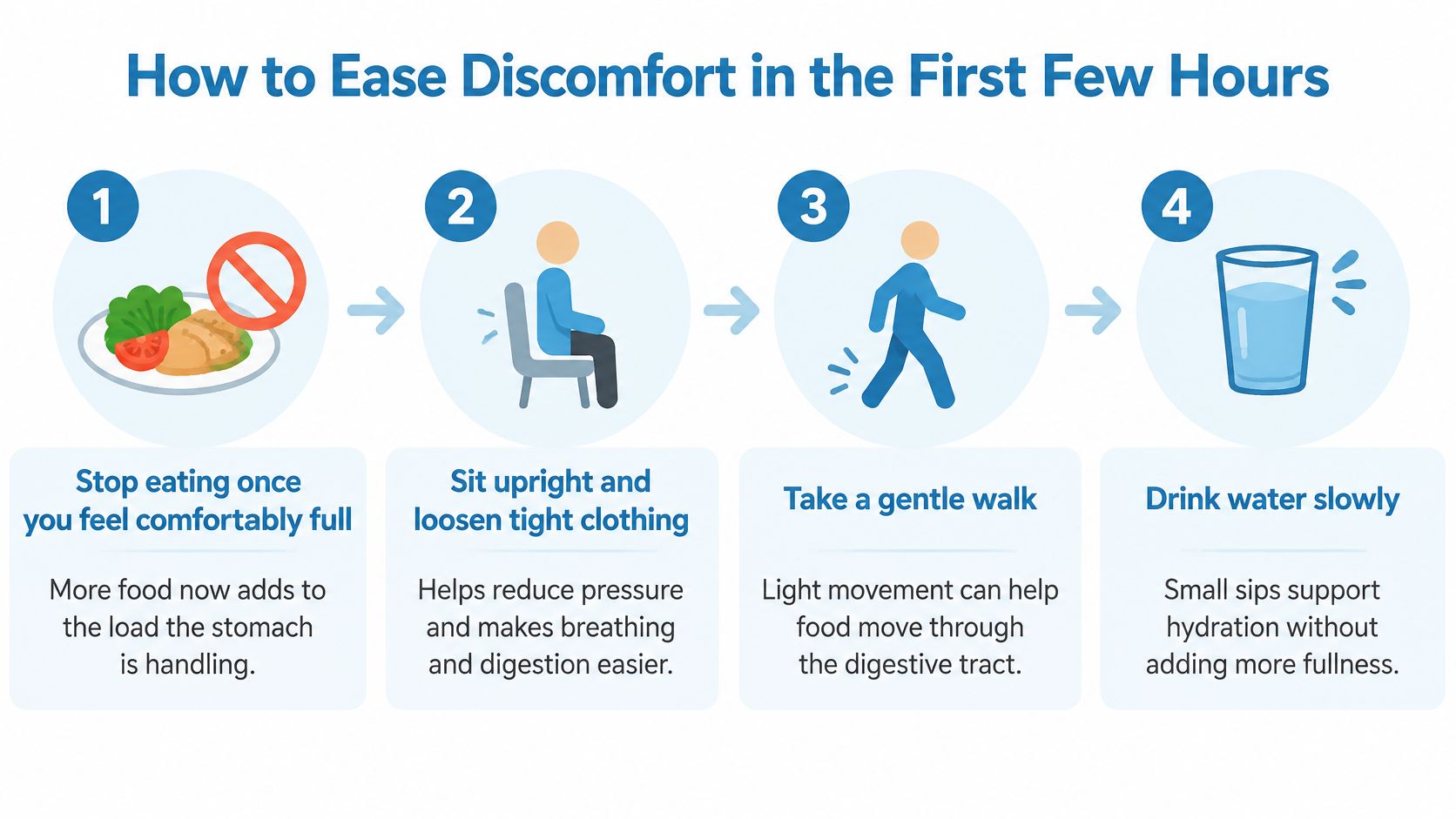
A tight waistband can make post-meal pressure harder to tolerate. Loosen it, and keep your next steps simple: stop adding food, stay comfortable, and avoid trying to force digestion.
Make the next few hours easier
If you feel steady, a short, easy walk is reasonable. A randomized crossover trial of 12 healthy adults found that a comfortable 10-minute walk after 75 g of glucose lowered peak blood glucose to 164.3 mg/dL versus 181.9 mg/dL at rest, approximately 9.7% lower, according to the Scientific Reports study. The study examined glucose handling after a glucose drink, so it does not establish that walking relieves fullness after a large mixed meal.
Stay upright if you notice burning or food coming back up. Rest is fine, but avoid lying flat right after eating. If you want water, drink to thirst; forcing a large amount will not make the meal pass faster.
Put away the second plate, dessert, or snacks and give the fullness time to settle. When hunger returns, choose a manageable next meal. A smaller portion may be more comfortable than a large, bulky meal.
Match medication to the symptom
An antacid can provide short-term relief for uncomplicated burning, but it does not remove food from the stomach. Follow the product directions, check ingredients before combining remedies, and ask a pharmacist about possible interactions. Seek medical advice if symptoms persist or you repeatedly need medication for them.
For additional ideas, read this guide to reducing bloating fast. Look for pressure that gradually eases and movement that feels more comfortable, rather than expecting fullness to disappear at once.
Habits That Make Overeating Feel Worse
Discomfort isn't a signal that you need to compensate. After a single episode, symptoms commonly begin improving within a few hours, and the digestive phase for liquids and digestible solids takes roughly 2 to 3 hours, as summarized in the Cleveland Clinic guidance on overeating.
That's a reason to give your body time, not to force a faster result. Water and gentle movement may support comfort, but neither erases the meal or dramatically accelerates digestion.
Replace compensation with ordinary care
-
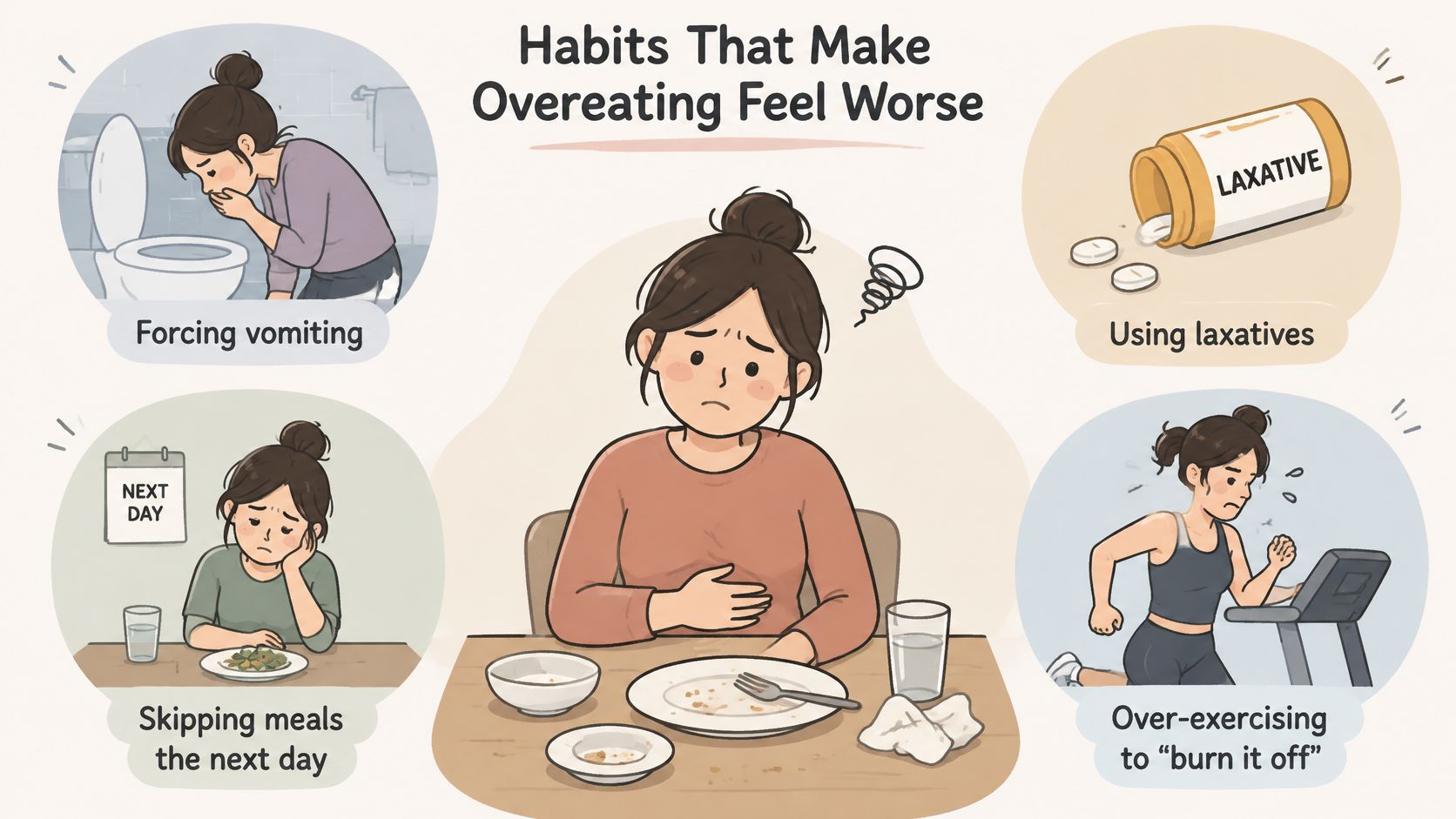
Forcing vomiting: Don't induce vomiting to empty your stomach. It can cause harm and fluid loss rather than provide a safe recovery strategy. Let the meal settle, and seek help if vomiting happens repeatedly on its own.
-
Using laxatives to flush food out: Laxatives aren't a way to empty a heavy meal from your stomach. Misusing them can add cramping, diarrhea, and dehydration to the discomfort you already have. Use ordinary hydration instead.
-
Skipping meals out of guilt: Waiting until you're hungry is reasonable; deciding you must fast to repay dinner isn't. Repeated restriction can contribute to another episode of eating past comfort. Return to a manageable meal when your appetite returns.
-
Doing a hard workout while distended: Running, intense abdominal exercise, or a punishing gym session isn't required. Choose comfortable movement and stop if it makes nausea, pain, or dizziness worse.
Recognize the guilt-driven pattern
Say you eat a large holiday dinner, skip breakfast to compensate, and push through a long run the next morning. You could reach lunch lightheaded and still bloated, having added strain without solving the original fullness.
You don't have to earn your next meal by feeling hungry enough, exercising enough, or feeling guilty enough.
If holiday stress contributes to eating beyond comfort, the Providers for Healthy Living blog offers context on holiday stress eating. Recurring urges to vomit, restrict, or exercise as punishment deserve a conversation with a qualified healthcare professional.
If burning is your main complaint, practical positioning and food adjustments in how to ease acid reflux may be more relevant than another digestive supplement. Persistent symptoms need assessment, not a stricter fasting plan.
Eating Habits That Reduce Bloating and Gas
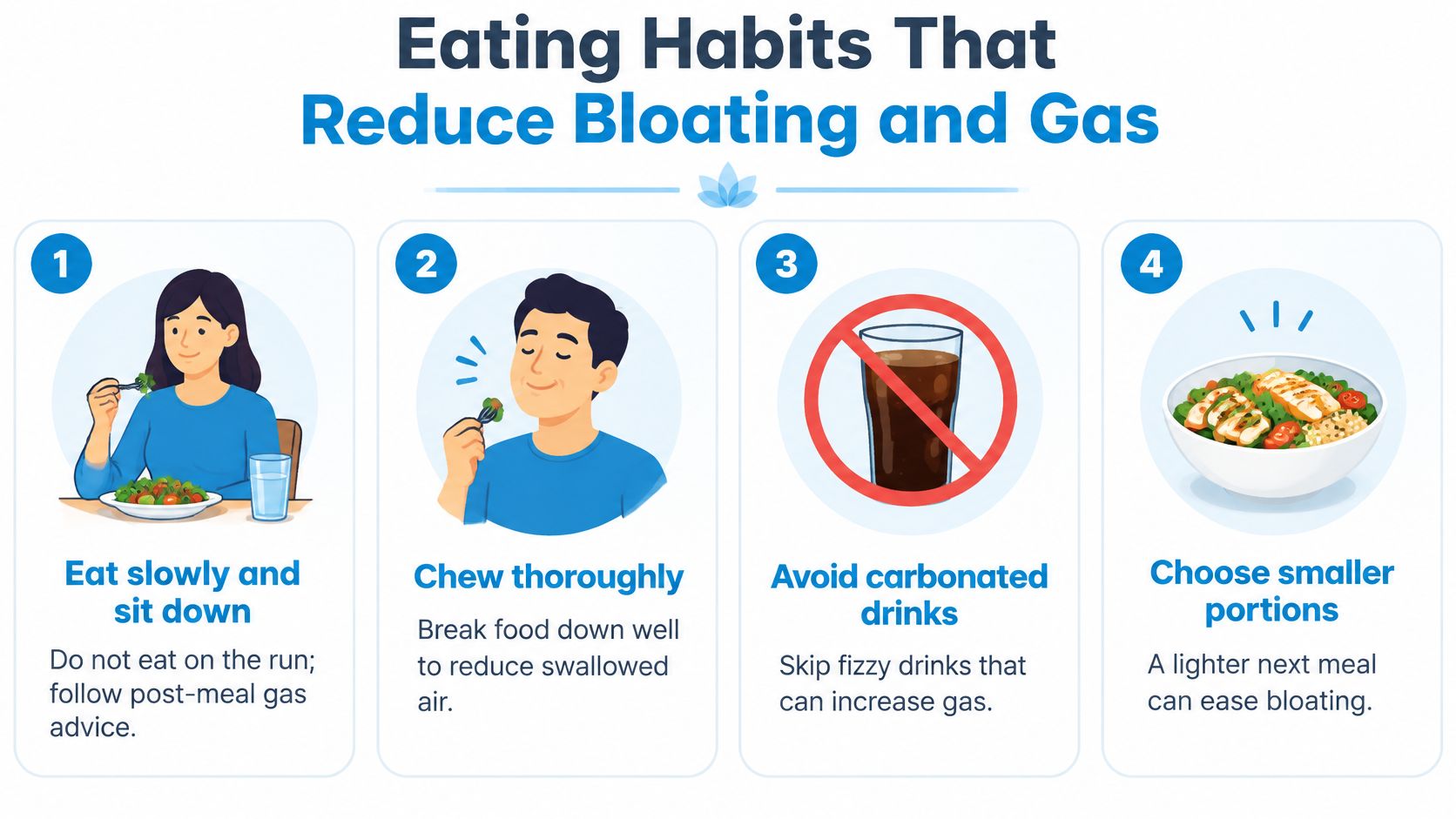
If discomfort tends to follow rushed meals or large portions, adjust how you eat before making broad changes to your diet. The National Institute of Diabetes and Digestive and Kidney Diseases guidance on gas recommends eating slowly and sitting down at meals. These habits may be especially relevant if you eat quickly, drink fizzy beverages, or tend to eat while standing.
Make meals easier to manage
- Sit down and slow your pace. Put food on a plate rather than eating from a serving container. Pause occasionally to notice when you feel satisfied.
- Chew thoroughly. Finish chewing before taking another bite. There's no need to count chews; just avoid rushing.
- Reduce swallowed air. If gas is bothering you, skip gum, hard candy, straws, and fizzy drinks. Finish chewing before talking.
- Choose familiar foods. Cooked vegetables or broth-based soup may feel more manageable than rich foods. Keep portions comfortable without trying to create a perfect recovery meal.
Fatty or greasy foods, carbonated drinks, caffeine, alcohol, and spicy foods can worsen indigestion for some people, according to the NIDDK overview of indigestion. If you know a particular food tends to trigger symptoms, ease off it temporarily. One uncomfortable dinner alone is not a reason to remove entire food groups.
Adjust meal frequency only if symptoms recur
If large portions repeatedly bring on abdominal gas, four to seven smaller meals daily may be an option described in the StatPearls review of meteorism. Use this pattern only if the symptoms recur. Avoid turning smaller meals into constant grazing, which can leave you feeling uncomfortably full.
For ordinary hydration alongside fiber intake, GutRx recommends at least 8 to 10 glasses of water daily. Follow individualized advice if you have been told to limit fluids. If drinking with food increases pressure, try having more fluids between meals. For meals that tend to leave you gassy, sit down, slow your pace, chew thoroughly, and skip the fizzy drink.
Warning Signs That Need a Doctor Now
Heartburn, fullness, bloating, nausea, and burping can follow a large meal. The important distinction is whether they improve or become severe, persistent, or recurrent, as outlined in the NHS guidance on indigestion.
Don't assume every symptom after eating was caused by overeating. Match your situation to the appropriate level of care.
Get emergency help now
- Chest or spreading pain: Call emergency services for chest pressure or pain involving the jaw, neck, or arm, especially with breathlessness, sweating, or faintness.
- Bleeding: Vomiting blood or passing black, tar-like stools needs immediate medical attention.
- Severe abdominal symptoms: Sudden or severe constant pain, rapidly worsening symptoms, or repeated vomiting with inability to keep fluids down requires urgent assessment.
The NIDDK warning-sign guidance identifies these symptoms as reasons to seek medical care rather than continue home remedies. Don't walk it off or drive yourself if you're faint or suspect an emergency.
Arrange a clinician visit
Book an assessment when symptoms repeatedly follow ordinary-sized meals, fail to improve with reasonable self-care, or interfere with eating. Trouble swallowing, unexplained substantial weight loss, persistent vomiting, or ongoing abdominal swelling also needs medical review.
You don't need to wait for the discomfort to become unbearable. Repeatedly buying antacids or digestive products can postpone finding out why symptoms keep returning.
For example, someone with several uncomfortable meals over a month who then notices black stools shouldn't book a routine appointment and wait. The bleeding warning sign takes priority and calls for immediate care.
Continue home care only when symptoms are mild and improving
A single unusually heavy meal with gradually easing fullness is the situation most suited to conservative care. Stop self-treating if the direction changes.
Safety boundary: A familiar explanation doesn't cancel an unfamiliar warning sign.
For an appointment, bring notes on meal timing, portion size, symptoms, bowel changes, and all medicines or supplements you take. Tell the clinician whether discomfort follows particular foods or happens regardless of what you eat.
Choose Your Next Step After a Heavy Meal
A heavy meal that leaves you uncomfortably full but is gradually settling usually calls for time and simple comfort measures. Repeated symptoms after ordinary meals, worsening pain, or warning signs call for medical assessment.
Match the response to the pattern
| Your situation | The sensible next step |
|---|---|
| One heavy meal, with fullness that is easing | Give your digestion time and avoid trying to compensate with a supplement |
| Occasional discomfort after heavy meals or specific food triggers | Adjust portions and pace; consider targeted support before a future meal |
| Symptoms after ordinary meals, worsening pain, or warning signs | Seek medical assessment rather than continuing supplement trials |
GutRx MEALTIME supports digestion of protein, fat, fiber, dairy, FODMAP and lactose foods. Take 1 to 3 capsules right before eating for occasional bloating and gas after meals. It is intended for use before a meal, not after discomfort has begun. For more on digestive enzymes and indigestion, see how enzyme support relates to meal-time symptoms.
Enzymes can support digestion within the meal, but they do not replace a clinician's assessment when symptoms recur or worsen. Ask a pharmacist before adding a supplement if you take prescription medicines or have an ongoing health concern.
These statements have not been evaluated by the FDA. This product is not intended to diagnose, treat, cure, or prevent any disease.
Common questions after overeating
Should I take a digestive supplement after I've finished eating?
MEALTIME is taken right before eating. If discomfort has already started, follow the comfort measures described earlier and monitor whether symptoms ease.
When should I stop trying home care?
Seek medical assessment if symptoms follow ordinary meals, worsen, or include warning signs. Recurrent discomfort also deserves evaluation rather than repeated supplement trials.
GutRx offers digestive supplements for targeted support around meals. Review GutRx MEALTIME and its suggested use when planning for a future meal.


