

Acute diarrhea may improve in 2 days to 1 week, while bloating, regularity, and IBS typically need 3 to 8 weeks, and chronic benefits often require 8 to 12 weeks of consistent daily use. The right answer to “how long before probiotics work” depends on the symptom, the strain, and whether you're seeking short-term relief or a broader change in digestive balance.
You take a capsule, wait a day, and check your digestion. Nothing seems different, so you wonder whether the probiotic is ineffective. That reaction is understandable, but a probiotic isn't a universal fast-acting remedy. A product aimed at infectious diarrhea may produce an early signal, while a daily probiotic for bloating, irregularity, or IBS usually needs a more structured trial.
Table of Contents
- How Long Before Probiotics Work At A Glance
- How Probiotics Work Inside Your Gut
- Typical Timelines By Symptom And Goal
- What Makes Probiotics Work Faster Or Slower
- How To Take Probiotics For The Best Results
- Choosing The Right Probiotic For Your Timeline
- Common Mistakes And When To Talk To A Clinician
How Long Before Probiotics Work At A Glance
You start a probiotic after several difficult days of diarrhea and hope for a quick change. That situation belongs to a different timeline from taking a daily formula for bloating or IBS. The goal and the symptom determine when a response is reasonable to look for.
A person using a probiotic for acute infectious diarrhea may notice improvement within days. Across 63 studies, some participants experienced relief as early as 2 days, according to this review of probiotic timelines. The finding describes an early signal, not a promise that every product will work that fast.
Bloating, constipation, irregularity, and IBS usually change more gradually. Early signs may include less post-meal discomfort, more predictable bowel movements, reduced gas, or fewer disruptive symptom days. Feeling a small improvement is different from knowing that the pattern has settled, so a consistent trial matters.
A practical timeline
- Acute diarrhea: Look for a possible early response within 2 days to 1 week. The strain and cause still matter.
- Bloating: Early gas or bloating may settle within roughly a week, while a clearer change may take around 21 days. This evidence-based bloating timeline explains why early and dependable improvement are not always the same.
- IBS and chronic digestive symptoms: Initial changes may appear within 2 to 3 weeks, while trials commonly assess outcomes over 4 to 8 weeks. The clinical review on probiotics for IBS supports taking a product consistently each day.
- Broader digestive or systemic goals: Benefits commonly fall within 4 to 12 weeks. Some outcomes require 24 weeks or 6 months, according to this summary of probiotic treatment durations.
Practical rule: Judge a probiotic against the goal it was designed to support, not an overnight-results expectation.
Take it consistently, track the symptom you want to change, limit major routine changes, and allow the relevant time window before deciding whether it helps.
How Probiotics Work Inside Your Gut
Think of the gut as a garden rather than an empty container waiting for bacteria. A probiotic introduces selected live microorganisms, while your diet and existing microbiome determine whether the surrounding environment supports their activity.
The garden analogy
Probiotics are like seeds. They may interact with the microbes already present, produce useful compounds, compete with less helpful organisms, and influence the gut environment. Prebiotics are like fertilizer, providing material that existing or introduced microbes can use. Postbiotics are nonliving microbial components or products that may also contribute to a formula's intended support.

A fast response can happen when the immediate task is to make the gut environment less favorable to a pathogen. Probiotics may support colonization resistance, which means beneficial organisms occupy space and resources that unwanted organisms could otherwise use. They may also contribute to competitive exclusion, where microbes compete for attachment sites and nutrients.
A slower response is more likely when the goal involves regularity, bloating patterns, IBS symptoms, or broader metabolic and immune support. Those outcomes may depend on gradual changes in microbial metabolites, epithelial signaling, bowel habits, and the way the nervous system interprets digestive sensations. The gut doesn't become a different ecosystem after one capsule.
Why strain and delivery matter
Two probiotic products can contain different organisms, doses, protective technologies, and supporting ingredients. A strain selected for diarrhea-related research shouldn't automatically be assumed to help constipation or IBS in the same way.
Delivery also matters. A delayed-release or enteric-coated capsule is designed to protect its contents through part of the upper digestive tract, while a shelf-stable format may be easier to use consistently. These features don't guarantee a particular outcome, but they can influence how a product is used and how predictable the routine feels.
If you're comparing a targeted formula, GutRx BALANCE offers 30 billion CFUs per capsule with next-generation probiotics for gut health, digestive balance, and immune support. The relevant buying question remains whether its intended focus matches your symptom and the time you can commit to a daily trial.
Typical Timelines By Symptom And Goal
A person watching acute diarrhea is tracking a different outcome from someone managing recurring bloating, constipation, or IBS. The useful question is not how long probiotics take. It is which symptom is being measured, how often it occurs, and how long a consistent trial can reasonably continue.
Match the timeline to the symptom
| Goal or symptom | Typical noticeable window | What improvement looks like |
|---|---|---|
| Acute infectious diarrhea | 2 days to 1 week, sometimes longer | Fewer loose stools, improved comfort, and a return toward normal bowel function |
| Bloating | Around 21 days for some people | Less pressure, reduced post-meal discomfort, or fewer bloating episodes |
| IBS symptoms | About 2 to 8 weeks | More manageable pain, bloating, stool changes, or symptom frequency |
| Regularity and constipation support | Several weeks | More predictable bowel movements and less straining or disruption |
| Broader digestive balance | 4 to 12 weeks | A steadier pattern across multiple digestive symptoms |
| Longer systemic goals | 12 to 24 weeks or more | Gradual changes in the specific marker or symptom being tracked |
The table separates short-term symptom relief from changes that require repeated observation. With acute infectious diarrhea, the first useful sign may be fewer loose stools or improved comfort. A person with bloating may need to compare post-meal pressure across several weeks, because one uncomfortable day does not show whether the pattern is changing.
IBS and regularity are slower to judge. Track pain, stool changes, urgency, straining, and symptom frequency rather than waiting for every complaint to disappear. A single better bowel movement can be encouraging, but a steadier pattern is more meaningful.
For broader digestive balance, the signal may appear as several small improvements rather than one dramatic change. Keep the same product and routine long enough to compare similar days, meals, and symptoms. The GutRx guide to gut recovery provides broader context for placing a probiotic trial within a digestive-support routine.
Evidence for non-acute goals generally supports a trial lasting 4 to 12 weeks, while some longer systemic goals may require 24 weeks or 6 months of observation. Changing products after a few inconsistent days makes the result difficult to interpret. Give the symptom and the formula a defined testing period, then review the pattern rather than judging one isolated day.
Duration appears particularly relevant for IBS. A meta-analysis of probiotic treatment duration found significant improvement with treatment lasting 8 weeks or longer, whereas shorter courses showed smaller or statistically uncertain results. This does not guarantee that every formula will help every person. It does support waiting long enough to assess the intended use, unless symptoms worsen or a clinician advises otherwise.
What Makes Probiotics Work Faster Or Slower
A probiotic may seem to work quickly for one symptom and slowly for another. The difference often comes from the product, the problem being addressed, and how consistently the routine is followed.
Product factors
Strain selection comes first. Choose a named strain with research related to your intended use. A formula aimed at digestive balance may not suit women's vaginal and urinary support or meal-related enzyme support. Strains are more useful for comparison than a large CFU figure alone.
CFU count is one comparison point. A higher count does not automatically produce a faster or better result. Check the strain focus, dose instructions, potency through the expiration date, delivery system, and whether the label explains any prebiotics or postbiotics.
The capsule's design can affect how practical the product is to use. Delayed-release protection may help contents move farther through the digestive tract. Shelf stability may simplify storage. These features still do not show that the formula matches your goal.
Personal factors
Your starting microbiome, diet, stress, recent antibiotic use, and digestive condition can change what you notice first. Acute diarrhea may shift before a longer-standing pattern such as bloating changes. IBS often requires observation across meals, bowel movements, and symptom intensity because its symptoms can vary from day to day.
Your routine also affects the visible result. Missing doses, switching products repeatedly, or introducing several supplements at once makes it harder to tell what caused a change. Keep one main variable steady while you assess the symptom you chose.
Antibiotic use in the prior three months can lengthen the visible window. In that situation, allow an extra two to four weeks before deciding that a carefully chosen product has failed, unless symptoms worsen or a clinician gives different advice.
A useful quality filter: Look for clearly identified strains, transparent testing, and a product that explains its intended use instead of relying on CFUs alone.
Third-party testing and downloadable Certificates of Analysis can help buyers check identity, purity, and potency. They are quality signals, not proof that a particular product will resolve your symptoms. A formula can meet labeling standards and still be a poor match for the symptom or strain-specific goal you have chosen.
How To Take Probiotics For The Best Results
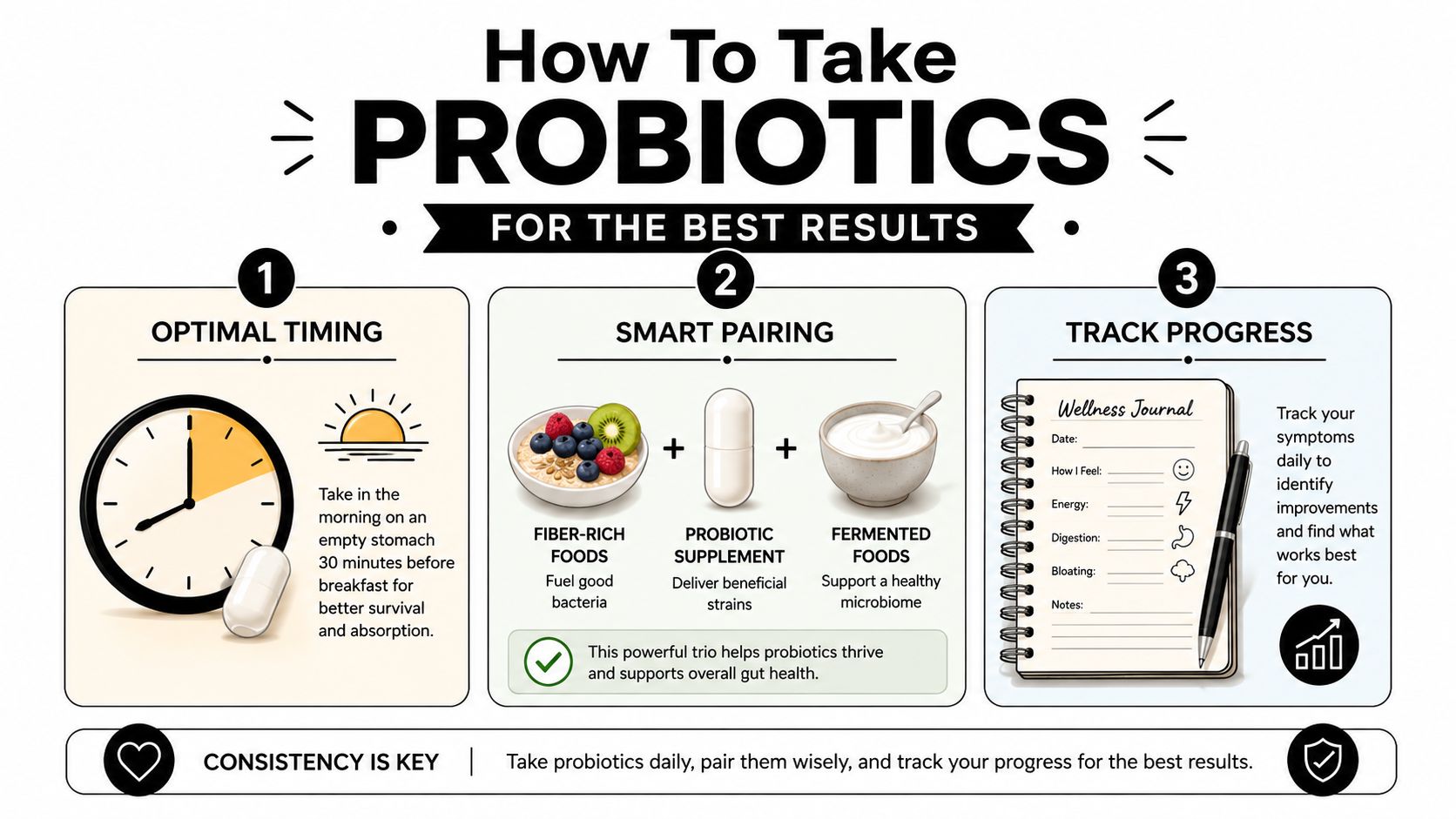
If your mornings are rushed, attach the probiotic to a habit you already complete, such as breakfast, brushing your teeth, or preparing a morning drink. Follow the label when it gives specific food or storage instructions. Consistency makes gradual changes easier to recognize.
Build a simple routine
Take the product as directed. If you miss a day, resume the usual dose rather than doubling it. A varied, fiber-rich diet may support the gut environment, but increase fiber only as your symptoms allow. Fermented foods can fit the routine too. Add them gradually if gas or bloating is already a problem.
Track one main outcome so small changes do not get lost in daily variation. Your diary should include:
- Your main symptom: Choose bloating, stool regularity, diarrhea frequency, or another primary outcome.
- Your daily pattern: Record meals, bowel movements, discomfort, and unusual changes.
- Your trial period: Match the trial to your goal rather than expecting every symptom to follow the same countdown.
- Your tolerance: Note extra gas, cramping, or worsening symptoms and respond rather than ignoring them.
For chronic digestive symptoms, mark review dates at the 4-week and 8-week points of your trial. Judge the product against your diary entries, not against one unusually good or bad day. IBS symptoms often vary with meals, bowel movements, and stress, so a longer record can reveal a pattern that a quick impression misses.
Don't confuse probiotics with enzymes
Probiotics follow a longer digestive-support timeline. Digestive enzymes work around the meal itself. Guidance recommends taking enzymes just before eating or with the first few bites, within a window of roughly 30 minutes before a meal up to the moment eating begins. Taking them after the meal may reduce their usefulness, according to this explanation of digestive enzyme timing.
That distinction matters when discomfort follows dairy, a heavy meal, or another specific food. Enzymes address meal-related digestion, while broader bloating may involve fermentation, food sensitivities, IBS, constipation, swallowed air, or stress. If evening is the most reliable time for your capsule, follow this guide to taking probiotics at night.
Choosing The Right Probiotic For Your Timeline
A product that suits occasional bloating may not match a daily regularity goal. Choose the formula according to the symptom, intended use, and trial period you can follow consistently.
Match the formula to the use case
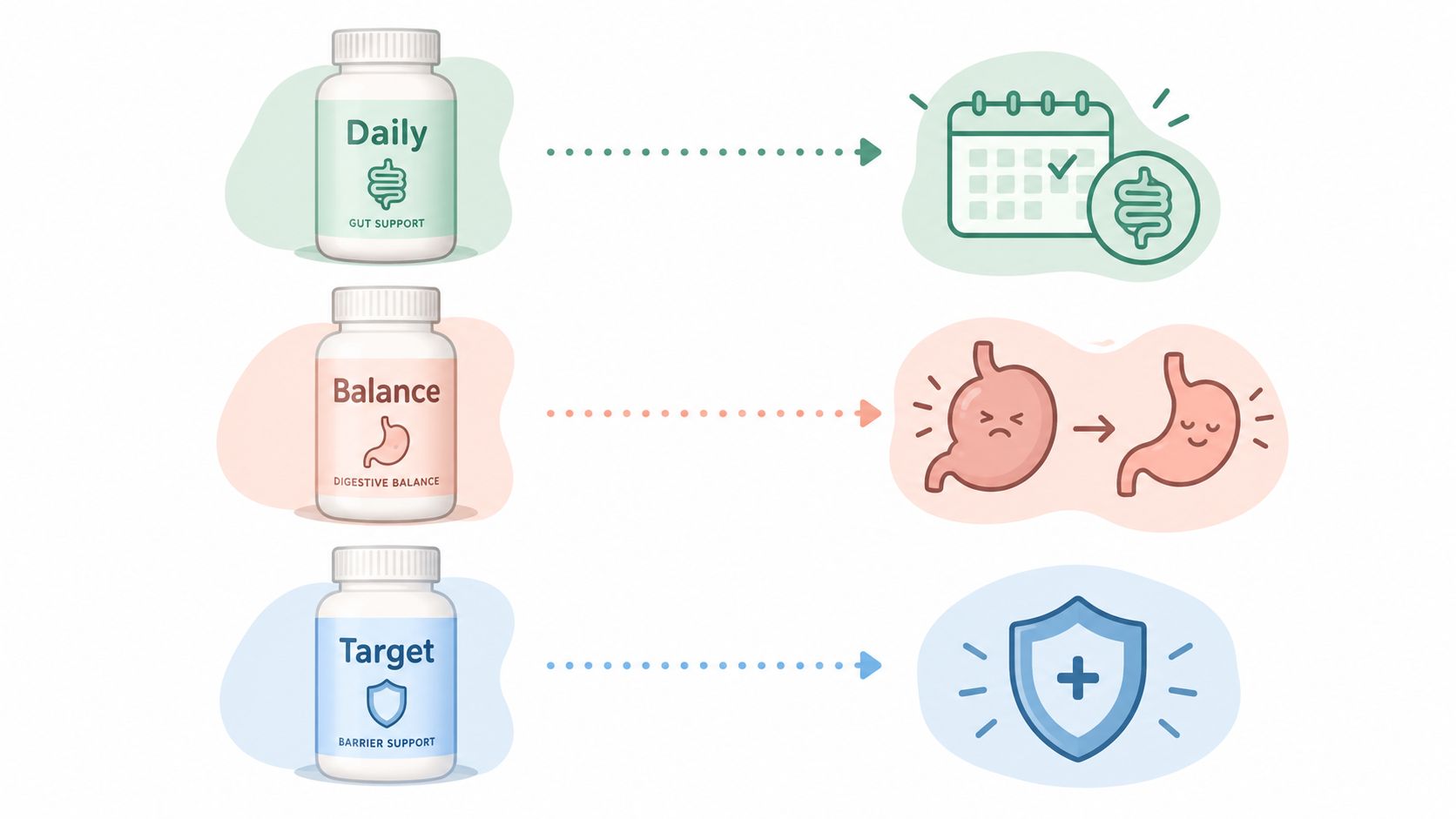
For daily regularity, compare products designed for everyday gut support and a routine you can maintain. For bloating or broader digestive balance, review the strain focus and whether the formula includes prebiotics, postbiotics, or next-generation organisms that match its stated purpose.
Women's combined support represents a different buying goal. A women's probiotic may address digestive, vaginal, and urinary wellness, with ingredients such as cranberry and D-mannose, rather than focusing only on bowel regularity.
Symptoms linked to a particular meal call for a separate comparison. Digestive enzymes act around eating, while probiotics are generally evaluated over a longer period. If discomfort follows dairy or another specific food, an enzyme may fit the pattern better than a daily probiotic.
An all-in-one synbiotic combines probiotic organisms with prebiotic support. A postbiotic formula focuses on nonliving microbial components or their products. Compare:
- Strain focus: Are the organisms clearly identified and suited to your goal?
- Delivery system: Does the product use delayed-release protection or a shelf-stable format?
- Supporting ingredients: Are prebiotics or postbiotics included for a stated reason?
- Quality evidence: Does the manufacturer provide third-party testing or downloadable COAs?
- Routine fit: Is it intended for daily maintenance or a defined symptom pattern?
One option is GutRx COMPLETE, described as a high-potency probiotic and prebiotic blend containing 62 billion CFUs, Akkermansia muciniphila, and SIBO support. Assess it by label transparency, intended use, and whether its focus matches your timeline.
For IBS, duration should guide the purchase more than an impressive dose. Choose a formula you can commit to for a full trial rather than a higher-CFU product you may stop using early. This high-CFU probiotic guide explains why CFU count alone should not determine the comparison.
Common Mistakes And When To Talk To A Clinician
The commonest mistake is expecting a chronic digestive concern to change overnight. Switching products too soon creates another problem: you cannot tell which formula, dose, or routine influenced the result.
Early gas does not automatically mean the probiotic has failed. If it appears during the first week, keep the dose steady if symptoms remain mild and log severity each day. Worsening symptoms after day 10, or discomfort that limits eating and daily activities, is a reason to stop and seek advice rather than push through.
Avoid choosing only by the largest CFU number, taking doses irregularly, or changing diet, enzymes, and probiotics at the same time. Change one variable at a time so the response is easier to interpret.
Contact a clinician for persistent or worsening symptoms, significant pain, blood in the stool, unexplained weight loss, or symptoms that do not fit a routine supplement question. If a carefully followed 8 to 12 week trial brings no meaningful change, review the strain, diagnosis, dose, and overall plan with a clinician.
GutRx offers probiotic and digestive-support options. Compare its strain focus, testing information, and intended use at GutRx, then choose a routine you can follow consistently.


