

“Just take a probiotic” is popular gut advice, but it's often too imprecise to be useful. Gut motility supplements don't all work on the same part of the digestive tract, and a product that supports bowel regularity may not address early fullness, nausea, meal-related bloating, or slow stomach emptying.
A better approach starts with location. Is the slowdown in the stomach, the small intestine, or the colon? Once you identify the most likely bottleneck, you can compare probiotics, synbiotics, magnesium, fiber, digestive enzymes, and other options without treating every digestive complaint as constipation.
Table of Contents
- Why Most Gut Motility Advice Gets It Wrong
- Understanding the Three Zones of Digestive Motility
- Comparing Supplement Classes for Motility Support
- Matching Your Symptoms to the Right Supplement Type
- Evaluating Supplement Quality and Safety
- Practical Dosing and Timing for Common Regimens
- When to Seek Medical Evaluation Instead of Self-Treating
Why Most Gut Motility Advice Gets It Wrong
Many supplement pages frame motility as a single issue: food moves too slowly, so you need something to speed it up. That model misses the difference between gastric emptying, small-bowel transit, and colonic transit. These regions perform different jobs, respond to different signals, and produce different symptom patterns when movement is impaired.
A person who feels full after a small meal may need a very different evaluation from someone who has infrequent, hard stools. A probiotic can support bowel function in some people, but it isn't automatically a treatment for delayed stomach emptying. Likewise, a digestive enzyme may make a meal feel easier to tolerate without changing the underlying speed of intestinal transit.
Practical rule: Match the supplement to the symptom pattern and suspected region, not to the broad phrase “gut motility.”
The evidence supports that caution. A 2022 systematic review of probiotics and synbiotics for chronic constipation examined 30 randomized controlled trials on probiotics and four on synbiotics. Probiotics produced a measurable treatment-response benefit, but the review also concluded that benefits were strain-specific and that evidence remained insufficient to recommend synbiotics broadly for chronic constipation.
That distinction matters for buyers searching for a daily probiotic, a probiotic for constipation, or a prebiotic probiotic postbiotic supplement. “Contains probiotics” tells you very little by itself. The relevant questions are which strains are present, whether the formula is designed for regularity or another use case, and whether the symptoms reflect transit delay at all.
Symptoms and transit aren't interchangeable
Digestive symptoms can improve before an objective transit problem changes, or they can persist even when transit measurements look better. Reviews of prokinetic therapies describe evidence as heterogeneous, with no clear recommendation for one prokinetic class across all motility disorders and a continuing need for safer, more selective options, as discussed in this review of emerging approaches to gastrointestinal motility.
That's why “natural prokinetic” is not a complete buying criterion. Ginger, magnesium, fiber, probiotics, enzymes, and herbal formulas have different purposes. Some influence stool water, some alter fermentation, some help break down food, and some may affect movement signals. Your first job is to determine which problem you're trying to solve.
Understanding the Three Zones of Digestive Motility
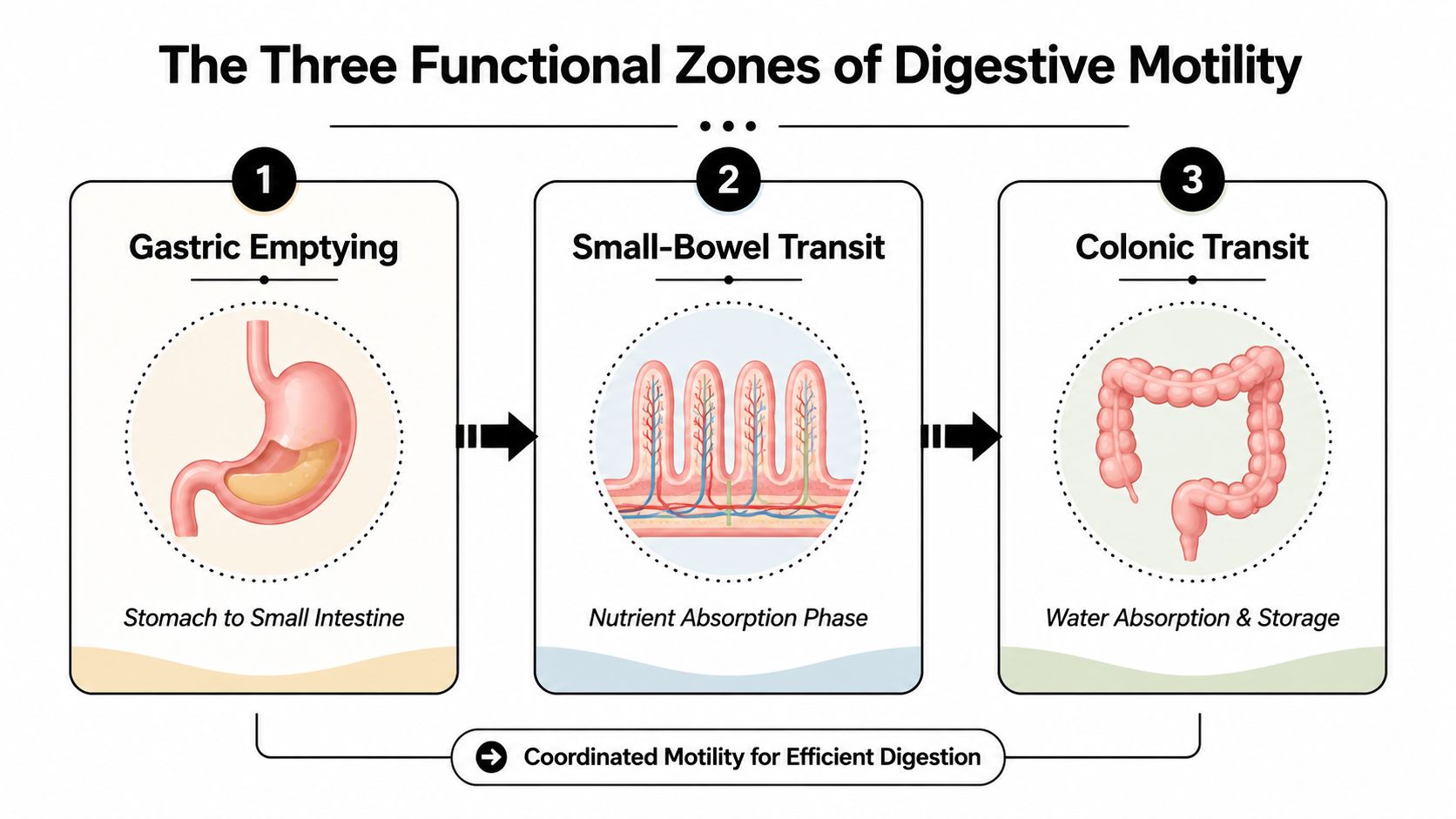
Digestive movement is easiest to understand as a sequence of three zones. Each zone has a distinct role, and symptoms can help identify where support may be most relevant.
Gastric emptying
The stomach stores and mixes food before releasing it into the small intestine. When emptying is delayed, the dominant pattern often appears soon after eating: early fullness, nausea, upper-abdominal pressure, or bloating after a modest meal. Constipation can coexist, but a stool-focused supplement won't necessarily address the original upper-digestive problem.
For this pattern, meal size, fat tolerance, medication effects, and medical conditions deserve attention before adding a strong motility product. Digestive enzymes may help when discomfort follows a specific food or a heavy meal, but enzymes support digestion rather than guarantee faster gastric emptying. Readers interested in the relationship between post-meal discomfort and digestive compounds can review this guide to butyrate and gastric emptying.
Small-bowel transit
The small intestine receives stomach contents, completes digestion, and absorbs nutrients. Delayed or disordered movement here may present as gas, diffuse bloating, abdominal discomfort, or symptoms that vary with fermentable carbohydrates. Some people also experience diarrhea, constipation, or signs of poor tolerance rather than a simple slowdown.
This is the zone where a broad probiotic claim can become misleading. A probiotic may influence fermentation or symptoms without reliably correcting the movement pattern that allowed discomfort to develop. If symptoms suggest small-intestinal overgrowth, malabsorption, or a medication-related change, testing and clinical guidance may be more useful than stacking several supplements.
Colonic transit
The colon absorbs water, stores stool, and coordinates evacuation. Infrequent bowel movements, hard stools, straining, and a sense of delayed passage point more strongly toward colonic transit or stool-consistency problems.
Magnesium oxide has a particularly clear rationale here because nonabsorbed magnesium retains water in the intestine. In a randomized, double-blind, placebo-controlled trial, magnesium oxide improved spontaneous bowel movements and shortened colonic transit time, while a 2023 systematic review and meta-analysis of magnesium oxide concluded that it improves cardinal symptoms of chronic constipation.
The same ingredient may be less compelling when stool frequency is normal but evacuation feels incomplete or bloating dominates. A population study found dietary magnesium intake was associated with chronic constipation defined by stool frequency, but not with constipation defined by stool consistency, according to this analysis of magnesium intake and constipation. That supports targeted use rather than assuming magnesium fits every digestive complaint.
Comparing Supplement Classes for Motility Support
The most useful comparison isn't “natural versus pharmaceutical.” It's what the supplement does, where it acts, and how strong the evidence is for your symptom pattern.
| Supplement Class | Primary Mechanism | Target Zone | Evidence Strength | Best For |
|---|---|---|---|---|
| Probiotics | Modulate the gut microbial environment and may influence stool patterns | Mostly colonic and small-bowel symptom support | Moderate for selected constipation outcomes, strain-specific | Constipation, irregularity, digestive balance |
| Synbiotics | Combine microbes with fermentable substrates intended to support them | Small bowel and colon, depending on formula | Incomplete and product-specific | People seeking broader microbiome support |
| Prebiotics and fiber | Add fermentable substrate or bulk, retain water, and influence stool form | Primarily colon | Useful for selected constipation patterns, tolerance varies | Low fiber intake and irregular stools |
| Magnesium compounds | Retain intestinal water and soften stool | Primarily colon | Stronger for magnesium oxide and constipation | Infrequent or hard stools |
| Digestive enzymes | Break down food components before or during intestinal digestion | Stomach and small intestine | Best matched to food-specific discomfort, not general transit | Meal-related bloating or intolerance |
| Herbal prokinetics | May influence nausea, gastric function, or intestinal movement | Varies by compound | Mixed and condition-specific | Selected upper-digestive symptoms with professional guidance |
| Osmotic or stimulant laxatives | Increase water content or stimulate evacuation | Colon | Effective for short-term relief, but not a universal long-term strategy | Acute constipation under appropriate guidance |
Probiotics and synbiotics
Probiotics have the most relevant multi-study evidence for people searching for a probiotic for constipation or a probiotic for digestive balance. A 2019 meta-analysis of randomized controlled trials pooled 21 comparisons involving 2,656 adults and found improvements in weekly stool frequency and whole-gut transit time. After adjustment for publication bias, the stool-frequency benefit remained smaller but present.
The practical limitation is variability. A formula can contain several familiar genera and still fail to match the strain or dose used in a study. Synbiotics may be appealing for broader microbiome support, but evidence doesn't justify treating every prebiotic-plus-probiotic combination as a proven motility intervention.
Fiber and magnesium
Fiber can help when stool bulk, water retention, or low intake contributes to irregularity. It can also worsen bloating if introduced too quickly or if fermentation is already a major issue. Magnesium oxide is more directly suited to stool frequency and transit, but high doses require caution in people with kidney disease because magnesium can accumulate and cause hypermagnesemia.
Enzymes and other prokinetics
Digestive enzymes are not substitutes for probiotics. They're more logical when discomfort follows dairy, high-fat meals, protein-heavy foods, or fermentable ingredients and the problem appears to begin during digestion. Herbal prokinetics may have a role, but the evidence is less uniform and the safety profile depends on the ingredient, dose, health history, and medications.
Matching Your Symptoms to the Right Supplement Type
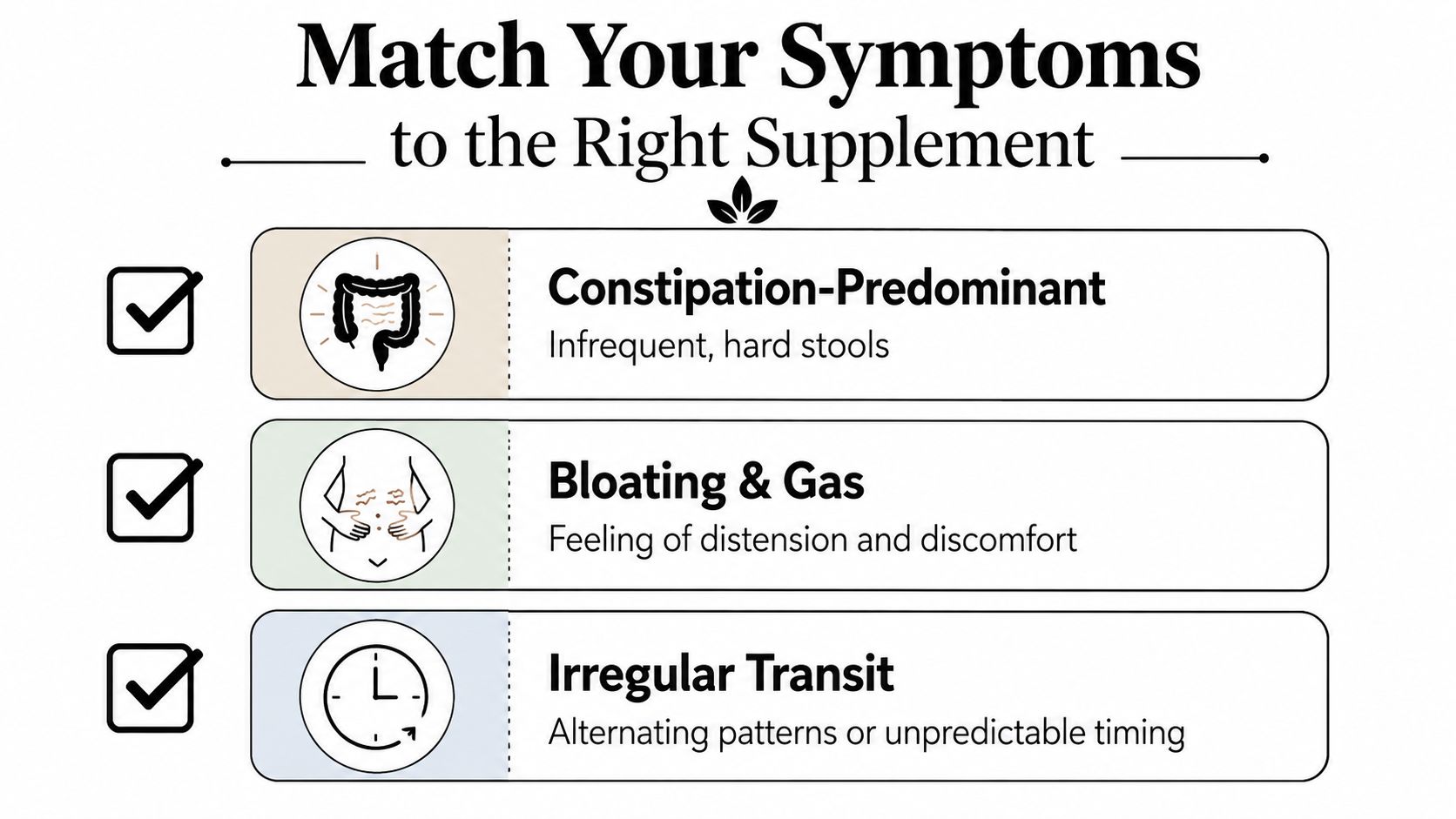
Start with the dominant pattern, not the longest list of symptoms. A short symptom diary can record meal timing, stool frequency, stool consistency, fullness, nausea, bloating, and urgency. That information often reveals whether the main issue is upper digestive discomfort, fermentation, or delayed evacuation.
Constipation-predominant symptoms
If bowel movements are infrequent and stools are hard, start by thinking about the colon. Magnesium oxide is the most directly aligned supplement class when water retention and transit are central concerns. A probiotic may be reasonable for longer-term digestive balance, especially when irregularity coexists with broader microbiome symptoms, but it shouldn't be presented as an immediate laxative replacement.
Fiber can help some people, particularly when intake is low, but adding a large amount during significant bloating can backfire. Choose one primary change first so you can tell whether stool frequency, ease of passage, and abdominal discomfort improve.
Bloating and gas after meals
Bloating after eating doesn't automatically mean slow colonic transit. The pattern may point toward meal composition, food breakdown, fermentation, swallowed air, or small-bowel dysfunction. A mealtime digestive enzyme is more targeted when the discomfort repeatedly follows particular foods, while a probiotic may be more appropriate when bloating accompanies irregularity or a broader shift in digestive balance.
Avoid treating every episode with a strong laxative. Evacuation may temporarily reduce pressure, but it won't explain why symptoms begin after certain meals.
Postprandial fullness and discomfort
Early fullness, nausea, and upper-abdominal pressure suggest that gastric emptying deserves attention. Enzymes may support digestion, but persistent or severe symptoms require evaluation rather than escalating a supplement stack. Combining several motility products can make it impossible to identify the cause and may worsen nausea, cramping, or diarrhea.
Mixed or stress-related symptoms
Alternating bowel patterns need a more cautious plan. A targeted probiotic may support regularity or digestive balance, but adding magnesium, fiber, enzymes, and herbal prokinetics together creates too many variables. Stress can alter the gut-brain relationship and symptom perception, yet stress-related symptoms still deserve a proper history when they persist.
Start with one meaningful change: Use a single ingredient or clearly defined formula first, track the response, then decide whether another component has a specific job.
For people who want a daily bowel-regularity formula, GutRx Daily is one example of a product positioned for daily motility and nutrient-absorption support. The more important decision is whether that use case matches your symptoms, rather than whether a label promises broad “full-spectrum” movement.
Evaluating Supplement Quality and Safety
A high-quality gut motility supplement should make its intended use easy to understand. If a probiotic label lists only a genus and species without a strain designation, you can't confidently compare it with strain-specific research. Look for the genus, species, and strain, plus a clear statement about whether potency is guaranteed through expiration or only measured at manufacture.
Quality markers that matter
- Strain specificity: A product should identify probiotic strains precisely, not rely on a generic “proprietary blend” that prevents meaningful comparison.
- Potency transparency: The label should clarify how live cultures are measured and when that potency applies.
- Independent verification: Third-party testing can help verify identity, purity, and potency, but the certification should be identifiable rather than implied.
- Delivery protection: Enteric coating or delayed-release capsules may help protect ingredients from stomach conditions, although delivery technology doesn't prove that a formula will solve your symptoms.
- Storage instructions: Follow the stated storage requirements. Shelf-stable doesn't mean indestructible, and heat or moisture can affect product quality.
- Complete labeling: Every active ingredient and dosage should be visible, with no unexplained blend that hides the actual formula.
A downloadable Certificate of Analysis can add useful accountability when it identifies the tested batch and the attributes measured. It may verify identity, potency, purity, or contaminants, but it doesn't prove clinical effectiveness. For a practical explanation of what these documents can and can't establish, see this guide to Certificates of Analysis.
Safety belongs in the buying decision
Magnesium needs extra caution in kidney disease. Probiotic, fiber, enzyme, and herbal products can also be inappropriate depending on immune status, medications, suspected obstruction, severe abdominal symptoms, or an undiagnosed condition. A “natural” label doesn't remove interaction risk.
Be skeptical of products that promise to repair every digestive problem, list no strain details, hide dosages inside a blend, or suggest that persistent symptoms only prove you need a stronger dose. The right formula should have a defined role, transparent quality controls, and a clear reason to stop or seek advice.
Practical Dosing and Timing for Common Regimens
The safest regimen is one you can evaluate. Start with the smallest reasonable change that matches the symptom pattern, follow the product label, and track bowel frequency, stool form, straining, fullness, nausea, gas, and post-meal discomfort. Don't add several new products on the same day unless a clinician has designed the plan.
For constipation-predominant symptoms
A practical sequence is a daily probiotic or targeted microbiome formula alongside a magnesium protocol when magnesium is appropriate for you. Take the probiotic according to its label, often at a consistent time each day, and take magnesium as directed with attention to stool response. Magnesium oxide has clinical support for chronic constipation, but dose escalation should be cautious, especially with kidney disease or loose stools.
Assess the pattern over a meaningful trial rather than expecting an instant microbiome change. Stop or reduce the product if diarrhea, cramping, or worsening pain develops, and don't use repeated escalation to cover up persistent constipation.
For bloating and IBS-type discomfort
Use a digestive enzyme with the meal it is intended to support, not hours afterward. A targeted probiotic can be taken consistently at the label's recommended timing, but introduce it separately from the enzyme if you want to know which intervention affects symptoms.
This combination makes the most sense when meals trigger discomfort and irregularity is also present. If bloating is severe, progressive, or accompanied by weight loss, vomiting, or marked pain, self-directed supplement trials aren't enough.
For postprandial discomfort
A mealtime enzyme strategy should match the food trigger. Take the product at the beginning of the meal when the label directs, and record which meals produce early fullness, pressure, nausea, or gas. Guidance on timing is also available in this explanation of when to take digestive enzymes.
Don't cycle products just because cycling sounds more “natural.” Continue only while the formula has a clear benefit and remains appropriate. If symptoms don't improve, reassess the suspected zone instead of adding another supplement class.
When to Seek Medical Evaluation Instead of Self-Treating
Gut motility supplements are a poor substitute for evaluation when symptoms suggest obstruction, inflammation, severe dysfunction, or a medication effect. Seek prompt medical care for severe or escalating abdominal pain, persistent vomiting, marked distension, inability to pass stool or gas, blood in the stool, unexplained weight loss, fever, or a sudden major change in bowel habits.
Persistent early fullness, nausea, constipation, diarrhea, or bloating also deserves attention when a sensible supplement trial doesn't help. A clinician may consider medication review, laboratory work, imaging, endoscopy, breath testing, or specialized transit and gastric-emptying studies, depending on the pattern.
Don't force movement through an unexplained problem. If obstruction or significant disease is possible, a laxative or prokinetic supplement may delay appropriate care or worsen the situation.
Bring your supplement bottles or photographs of the labels to the appointment. Record when symptoms begin, what foods trigger them, stool patterns, medications, and what changed after each product. A gastroenterologist can evaluate suspected motility disorders, while a registered dietitian can help match food and supplement choices to the diagnosis.
Not every constipation complaint is a motility disorder, and not every episode of bloating reflects slow transit. The safest plan identifies the likely region, tests one targeted strategy at a time, and escalates to professional assessment when the pattern doesn't fit.
GutRx offers targeted digestive support, including daily regularity formulas, microbiome-focused products, women's urinary and digestive support, and mealtime digestive enzymes. Visit GutRx to compare options by symptom pattern, ingredient focus, and product quality documentation before choosing a gut motility supplement.


