

Stress doesn't usually create a new supply of intestinal gas. Can stress cause bloating and gas? Yes, but mainly by changing how the gut moves, clears, and interprets gas that is already present. Stress can slow transit, alter secretion and permeability, and make gut nerves more sensitive, so a normal amount of gas may feel tight, painful, or visibly distending. Research on stress and the gut-brain axis supports this more precise explanation.
That distinction matters when you're frustrated because your abdomen feels swollen after an ordinary meal. Bloating is the sensation of fullness, pressure, or tightness. Abdominal distension is visible expansion. They can occur together, but they aren't identical, and neither automatically proves that your body is producing too much gas.
Table of Contents
- The Real Link Between Stress and Digestive Discomfort
- How the Fight or Flight Response Halts Digestion
- Visceral Hypersensitivity and Delayed Gas Clearance
- Recognizing When Bloating Signals a Deeper Gut Issue
- Targeted Supplements for Stress-Induced Gut Imbalance
- Practical Habits to Calm the Gut-Brain Axis
- Building Long-Term Digestive Resilience
The Real Link Between Stress and Digestive Discomfort
The popular advice to “just relax” misses the biology. Your discomfort is physical, but stress may be changing the gut's handling and perception of normal digestive contents rather than manufacturing excessive gas. A review of bloating found that people who feel bloated don't necessarily have a significantly higher total intestinal gas volume, which means the sensation can reflect altered gut-brain signaling, impaired clearance, or heightened sensitivity instead of gas production alone. The review on bloating, gas retention, and stress explains this distinction.
Bloating and distension aren't the same
You might feel pressure in your abdomen without obvious swelling. In another episode, your waistband may feel tighter because the abdomen visibly expands. Stress can contribute to either experience by affecting intestinal movement, the coordination of abdominal muscles, and the way sensory nerves report stretching to the brain.
That doesn't make the symptom imaginary. The digestive tract contains an extensive network of nerves that constantly monitors stretching, chemical changes, and movement. When stress increases the responsiveness of that system, ordinary sensations can become intrusive or painful.
The practical takeaway: Stress may amplify bloating even when the amount of gas inside the intestine hasn't risen substantially.
A large NIH-hosted study of functional gastrointestinal symptoms found that 53% of participants reported bloating and 48% reported gas, while 18% reported psychological distress. The authors still observed relationships between stress and symptoms. That pattern shows why you don't need widespread psychological distress for emotional strain to interact meaningfully with digestive symptoms.
The same study identified a broader cluster of stress-sensitive complaints, including heartburn at 73%, discomfort at 67%, and diarrhea at 57%. Bloating and gas therefore often belong to a wider pattern of altered gut-brain communication, rather than appearing as isolated reactions.
For a visual explanation of how the nervous system and digestive tract communicate, see this gut-brain axis diagram. It can help you understand why a demanding week, tense meal, or prolonged worry may change when symptoms appear and how intensely you feel them.
How the Fight or Flight Response Halts Digestion
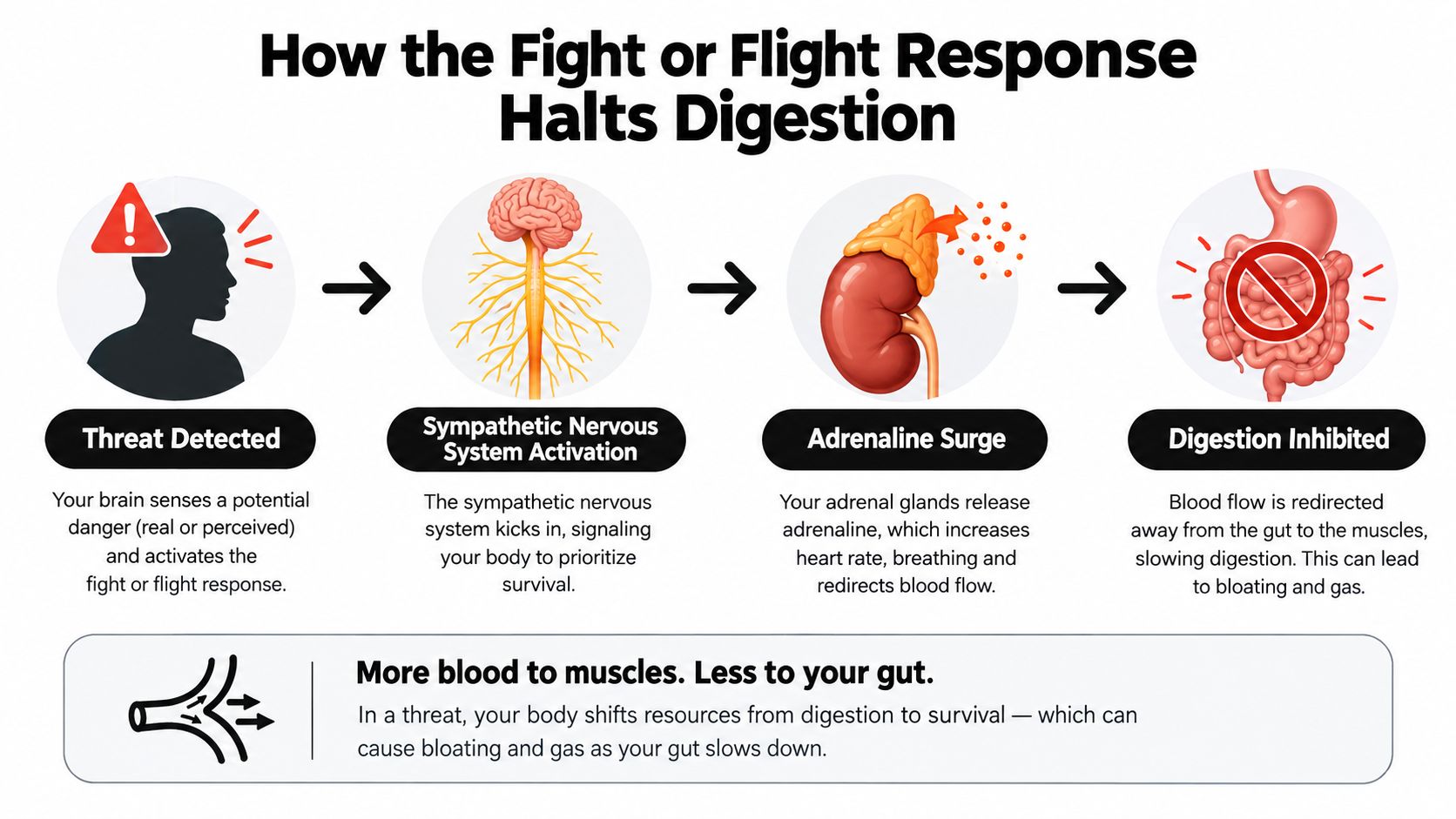
Your digestive system works best when the body senses relative safety. During a threat response, the sympathetic nervous system becomes more active and the hypothalamic-pituitary-adrenal, or HPA, axis helps release hormones such as cortisol and adrenaline. These signals prioritize immediate survival functions and can temporarily reduce attention to digestion.
That response is useful when you need to react quickly. It becomes less helpful when your body stays on alert through work pressure, poor sleep, conflict, or persistent worry. An explanation of stress and digestion describes how stress can suppress digestive muscle contractions, slow digestive enzyme release, and disrupt communication between the brain and gut.
Why a tense meal can feel different
Suppose you eat lunch while rushing between meetings. You may chew quickly, swallow more air, and pay little attention to fullness signals. At the same time, stress-related changes in motility and secretion can slow the normal processing of food. The result may be pressure, burping, abdominal fullness, or gas that seems to appear suddenly.
The problem isn't that digestion completely stops. It becomes less coordinated. Muscular contractions may move food and gas less efficiently, while changes in secretion can make the digestive process feel slower or heavier. Food then spends more time in parts of the tract where microbes can ferment undigested carbohydrates, although the dominant issue may still be delayed movement and heightened sensation rather than a dramatic increase in total gas.
Stress can also influence the behaviors surrounding meals. People under pressure may eat faster, talk while chewing, rely more heavily on carbonated drinks, or change their usual meal pattern. Those behaviors can add swallowed air or make an already sensitive digestive system more difficult to read.
A digestive enzyme product fits a different part of this picture. GutRx MEALTIME is described as a digestive enzyme supplement that supports digestion, reduces bloating, and enhances nutrient absorption. It doesn't replace evaluation of persistent symptoms, and it won't address every stress-related mechanism, but it may be relevant when discomfort consistently follows meals and the concern centers on digestive processing.
The key is timing. If symptoms begin during acute tension, the nervous system may be central. If they reliably follow a particular food, enzyme activity, fermentation, intolerance, or meal size may also deserve attention.
Visceral Hypersensitivity and Delayed Gas Clearance
Stress does not usually create a sudden surplus of gas. More often, it changes how the intestine moves gas and how strongly the gut interprets normal stretching. The result can be intense bloating even when the total gas volume has not increased substantially.
Visceral hypersensitivity describes an unusually strong response from sensory nerves in the digestive tract. As the intestinal wall stretches, a person with heightened sensitivity may feel pressure, fullness, or pain from an amount of distension that would otherwise feel neutral. The gut-brain literature connects stress with altered motility and exaggerated visceral perception, particularly in people with IBS. This review of stress, IBS, and gut-brain mechanisms explains how stress can also influence secretion, permeability, immune activity, autonomic signaling, and the microbiota.
Delayed clearance, not necessarily excess production
Gas normally forms during digestion, moves through the intestine, and leaves the body. Psychological stress can slow small-intestinal transit and interfere with gas evacuation. A review of stress-related intestinal changes describes associations between stress, reduced transit, bacterial overgrowth, and changes to the small-intestinal mucosa. These effects may encourage gas retention, distension, discomfort, and bloating.
The number of gas pockets may be ordinary, but movement is slower, so pressure accumulates. Stress-related bloating therefore often reflects delayed clearance rather than a major increase in gas production. The gut behaves less like an overfilled container than a system that is taking longer to move its contents onward.
This combination explains why your abdomen can feel tight after a meal without evidence of substantially greater total gas volume. Gas remains in the intestine longer, while more reactive nerves send stronger warning signals to the brain. Either mechanism can cause discomfort, and both can occur together.
A better question than “How do I eliminate all gas?” is “Is my gut clearing gas normally, and are my nerves overreacting to ordinary stretching?”
For a comparison of probiotic options aimed at gas and bloating, see this guide to the best probiotics for gas. The product choice does not explain every case, but understanding the clearance problem helps distinguish support for regular digestion from attempts to eliminate normal gas.
Constipation can intensify pressure because slower movement keeps digestive contents in the colon longer. Stress can also accelerate bowel activity in some people, causing urgency or diarrhea. The nervous system does not produce one fixed digestive response, so the same person may experience bloating, constipation, loose stools, or changing symptoms at different times.
When bloating occurs with irregular bowel movements, GutRx DAILY is described as containing selected strains intended to support bowel-movement form and transit, alongside prebiotics for ongoing probiotic support. This differs from an enzyme supplement taken around a meal. It is framed as support for regularity rather than an immediate solution for one episode of pressure.
Track the relationship between symptoms, stress, meals, bowel movements, and time of day. That pattern can show whether delayed clearance, heightened sensitivity, or another digestive factor deserves closer attention.
Recognizing When Bloating Signals a Deeper Gut Issue
Stress may trigger a flare, but it does not automatically explain recurring bloating. An isolated episode can settle as the nervous system and digestion return to baseline. Repeated symptoms deserve a broader assessment, particularly when bloating occurs with abdominal pain, constipation, diarrhea, or a lasting change in bowel habits.
IBS is one possible explanation. Stress can worsen IBS symptoms without causing IBS itself, so stress-related symptoms remain medically real and should not be dismissed as anxiety. The same distinction also prevents self-diagnosing IBS based only on periods of high stress.
What the clinical pattern shows
A 2016 clinical study found abdominal bloating in 70.0% of people with IBS overall, compared with 19.5% of non-IBS subjects. The full IBS study also reported bloating in 84.2% of participants with IBS-C. Within that IBS-C group, 26.8% said bloating was more likely during stressful periods, and 27.5% identified it as their most bothersome symptom. These findings support a connection between stress and bloating within a digestive disorder, while showing that stress is one factor in a larger clinical pattern.
The relationship is not identical for everyone. Another IBS study reported bloating in 61.6% of participants and associated it with catastrophic life events and depression, while stress and anxiety were not independently associated with bloating in that sample. The study on psychological factors and IBS bloating reinforces why individual symptom patterns matter more than a single explanation.
The practical question is whether symptoms reflect altered motility, heightened sensitivity, IBS, food intolerance, or another condition. Seek medical advice if bloating is new, persistent, repeatedly disrupts daily life, or occurs with unexplained weight loss, gastrointestinal bleeding, persistent vomiting, severe abdominal pain, or a sustained major change in bowel habits. These signs do not identify a diagnosis by themselves, but they warrant professional evaluation rather than self-treatment alone.
Questions to bring to an appointment
- Timing: Does bloating begin during stress, after eating, or independently of both?
- Bowel pattern: Do constipation, diarrhea, urgency, or incomplete evacuation occur with it?
- Food relationship: Do dairy, large meals, or specific carbohydrate-rich foods repeatedly trigger symptoms?
- Duration: Does discomfort resolve, or does it continue and recur?
- Whole-body context: Have sleep, mood, medications, infections, or menstrual patterns changed at the same time?
A clinician can use this history to decide whether testing, dietary guidance, or evaluation for a functional digestive disorder is appropriate. A supplement cannot distinguish IBS, food intolerance, bacterial overgrowth, or another cause.
Targeted Supplements for Stress-Induced Gut Imbalance
Supplements do not remove stress from the body, and they cannot reliably tell whether bloating comes from altered motility, food intolerance, IBS, or another condition. Their useful role is narrower: support a suspected pattern while you continue looking for the factor driving symptoms. The goal is not to produce more gas or force digestion faster. It is to reduce symptoms without overlooking their cause.
Stress can change intestinal movement, secretion, gut permeability, immune signaling, and microbial activity. Those changes may delay gas clearance or heighten sensitivity, so ordinary gas volumes can feel unusually painful. A stressed person does not automatically have a depleted microbiome or inadequate digestive enzymes. Match the product to the symptom pattern, introduce it cautiously, and judge it by your response.
Match the tool to the symptom pattern
| Symptom pattern | Best support type | Primary benefit |
|---|---|---|
| Bloating with irregular bowel movements | Probiotic or synbiotic | Ongoing microbiome and regularity support |
| Discomfort after a specific meal | Digestive enzyme formula | Helps break down targeted food components |
| Gas with a changing bowel pattern | Clinician-guided evaluation, with targeted support if appropriate | Identifies whether motility, sensitivity, food, or another factor is involved |
| Persistent symptoms with alarm signs | Medical evaluation | Rules out conditions that supplements can't diagnose |
A synbiotic pairs live probiotic organisms with prebiotic compounds intended to support them. A postbiotic contains nonliving microbial components or metabolites, depending on the formula. These terms describe how a product is made, not what it will accomplish for every person. Check the identified strains, intended use, storage requirements, quality controls, and directions.
This guide to gut-brain axis supplements offers a practical framework for comparing support options. Transparent strain identification, clear storage instructions, and testing documentation can make a product easier to assess. Third-party testing or a downloadable Certificate of Analysis may help verify purity, potency, and strain identity, but those details cannot establish that the formula fits your symptoms.
Use enzymes more selectively
Digestive enzymes and probiotics serve different purposes. An enzyme formula may be relevant when discomfort follows a meal containing dairy or certain carbohydrate-rich foods that are difficult to digest. It does not directly retrain visceral sensitivity or resolve the stress response, and a larger dose is not automatically more effective.
Change one variable at a time and track what happens. If symptoms intensify, stop the product and reassess rather than adding several supplements together. Anyone who is pregnant, takes medication, manages a diagnosed condition, or has persistent symptoms should consult a qualified clinician before beginning a supplement routine.
Practical Habits to Calm the Gut-Brain Axis
Your nervous system responds to repeated signals of safety, not one relaxation exercise after discomfort peaks. Small changes before and during meals can reduce the mismatch between eating and the body's readiness to digest. Stress may not create a large amount of extra gas, but it can alter movement and amplify how strongly ordinary intestinal sensations are felt.
Build a calmer meal routine
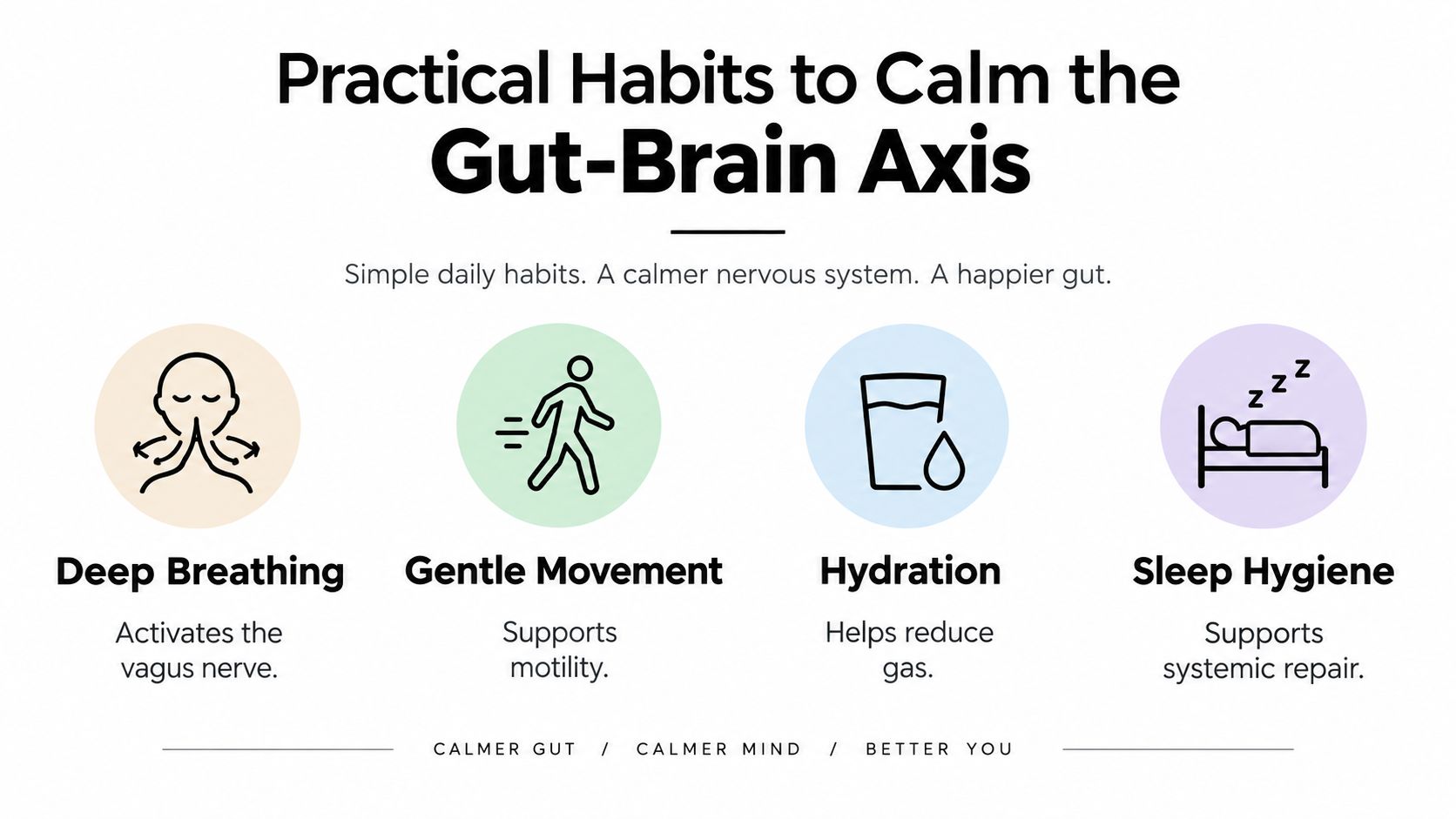
Begin before the first bite. Pause briefly, lower your shoulders, and breathe slowly with a longer exhale than inhale. This does not require an extended meditation session. The aim is to reduce the intensity of the fight-or-flight response before food reaches the stomach, giving digestion a better chance to proceed normally.
Chew thoroughly and slow the meal's pace. Eating quickly can increase swallowed air and makes fullness harder to recognize. If work or scrolling keeps you rushing, place your utensils down between bites.
Gentle movement can support intestinal motility. A relaxed walk after eating may feel better than intense exercise immediately after a meal, particularly when abdominal pressure is already present. Hydration can also help when bloating occurs with irregular bowel movements, although drinking more does not address every cause.
Before changing your entire diet, record the sequence: stress level, meal, eating speed, symptoms, and bowel movement pattern. The sequence often reveals more than a list of “bad” foods.
Protect the recovery window
Sleep and stress management shape the conditions in which digestion operates. Use a consistent wind-down routine, reduce stimulating activity before bed, and choose a relaxation practice you can repeat comfortably.
Food restriction can become another source of anxiety. Rather than removing many foods at once, test one suspected trigger with professional guidance when symptoms are frequent or severe. A dietitian can help maintain nutritional adequacy while assessing intolerances or fermentable carbohydrates.
Behavior-based therapies also address gut-brain signaling. A review of brain-gut behavioral therapies summarized a meta-analysis of 42 randomized trials in which cognitive behavioral therapy and hypnotherapy reduced pain. The review discussing these therapies supports using these approaches as part of structured care for persistent digestive symptoms, rather than treating them as vague wellness advice.
Building Long-Term Digestive Resilience
Stress is unavoidable, yet its digestive effects can become more manageable. Long-term resilience comes from identifying patterns, matching interventions to the problem, and giving the gut-brain system predictable conditions.
Keep a brief symptom record. Note whether bloating follows stress, a particular meal, constipation, diarrhea, or several factors together. Over time, this record can show whether symptoms track gas production, slowed clearance, or heightened sensitivity. It also gives a clinician, dietitian, or pharmacist a clearer basis for choosing one intervention at a time.
For supplements, choose transparent formulations with clearly identified strains, storage and delivery guidance, and accessible third-party testing when those standards matter to you. Delayed-release designs may help protect ingredients from early breakdown, but capsule format alone cannot promise relief. Avoid treating a product as a substitute for understanding your symptom pattern.
A resilient routine includes regular meals you tolerate, adequate fluids, gentle movement, slower eating, and consistent sleep. These habits do not eliminate every digestive cause, but they reduce avoidable strain on motility and sensitivity.
The central lesson is simple: stress can make normal digestion feel abnormal by changing movement and sensitivity. Once gas volume is separated from gas perception, treatment can become more targeted. Persistent symptoms or symptoms with alarm features deserve medical assessment.
GutRx offers synbiotic and digestive enzyme options for different digestive-support needs, including microbiome support and meal-related discomfort. If stress-related bloating or gas continues to disrupt your routine, review its available formulations and compare them with your symptom pattern.


