

You eat a normal dinner, settle onto the couch, and within an hour your waistband feels tight, your upper abdomen feels pressurized, and gas seems to arrive the minute you try to relax. That's the pattern people mean when they search for bloating and gas at night.
The first useful distinction is simple. Some people feel worse at bedtime because daytime triggers finally catch up with them. Others wake from sleep with bloating, gas pain, or visible distension. Those are not the same problem, and they usually don't respond to the same fixes.
Table of Contents
- Why Bloating and Gas Show Up at Night
- How Your Gut Actually Behaves After Dark
- The Most Common Nighttime Triggers
- Matching Relief Tools to Your Symptom Pattern
- Your Evening Routine for Lighter Nights
- Fixes That Look Helpful but Miss the Point
- Putting It All Together for Your Situation
- Red Flags and When to Seek Care
Why Bloating and Gas Show Up at Night
For many, the evening problem starts earlier than they think. The trigger is often dinner itself, or the way dinner was eaten. A large meal, a high-FODMAP meal, carbonated drinks, eating fast, or lying down too soon can create symptoms that peak when the day gets quiet.
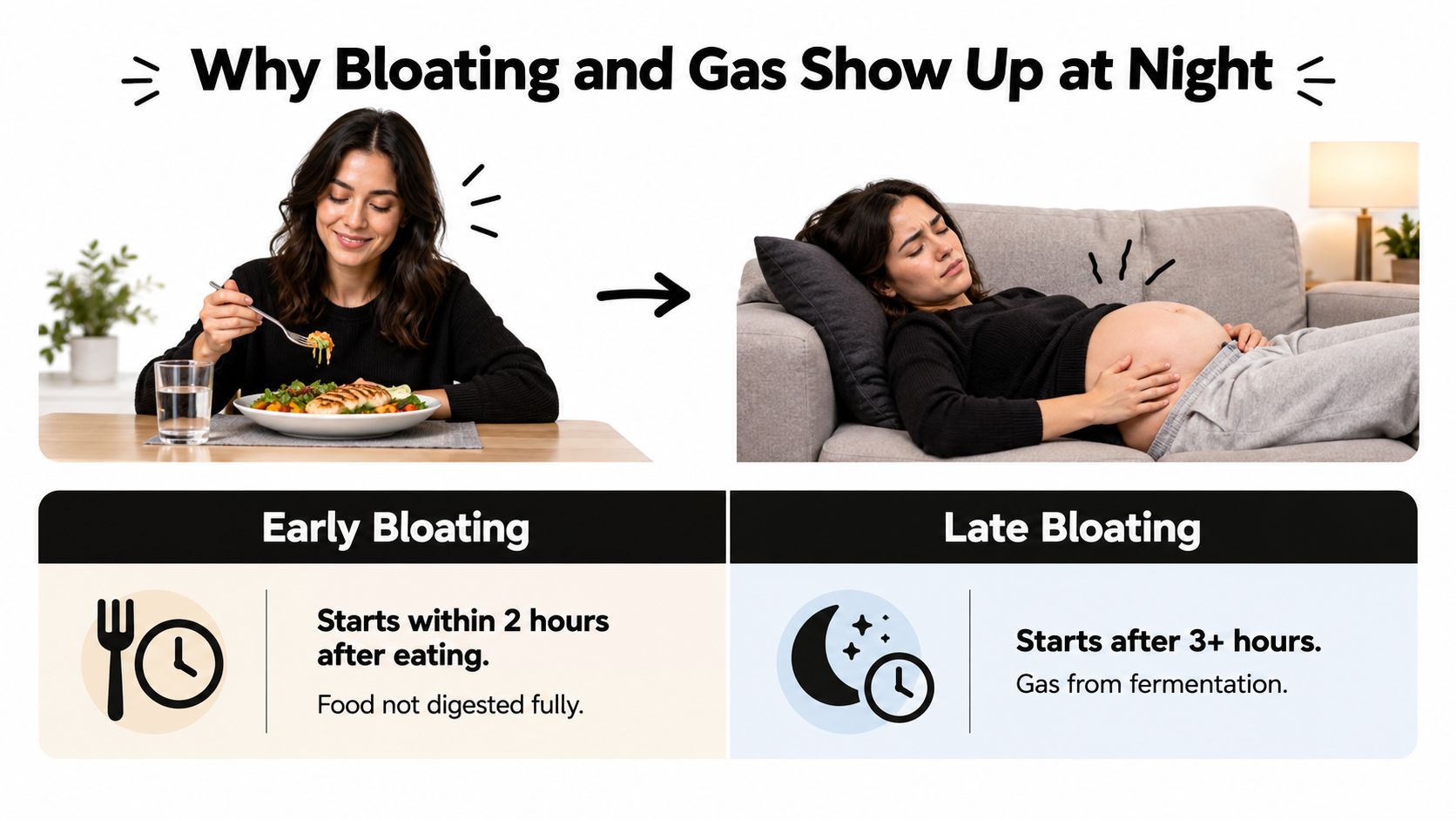
Two nighttime patterns that matter
Pattern one is bedtime peaking symptoms. You feel fine or mostly fine through the meal, then get pressure, fullness, belching, or gas within the next few hours. This is the common pattern. It usually improves when you change meal timing, meal size, food choice, or how quickly you eat.
Pattern two is true nocturnal waking. You fall asleep, then wake later with distension, gas pain, or abdominal pressure. That deserves more attention. A clinician-facing review notes that waking from sleep with symptoms is a warning sign worth closer evaluation, while functional bloating often improves overnight and is lowest in the morning, which makes the distinction clinically useful for sorting ordinary bedtime discomfort from symptoms that may need workup (Medicine Today review on abdominal bloating).
Practical rule: Feeling bloated when you go to bed is common. Waking up because bloating or gas interrupted sleep is a different pattern.
Why this isn't a niche complaint
Bloating is one of the most common symptoms in functional gut disorders. A large European multicenter analysis published in 2026 found bloating and or visible abdominal distension in 64.9% of people with IBS, 50.6% with functional dyspepsia, and 88.5% with both conditions, compared with 13.7% in a reference group (European multicenter analysis).
That matters because nighttime discomfort rarely appears in isolation. It often sits inside a bigger pattern of IBS-type gut sensitivity, meal-related fermentation, and motility changes.
How Your Gut Actually Behaves After Dark
A meal that felt manageable at lunch can feel miserable at 10 p.m. for three reasons. The gas may move more slowly, your nervous system may notice it more, and your body position changes how pressure is handled.
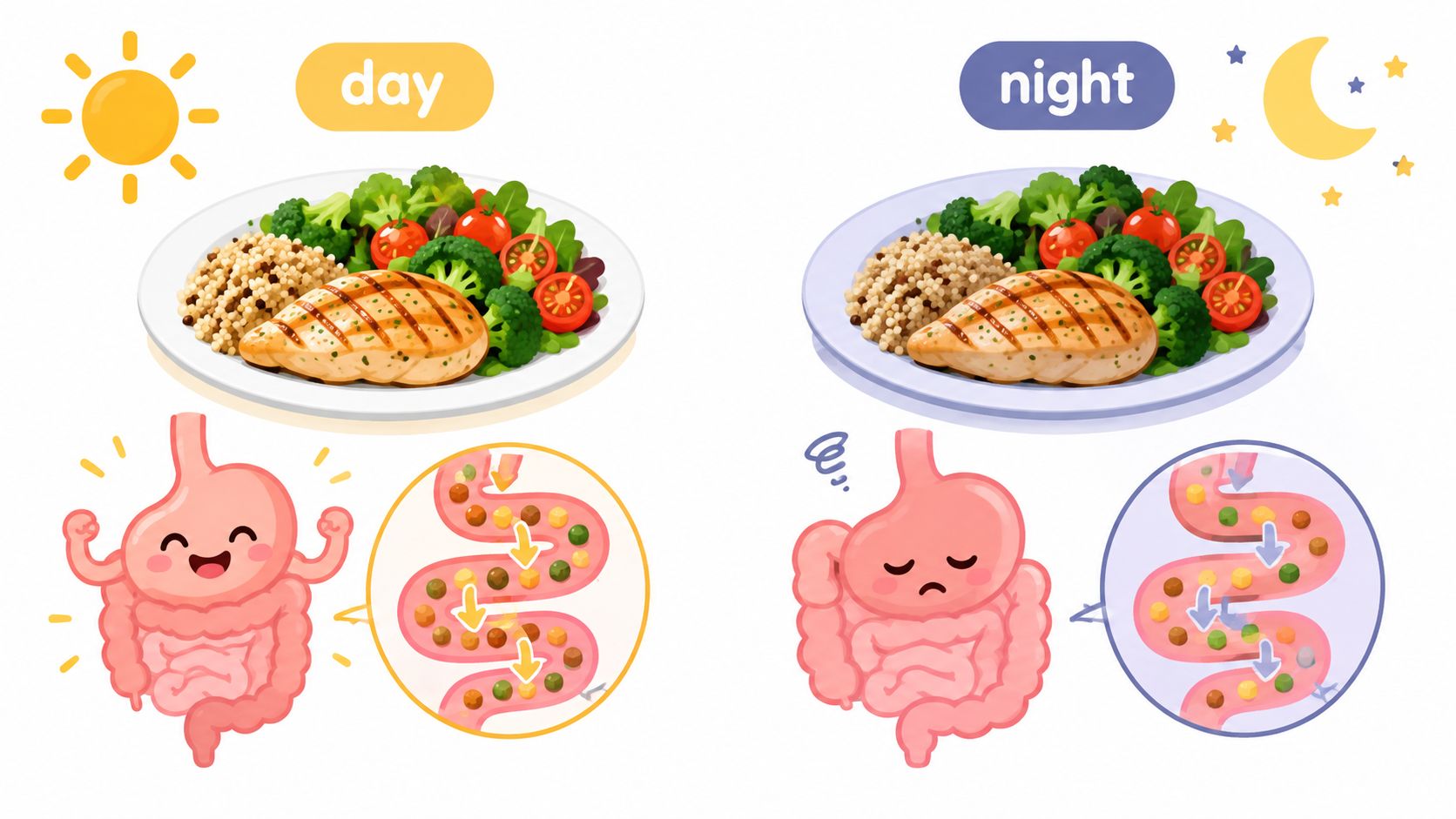
Motility slows and gas clears less efficiently
Functional bloating and distension aren't explained mainly by having too much gas trapped inside. Expert reviews describe them as multifactorial, involving visceral hypersensitivity, abdomino-phrenic dyssynergia, dysmotility, and dysbiosis. The same review notes that colonic propulsive activity falls markedly during sleep, so fermented gas moves less efficiently at night and is more likely to be felt as pressure or discomfort when you're lying down (United European Gastroenterology review).
If post-meal heaviness is part of your pattern, it helps to understand the broader digestion piece too. Gut motility and gastric emptying shape how pressure builds after dinner, which is why this overview on butyrate and post-meal discomfort is relevant.
Your brain notices the same stretch more at night
People with IBS often have visceral hypersensitivity. That means the gut doesn't need a dramatic amount of stretching to feel uncomfortable. During the day, movement and distraction can blunt that sensation. At night, when you're still and paying attention, the same pressure can feel much louder.
Population and clinic studies show how often bloating sits inside IBS. Historical and epidemiologic data describe monthly bloating in 15.9% of people overall, with higher rates in women at 19.2% versus 10.5% in men. In IBS populations the burden rises sharply, including 76% of 542 IBS patients in one U.S. study and 82.5% of 337 IBS patients in another study, with women affected more often than men at 87.4% versus 70.4% (review of epidemiology and IBS burden).
Position changes pressure, not just comfort
Think of a partly filled balloon. Hanging freely in a room, the pressure distributes one way. Press that same balloon against a flat surface, and the pressure shifts shape even if the amount of air didn't change.
Your abdomen behaves similarly. When you lie down, the abdominal wall and diaphragm have to accommodate pressure differently. That's one reason bloating can feel suddenly more dramatic the moment you recline.
The problem at night often isn't that your body made a huge new amount of gas in one minute. It's that the gas you already produced becomes harder to move and easier to feel.
The Most Common Nighttime Triggers
The fastest way to troubleshoot bloating and gas at night is to match the trigger to the timing. Dinner choices usually create one pattern. Slower transit or microbial overgrowth creates another.
The biggest offenders
Cleveland Clinic notes that nighttime gas is commonly linked to high-FODMAP foods, eating too much at once, lying down soon after meals, and swallowing extra air from fast eating, straws, or carbonated drinks. It also notes that IBS is among the most common medical causes of excessive nighttime gas (Cleveland Clinic guidance on gas at night).
That lines up with what shows up most often in practice:
- High-FODMAP evening meals: Onion, garlic, beans, wheat, some fruits, and some dairy can be fine at lunch and rough at night. This usually fits the later fermentation pattern, where symptoms build a few hours after eating.
- Large portions: Even a healthy dinner can backfire if the meal is too big. This usually causes early pressure and fullness, then a second wave of gas later.
- Eating close to bed: A late dinner makes it more likely that digestion and fermentation peak when you're horizontal.
- Fast eating and extra air: Carbonated drinks, gum, straws, and rushed meals often create upper abdominal pressure and belching more than deep lower abdominal gas.
Conditions that change the pattern
Some patterns are more persistent and less tied to one obvious food.
| Trigger | Typical Nighttime Pattern |
|---|---|
| High-FODMAP dinner | Symptoms build later in the evening and may include visible distension |
| Large evening meal | Fullness, tightness, and pressure start early and worsen when reclining |
| Carbonation or swallowed air | Belching, upper abdominal pressure, and discomfort soon after eating |
| IBS with faster bowel patterns | Fermentation-type gas and urgency can build across the evening |
| IBS with slower bowel patterns | Pressure, pooling, and distension often worsen the longer stool sits |
| Suspected SIBO | Earlier, persistent bloating that may seem disproportionate to meal size |
| Delayed gastric emptying | Fullness and heaviness linger well into the night |
What to watch for in your own timeline
A medical review of chronic bloating identifies the two most common causes in this category as small intestinal bacterial overgrowth and intolerance to carbohydrates and other food groups, while also listing celiac disease, pancreatic insufficiency, gastroparesis, hypothyroidism, and chronic intestinal pseudo-obstruction among other organic causes (Mayo Clinic review on chronic abdominal bloating).
For suspected SIBO, a commonly cited technical benchmark is a rise in breath hydrogen of more than 10 to 12 ppm after a 50 g glucose load or more than 20 ppm after lactulose within the first 90 minutes, with jejunal aspirate more than 10^5 CFU/mL traditionally used as a diagnostic reference standard (SIBO testing review).
If your symptoms are early, persistent, and not clearly explained by portion size, that's the pattern that deserves a closer look instead of endless food restriction.
Matching Relief Tools to Your Symptom Pattern
By the time people get to this stage, many have already tried three things at once. An enzyme, a probiotic, peppermint, maybe a food list from social media. That usually creates more confusion than relief.
The first job is to sort out which pattern you have. True nocturnal symptoms tend to wake you, shift with body position, or show up even after a fairly careful dinner. The more common pattern is daytime buildup that becomes obvious at bedtime because dinner was large, late, fermentable, or all three. Those two patterns need different tools.
Which tool fits which problem
| Tool | Best Symptom Match | When It Misses the Point | How to Test |
|---|---|---|---|
| Low-FODMAP food choices | Predictable evening distension after foods like onion, garlic, beans, wheat, or some dairy | Doesn't address constipation-related backup, delayed emptying, or symptoms that wake you regardless of dinner | Keep dinner stable for 2 weeks and remove only the likely fermentable triggers |
| Digestive enzymes | Meal-linked symptoms tied to dairy, legumes, certain fibers, or heavier mixed meals | Won't compensate for a very large late meal or fix bloating that is present most of the day | Use them only with the suspect meal type for 2 weeks and track pressure, belching, and overnight waking |
| Probiotics or synbiotics | Ongoing gas, post-antibiotic changes, or a chronic pattern that is not tightly linked to one food | Can aggravate a very sensitive gut early on and won't give same-night relief | Start one formula only and reassess after a defined trial |
Low-FODMAP works best for the bedtime peak pattern
If the problem reliably swells after onion, garlic, beans, wheat-heavy dinners, or certain dairy foods, food composition matters more than supplements. This is the person who feels increasingly distended through the evening, then blames sleep because bedtime is when the pressure becomes hard to ignore.
That pattern usually responds well to a simpler dinner. Fewer fermentable carbs at night. More repetition for a couple of weeks. Less guesswork.
Enzymes help when a meal is the trigger
Enzymes fit the patient who can say, "I do fairly well until I eat pizza, ice cream, creamy sauces, or a bean-heavy dinner." That is different from someone who feels bloated no matter what they eat by late afternoon.
Research on oral lactase found reduced breath hydrogen and symptom improvement in lactose intolerance during a 25 g lactose challenge, but not at a higher 50 g lactose load, according to diet therapy guidance on lactase. The trade-off is straightforward. A targeted enzyme can help with the right food and portion. It does not make a large, highly fermentable meal consequence-free.
One factual example in this category is GutRx MEALTIME, a digestive enzyme formula designed to support breakdown of protein, fat, fiber, dairy, and FODMAP-containing meals when taken with food.
If your gas is chronic and not clearly tied to one meal type, a broader comparison of probiotic options for gas is usually more relevant than continuing to add meal enzymes.
Probiotics and synbiotics are slower tools
These fit the longer-arc pattern. Ongoing gas after antibiotics. A gut that has become more reactive over months. Symptoms that are present across the week instead of after one specific dinner.
They are rarely the right answer for somebody who only gets bloated after a late burrito or a heavy bowl of pasta. They also require patience. Early bloating during a trial is common in sensitive patients, so changing strains every few days usually backfires.
Use one tool for one suspected mechanism. That is how you figure out whether you are dealing with a bedtime peak from daytime triggers, or a problem that is happening after dark.
Your Evening Routine for Lighter Nights
Patients who feel bloated or gassy at bedtime usually do best with a repeatable evening routine that lowers fermentation, pressure, and swallowed air before sleep. The goal is to separate two patterns. One is a daytime trigger that catches up with you at night. The other is a symptom pattern that starts after dark. Your routine should match the pattern.
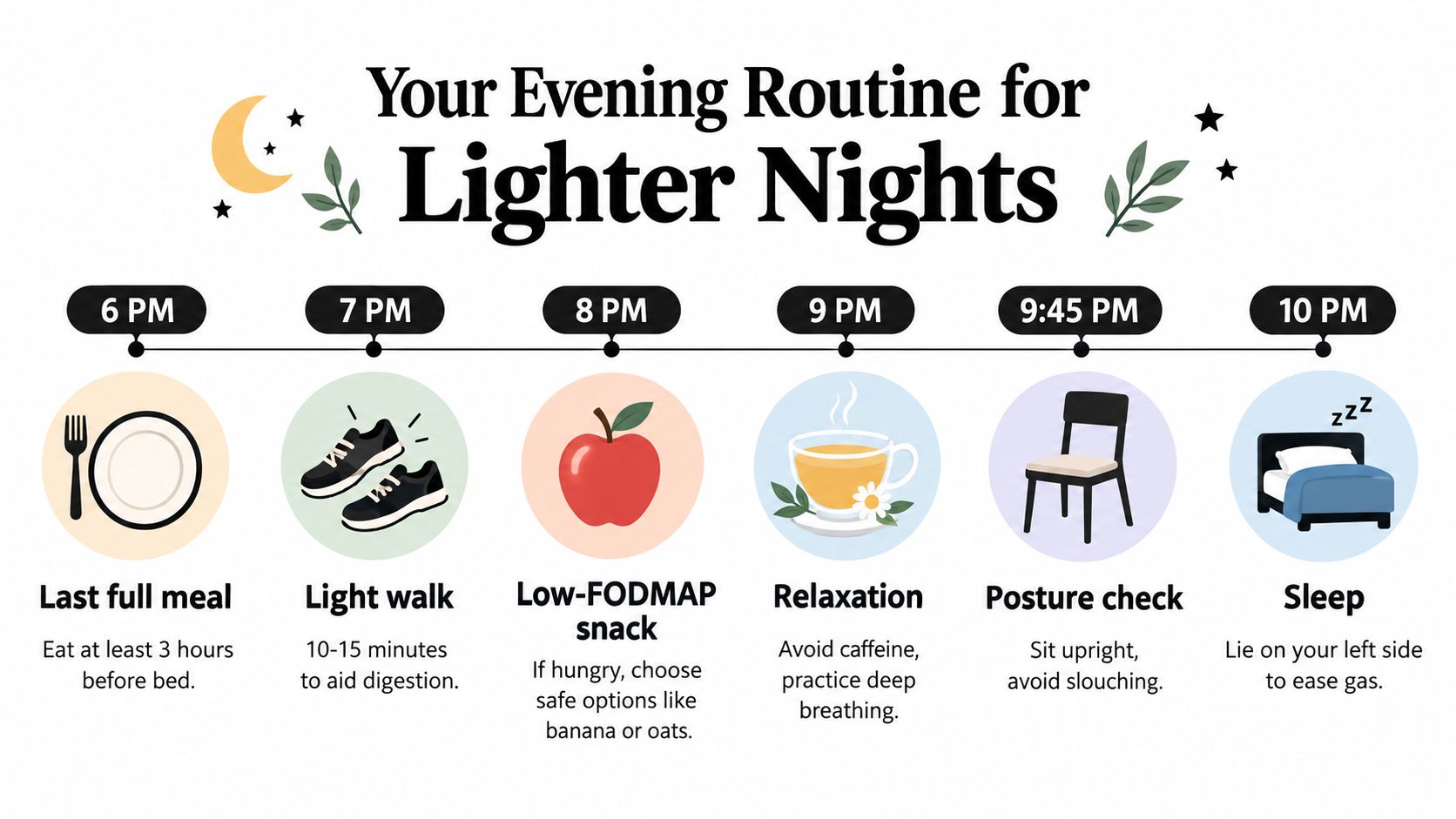
A simple two-hour setup
Start with dinner timing. If bedtime bloating follows a late, large meal, the first fix is simple. Finish your last full meal about three hours before lying down when your schedule allows.
Then look at volume and food mix. A dinner that is heavy in starch, large portions, and several fermentable ingredients at once is the pattern I see most often in people who feel miserable as soon as they get into bed.
A practical dinner template looks like this:
- Protein first: Grilled chicken, fish, eggs, or firm tofu
- Lower-FODMAP vegetables: Carrots, zucchini, spinach, or similar easy vegetables
- Dairy swap when needed: Lactose-free dairy if dairy is a common trigger
- Smaller carb load: A modest serving instead of a large bowl or second helping
This is not a forever diet. It is a clean test. If lighter dinners reduce bedtime symptoms within several nights, your problem is more likely a bedtime peak from what you ate earlier than a gut process that only happens at night.
What to do after dinner
A short walk after dinner helps many people more than another supplement does. Ten minutes of easy movement often supports gastric emptying and gas transit better than sitting still or collapsing onto the couch.
Stay upright for at least an hour after eating.
If your symptoms build only once you lie down, position can still matter for comfort. Left-side sleeping may reduce the sense of pressure for some people, even though it does not reduce total gas production.
The other piece is pace. Fast eating, talking while eating, gum, straws, and carbonated drinks all add swallowed air. That matters most in people who describe upper abdominal pressure, burping, or a tight full feeling soon after dinner, not just lower gut gas later in the night. In those cases, a calmer meal and a quieter wind-down often outperform a pile of rescue products.
To support that, this short video gives a useful visual routine:
Where supplements fit into the routine
Use supplements to match the trigger, not as a blanket bedtime habit. Take lactase with dairy-containing meals. Use alpha-galactosidase with bean-heavy or cruciferous meals when those foods reliably set you off. Taking them after symptoms start is usually too late to change much.
If symptoms show up across the week, are not tied to one dinner, or wake you from sleep even after lighter evenings, think beyond the meal itself. That pattern is where longer-arc tools sometimes fit better than nightly rescue tactics. For people asking about timing, this guide on whether probiotics are better taken at night is a practical follow-up, because consistency matters more than the clock.
A good evening routine is plain on purpose. Earlier dinner, smaller portions, less air swallowing, and a brief walk solve more nighttime bloating than expected.
Fixes That Look Helpful but Miss the Point
People naturally want a quick mechanical fix. Change sleeping position. Take a gas pill. Drink something fizzy and hope it "moves things through." Those approaches usually help less than expected because they don't change the upstream cause.
What these fixes can and can't do
Left-side sleeping can make some people more comfortable, but it doesn't reduce the amount of gas produced. It changes where pressure sits.
Simethicone can help coalesce existing gas bubbles. It does not stop fermentation earlier in the digestive tract. If dinner keeps producing gas night after night, simethicone may blunt the sensation without solving the reason.
Activated charcoal gets oversold for this problem. It can bind medications and nutrients, and the payoff for routine nighttime bloating is often underwhelming.
Where people overestimate peppermint
Peppermint oil can be useful for some daytime IBS pain patterns. It's less reliable for late-evening distension if the issue is a large fermentable dinner, slow transit, or persistent microbial imbalance. It works better as part of a larger plan than as a standalone answer.
If you've already improved meal timing, lowered fermentable triggers at dinner, and used targeted enzymes appropriately but still wake up distended, think less about "trapped air" and more about motility or microbial causes.
The better approach is layering
Single interventions usually move symptoms modestly. Better results come from combining the basics:
- Meal timing: Earlier dinner, less lying down after eating
- Food choice: Lower-FODMAP swaps when dinner is the clear trigger
- Targeted support: Enzymes for known food intolerances
- Nervous system support: Less rushed eating, less late-evening stress load
Putting It All Together for Your Situation
Most readers can sort themselves into a useful decision path within a week if they stop guessing and start tracking timing.
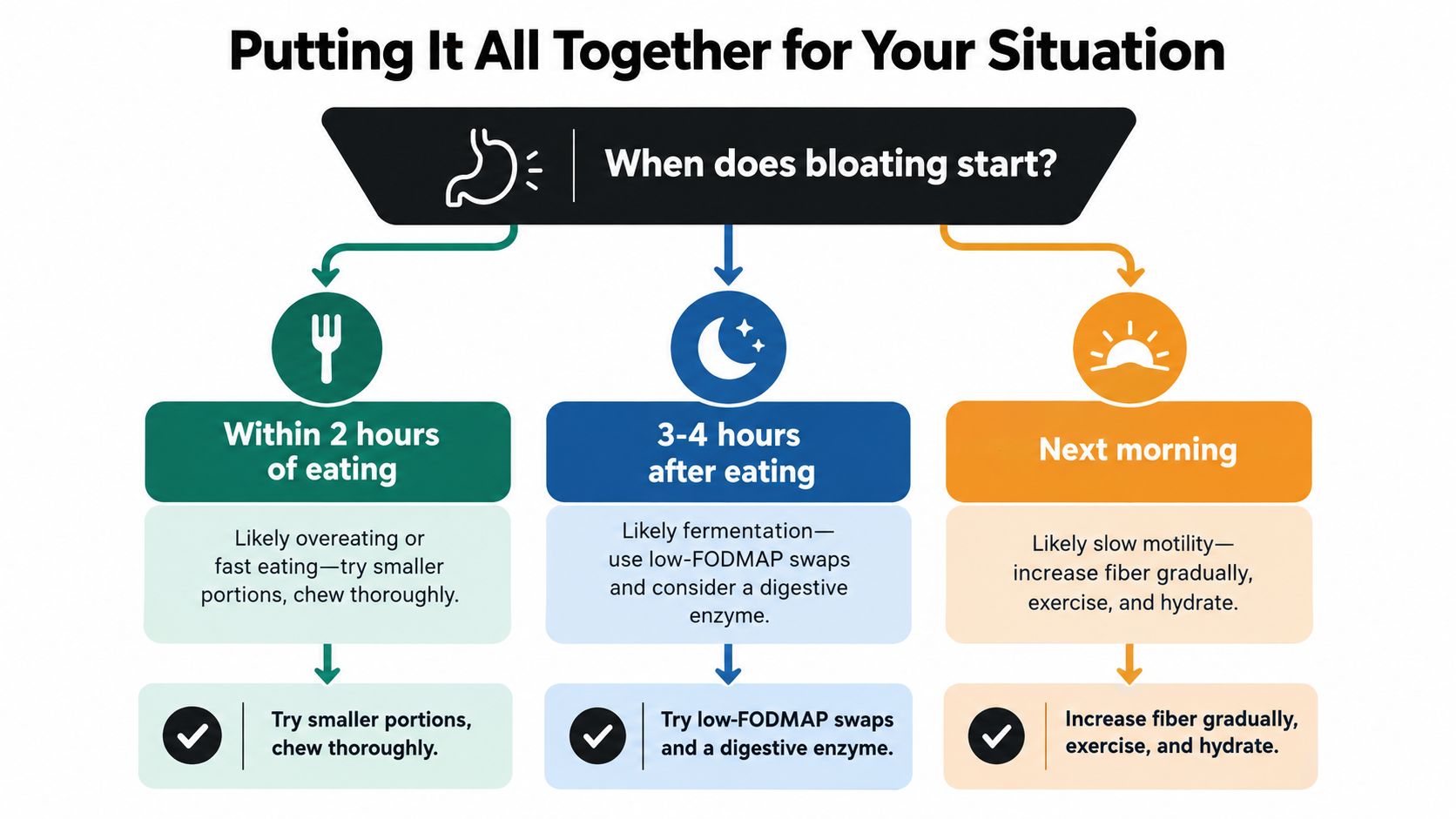
Branch one for food-linked bedtime bloating
If symptoms start within about two hours of dinner and repeatedly track to specific foods, begin with dinner changes only. Keep the rest of the day stable. For the next 10 to 14 days, remove the obvious evening triggers first, especially high-FODMAP foods and oversized portions.
This is the right branch for the person who feels worse at bedtime but doesn't usually wake from sleep because of bloating.
Branch two for fullness that drags into the night
If dinner seems to sit there for hours, and fullness or pressure hangs on past midnight, focus on digestion speed. Use smaller portions, eat earlier, and consider a structured trial of digestive enzymes at dinner, especially when dairy or complex carbohydrate meals are part of the pattern.
Track a few concrete markers instead of relying on memory:
- Bedtime abdominal pressure
- Visible distension
- Belching or upper abdominal fullness
- Whether symptoms wake you up
Branch three for gradual evening distension
If your abdomen expands progressively across the evening, especially when the visible distension seems out of proportion to the meal, think microbial pattern. That's where a probiotic or synbiotic trial may make more sense than endlessly shrinking dinner.
Use a defined trial window and reassess. If the abdomen still swells nightly and sleep is disrupted, the issue may need formal evaluation rather than more supplement experiments.
When to bypass self-testing
Skip the DIY phase and seek care sooner if symptoms are nocturnal, new, persistent, or paired with red flags. The key distinction from the start still matters. Bedtime peaking symptoms often improve with practical dinner changes. Symptoms that wake you from sleep deserve more caution.
Red Flags and When to Seek Care
Nighttime bloating isn't automatically dangerous, but some patterns shouldn't be managed at home for long. Seek medical evaluation promptly if you have unintentional weight loss, blood in the stool, black tarry stools, persistent pain that doesn't fully settle, new onset after age 50, anemia, fever, night sweats, recurrent vomiting, a palpable abdominal mass, or a family history of colorectal cancer, celiac disease, or ovarian cancer.
Worsening reflux, trouble swallowing, or chest pain at night also need urgent assessment because not every "gas" complaint is digestive gas. Some symptoms overlap with esophageal or cardiac problems.
Who to see and what to expect
Start with your primary care clinician or a gastroenterologist. Depending on the pattern, they may consider basic lab work, celiac screening, H. pylori testing, and imaging or endoscopy when appropriate.
People who benefit most from SIBO or gastroparesis testing are the ones with bloating plus early satiety, nausea, persistent fullness, or risk factors such as diabetes or opioid use.
Quick FAQ
- Is nighttime gas dangerous? Usually not by itself. It's often uncomfortable rather than dangerous, but context matters.
- How long should I try lifestyle changes first? If symptoms are mild and clearly meal-linked, a short structured trial is reasonable. If symptoms interrupt sleep or keep recurring despite good changes, don't drag it out.
- Can OTC products mask something serious? They can soften symptoms enough to delay proper evaluation. That's why persistent or worsening patterns shouldn't be written off as "just gas."
GutRx offers digestive support options that fit the patterns in this article, including enzyme support for meal-related discomfort and broader microbiome support for ongoing bloating and irregularity. If your symptoms point to a supplement trial after you've cleaned up timing and food triggers, visit GutRx to compare the available options and choose the one that matches your pattern.


