

If bloating after lunch feels terrible, does that mean your gut is inflamed? Not necessarily, and that gap between how you feel and what's happening in the tissue is where most confusion starts. What causes gut inflammation is rarely one food or one bad bacterium. It usually starts when your intestinal barrier, resident microbes, and immune system stop working together, so material that should stay in the gut reaches immune cells and keeps them switched on.
Table of Contents
- Seven Main Causes of Gut Inflammation
- How the Gut Lining Turns Irritation Into Lasting Inflammation
- Diet and Microbiome Imbalance as Everyday Triggers
- Infections, Medications and Immune Conditions That Start or Sustain It
- How Chronic Stress Feeds Gut Symptoms
- Symptoms That Point to Inflammation Versus Something Else
- Choosing the Right Strategy for Your Trigger
Seven Main Causes of Gut Inflammation
Seven triggers account for most cases of gut inflammation, and they tend to arrive in clusters rather than alone. Someone recovering from a stomach bug who then takes antibiotics and eats little fiber is stacking three rows of the table below, and each added row raises the pressure on the lining. Research on how these drivers interact in gut inflammation groups them into dietary, microbial, infectious, medication-related, immune, stress-related, and genetic categories.
Use the table as a checklist for your own history. The more rows that fit, the more likely a passing irritation has settled into something that sustains itself.
| Trigger | How it drives inflammation | Common example |
|---|---|---|
| Diet pattern | Less fermentable fiber means fewer butyrate-type metabolites and a thinner protective mucus layer | Low-fiber diet high in ultra-processed food and refined sugar |
| Microbiome imbalance (dysbiosis) | Loss of protective microbes and their metabolites, with more inflammatory microbial signals | Ongoing shifts after antibiotics or a restrictive diet |
| Recent gastrointestinal infection | Altered immune signaling and microbiome that keeps the gut reactive after the illness | Bacterial or viral gastroenteritis followed by lasting symptoms |
| Medications | Barrier junctions weakened or microbiome disrupted | NSAIDs, antibiotics and proton-pump inhibitors, used under clinician guidance |
| Immune conditions | Abnormal immune response to intestinal contents in genetically susceptible people | Crohn's disease or ulcerative colitis |
| Chronic stress | Stress-hormone signaling shifts microbes and increases gut permeability and sensitivity | Months of poor sleep and sustained pressure |
| Family history and genetics | Higher baseline susceptibility to immune and barrier problems | First-degree relative with inflammatory bowel disease |
One distinction matters as you scan this list. Every row describes a driver of inflammation in the tissue itself, meaning changes in the lining that clinicians can measure. Symptoms tell a different story. Bloating and pain can be severe while inflammation stays minimal, and genuine inflammation can persist silently for a long time. For many people, two or three rows apply at once, and which ones combine matters far more than any single meal you could blame. The next section walks through the cycle these triggers set off in the lining.
How the Gut Lining Turns Irritation Into Lasting Inflammation
Think of your gut lining as a brick wall with a bouncer. Epithelial cells are the bricks, tight-junction proteins are the mortar, and a mucus layer covers the surface. The bouncer job is selective passage, letting nutrients through while keeping most microbes and their fragments in the gut lumen.
The mortar includes claudins, occludin, and zonula occludens proteins, which regulate which molecules pass between cells. When that mortar loosens, permeability rises and immune cells underneath meet material they normally wouldn't see in large amounts. You can read more on this mechanism in our guide to intestinal permeability and barrier function.
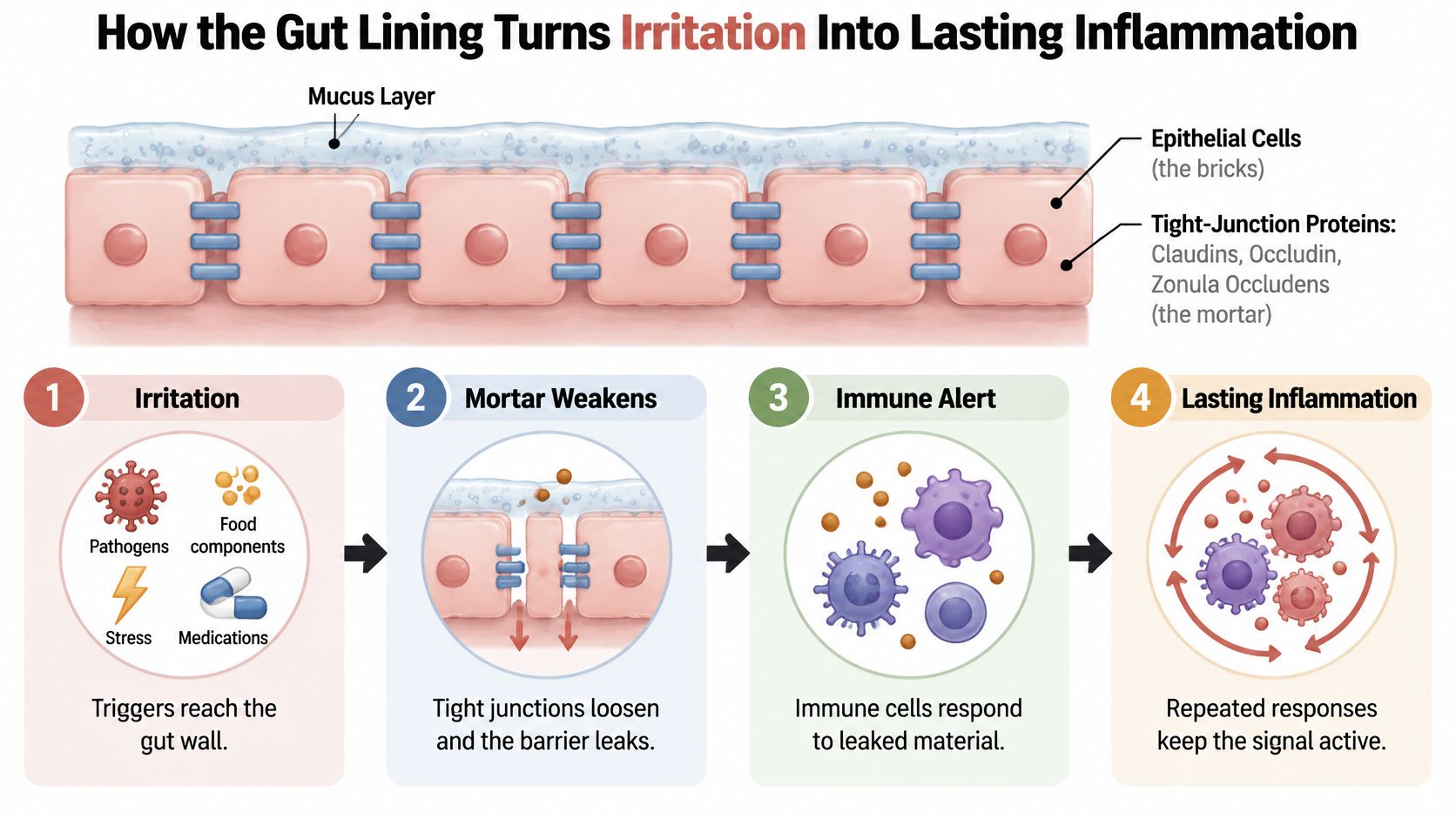
The Four Step Cycle
- A trigger loosens the junctions. Dietary emulsifiers, alcohol, NSAIDs, antibiotics, psychological stress, pathogens, and inflammatory cytokines can disrupt this system.
- Microbial products cross. Compounds such as lipopolysaccharide and other luminal antigens gain greater access to mucosal immune cells.
- Immune receptors fire. Toll-like receptor activation increases inflammatory mediators, including TNF-α and IFN-γ.
- Those mediators damage the wall further. They injure tight junctions and epithelial cells, so more material crosses and the loop continues.
This sequence is detailed in research on epithelial barrier failure and self-reinforcing intestinal inflammation. It explains why inflammation can persist after the original trigger is gone. The loop sustains itself because barrier loss increases immune exposure, and immune activation worsens barrier loss.
Practical rule: Persistent symptoms justify reviewing NSAID use, alcohol, recent antibiotics, highly processed foods, and sleep disruption, not just adding more probiotics.
The same leak can carry microbial products beyond the intestine. When permeability rises, lipopolysaccharide can reach host tissues and promote broader inflammatory signaling, a pathway outlined in research on barrier leak and systemic metabolic inflammation. Increased permeability alone doesn't establish a diagnosis, but it helps explain why gut inflammation isn't purely an intestinal problem.
Diet and Microbiome Imbalance as Everyday Triggers
Drop oats, beans, and onions from your diet for a few weeks and something quiet happens in the colon. The bacteria that make butyrate run short of fermentable fiber, their output falls, and some of them start eating the mucus layer itself. That is the everyday version of a gut trigger, no infection required.
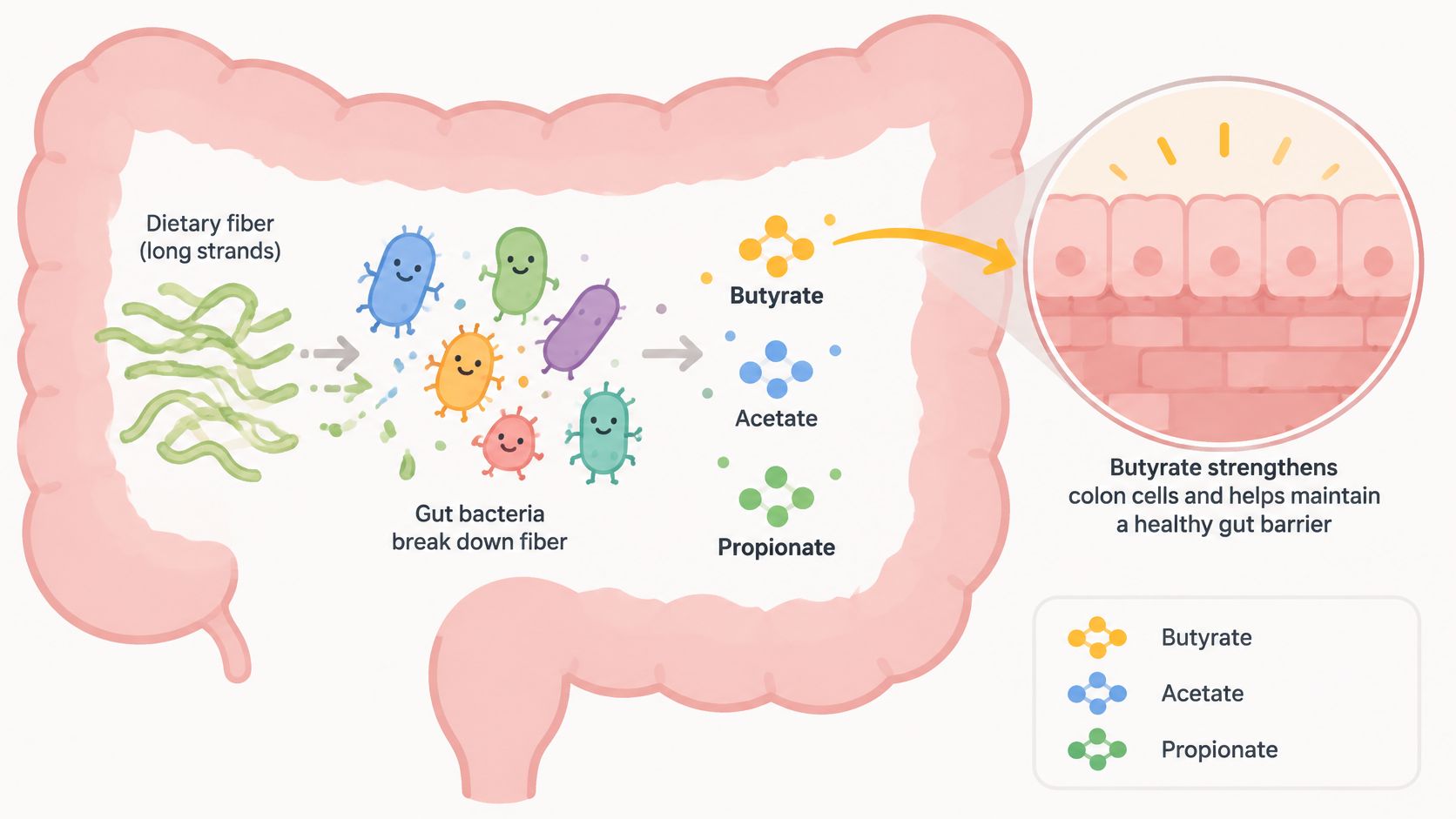
Gut bacteria ferment fiber into short-chain fatty acids, including butyrate, acetate, and propionate. These metabolites feed intestinal epithelial cells and help regulate barrier function and mucosal immunity, while a fiber-deprived diet can push microbes to consume the colonic mucus layer, as described in a 2025 review of fiber, microbial metabolism, and the mucus barrier. Fewer protective metabolites plus a thinner physical defense leaves the lining exposed on two fronts.
Patterns Matter More Than Single Foods
That same 2025 review compared whole eating patterns rather than isolated ingredients. Mediterranean, Japanese, Korean, high-polyphenol, high-fiber, plant-based, and low-fat diets were associated with greater abundance of short-chain-fatty-acid-producing or lactic-acid-producing bacteria. Western, animal-based, ketogenic, and some restrictive diets were associated with fewer of those producers.
A separate 2024 review of dietary components and gut-related inflammation went further. It found that diet changes shifted specific microbial taxa and inflammatory markers more consistently than overall microbiome diversity, and it identified saturated fats, trans fats, refined sugars, and excessive omega-6 fatty acids as components that can raise inflammatory markers.
Judge the pattern rather than any single food on your plate. It also helps to keep two kinds of trouble separate: bloating and pain after a meal reflect fermentation and gut sensitivity, and they can feel intense while measurable tissue inflammation stays low. For a broader view of community balance, see our article on intestinal flora balance and daily habits.
The video below walks through how fiber fermentation supports the colon in plain visual terms.
Dysbiosis is best understood as a loss of protective functions rather than the presence of one bad organism. A diverse microbiota produces butyrate that supports colonocyte energy, epithelial integrity, and immune tolerance, and losing those functions can amplify inflammatory tone, as described in research on dysbiosis, barrier loss, and inflammatory signaling. This is also why symptom severity alone can't grade inflammation. A sensitive gut with an intact barrier can feel worse than one carrying real inflammatory activity.
Infections, Medications and Immune Conditions That Start or Sustain It
Infections That Leave the Gut Reactive
A stomach bug does not always end when the vomiting or diarrhea stops. Bacterial or viral gastroenteritis can alter immune signaling, disrupt the microbiome, increase permeability, and leave the gut reactive to ordinary food and microbial stimuli. A review of post-infectious IBS estimates that approximately 10% of IBS cases are post-infectious, according to research on post-infectious IBS after gastrointestinal illness.
The reactivity that follows is a symptom pattern. Bloating, urgency, and pain can persist after the infection clears because nerves and the barrier stay sensitized, so discomfort alone cannot tell you how much inflammation remains.
The clue is timing. Symptoms continuing for weeks or months after an acute illness, especially when you felt fine beforehand, fit a different pattern than a two-day infection. Tell your clinician when it started, because that onset changes what they consider first.
Medications That Affect the Barrier or Microbiome
NSAIDs such as ibuprofen and naproxen can loosen the tight junctions that seal the gut lining, while antibiotics disrupt the microbiome. Proton-pump inhibitors also appeared among the strongest associated categories in a 2024 umbrella review that found 191 unique inflammatory bowel disease risk factors, including 92 significantly associated factors, reported in an umbrella review of inflammatory bowel disease risk factors.
A drug can act on the barrier even when you feel nothing on a given day, so exposure history carries more weight than any single symptom. Don't stop a prescribed medication on your own. Ask whether it's still necessary, whether the dose or duration can change, and whether an alternative fits your condition.
If a new gut pattern started after a medication change, write down the drug, start date, and symptom start date before your appointment.
Immune Conditions and Family History
Inflammatory bowel disease reflects an abnormal immune response to intestinal contents in people who are genetically susceptible. CDC data from 2023 to 2024 estimated 1.6% of adults, approximately 4.1 million people, had ever been diagnosed, including 1.2% with ulcerative colitis and 0.5% with Crohn's disease, in CDC estimates of inflammatory bowel disease prevalence.
Family history becomes useful when it changes the clinical questions. In that same umbrella review, the strongest associated categories included infections, family history, periodontal disease, proton-pump-inhibitor use, and a Western dietary pattern. If a parent, sibling, or child has inflammatory bowel disease, mention it early: a first-degree relative's diagnosis shifts the opening questions toward signs of tissue inflammation, such as how long symptoms have lasted, instead of stopping at a food diary.
How Chronic Stress Feeds Gut Symptoms
During exam week, a student sleeps poorly, skips breakfast, drinks extra coffee, and eats at odd hours. Within days she notices bloating, urgency, and loose stools, then the same pattern returns next term. Her symptoms track her exam schedule closely enough to be useful data when you're sorting out what causes gut inflammation versus stress-amplified symptoms.
Stress is a biological input. Activation of the hypothalamic-pituitary-adrenal axis can alter microbial ecology, disrupt the epithelial barrier, activate local immune pathways, and increase visceral sensitivity. A 2024 Frontiers review stated chronic stress can shift the gut microbiome toward dysbiosis, leading to intestinal hyperpermeability, endotoxemia, and neuroinflammation, in research on chronic stress, dysbiosis, and gut permeability.
That last point explains a common confusion. Stress-driven symptoms can feel identical to active tissue inflammation even when the intestinal wall looks normal on testing, so symptom intensity alone can't tell you which one you have.
The Gut Brain Link
Stress can also lower your pain threshold in the gut. After a week of deadline pressure, ordinary gas moving through the colon can feel sharp or cramping, even though nothing new is wrong with the tissue. The nerves amplify a signal that would normally pass unnoticed. Our overview of stress and gut health connections explains that two-way signaling in more detail.
A short diary helps you spot whether stress is driving your pattern. Note three markers for two weeks:
- Symptom timing: Do flares line up with deadlines, travel, or poor sleep nights?
- Sleep quality: Are worse mornings followed by worse gut days?
- Meal regularity: Do skipped or rushed meals predict symptoms better than specific foods?
Stress management belongs alongside medical evaluation. If red flags are present, evaluation comes first even when stress clearly worsens symptoms.
Symptoms That Point to Inflammation Versus Something Else
Bloating, pain, diarrhea, and constipation don't reliably indicate how much inflammation is present. A smoke alarm sounds the same whether the cause is burnt toast or a house fire, and gut symptoms behave similarly: intensity alone cannot separate visceral sensitivity from tissue inflammation. You can feel severe symptoms while inflammatory tests come back normal, and active inflammation can stay quiet enough that only testing detects it.
That gap changes how you read your own body.
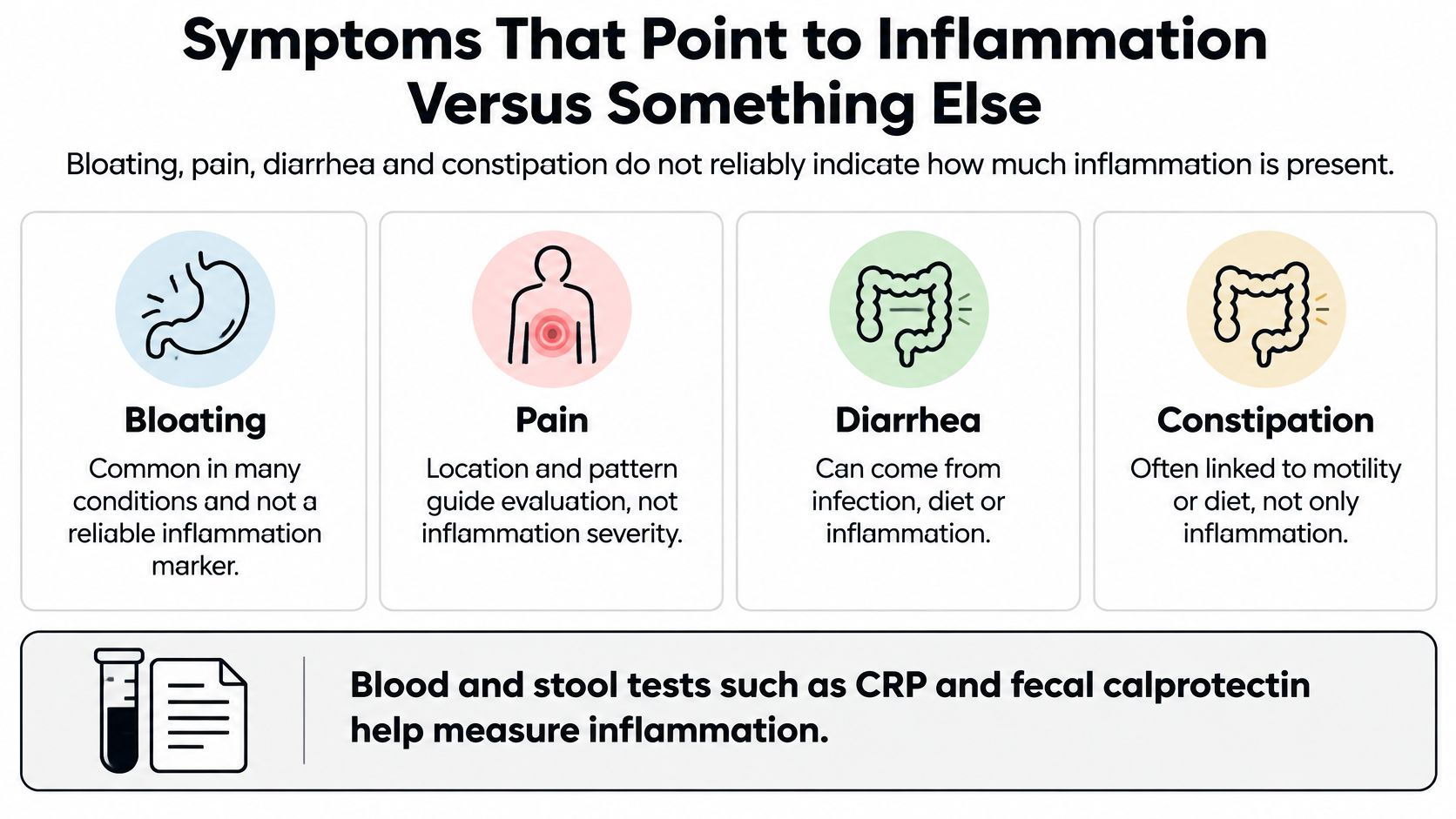
A primary-care study of IBS patients makes the point concretely: five baseline markers (CRP, fecal calprotectin, secretory IgA, beta-defensin-2, and fecal elastase) showed no correlation with symptom severity and did not predict who would improve on an eight-week low-FODMAP diet, as reported in research on IBS markers and symptom severity. IBS itself can involve low-grade immune, barrier, microbial, and gut-brain changes, and those changes differ by subtype. The condition is real and can be debilitating, and it still sits in a different category from inflammatory bowel disease.
| Symptom pattern | What it may point to | Next step |
|---|---|---|
| Blood in stool, weight loss or night-time diarrhea | Possible inflammatory bowel disease or another organic cause | See a clinician promptly |
| Diarrhea or lingering symptoms after a stomach bug | Possible post-infectious IBS | Track the pattern and tell a clinician |
| Bloating and gas after specific meals with normal tests | Visceral sensitivity or food reactivity | Keep a two-week food-symptom diary |
| Constipation with cramping | Altered motility or constipation-predominant IBS pattern | Clinician review |
| Fever, persistent severe pain or rapid worsening | Possible serious infection or complication | Urgent medical evaluation |
Track these patterns with the same two-week diary described in the stress section, adding foods to that daily record. Repeatable links across the fortnight tell a clinician more than one bad afternoon, and the overall trigger pattern weighs more than any single suspect meal.
The flags in the first and last rows earn their urgency because they point toward organic disease a diary cannot settle: blood and weight loss suggest tissue damage, fever points to infection, and night-time diarrhea falls outside the typical IBS pattern. Sorting those possibilities takes testing and a careful history, which umbrella terms like leaky gut tend to blur.
Choosing the Right Strategy for Your Trigger
What if the loudest symptom is not the deepest problem? A useful choice starts by separating two questions: whether tissue is inflamed, and whether a sensitive gut is reacting strongly to meals, stress, infection, or medicines.
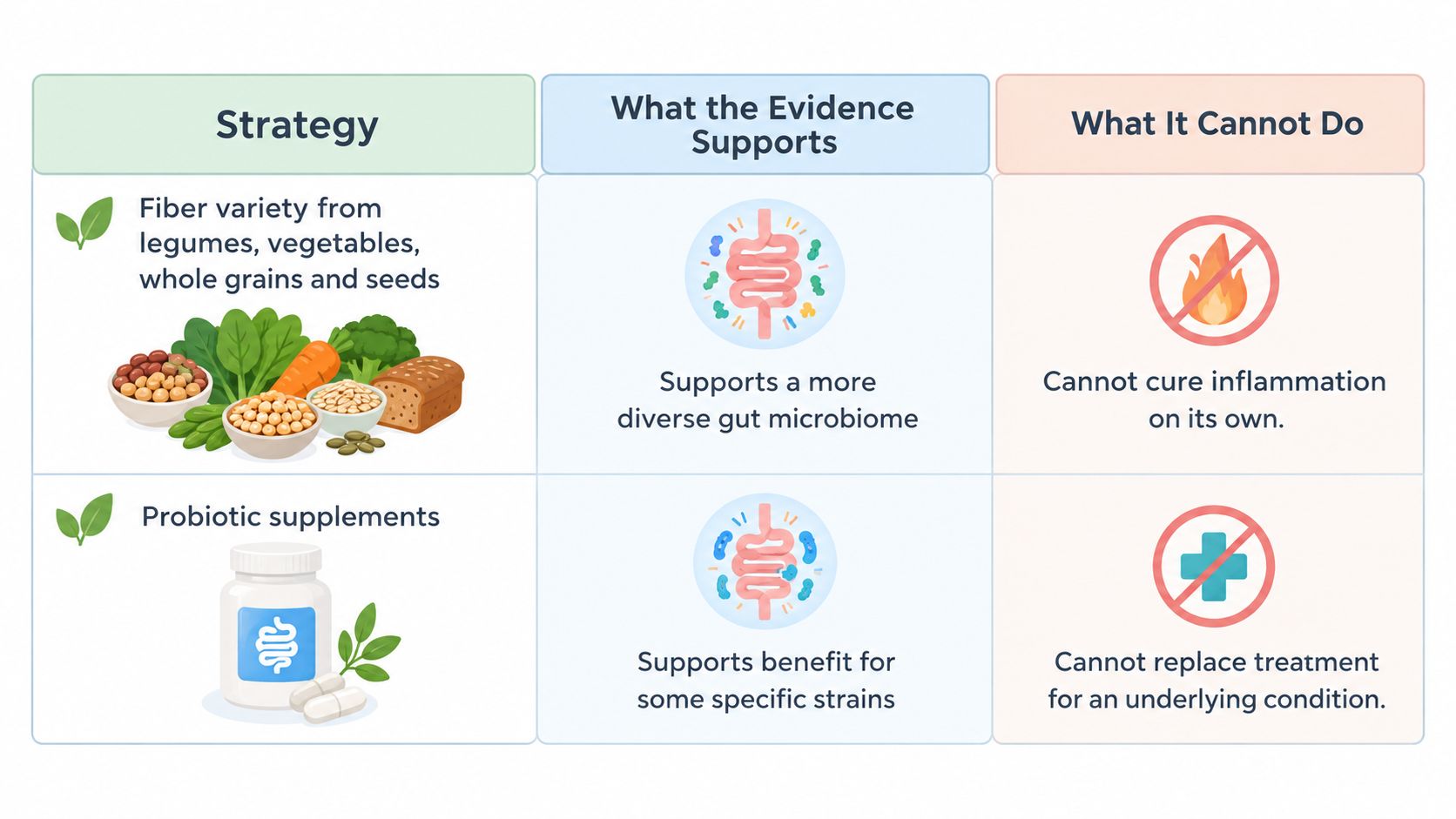
| Strategy | What the evidence supports | What it cannot do |
|---|---|---|
| Fiber variety from legumes, vegetables, whole grains and seeds | Supports short-chain fatty acid production and the mucus barrier | Response varies by person and by gut microbiome |
| Mediterranean-style eating pattern | Associated with more SCFA-producing bacteria | Association, not proof of a cure |
| Trimming ultra-processed food, refined sugar and saturated or trans fat | Linked to lower inflammatory markers in research | Does not treat diagnosed inflammatory bowel disease |
| Moderating alcohol and reviewing NSAID use with a clinician | Reduces known barrier-disrupting exposures | Must not replace prescribed treatment |
| Regular sleep, daily movement and consistent meal timing | Supports gut-brain signaling in IBS research | Not a standalone treatment for organic disease |
| Probiotics and synbiotics | Benefits are strain-specific and vary between studies | Cannot reverse established inflammatory disease |
| Digestive enzymes | Target meal-related digestion and bloating after heavy or dairy meals | Do not treat inflammation or underlying disease |
Clinician-directed therapy remains the strategy for diagnosed inflammatory bowel disease. Diet and supplements may support general gut health alongside care, but they don't replace diagnosis or prescribed treatment.
Two Checks That Still Get Skipped
Once timing, exposures, and safety signs are clear, two questions still change the choice. Does a close relative have inflammatory bowel disease or celiac disease? And what result would count, over a set trial window, as enough benefit to continue?
That second check matters because bloating can feel dramatic while tissue markers stay quiet, and quiet weeks can still occur in disease that needs monitoring. Treat the symptom score as feedback, then confirm the pattern with history and testing before judging progress.
Matching Pattern to Strategy
If symptoms cluster after heavy, dairy, or high-FODMAP meals while tests show no inflammatory disease, digestion during the meal is the first variable to test. Enzyme support works on food breakdown as the meal arrives; it makes no claim to change immune activity. In that category, GutRx MEALTIME is a digestive enzyme supplement that supports digestion, reduces bloating, and enhances nutrient absorption for optimal gut health.
If symptoms began after antibiotics or a stomach bug and no red flags are present, ask a clinician whether a specific microbial strain has human data for that pattern. Effects are strain-specific and variable, so identity, intended use, delivery protection, and independent testing matter more than headline counts. A routine product may support regularity, yet it still cannot diagnose inflammation or reverse established disease.
If your diary shows stress and sleep predict symptoms better than foods do, prioritize regular meals, sleep, and movement alongside evaluation. Adding products without addressing that driver often leaves the main trigger untouched.
When labels differ, compare the same basics every time: named strains, intended use, delivery type, and third-party certificates. Those details help you judge whether a product matches your pattern.
Understanding what causes gut inflammation in your case won't come from one label or one symptom. It comes from lining up timing, exposures, family history, and test results, then choosing the least complicated strategy that fits that pattern and reviewing whether it helps.
If your identified trigger points to meal timing, regularity, or microbiome support, compare formulas at GutRx by intended use, strain or enzyme focus, delivery system, and downloadable certificates, then choose the option that matches that pattern.


