

No single probiotic strain or brand is proven best for people with diabetes, and pooled trials show only a small average effect on HbA1c, roughly 0.2 to 0.4 percentage points in a 2020 meta-analysis indexed in PubMed. That supports a possible adjunct role alongside prescribed care, with medication, nutrition, activity and glucose monitoring still central.
Popular advice to pick the highest CFU count or trust a single headline result skips the hard part. The trials behind that average tested different blends in different people over different lengths of time. An average that small can hide real differences between products that one headline cannot reveal.
For the best probiotic for diabetics, the useful question is whether a specific label discloses its strains and doses clearly enough for you and your clinician to judge it.
Table of Contents
- Whether Probiotics Lower Blood Sugar, Study by Study
- Why Study Results Differ From Product to Product
- Strains, Doses and Labels to Check First
- Quality Checks That Protect Live Cultures
- When Probiotics Need Medical Oversight
- How to Track Results Without Guessing
- How GutRx Formulas Compare on Label Facts
- Confirm the Plan With Your Clinician Before You Buy
- Frequently Asked Questions About Probiotics for Diabetics
Whether Probiotics Lower Blood Sugar, Study by Study
The verdict is narrow. Some pooled analyses find a small average improvement in blood sugar markers, others find an effect that does not clear statistical significance, and none identifies one universally superior strain.
The 2020 meta-analysis of randomized trials indexed in PubMed found probiotics lowered HbA1c by 0.24 percentage points compared with controls in people with type 2 diabetes (95% confidence interval 0.04 to 0.44, p=0.02), while a separate review in that same analysis reported a 0.20% reduction with a confidence interval reaching 0.00%. It also found fasting blood glucose fell by 0.44 mmol/L, about 7.9 mg/dL, and HOMA-IR fell by 1.07 units. Because the second estimate's interval touched zero, it narrowly missed conventional significance.
What the Pooled Results Show
| Evidence source | Population | HbA1c result | Main limitation |
|---|---|---|---|
| 2020 meta-analysis of randomized trials | Adults with type 2 diabetes | Roughly a quarter of a percentage point lower | Average across varied strains and doses |
| 2020 meta-analysis in the British Journal of Nutrition | Adults with diabetes in 14 randomized studies | Mean difference -0.33 percentage points (95% CI -0.53 to -0.13) | Modest average effect |
| 2020 systematic review | Adults with diabetes | Small reduction with a confidence interval reaching zero | Did not reach conventional significance |
| GRADE meta-analysis of 46 trials | Adults with prediabetes or type 2 diabetes | Small average reduction | Heterogeneous strains, doses and durations |
| 12-trial meta-analysis in Diabetology and Metabolic Syndrome | 684 adults with type 2 diabetes | SMD -0.38 (95% CI -0.62 to -0.14) | Few trials per outcome |
| 2024 systematic review in Clinical Nutrition | Adults in controlled studies | SMD -0.44 (95% CI -0.84 to -0.05) | High variation between trials |
Read the confidence intervals, not just the headline number. An interval that nearly touches zero means the true average effect could be very small. An SMD, or standardized mean difference, also is not a percentage point drop you can apply directly to your own lab result: a mean difference of -0.33 and an SMD of -0.44 are measured on different scales, so lining them up in one column overstates how comparable they are.
Practical rule: Treat a pooled average as a reason to ask better label questions, never as a predicted result for one person or one bottle.
That distinction matters when you compare educational material on blood sugar support with a product page. Education can describe trial averages. A product still has to show which strains it contains, at what viable dose, and whether those strains resemble what was studied.
Why Study Results Differ From Product to Product
A meta-analysis averages studies that often have little in common beyond the word probiotic. That's the first limit. Trials used different strains, single-strain and multi-strain formulas, different doses, and different treatment periods. A result from one blend doesn't transfer automatically to another blend with a similar genus name on the front panel.
Genus alone can't carry that weight for a shopper. Lactobacillus or Bifidobacterium names a family, not the tested organism. You need the species and strain code before you can even ask whether a study is relevant to the product in your hand.
When trials disagree with each other
The second limit is heterogeneity, a measure of how much trial results differ beyond chance. HOMA-IR results showed I² of 86% in the 12-trial meta-analysis of 684 adults with type 2 diabetes, and HbA1c results showed I² of 76.13% in the 2024 systematic review in Clinical Nutrition. Those are high values. The studies weren't all estimating the same effect.
High heterogeneity should lower your confidence in any single average. It can reflect different baseline glucose levels, diets, medications, study quality, or formulas. A label that quotes the pooled number without naming its strains gives you no way to locate that product within the spread.
Network rankings rest on indirect comparisons
Network analyses rank treatments partly through indirect comparisons, where products were compared with a common control rather than with each other. A ranking can generate a useful hypothesis for future trials. It doesn't prove the top-ranked approach beats the second-ranked approach in the same patients.
The spread shows up inside the pooled sets themselves. A single-strain Lactobacillus trial and a multi-strain blend trial can land on opposite sides of the same average, each reporting its own HbA1c result, with the pooled figure describing neither product precisely. For a person with diabetes, the gap widens further, because medication, meals, sleep, illness, and baseline control all push an individual result away from any trial mean.
Judge a product against the exact strains, dose, and population in the relevant trial. If those details don't match, you're not buying the studied intervention. You're buying a different one and hoping the class effect carries over.
Strains, Doses and Labels to Check First
The pooled evidence supports a modest average benefit, and it stops there. A GRADE-assessed meta-analysis summarized by Monash University covering 46 randomized controlled trials and 3,067 adults with prediabetes or type 2 diabetes found average reductions of 11.18 mg/dL in fasting plasma glucose, 1.23 µIU/mL in fasting insulin, and 0.87 units in HOMA-IR versus controls. What that average cannot do is name the organisms responsible. Identity before potency is the practical response: a label has to let you verify what you are taking before its CFU number means anything.
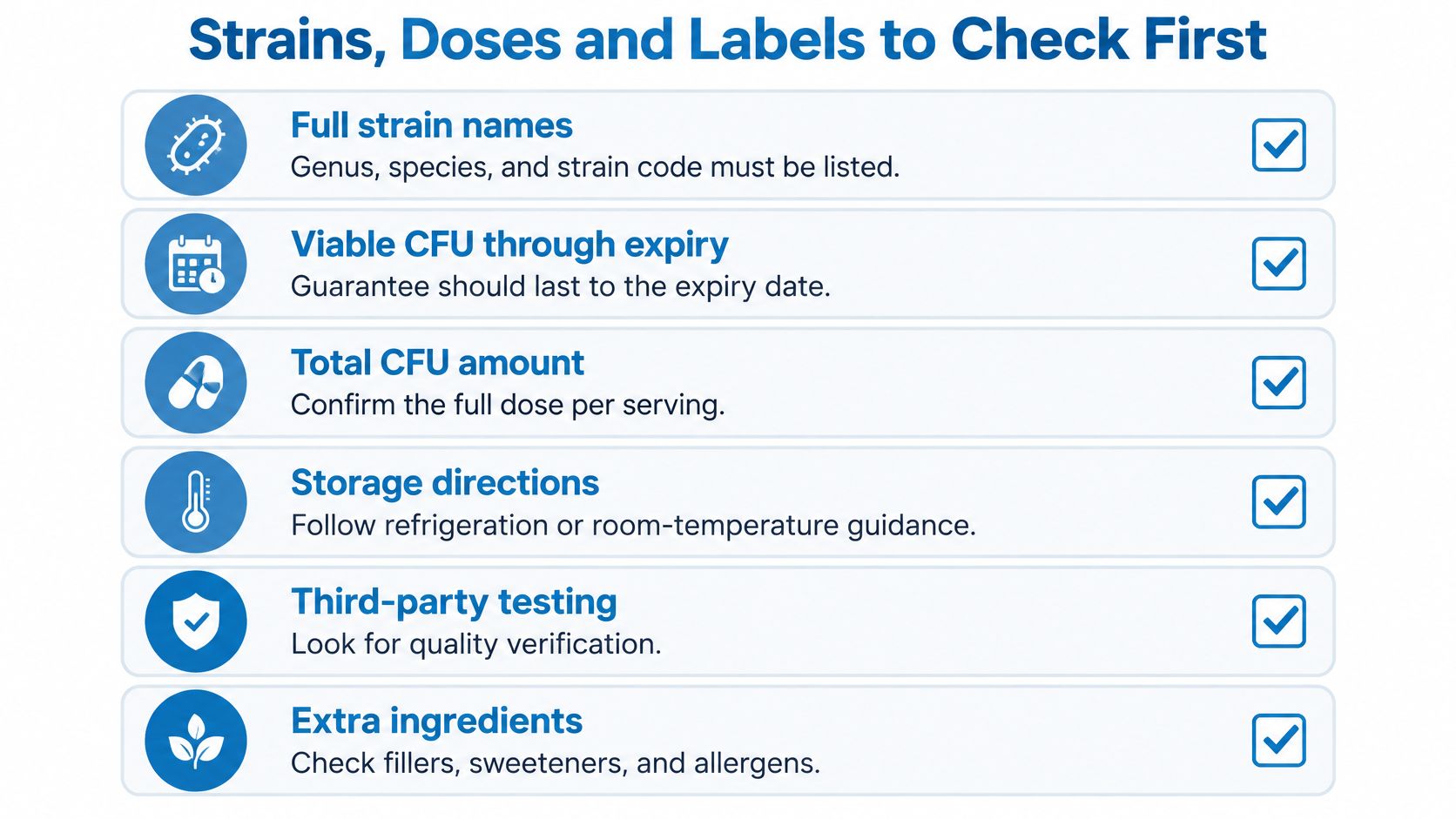
Six checks turn that verification into a repeatable routine.
| Label check | What to look for | Red flag |
|---|---|---|
| Strain names | Genus, species and strain code for every strain | Only "probiotic blend" with no strain names |
| Viable CFU | Count guaranteed through the expiry date | Count stated only at manufacture |
| Dose per serving | Total CFU per serving with the serving size | Proprietary blend hides per-strain amounts |
| Prebiotics | Named fibers with amounts, used only if tolerated | Large fiber load with no amounts listed |
| Testing | Third-party results or certificate of analysis for the batch | No testing documentation |
| Storage | Clear instructions, refrigeration after opening where required | No storage guidance |
A worked label example
Apply the table to two products side by side. The first label lists every organism to strain-code level, gives each strain its own count, guarantees the total through expiry, names its prebiotic fibers with amounts, and states how to store the opened bottle. Each check resolves to a yes before you even reach the CFU figure, and a clinician can line the named strains up against the organisms used in a relevant trial instead of guessing from a blend total. For background on why the strain code matters for one commonly discussed species, see this resource on understanding L. reuteri probiotic strains.
The second label says only "probiotic blend, 50 billion CFU at manufacture." It fails the strain check, hides per-strain dose, and gives no viable count at expiry. There is no way to match it to a trial, and no way to tell whether one strain dominates the blend.
- Proprietary blend: Ask for per-strain amounts before buying.
- CFU at manufacture only: Ask what is guaranteed at expiry.
- No batch documentation: Ask for the certificate of analysis.
- No storage instruction: Ask how heat and humidity affect potency.
Novelty is not a substitute for disclosure. Educational material on Akkermansia probiotic benefits can explain an organism's role in the gut, yet a diabetes-related decision still rests on the exact product's strains, viable dose, tolerability, and your medication plan. A manufacturer that will not identify strains or doses has already answered for you.
Quality Checks That Protect Live Cultures
A probiotic is a live product with a declining count over time. The number that matters is viable potency through expiry, not the larger figure that may have been present on the filling line.
Storage comes before anything on the front label.
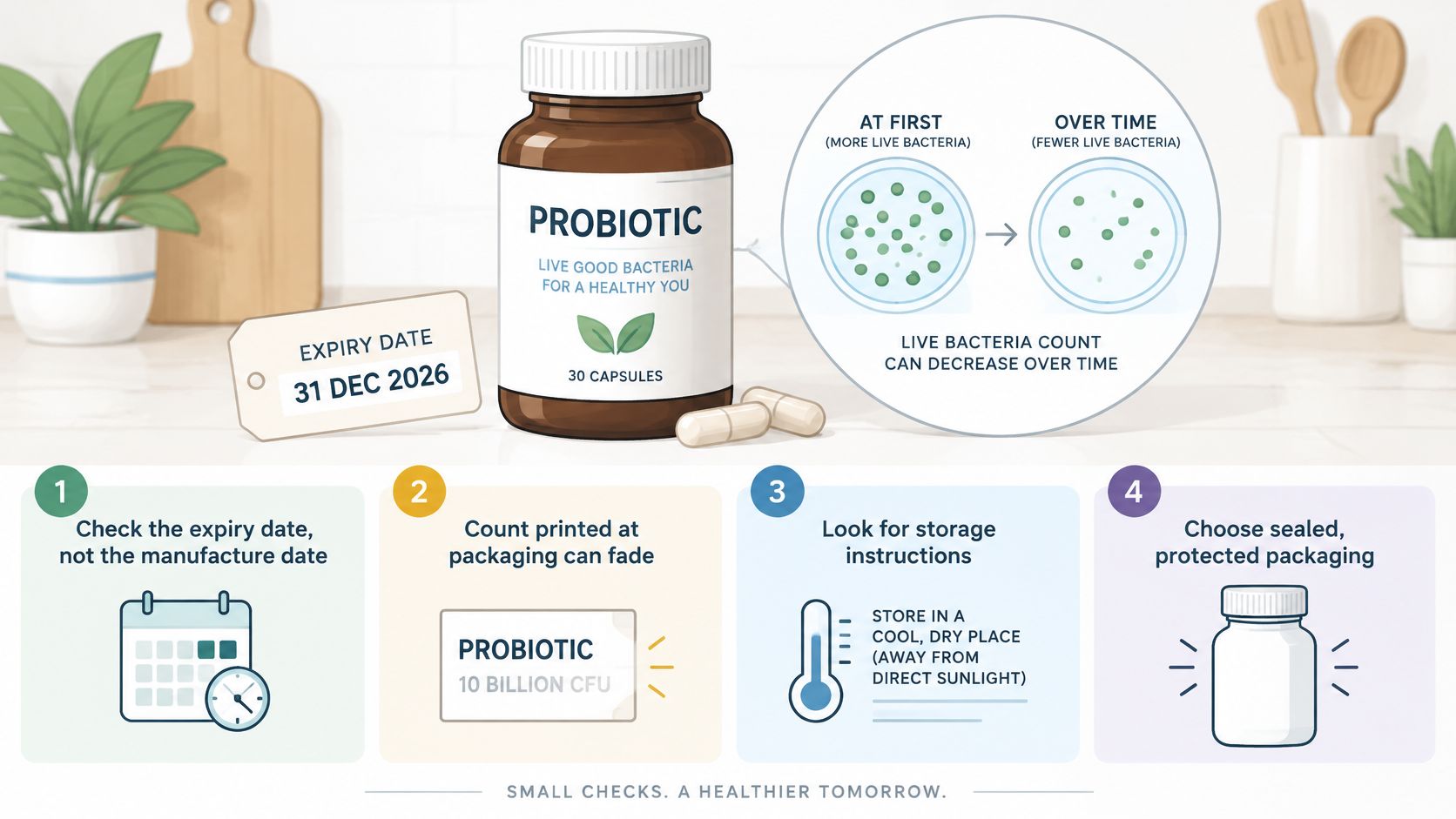
Heat, moisture, and repeated exposure to air can reduce viable organisms. Products that state refrigeration after opening should be kept cold once opened, while formulas labeled shelf stable still need a sealed, dry bottle away from a steamy bathroom cabinet. Follow the storage line on the specific product rather than assuming every probiotic tolerates heat the same way.
Capsule design is the next checkpoint. Delayed-release and enteric-coated formats are designed to help live cultures pass through stomach acid, but the label should state the format plainly. A delivery claim without a named format tells you nothing you can verify.
What a documentation check looks like
Take a bottle you already own and run it once. Find the expiry date and confirm the CFU count is stated through that date rather than only at manufacture. Write the opening date on the label and apply the storage instruction from that day forward. Then take the lot number printed on the bottle and look for a downloadable certificate of analysis, or COA, matching that batch.
If no COA is retrievable, the next move is a short email to the manufacturer. Ask which laboratory performed the testing, what the report measured (strain identity, viable potency, contaminant screening), and what manufacturing controls the facility follows. A company that answers those questions in writing gives you more to work with than one that points to a generic quality seal with no report behind it.
These checks support label accuracy. They do not prove a clinical benefit for diabetes, and no COA can substitute for a human trial of the finished formula.
The video below gives a visual walkthrough of storage and handling points to check alongside the written label.
If you're comparing testing claims across brands, this guide to third-party tested probiotics explains what batch documentation should show. Ask for identity, potency, and contaminant testing by lot. A dated COA tied to the bottle in your hand is stronger evidence than any front-label badge.
When Probiotics Need Medical Oversight
The common assumption is that a probiotic is too gentle to affect a diabetes plan. Don't rely on that. If glucose changes after you start one, the change matters most when you use insulin or a medicine that can cause hypoglycemia.
Talk with your clinician before starting if you use insulin or any glucose-lowering medication. Ask whether your monitoring schedule should change during the first weeks, what readings should prompt a call, and whether any planned medication adjustment could confound the result. Bring the full strain list, not just the front label, so the clinician can review the actual organisms and added fibers.
People reviewing prescription options for metabolic care can also explore tirzepatide safety and effectiveness as background for a clinician discussion. That doesn't make a supplement comparable to a prescription drug, and it isn't a reason to substitute one for the other. Keep those categories separate.
Higher risk situations for live cultures
Live bacteria aren't appropriate for everyone. Seek medical advice first, and don't start on your own, if any of these apply:
- Severe immunocompromise: Live organisms can pose a bloodstream infection risk when immune defenses are markedly reduced.
- Central venous catheter: A direct line into the bloodstream raises the consequence of contamination or translocation.
- Recent surgery or serious illness: Recovery, critical illness, and disrupted gut barrier function call for individualized review.
- Pregnancy or breastfeeding: Ask your obstetric clinician before using a live-culture supplement.
- Children: Parents should get pediatric guidance on strain, dose, and duration rather than splitting an adult product.
Tolerance is a separate issue from infection risk. Gas, bloating, or looser stools can occur when you introduce live cultures or prebiotic fibers, especially if the dose changes abruptly. Persistent or worsening symptoms aren't something to push through just to finish a bottle.
Warning signs that need prompt care
Stop and seek medical advice promptly for any of the following:
- Unexpected glucose changes: Readings move outside the target range your clinician set, or lows become more frequent.
- Fever: Especially with chills, severe weakness, or any central line in place.
- Severe abdominal pain: Pain that's intense, localized, or getting worse needs assessment.
- Persistent or bloody diarrhea: Blood, dehydration, dizziness, or inability to keep fluids down needs urgent review.
- Rapidly worsening symptoms: New vomiting, rash, swelling, or breathing difficulty requires immediate care.
Never stop, reduce, or delay prescribed diabetes medication to make room for a probiotic trial.
This article doesn't diagnose diabetes or any digestive condition. Diagnosis, medication changes, and interpretation of HbA1c belong with the clinician who knows your history, kidney function, other conditions, and full drug list.
How to Track Results Without Guessing
Timing is where many probiotic trials get misread by consumers. Fasting glucose can show a pattern within weeks, while HbA1c reflects roughly three months of glucose, so rechecking it after ten days mostly measures your previous control.
The systematic review available through ScienceDirect covered 28 randomized trials involving 1,947 participants and found a short-term fasting glucose reduction of 12.99 mg/dL, compared with only 2.99 mg/dL in long-term studies. Across seven long-term HbA1c trials, the pooled difference was not statistically significant. That's a warning against judging durability from an early fasting trend.
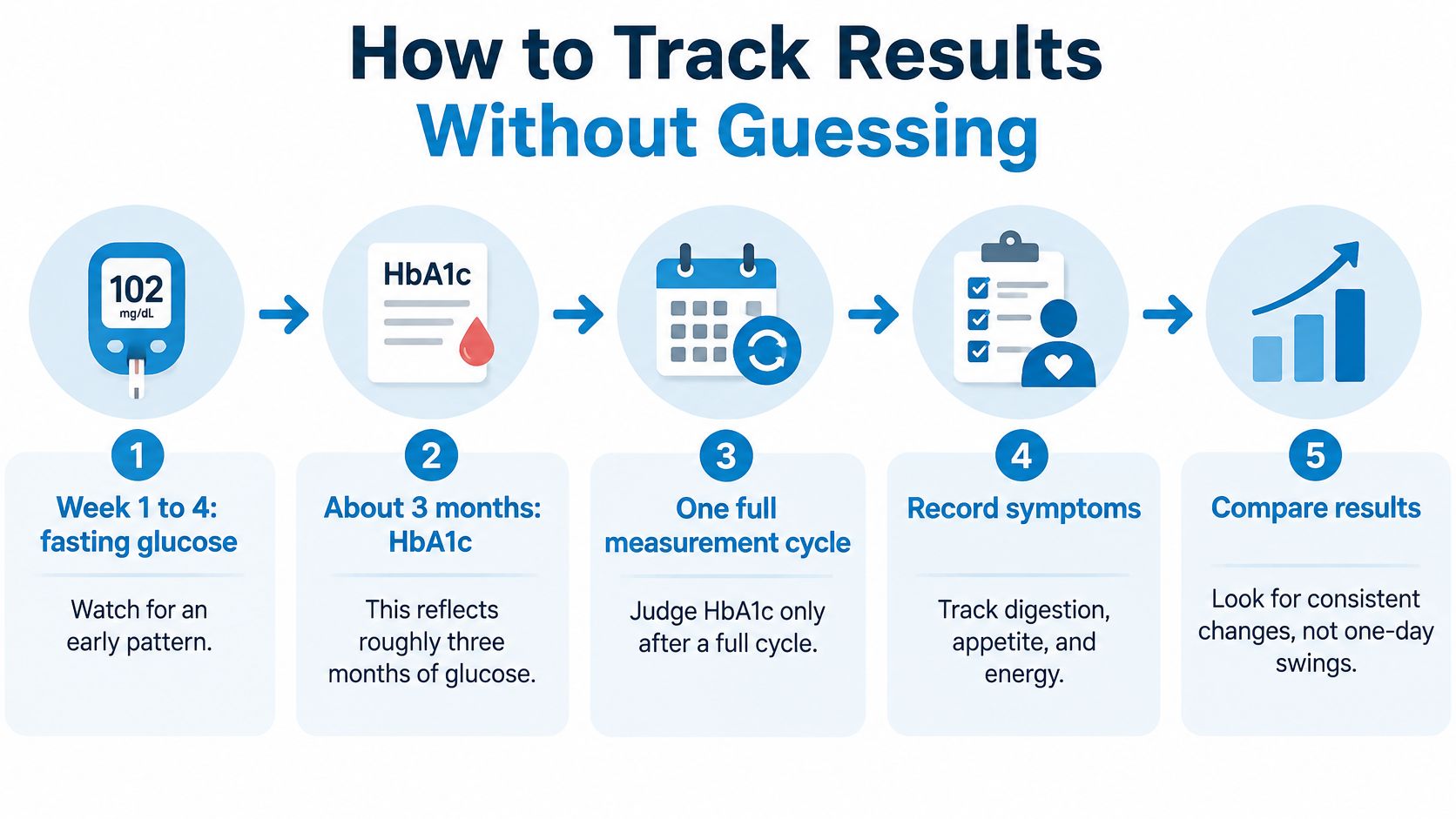
A clean three month tracking method
- Confirm the baseline plan: Ask your clinician to keep conventional therapy stable where clinically appropriate, so you aren't testing three changes at once.
- Record starting values: Write down your last HbA1c, its date, and your typical fasting range before the first capsule.
- Log fasting readings: Record morning readings with the date, product name, dose, and any illness, missed medication, or unusual meal.
- Track tolerance daily: Note bloating, gas, stool change, appetite, and whether you took the product with food.
- Recheck at one cycle: Repeat HbA1c after about three months, ideally through the same laboratory and under similar conditions.
- Review the whole log: Bring the record to your appointment and flag readings outside your clinician's target range before the visit if they recur.
Look for a consistent pattern across weeks, not a single low morning after a light dinner. Food, activity, stress, infection, and medication timing can move fasting glucose more than a supplement plausibly will.
For readers who want background on balancing HbA1c targets with hypoglycemia risk, use it to prepare questions rather than to set your own target. Targets differ by age, comorbidities, hypoglycemia history, and treatment. Your clinician should set the range and decide what change is clinically meaningful for you.
How GutRx Formulas Compare on Label Facts
None of the three formulas compared here is designed, labeled, or tested for people with diabetes. The table shows label attributes only. It is not a verdict on the best probiotic for diabetics, and no CFU figure on its own turns a general digestive product into a diabetes intervention.
DAILY is the one-capsule daily synbiotic aimed at regularity and everyday balance. BALANCE is built around next-generation strains for microbiome balance, digestive comfort, and the gut lining. COMPLETE combines probiotics, prebiotics, and postbiotics in a single formula.
| Attribute | DAILY | BALANCE | COMPLETE |
|---|---|---|---|
| Probiotic count | 10 strains, 61 billion CFU | 30 billion CFU per capsule | 78 billion CFU |
| Next-generation strains | None among the 10 listed strains | Akkermansia and Christensenella strains | Akkermansia and Christensenella included |
| Prebiotic and postbiotic content | 400 mg prebiotic blend: acacia senegal, apple, raspberry, and black currant extracts, 100 mg each | Synbiotic formula; no prebiotic amount stated | Prebiotics and postbiotics included |
| Delivery format | Capsule; no delayed-release claim | Delayed-release format for live delivery | Not stated |
| Serving | One capsule daily | Dose stated per capsule | Not stated |
| Storage | Refrigerate after opening | Refrigerate after opening | Refrigerate after opening |
Read the table structurally, not as a ranking. DAILY spreads its count across 10 named strains in one capsule, while BALANCE puts a smaller count into next-generation strains with delayed release designed to reach the gut live. COMPLETE carries the largest CFU figure, yet states less about strain identity and serving size, which makes a like-for-like comparison weaker.
That asymmetry is the practical lesson. Two honest labels can still be hard to compare on the numbers a buyer checks first. If a clinician is reviewing one of these formulas with you, bring the full supplement facts panel and lot documentation rather than the CFU headline.
These statements have not been evaluated by the FDA. These products are not intended to diagnose, treat, cure, or prevent any disease.
Confirm the Plan With Your Clinician Before You Buy
A common pattern in clinic notes is the supplement mentioned in the last two minutes, after the medication review is already done. That order is backwards for diabetes: the decision needs a baseline, a monitoring rule, and a stop rule before the first capsule.
Use the visit to settle three questions: whether insulin or glucose-lowering medication changes the risk, whether the label's named strains and dose match anything studied in people like you, and which readings should trigger contact instead of waiting for the next appointment.
- If your clinician agrees: run the label through the same six checks: strain identity, viable CFU through expiry, serving dose, prebiotic amount, batch testing, and storage.
- Before checkout: keep the lot or Certificate of Analysis request and the exact refrigeration or shelf-stable instruction with the product page.
- After starting: log fasting glucose, unexpected lows, and digestive tolerance, then review the pattern at the three-month HbA1c check.
The verdict to confirm is narrow: a probiotic may be an adjunct for selected patients, while medication, testing cadence, and hypoglycemia safety stay under clinical control.
Frequently Asked Questions About Probiotics for Diabetics
Is there one probiotic proven best for people with diabetes?
No. The study-by-study review earlier in this article shows small, variable average effects rather than a single superior strain or brand. Formulation, dose, duration, and the population studied all move the result, so a disclosed strain list you can compare against trial evidence matters more than any "best" claim.
Can a probiotic replace diabetes medication if my glucose improves?
No. Dose decisions belong to your prescriber. If readings shift in either direction, share your tracking log with them, and they can judge whether the change is real, sustained, and safe before adjusting anything.
How long should I wait before judging an HbA1c result?
Long enough for the marker to reflect the new routine. Until that interval passes, the fasting glucose and tolerance log described in the tracking section is the more sensitive readout for spotting early patterns or problems.
Do probiotics need to be refrigerated?
Only some formulas do. In the GutRx line, the probiotic, fiber, and collagen products are refrigerated after opening, while Mealtime, Bloat+Gas, MAG+ Morning, and Hangover are shelf stable. Check the label on the specific product rather than assuming one rule covers the whole category.
Who should talk to a clinician before starting?
Anyone using insulin or glucose-lowering medicine, plus people who are immunocompromised, have a central venous catheter, recent surgery, or serious illness. Pregnant or breastfeeding people and parents considering a product for a child belong in the same group.
The practical takeaway is that "best" means the label that matches your plan and survives your clinician's review. Visit GutRx to review full strain lists, storage instructions, and batch documentation before you buy.


